


Dairy • Cream Cheese Dough • Contains Gluten
Dairy-Free • Oil-Based Dough • Contains Gluten
48 rugelach
Beginner–Intermediate
45 minutes
3–4 hours
Mezonot
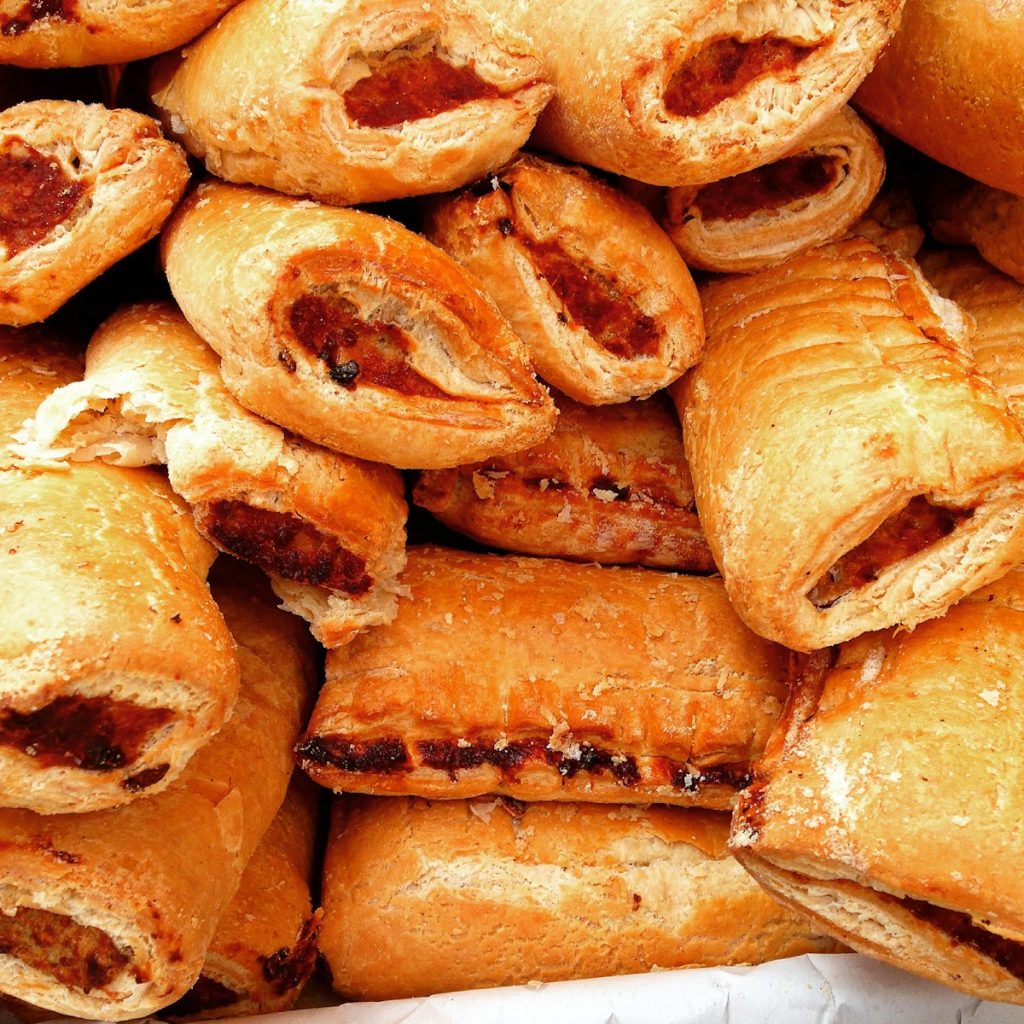
This rugelach recipe delivers the cookie that isn’t a cookie — flaky, buttery crescents filled with everything wonderful.
There is a moment, somewhere between the rolling and the shaping, when you realize what rugelach actually is. It is not a cookie. It is not quite a pastry. It is something in between — a crescent of impossibly tender, flaky dough wrapped around a filling that oozes and caramelizes and perfumes your kitchen with cinnamon, chocolate, or the sweet tang of apricot. Every layer shatters just slightly when you bite through it. The filling clings to the crumb. The cinnamon sugar coating on the outside crackles between your teeth. And then it is gone, and you are reaching for another one before you have finished chewing the first.
Every Jewish grandmother has a rugelach recipe. It lives in a handwritten card in a recipe box, or in the muscle memory of hands that have shaped a thousand crescents. Some use cream cheese dough, rich and tangy. Others use a pareve version that can travel to any table. The fillings vary by family, by season, by whatever is in the pantry. But the shape is always the same — that elegant rolled crescent, wider at one end and curling to a delicate point at the other.
Now you have yours. This recipe gives you two dough options, three filling variations, and a shaping technique so clear you will get it right on the first try. Forty-eight perfect crescents from one batch. Enough to fill a platter, a gift box, or a Friday night table — assuming they survive that long.
This recipe is designed for two dough choices: a classic cream cheese dough (dairy/milchig) and a pareve oil-based dough that can accompany any meal. Choose one based on your table, your guests, and your preference. Both produce exceptional rugelach.
Kosher Notes & Halachic Guidance
Two Dough Options, Two Kosher Classifications
Option A — Classic Cream Cheese Dough: MILCHIG (Dairy). This dough contains cream cheese and butter, making it a dairy product. It cannot be served at a meat meal, and you must wait the appropriate time after eating meat before consuming it (the waiting period varies by community custom: 1, 3, or 6 hours). If you bake the dairy version for a gathering or gift, label it clearly as milchig to prevent confusion. Many families reserve the cream cheese version for dairy meals, Shavuot, or standalone dessert occasions.
Option B — Pareve Oil-Based Dough: PAREVE. This version uses neutral oil and pareve margarine instead of cream cheese and butter. It contains no dairy or meat ingredients and can be served alongside any meal — meat, dairy, or pareve. This is the more flexible option for Shabbos, Yom Tov, and mixed-menu occasions. Ensure the margarine you use is certified pareve and does not contain any dairy derivatives.
Bracha (Blessing)
The correct bracha before eating rugelach is Mezonot. Rugelach dough is enriched with fat (cream cheese or oil), sugar, and eggs, placing it in the category of pas haba’ah b’kisnin (a bread-like food eaten as a snack). It is typically consumed in small quantities as a treat rather than as a bread meal. If, however, one were to eat a very large quantity as part of a meal — enough to be considered kove’a seudah — the bracha would become HaMotzi, requiring washing and bentching. In practice, this is uncommon with rugelach. When in doubt, consult your Rav.
Ingredient Checks
- Cream cheese (Option A): Must bear a reliable hechsher (kosher certification). Many cream cheese brands are kosher-certified, but always verify the symbol on the package. For those who keep Chalav Yisroel (dairy products produced with full-time Jewish supervision of the milking), Chalav Yisroel cream cheese is available from specialty brands. If your community observes Chalav Yisroel, ensure both the cream cheese and butter carry this certification.
- Butter (Option A): Must have a reliable hechsher. For Chalav Yisroel households, use Chalav Yisroel butter.
- Chocolate and cocoa powder (Filling 2): Must bear a reliable hechsher. For dairy rugelach, the chocolate may be dairy or pareve. For pareve rugelach, the chocolate must be certified pareve. Most quality dark chocolates (60% cacao and above) are pareve, but always check the label carefully — many contain milk solids or are processed on dairy equipment.
- Jam/preserves (Filling 3): Must bear a reliable hechsher. This is particularly important because some jams and preserves contain gelatin (which may be non-kosher) or grape derivatives (grape juice or wine-based pectins, which raise separate kashrus concerns). Read the ingredient list and confirm the hechsher.
- Walnuts (Filling 1): Plain, raw walnuts generally do not require a hechsher. However, walnuts can be subject to insect concerns. Inspect walnuts visually before use — break a few open and look for any webbing, larvae, or discoloration inside the nut meat. If they look clean, they are fine to use. Flavored, glazed, or pre-seasoned nuts do require a hechsher.
- Raisins (Filling 1): Raisins can harbor insect concerns. Some poskim recommend soaking raisins in warm water for several minutes, then spreading them on a white surface or paper towel to inspect for any tiny insects. If clear, they are fine. Others recommend purchasing raisins that have been checked under kosher supervision. Follow the practice of your community.
- Eggs: Each egg must be cracked individually into a clear glass and checked for blood spots before use. If a blood spot is found, that egg must be discarded.
Hafrashat Challah
Each dough option in this recipe uses approximately 280–300 g of flour, which is well below the threshold requiring hafrashat challah. If you double or triple the recipe and reach 1,200 g of flour or more, separation without a bracha is required. At 1,666 g or more, separation with a bracha is required. Many dedicated bakers intentionally scale up to perform this mitzvah.
Dough Option A: Classic Cream Cheese Dough (Milchig/Dairy)
This is the rugelach dough that built reputations. Cream cheese and butter create a dough that is absurdly tender, slightly tangy, and rolls into layers so flaky they shatter at first bite. If you are serving at a dairy meal or baking for a gift box where the dairy label is clear, this is the gold standard.
| Ingredient | Grams | Volume (approx.) |
|---|---|---|
| All-purpose flour | 280 g | 2¼ cups |
| Cream cheese, cold (with hechsher; Chalav Yisroel option available) | 226 g | 8 oz (1 block) |
| Unsalted butter, cold, cubed (with hechsher) | 226 g | 1 cup (2 sticks) |
| Granulated sugar | 25 g | 2 Tbsp |
| Fine sea salt | 3 g | ½ tsp |
| Pure vanilla extract | 5 g | 1 tsp |
Making the Cream Cheese Dough
- Combine the dry ingredients. In a large bowl, whisk together the flour, sugar, and salt.
- Cut in the butter and cream cheese. Add the cold, cubed butter and the cold cream cheese (cut into rough chunks) to the flour mixture. Using a pastry blender, two forks, or your fingertips, work the fat into the flour until the mixture resembles coarse, uneven crumbs with some pea-sized pieces of butter still visible. Do not overwork it — those irregular bits of butter are what create flaky layers. Alternatively, pulse in a food processor: combine the flour, sugar, and salt, then add the cold butter and cream cheese in pieces. Pulse 15 to 20 times until you see a crumbly, shaggy mixture with visible butter bits.
- Add the vanilla. Drizzle the vanilla extract over the mixture and toss or pulse briefly to incorporate.
- Bring the dough together. Turn the mixture onto a clean work surface and press it together gently with your hands. It will feel dry and crumbly at first, but keep pressing and folding until it forms a cohesive dough. Do not knead — you want to handle it as little as possible. Overworking cream cheese dough makes it tough.
- Divide and chill. Divide the dough into 4 equal portions (approximately 190 g each). Flatten each portion into a disc about 1 cm (½ inch) thick. Wrap each disc tightly in plastic wrap. Refrigerate for at least 2 hours, or up to 2 days. The dough must be thoroughly cold before rolling — this is non-negotiable. Cold dough rolls cleanly, holds its shape, and produces flaky layers. Warm dough will stick to everything and produce dense, greasy results.
Dough Option B: Pareve Dough (Oil & Margarine-Based)
This pareve version can go anywhere — a meat meal, a dairy meal, a packed lunch, a gift for someone whose kitchen you do not know. The dough uses neutral oil and pareve margarine to achieve a tenderness and flakiness that will surprise anyone who assumes pareve means compromise. It does not.
| Ingredient | Grams | Volume (approx.) |
|---|---|---|
| All-purpose flour | 300 g | 2½ cups |
| Pareve margarine, cold, cubed (with hechsher, certified pareve) | 170 g | ¾ cup |
| Neutral oil (canola, sunflower, or light olive) | 60 g | 4 Tbsp |
| Granulated sugar | 50 g | ¼ cup |
| Large egg, room temperature (checked for blood spots) | 50 g (1 large) | 1 egg |
| Pure vanilla extract | 5 g | 1 tsp |
| Fine sea salt | 3 g | ½ tsp |
| Cold water (if needed) | 15–30 g | 1–2 Tbsp |
Making the Pareve Dough
- Combine the dry ingredients. In a large bowl, whisk together the flour, sugar, and salt.
- Cut in the margarine. Add the cold, cubed pareve margarine to the flour mixture. Using a pastry blender, two forks, or your fingertips, work the margarine into the flour until the mixture resembles coarse crumbs with some pea-sized pieces remaining. As with the dairy version, these irregular bits create flaky layers — do not overwork.
- Add the wet ingredients. In a small bowl, whisk together the egg, oil, and vanilla extract. Pour this over the flour-margarine mixture and stir with a fork until the dough begins to come together. If it seems too dry and crumbly, add the cold water one tablespoon at a time until the dough just holds together when pressed.
- Bring the dough together. Turn the mixture onto a clean surface and press gently into a cohesive mass. Do not knead. Handle as briefly as possible.
- Divide and chill. Divide into 4 equal portions (approximately 165 g each). Flatten each into a disc about 1 cm (½ inch) thick, wrap tightly in plastic wrap, and refrigerate for at least 2 hours, or up to 2 days.
Three Filling Variations
Each filling below is enough for the full batch (48 rugelach). You can also mix and match — use one filling for two dough discs and another for the remaining two. Rugelach is forgiving that way.
Filling 1: Cinnamon Walnut Raisin (The Classic)
| Ingredient | Grams | Volume (approx.) |
|---|---|---|
| Walnuts, finely chopped (inspect before use — see kosher notes) | 120 g | 1 cup |
| Granulated sugar | 100 g | ½ cup |
| Ground cinnamon | 8 g | 1 Tbsp |
| Raisins (soaked, drained, and checked — see kosher notes) | 80 g | ½ cup |
| Apricot or raspberry jam (with hechsher), for brushing | 120 g | ⅓ cup |
Preparation: In a bowl, combine the chopped walnuts, sugar, and cinnamon. Toss to mix evenly. Keep the raisins and jam separate — these are applied in layers during assembly.
Filling 2: Chocolate (The Irresistible)
| Ingredient | Grams | Volume (approx.) |
|---|---|---|
| Dark chocolate (60–70% cacao), finely chopped (with hechsher; pareve if using pareve dough) | 150 g | about 5 oz |
| Granulated sugar | 50 g | ¼ cup |
| Dutch-process cocoa powder (with hechsher) | 15 g | 2 Tbsp |
| Ground cinnamon (optional) | 2 g | ½ tsp |
Preparation: In a bowl, combine the finely chopped chocolate, sugar, cocoa powder, and cinnamon (if using). Toss together. The chopped chocolate will melt during baking, creating pockets of molten chocolate that ooze from the seams of each crescent — exactly what you want.
Filling 3: Apricot Jam (The Elegant)
| Ingredient | Grams | Volume (approx.) |
|---|---|---|
| Apricot jam or preserves (with hechsher — check for gelatin and grape derivatives) | 200 g | ⅔ cup |
| Shredded sweetened coconut (optional) | 40 g | ½ cup |
| Finely chopped dried apricots (optional, with hechsher) | 60 g | ⅓ cup |
Preparation: If the jam contains large fruit pieces, pulse it briefly in a food processor or press through a sieve for a smooth, spreadable consistency. If using dried apricots and coconut, toss them together and keep them separate from the jam — they are sprinkled on after the jam is spread.
Egg Wash & Cinnamon Sugar Coating (Optional but Recommended)
- Egg wash: 1 large egg (checked for blood spots) whisked with 1 Tbsp water and a pinch of salt.
- Cinnamon sugar: 50 g (¼ cup) granulated sugar mixed with 4 g (1 tsp) ground cinnamon.
The egg wash gives each crescent a golden, glossy finish. The cinnamon sugar adds a crackly, sweet crust that shatters with every bite. Together, they transform good rugelach into rugelach that disappears from the platter in minutes.
Equipment
- Large mixing bowl or food processor
- Pastry blender or two forks (if mixing by hand)
- Rolling pin
- Large baking sheets (2), lined with parchment paper
- Plastic wrap
- Sharp knife or pizza cutter
- Pastry brush
- Wire cooling rack
- Digital kitchen scale
- Offset spatula (helpful for spreading fillings)
Step-by-Step Instructions
Step 1: Make Your Chosen Dough
Follow the instructions above for either Option A (Cream Cheese Dough) or Option B (Pareve Dough). The critical point for both: the dough must chill for at least 2 hours before rolling. You can make it the day before and refrigerate overnight — in fact, this is the easiest approach if you want fresh rugelach for Shabbos.
Step 2: Prepare Your Chosen Filling
While the dough chills, prepare the filling components according to the instructions in the filling section above. Have everything measured, mixed, and ready to go before you remove the dough from the refrigerator. Once the cold dough is out, you want to work efficiently — it gets soft and sticky as it warms.
Step 3: Roll the Dough into Circles
Preheat your oven to 175°C (350°F). Line two large baking sheets with parchment paper.
Remove one dough disc from the refrigerator. On a lightly floured surface, roll the disc into a circle approximately 28–30 cm (11–12 inches) in diameter. The dough should be about 3 mm (⅛ inch) thick — thin enough to roll easily, thick enough to hold the filling without tearing.
Rolling technique: Start from the center and roll outward in all directions, rotating the dough a quarter turn after every few strokes. If the dough cracks at the edges, it is too cold — let it sit for 2 to 3 minutes and try again. If it starts to stick, dust lightly with flour underneath. If it becomes soft, floppy, and difficult to handle, slide it onto a parchment-lined sheet pan and return it to the refrigerator for 10 to 15 minutes. Patience here produces clean, beautiful crescents later.
Step 4: Spread the Filling
For Cinnamon Walnut Raisin (Filling 1): Using an offset spatula or the back of a spoon, spread a thin, even layer of jam over the entire circle of dough, leaving no border. Sprinkle the cinnamon-walnut-sugar mixture evenly over the jam. Scatter the raisins on top, pressing them gently into the surface.
For Chocolate (Filling 2): Sprinkle the chocolate-sugar-cocoa mixture evenly over the entire circle of dough, pressing gently so the pieces adhere. No jam base is needed — the chocolate melts on its own during baking.
For Apricot Jam (Filling 3): Spread the apricot jam in a thin, even layer over the entire circle. If using coconut and dried apricots, scatter them evenly on top and press gently.
Step 5: Cut into 12 Wedges
Using a sharp knife or pizza cutter, cut the filled circle into 12 equal wedges, like cutting a pizza or a clock face. The easiest approach: cut the circle in half, then each half into thirds, then each third in half. Each wedge should be a triangle with a wide base (about 7–8 cm / 3 inches) and a pointed tip.
Step 6: Roll and Shape the Crescents
This is the signature technique, and it is simpler than it looks.
- Start at the wide end. Take one wedge and position it with the wide base facing you and the point facing away.
- Roll toward the point. Beginning at the wide base, roll the wedge up toward the pointed tip, tucking the filling in as you go. Use gentle, even pressure — firm enough to create a tight roll, but not so tight that filling squeezes out the sides. Think of it as coaxing the dough to curl around itself.
- Shape the crescent. Once rolled, the pointed tip should end up on the bottom (underneath the roll), which helps it stay sealed during baking. Now, gently curve the two ends of the roll inward toward each other, forming a crescent (half-moon) shape. The roll should be slightly fatter in the middle and taper at the curving ends.
- Place on the baking sheet. Set each shaped crescent on the parchment-lined baking sheet, point side down, with about 3 cm (1 inch) of space between them. They will spread slightly but not dramatically.
Repeat with all 12 wedges from the first dough disc, then return the remaining dough discs to the counter one at a time, rolling, filling, cutting, and shaping. Keep any dough discs you are not actively working with in the refrigerator.
You should have 48 shaped rugelach — 4 circles of 12 wedges each.
Step 7: Egg Wash and Cinnamon Sugar (Optional)
Using a pastry brush, gently brush the top of each crescent with a thin layer of egg wash. Then sprinkle generously with the cinnamon sugar mixture. The egg wash acts as glue for the sugar, and together they create a golden, crackly, caramelized exterior that is extraordinarily good.
If you are keeping the rugelach pareve and prefer not to use egg wash, you can brush lightly with a thin layer of oil or non-dairy milk and still apply the cinnamon sugar — it will adhere, though the finish will be slightly less glossy.
Step 8: Bake
Place the baking sheets in the preheated 175°C (350°F) oven. Bake for 18 to 22 minutes, rotating the pans front-to-back and top-to-bottom halfway through for even browning.
The rugelach are done when:
- The tops and bottoms are golden brown — not pale, not dark. A warm, even gold.
- The cinnamon sugar coating (if applied) looks crackly and slightly caramelized.
- Any filling that has oozed out at the seams looks set and slightly darkened, not raw or wet.
- The pastry feels firm to a gentle touch, not soft or squishy.
Remove from the oven and let the rugelach cool on the baking sheet for 5 minutes, then transfer to a wire rack to cool completely. The chocolate filling version benefits from cooling fully — the chocolate will set from molten to fudgy as it cools, giving you a cleaner bite. The cinnamon and apricot versions are delicious warm.
Storage & Make-Ahead
- Room temperature: Store baked rugelach in an airtight container at room temperature for up to 5 days. They actually improve slightly on days two and three as the flavors meld and the cinnamon sugar settles into the crust.
- Freezing baked rugelach: Place cooled rugelach in a single layer in a freezer-safe container or bag, with parchment between layers to prevent sticking. Freeze for up to 3 months. Thaw at room temperature for 30 minutes, or warm briefly in a 150°C (300°F) oven for 5 minutes. They freeze beautifully — many bakers make a double batch specifically to freeze half.
- Freezing unbaked rugelach: Shape the rugelach completely, place them on a parchment-lined sheet pan, and freeze until solid (about 2 hours). Transfer to a freezer bag. To bake from frozen, place on a parchment-lined sheet, apply egg wash and cinnamon sugar, and bake at 175°C (350°F) for 22 to 26 minutes (a few extra minutes since they are frozen).
- Make-ahead dough: Both doughs can be refrigerated for up to 2 days or frozen (wrapped tightly) for up to 1 month. Thaw frozen dough overnight in the refrigerator before rolling.
Troubleshooting
The dough is too soft and sticks to everything
The dough is not cold enough. This is the single most common problem with rugelach, and the solution is always the same: chill more. Return the dough to the refrigerator for 15 to 20 minutes. If your kitchen is warm (above 24°C / 75°F), work with only one dough disc at a time and keep the rest refrigerated. Lightly flour your work surface and rolling pin, but do not overdo it — too much flour toughens the dough. If the dough becomes truly unmanageable while rolling, slide the whole thing (filling and all) onto a sheet of parchment, place it on a sheet pan, and refrigerate for 10 minutes before continuing to cut and shape.
The filling is leaking out during baking
There are three common causes. First, the filling layer was too thick — a thin, even layer holds better than a generous mound. Second, the dough was not rolled tightly enough from the wide end to the tip. The roll should be snug (though not so tight that it squeezes filling out the sides). Third, the pointed tip was not tucked underneath the roll. When the tip faces up, it can unfurl during baking, letting filling escape. Some leaking is normal and even desirable — the jam or chocolate that caramelizes on the parchment paper at the base of each crescent is one of the best parts. But if your rugelach are losing most of their filling, tighten the rolls and thin the filling layer.
Uneven browning
Rotate the baking sheets halfway through baking — swap the pans between the upper and lower racks, and turn each pan 180 degrees. Most home ovens have hot spots. If the bottoms are browning too fast and the tops are still pale, move the pans to a higher rack. If the tops are browning too fast, move them lower or tent loosely with aluminum foil for the last 5 minutes. Using light-colored aluminum baking sheets (rather than dark non-stick) also helps prevent over-browning on the bottom.
The rugelach unroll during baking
The tip was not properly tucked underneath, or the dough was too warm during shaping. Make sure the pointed end of each wedge ends up on the bottom of the roll, pressed against the parchment. Also ensure the crescents are not touching each other on the sheet — if they are too close, they push against each other as they expand and can loosen the rolls. Leave at least 3 cm (1 inch) between each crescent.
Frequently Asked Questions
What is rugelach?
Rugelach (also spelled rugalach, rugulach, or rugelakh) is a traditional Jewish pastry of Ashkenazi origin. The name comes from the Yiddish word rugel, meaning “royal,” though some sources connect it to the word for “twist” or “roll.” Each rugelach is a small crescent of rich, flaky dough wrapped around a sweet filling — typically cinnamon and walnuts, chocolate, or fruit jam. The dough is rolled into a circle, spread with filling, cut into wedges, and each wedge is rolled from the wide end to the point, then curved into a crescent shape. Rugelach is served as a dessert, a snack, a gift, and a staple of Jewish celebrations, holiday tables, and shiva trays. It is one of the most beloved items in the Ashkenazi pastry tradition.
Is rugelach a cookie or a pastry?
This is one of the great unresolved debates of Jewish baking. Rugelach occupies a category all its own — somewhere between a cookie and a pastry. It is typically grouped with cookies in bakeries and on platters, but the dough itself (especially the cream cheese version) is closer to a pie or puff pastry in structure and technique. You do not cream butter and sugar together the way you would for a cookie. Instead, you work cold fat into flour, chill the dough, and roll it out — techniques borrowed directly from pastry making. The result has a flaky, layered quality that no ordinary cookie can match, yet it is small enough to eat in three bites and sweet enough to satisfy a cookie craving. The honest answer: rugelach is rugelach. It does not need to be anything else.
Can rugelach be pareve?
Absolutely. This recipe includes a fully pareve dough option (Option B) made with neutral oil and pareve margarine instead of cream cheese and butter. When paired with a pareve-certified filling (confirm that chocolate is certified pareve and that jam contains no non-kosher gelatin or grape derivatives), the result is entirely pareve and can be served alongside any meal — meat, dairy, or pareve. Pareve rugelach is slightly less rich than the cream cheese version, but it is still tender, flaky, and deeply satisfying. Many families keep a pareve version as their standard so it can go anywhere.
How do you pronounce rugelach?
The most common pronunciation is RUG-uh-lakh (the “ch” at the end is the guttural, throat-clearing sound common in Yiddish and Hebrew, like the “ch” in “Bach” or “Chanukah”). In casual American English, you will also hear ROO-guh-lah or RUG-uh-luh without the guttural ending. All are acceptable. The important thing is not how you say it but how quickly you eat it.
How long does rugelach stay fresh?
Stored in an airtight container at room temperature, baked rugelach stays fresh for up to 5 days. The flaky dough actually develops a slightly deeper, more settled texture over the first day or two, which many people prefer. For longer storage, rugelach freezes exceptionally well — up to 3 months in a sealed container with parchment between layers. Thaw at room temperature for about 30 minutes, or warm in a low oven (150°C / 300°F) for 5 minutes to revive the crackly exterior. Unbaked shaped rugelach can also be frozen and baked directly from frozen, adding a few minutes to the baking time.
Forty-Eight Crescents. One Batch. Your Kitchen.
You just learned how to make rugelach from scratch — cream cheese or pareve, cinnamon or chocolate or apricot, shaped by your own hands. That platter of golden, flaky crescents is waiting. Go make it.
Try Our Chocolate Babka Next →
Master Our Classic Challah →
Made these? Tag us @kosherbreadpro on Instagram. We want to see your crescents.