Search 150+ Kosher Recipes
There’s something undeniably charming about a basket of golden challah rolls gracing the Shabbat table. Each guest receives their own perfectly portioned roll—warm, soft, and fragrant with the same egg-enriched richness that makes a full-sized challah so beloved, but in a form that feels personal and special.
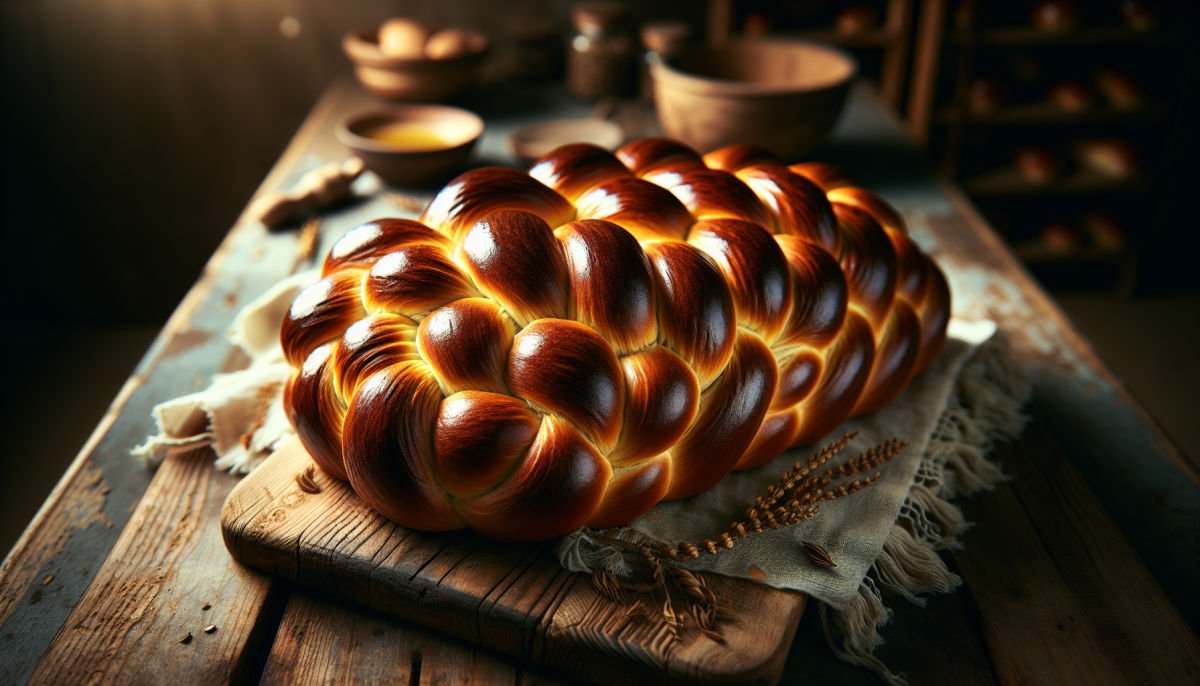
These individual challah rolls carry all the hallmarks of the classic loaf: a tender, slightly sweet crumb that pulls apart in gossamer layers, a burnished crust painted with egg wash, and that unmistakable aroma that signals the arrival of Shabbat. The difference is in the intimacy—each roll is its own small celebration, a personal portion that eliminates the need for slicing and ensures every seat at the table gets that coveted combination of crisp exterior and pillowy interior.
The shaping options are endlessly adaptable. A simple round knot creates an elegant presentation, while a three-strand mini braid delivers the traditional look in miniature. For holidays, you can shape them into small round spirals for Rosh Hashanah or elongated rolls for weekday use. Whatever the shape, the technique remains the same: a well-developed dough, gentle handling, and a generous brush of egg wash for that bakery-worthy shine.
What Makes This Recipe Special
- Perfect individual portions — No slicing needed; each guest gets a beautifully shaped roll with maximum crust-to-crumb ratio
- Faster bake time — Rolls bake in 18–20 minutes versus 30–35 for a full loaf, reducing oven time and risk of over-browning
- Versatile shaping — Knots, mini braids, or spirals—adapt the shape to the occasion
- Same beloved dough — Uses the classic challah formula with baker’s percentages optimized for tender, pull-apart rolls
- Freezer-friendly — Flash-freeze individually for quick Shabbat prep; reheat directly from frozen
Halachic Notes
- Kosher Classification: Pareve — contains no dairy or meat ingredients. Eggs must be checked for blood spots before use.
- Hafrashat Challah: This recipe uses approximately 500g of flour, which is below the shiur for separating challah. If doubling or tripling, separate challah without a bracha at 1.2 kg of flour, or with the bracha "ברוך אתה ה׳ אלקינו מלך העולם אשר קדשנו במצותיו וצונו להפריש חלה" at 2.25 kg.
- Pas Yisroel: When a Jewish person lights the oven or contributes to the baking process, these rolls fulfill the Pas Yisroel requirement.
- Brachot: Hamotzi lechem min ha’aretz before; Birkat Hamazon after.
Ingredients
| Ingredient | Grams | Volume | Baker’s % |
|---|---|---|---|
| Bread flour | 500g | 4 cups | 100% |
| Warm water (38°C / 100°F) | 160g | ⅔ cup | 32% |
| Large eggs | 100g (2 large) | 2 eggs | 20% |
| Egg yolk (for enrichment) | 18g (1 yolk) | 1 yolk | 3.6% |
| Granulated sugar | 65g | ⅓ cup | 13% |
| Neutral oil (vegetable or avocado) | 60g | ¼ cup | 12% |
| Fine sea salt | 9g | 1½ tsp | 1.8% |
| Instant yeast | 7g | 2¼ tsp | 1.4% |
Egg Wash
| Ingredient | Amount |
|---|---|
| Egg yolk | 1 |
| Water | 1 tsp |
| Sesame or poppy seeds (optional) | For sprinkling |
Instructions
Step 1: Mix the Dough
In a large bowl, whisk together the warm water, eggs, egg yolk, sugar, and oil until combined. Add the flour, salt, and instant yeast. Mix with a wooden spoon or dough whisk until a shaggy mass forms and no dry flour remains.
Step 2: Knead
Turn the dough onto a lightly floured surface and knead for 8–10 minutes until smooth, elastic, and slightly tacky but not sticky. The dough should pass the windowpane test—a small piece stretched thin should become translucent without tearing. Alternatively, knead in a stand mixer fitted with the dough hook on medium-low for 6–8 minutes.
Step 3: First Rise
Place the dough in a lightly oiled bowl, cover with plastic wrap or a damp towel, and let rise at room temperature (24–26°C / 75–79°F) until doubled in size, about 1½–2 hours.
Step 4: Divide and Pre-Shape
Gently deflate the dough and transfer to a clean surface. Divide into 12 equal pieces (approximately 75g each). Use a scale for consistency—evenly sized pieces ensure uniform baking. Round each piece into a tight ball by cupping your hand over the dough and rolling in a circular motion on an unfloured surface.
Step 5: Shape the Rolls
For knots: Roll each ball into a 20 cm (8 in) rope. Tie into a simple knot, tucking the ends underneath.
For mini braids: Divide each piece into three small strands and braid, pinching the ends.
For spirals (Rosh Hashanah): Roll into a 25 cm (10 in) rope and coil into a tight spiral, tucking the end under.
Step 6: Second Rise
Place shaped rolls on parchment-lined baking sheets, spacing 5 cm (2 in) apart. Cover loosely with plastic wrap and let rise for 30–40 minutes until puffy and nearly doubled. They should spring back slowly when gently pressed. Meanwhile, preheat your oven to 190°C (375°F).
Step 7: Egg Wash and Bake
Whisk the egg yolk with water and gently brush each roll with a thin, even coat. Sprinkle with sesame or poppy seeds if desired. Bake for 18–20 minutes, rotating the pan halfway through, until deeply golden brown. The internal temperature should read 88°C (190°F). Transfer to a wire rack to cool for at least 10 minutes before serving.
Storage & Make-Ahead
- Room temperature: Store in an airtight bag or container for up to 2 days. Rolls stay softer than full loaves due to higher crust-to-crumb ratio.
- Freezing: Cool completely, then flash-freeze on a sheet pan before transferring to a freezer bag. Keeps for up to 3 months.
- Reheating: From frozen, wrap in foil and bake at 175°C (350°F) for 10–12 minutes. From room temperature, 5–7 minutes. For a crisp crust, unwrap for the final 2 minutes.
- Make-ahead option: Shape the rolls and refrigerate overnight (up to 18 hours). Remove from the fridge 30 minutes before baking to take off the chill, then egg wash and bake as directed.
Troubleshooting
| Problem | Cause | Solution |
|---|---|---|
| Rolls are dense and heavy | Under-kneaded dough or insufficient rise | Knead until windowpane test passes; allow full doubling during first rise |
| Uneven sizes | Inconsistent portioning | Use a digital scale to weigh each piece to 75g |
| Rolls spread flat instead of rising tall | Over-proofed or dough too wet | Reduce second rise time; ensure dough is slightly tacky, not sticky |
| Pale crust | Thin egg wash or low oven temperature | Apply a generous, even coat of yolk-based wash; verify oven with thermometer |
| Knots unraveling | Dough too elastic or ropes springing back | Let pre-shaped balls rest 5–10 minutes before rolling into ropes |
Frequently Asked Questions
Can I use all-purpose flour instead of bread flour?
Yes, though the rolls will be slightly less chewy. All-purpose flour has lower protein content, resulting in a more cake-like texture. If using all-purpose, reduce the water by about 10g, as it absorbs less liquid than bread flour.
How do I make challah rolls for a crowd?
This recipe doubles and triples beautifully. When making a double batch (1 kg flour), you’ll need to separate challah without a bracha. For a triple batch (1.5 kg), separate with a bracha. Shape all rolls before the second rise and stagger baking sheets in the oven, rotating top to bottom halfway through.
Can I add toppings or mix-ins?
Absolutely. For everything rolls, top with a mix of sesame, poppy, dried garlic, dried onion, and coarse salt. For sweet rolls, brush with honey after baking and sprinkle with cinnamon sugar. Mix-ins like raisins (60g) or chocolate chips (80g) can be kneaded in after the first rise.
What’s the best way to serve these for Shabbat?
Arrange the rolls in a basket lined with a challah cover. Each person can take their own roll for hamotzi, eliminating the need for slicing. This is especially nice for larger gatherings where passing a full challah can be cumbersome. Place two rolls at the head of the table for lechem mishneh.
How do overnight challah rolls compare to same-day?
Overnight cold-proofed rolls develop more complex flavor due to slow fermentation. The cold retard also makes the dough easier to handle and results in a slightly more open crumb. Same-day rolls are perfectly delicious but have a simpler, sweeter flavor profile.
Enjoy Your Challah Rolls!
Perfect for Shabbat, holidays, or any time you want individual portions of challah perfection.
🍞 Get a New Kosher Recipe Every Week
Join our baking community. One recipe, one tip, one story — delivered every Friday before Shabbat.
No spam. Just bread. Unsubscribe anytime.
You Might Also Enjoy
- Classic Kosher Challah — The full-size braided loaf
- Mini Challah Buns — Even smaller individual portions
- Challah Wreath — Decorative ring-shaped challah
- Pull-Apart Challah — Fun tear-and-share bread
Leave a Reply
You must be logged in to post a comment.