Search 150+ Kosher Recipes
Pareve
16 pastries
Intermediate
1 hour
2½–3 hours
Mezonot
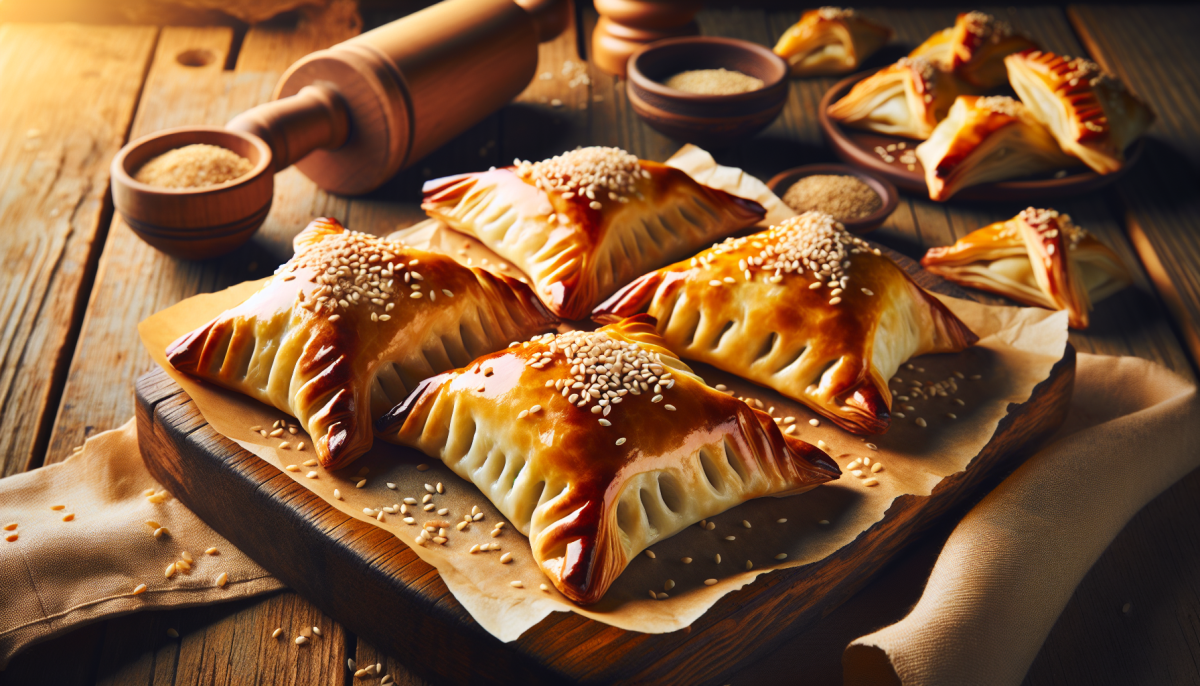
Potato bourekas are the pareve pillar of Sephardi baking — flaky pastry wrapped around a creamy, seasoned potato filling, baked until golden and shatteringly crisp. While cheese bourekas signal dairy and triangle shapes, potato bourekas are traditionally made in a half-moon or rectangle shape and can be eaten at any meal, making them perhaps the most versatile pastry in the Sephardi repertoire.
The filling is simple but must be done right: potatoes boiled until tender, mashed smooth, seasoned with salt, pepper, and a touch of nutmeg. Some traditions add sautéed onions; others keep it pure. The pastry can be homemade puff pastry, a simple oil-based dough, or store-bought puff pastry — we use a buttery-style pareve dough that bakes into layers without any dairy.
In Israel, potato bourekas are everywhere — bakeries, gas stations, bus stations, office kitchens. But homemade bourekas are in a different league entirely. The pastry is more delicate, the filling is seasoned with care, and the pride of serving your own bourekas at Shabbat kiddush is worth every minute of preparation.
What Makes This Special
- Pareve — No dairy, suitable for any meal including after meat.
- Flaky homemade dough — An oil-based pastry that bakes into shattering layers.
- Traditional shapes — Half-moon shape signals pareve/potato filling.
- Israeli national food — Bourekas are beloved across all Israeli communities.
Halachic Notes
- Kosher Classification: Pareve
- Hafrashat Challah: Uses ~500g flour. Separate challah without a bracha at this quantity.
- Checking Eggs: Each egg must be checked individually for blood spots before adding.
- Pas Yisroel: Homemade baked goods fulfill Pas Yisroel when a Jewish person is involved in baking.
- Brachot: Before eating: Mezonot (if snack) or HaMotzi (if meal). After: Al HaMichya or Birkat HaMazon.
Ingredients
Dough
| Ingredient | Grams | Volume | Baker’s % |
|---|---|---|---|
| All-purpose flour | 350 g | 2¾ cups | 100% |
| Fine sea salt | 5 g | 1 tsp | 1.4% |
| Vegetable oil | 90 g | 6 tbsp + 2 tsp | 26% |
| Cold water | 120 g | ½ cup | 34% |
| White vinegar | 5 g | 1 tsp | 1.4% |
Filling
| Ingredient | Grams | Volume | Baker’s % |
|---|---|---|---|
| Potatoes (peeled, cubed) | 600 g | 3 medium | — |
| Vegetable oil | 20 g | 1½ tbsp | — |
| Onion (finely diced) | 100 g | 1 medium | — |
| Fine sea salt | 5 g | 1 tsp | — |
| Black pepper | 2 g | ½ tsp | — |
| Nutmeg | 1 g | ¼ tsp | — |
Step-by-Step Instructions
Step 1: Make the Filling
Boil potatoes until tender, about 15 minutes. Drain and mash smooth. Sauté onion in oil until golden, about 8 minutes. Mix onion into mashed potato with salt, pepper, and nutmeg. Cool completely.
Step 2: Make the Dough
Mix flour and salt. Add oil, water, and vinegar. Stir until a dough forms. Knead 2–3 minutes until smooth. Do not overwork. Wrap and rest 30 minutes.
Step 3: Shape
Divide dough into 16 pieces. Roll each into a circle about 12 cm (5 in) in diameter. Place 2 tablespoons of filling on one half. Fold over to form a half-moon. Press edges with a fork to seal.
Step 4: Bake
Preheat oven to 190°C / 375°F. Place bourekas on parchment-lined baking sheets. Brush with egg wash. Sprinkle with sesame seeds. Bake 25–30 minutes until golden and flaky.
Storage & Make-Ahead
- Room temperature: Same day for crispiest results.
- Freezing: Freeze unbaked bourekas on a tray, then bag. Bake from frozen, adding 5 minutes to bake time.
- Reheating: 180°C oven for 8 minutes to re-crisp.
Troubleshooting
| Problem | Cause | Solution |
|---|---|---|
| Pastry not flaky | Dough overworked | Knead only 2–3 minutes; the vinegar helps keep it tender |
| Filling leaking | Too much filling or not sealed | Use 2 tbsp max; press edges firmly with fork |
| Soggy bottom | Filling too wet | Cool filling completely; drain any excess moisture from potatoes |
Frequently Asked Questions
Can I use store-bought puff pastry?
Yes. Use kosher pareve puff pastry sheets. Thaw, cut into circles, fill, and bake. The result is easier but slightly different from homemade dough.
Why half-moon shape?
In Sephardi tradition, the shape signals the filling. Half-moons = potato (pareve). Triangles = cheese (dairy). Rectangles vary by community. This helps guests identify fillings at a glance.
Can I fry instead of bake?
Yes, frying is also traditional. Deep-fry at 170°C / 340°F for 3–4 minutes until golden. Drain on paper towels.
What other pareve fillings work?
Mashed sweet potato, sautéed mushrooms, or eggplant are all traditional pareve boureka fillings.
🍞 Get a New Kosher Recipe Every Week
Join our baking community. One recipe, one tip, one story — delivered every Friday before Shabbat.
No spam. Just bread. Unsubscribe anytime.
You Might Also Enjoy
- Cheese Bourekas — Cheese-filled flaky pastries
- Spinach Bourekas — Green veggie-filled version
- Potato Knish — Ashkenazi potato pastry
- Burekas — Sephardic cheese pastries
- Sambusak — Iraqi filled pastries
Leave a Reply
You must be logged in to post a comment.