Search 150+ Kosher Recipes
Dairy-Free • Contains Gluten • No Eggs
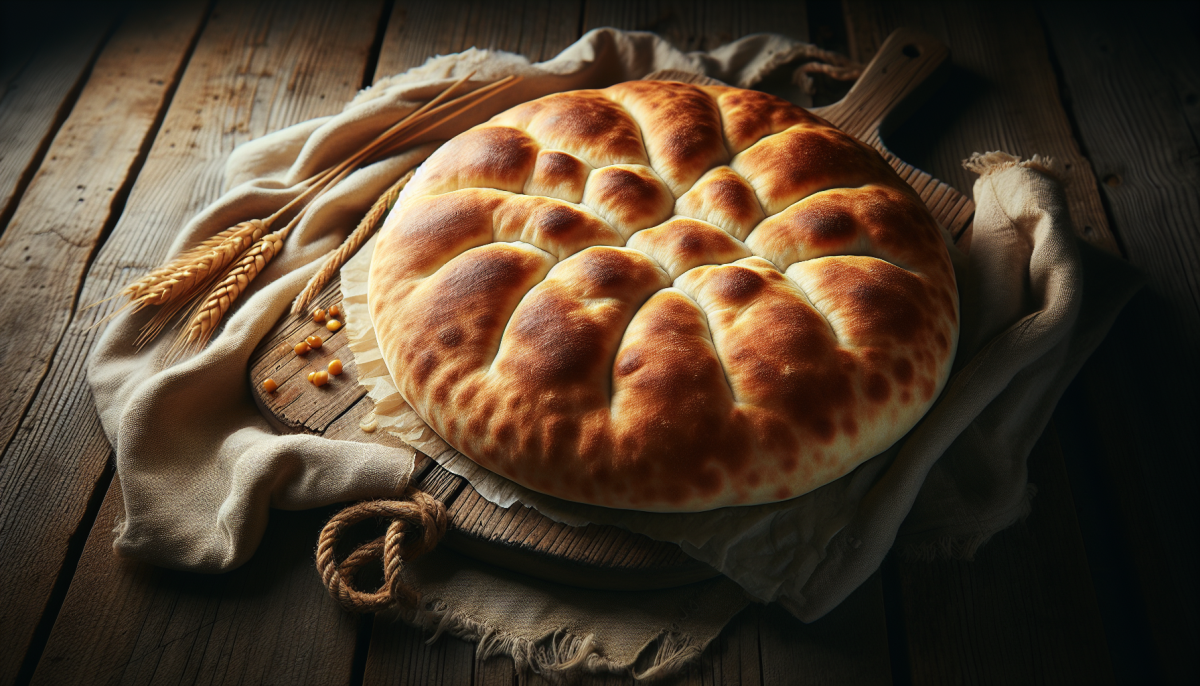
Sourdough pita takes the most ancient of flatbreads and elevates it with the magic of wild fermentation. The tangy complexity of a mature sourdough starter transforms humble pita into something extraordinary — bread with character, with depth, with the kind of flavor that commercial yeast simply cannot replicate.
Pita is arguably the oldest bread in the Jewish culinary tradition. Long before challah was braided, before bagels were boiled, flatbread was torn and shared at tables across the ancient Near East. By using a sourdough levain, you are baking with the same living culture that leavened bread in biblical times.
These pitas puff dramatically in a hot oven, creating the signature pocket that makes pita the world’s most perfect edible utensil. Fill them with falafel, shawarma, or sabich. Tear them into pieces for hummus. Or eat them warm from the oven with nothing but a drizzle of olive oil and a sprinkle of za’atar.
What Makes This Special
- Sourdough levain — 8-hour fermentation develops complex, tangy flavor impossible with commercial yeast.
- Dramatic puff — high oven heat creates steam pockets for perfect pita pockets every time.
- Simple ingredients — flour, water, salt, and starter. Nothing more.
- No eggs, no oil — naturally vegan and pareve in the simplest way.
Kosher Observance & Halachic Notes
Kosher Classification: Pareve
No dairy, no eggs. Naturally pareve and vegan.
Hafrashat Challah
This recipe uses approximately 600 g of flour, which is below the minimum shiur for hafrashat challah. No separation is required. If you combine multiple batches that together exceed 1,200 g of flour, separation would then apply.
Pas Yisroel
When a Jewish person lights the oven or contributes to the baking, this fulfills Pas Yisroel requirements, preferred or required by many communities.
Brachot (Blessings)
- Before eating: HaMotzi Lechem Min Ha’Aretz
- After eating: Birkat HaMazon
Ingredients
Levain (build 8–12 hours before)
| Ingredient | Grams | Volume | Baker’s % |
|---|---|---|---|
| Mature sourdough starter | 30 g | 2 Tbsp | — |
| Bread flour | 75 g | ½ cup + 1 Tbsp | — |
| Warm water | 75 g | ⅓ cup | — |
| Total Dough Weight | 180 g | — | — |
Dough
| Ingredient | Grams | Volume | Baker’s % |
|---|---|---|---|
| Bread flour | 500 g | 3¾ cups | 100% |
| Whole wheat flour | 100 g | ¾ cup | 20% |
| Fine sea salt | 12 g | 2 tsp | 2% |
| Ripe levain (from above) | 150 g | — | 25% |
| Warm water | 380 g | 1½ cups + 2 Tbsp | 63% |
| Olive oil | 15 g | 1 Tbsp | 2.5% |
| Total Dough Weight | ~1,157 g | — | — |
Target DDT: 27°C (80°F)
To calculate your water temperature:
Water Temp = (DDT × 3) − Flour Temp − Room Temp
Slightly warmer DDT promotes fermentation activity in sourdough.
The water should feel comfortably warm — never exceed 43°C (110°F) or you risk killing the yeast.
Step-by-Step Instructions
Step 1: Build the Levain (8–12 hours ahead)
Mix starter, flour, and water in a small jar. Cover loosely and let ferment at room temperature (24–26°C) for 8–12 hours. The levain is ready when it has doubled, smells pleasantly tangy, and passes the float test (a small spoonful floats in water).
Step 2: Mix the Dough
Combine both flours and salt in a large bowl. Add the ripe levain, water, and olive oil. Mix by hand or in a stand mixer on low for 3 minutes until a shaggy dough forms. Rest (autolyse) 20 minutes.
Step 3: Develop the Gluten
Knead on medium speed for 5 minutes, or perform 4 sets of stretch-and-folds at 30-minute intervals. The dough should become smooth and moderately elastic.
Step 4: Bulk Fermentation
Cover and ferment 4–5 hours at room temperature. The dough should increase by 50–75% and feel airy and jiggly.
Step 5: Divide and Shape
Turn out onto a lightly floured surface. Divide into 12 pieces (~96 g each). Shape each into a tight ball. Cover and rest 20 minutes.
Step 6: Roll
Preheat oven to its maximum temperature — 260°C (500°F) or higher — with a baking stone or inverted sheet pan inside. Roll each ball into a circle about 15–18 cm (6–7 inches) in diameter and 4 mm thick. Do not use too much flour — a light dusting is all you need.
Step 7: Bake
Slide 2–3 pitas onto the hot stone. Bake 3–4 minutes until they puff dramatically and develop light brown spots. Do not overbake — they should remain soft and pliable.
Step 8: Stack and Steam
Transfer to a clean towel and stack, wrapping loosely. The steam keeps the pitas soft and flexible as they cool.
Storage & Make-Ahead
- Room temperature: Best day-of. Store stacked in a bag for 1–2 days.
- Freezing: Cool completely, stack with parchment between each pita, freeze up to 3 months. Reheat in a hot skillet for 30 seconds per side.
- Dough: After bulk fermentation, refrigerate up to 24 hours. Bring to room temperature before dividing.
Troubleshooting
| Problem | Likely Cause | Solution |
|---|---|---|
| Pita doesn’t puff | Oven not hot enough, dough too thick, or rolled unevenly | Maximize oven heat. Roll to even 4 mm thickness. Let the stone preheat at least 30 minutes. |
| Pita is tough and chewy | Overbaked or too much flour | Bake only 3–4 minutes. Use minimal flour when rolling. |
| Dough is too sour | Over-fermented | Reduce bulk fermentation time or use less levain. A young, mild levain produces less acidity. |
| Uneven browning | Hot spots in oven | Rotate pitas during baking. Ensure stone is level and preheated evenly. |
Frequently Asked Questions
Can I use a skillet instead of the oven?
Yes. Heat a cast-iron skillet over high heat until smoking. Cook each pita 1–2 minutes per side. They may not puff as dramatically but will still be delicious with beautiful char spots.
Do I need a sourdough starter?
Yes, this recipe requires an active sourdough starter. If you do not have one, you can create one in about 7 days using just flour and water, or obtain some from a fellow baker.
Can I use all white flour?
Yes. The whole wheat adds flavor and structure but is optional. Use 600 g bread flour total if omitting.
How do I maintain the pocket after baking?
Stack the hot pitas immediately and wrap in a towel. The trapped steam keeps them pliable. Once cool, the pocket is set and will stay open when you cut the pita in half.
🍞 Get a New Kosher Recipe Every Week
Join our baking community. One recipe, one tip, one story — delivered every Friday before Shabbat.
No spam. Just bread. Unsubscribe anytime.
You Might Also Enjoy
- Pita Bread — The classic yeasted version
- Sourdough Boule — Crusty round artisan loaf
- Sourdough Challah — Braided naturally leavened
- Laffa — Soft Iraqi flatbread
- Za’atar Manoushe — Herbed Lebanese flatbread
Ready to Bake?
Bookmark this recipe and make it yours this Shabbat.
Save This Recipe
Try our Pita Bread Next →
Tag us @kosherbreadpro on Instagram. We answer every comment.
Leave a Reply
You must be logged in to post a comment.