Search 150+ Kosher Recipes
Dairy-Free • Contains Eggs • Contains Gluten
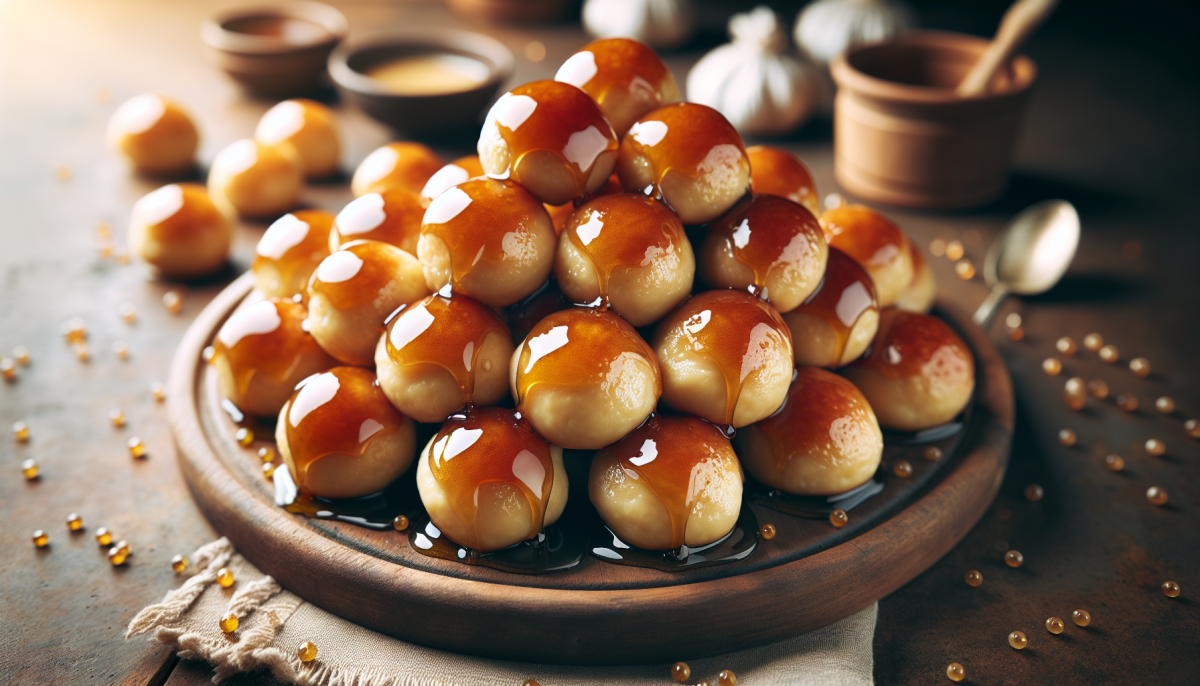
Teiglach are the honey-cooked dough balls that crown the Rosh Hashanah table. Small nuggets of simple egg dough, simmered in a bubbling honey syrup until they turn golden and caramelized, then tumbled with nuts and sometimes ginger. They are sticky, sweet, crunchy, and utterly addictive — the original Jewish candy.
The name comes from the Yiddish word for “little pieces of dough,” and teiglach have been part of Ashkenazi Rosh Hashanah celebrations for centuries. The honey syrup connects them to the universal Jewish wish for a sweet new year, while their golden color evokes prosperity and blessing.
Making teiglach is a communal activity. The dough is simple enough for children to roll, and the honey cooking process fills the kitchen with an intoxicating aroma. They are traditionally piled into a towering mound, glistening with honey, nuts scattered throughout like jewels.
What Makes This Special
- Cooked in honey — not baked, not fried, but simmered in honey syrup for deep, caramelized flavor.
- Rosh Hashanah tradition — a sweet for a sweet new year, pareve for any meal.
- Simple dough — flour, eggs, oil, and a pinch of salt. That is all.
- Incredible keeping quality — the honey preserves them for weeks.
Kosher Observance & Halachic Notes
Kosher Classification: Pareve
No dairy. Fully pareve, perfect for after a meat Rosh Hashanah dinner.
Hafrashat Challah
This recipe uses approximately 300 g of flour, which is below the minimum shiur for hafrashat challah. No separation is required. If you combine multiple batches that together exceed 1,200 g of flour, separation would then apply.
Checking Eggs for Blood Spots
Each egg should be cracked individually into a clear glass and inspected before adding to the dough. If a blood spot is found, discard that egg entirely.
Pas Yisroel
When a Jewish person lights the oven or contributes to the baking, this fulfills Pas Yisroel requirements, preferred or required by many communities.
Brachot (Blessings)
- Before eating: Mezonot
- After eating: Al HaMichya
Rosh Hashanah Significance
Teiglach are a traditional siman (sign) for a sweet new year, served at the Rosh Hashanah table alongside apples and honey.
Ingredients
Dough
| Ingredient | Grams | Volume | Baker’s % |
|---|---|---|---|
| All-purpose flour | 300 g | 2¼ cups | 100% |
| Large eggs | 150 g | 3 large | 50% |
| Neutral oil | 30 g | 2 Tbsp | 10% |
| Fine sea salt | 2 g | ¼ tsp | 0.7% |
| Baking powder | 3 g | ¾ tsp | 1% |
| Ground ginger | 2 g | ½ tsp | 0.7% |
| Total Dough Weight | ~487 g | — | — |
Honey Syrup
- 500 g (1½ cups) honey
- 200 g (¾ cup + 2 Tbsp) sugar
- 1 tsp ground ginger
- ½ tsp ground cinnamon
Add-ins
- 100 g walnuts or pecans, roughly chopped
- Optional: candied cherries, dried ginger pieces
Step-by-Step Instructions
Step 1: Make the Dough
Beat eggs with oil and salt. Sift flour, baking powder, and ginger together. Stir into the egg mixture until a soft, smooth dough forms. It should not be sticky. If it is, add flour 1 tablespoon at a time. Let rest 10 minutes.
Step 2: Shape the Dough Balls
Divide dough into small pieces. Roll each into a rope about 1 cm thick, then cut into 1.5 cm pieces. You should have about 60 small nuggets. They will expand during cooking, so keep them small.
Step 3: Cook in Honey
In a large, heavy-bottomed pot (at least 4 liters), combine honey, sugar, ginger, and cinnamon. Bring to a gentle simmer over medium-low heat, stirring until sugar dissolves. Important: The syrup must only gently bubble, never boil vigorously, or it will burn.
Carefully drop dough pieces into the simmering syrup, a few at a time. Stir gently to prevent sticking. Once all pieces are added, reduce heat to low. Cover and cook 45–60 minutes, stirring gently every 10–15 minutes. The teiglach are done when they are deep golden brown, firm, and the syrup has thickened significantly.
Step 4: Add Nuts
In the final 5 minutes, fold in the chopped nuts.
Step 5: Cool and Serve
Wet a large piece of parchment paper or a wooden board. Pour the teiglach onto the surface, spreading gently with a wet spatula. Let cool completely. The honey will set into a chewy, candy-like coating. Break into clusters or individual pieces to serve.
Storage & Make-Ahead
- Room temperature: 2–3 weeks in an airtight container. The honey acts as a natural preservative.
- Gifting: Teiglach make wonderful Rosh Hashanah gifts. Pack in cellophane bags or decorative tins.
- Do not refrigerate: Cold temperatures make the honey coating too hard.
Troubleshooting
| Problem | Likely Cause | Solution |
|---|---|---|
| Teiglach are burnt | Syrup was too hot | Keep heat LOW. The syrup should barely simmer, never boil vigorously. Stir regularly. |
| Teiglach are soft and pale | Not cooked long enough | Cook the full 45–60 minutes. They should be deep golden, not beige. |
| Stuck together in one mass | Not spread out while warm | Work quickly to spread on wet parchment before the honey sets. |
| Syrup crystallized | Sugar not fully dissolved | Stir until all sugar dissolves before adding dough. Avoid stirring the sides of the pot. |
Frequently Asked Questions
Can I use less honey?
The honey is not just flavoring — it is the cooking medium. You need enough to submerge the dough pieces. Do not reduce it below 400 g. The honey is reusable for other cooking after straining.
Why do teiglach need to cook so long?
The long, gentle cooking allows the dough to absorb honey and caramelize slowly. Rushing with higher heat burns the outside while leaving the inside raw. Patience is essential.
What nuts are traditional?
Walnuts and pecans are most traditional. Some versions use blanched almonds or hazelnuts. Any nut works. Some modern versions add dried cranberries or candied ginger.
Are teiglach the same as struffoli?
They are similar! Italian struffoli (fried dough balls in honey) likely share a common ancestor. Teiglach are cooked (simmered) in honey rather than fried first, giving them a different texture.
🍞 Get a New Kosher Recipe Every Week
Join our baking community. One recipe, one tip, one story — delivered every Friday before Shabbat.
No spam. Just bread. Unsubscribe anytime.
You Might Also Enjoy
- Honey Cake — Classic honey-soaked cake
- Honey Challah — Sweet holiday bread
- Sufganiyot — Fried Hanukkah doughnuts
- Challah Doughnuts — Fried challah treats
- Mandelbrot — Crunchy Jewish biscotti
Ready to Bake?
Bookmark this recipe and make it yours this Shabbat.
Save This Recipe
Try our Honey Cake Next →
Tag us @kosherbreadpro on Instagram. We answer every comment.
Leave a Reply
You must be logged in to post a comment.