
Bagel Bracha Guide — Hamotzi or Mezonot?
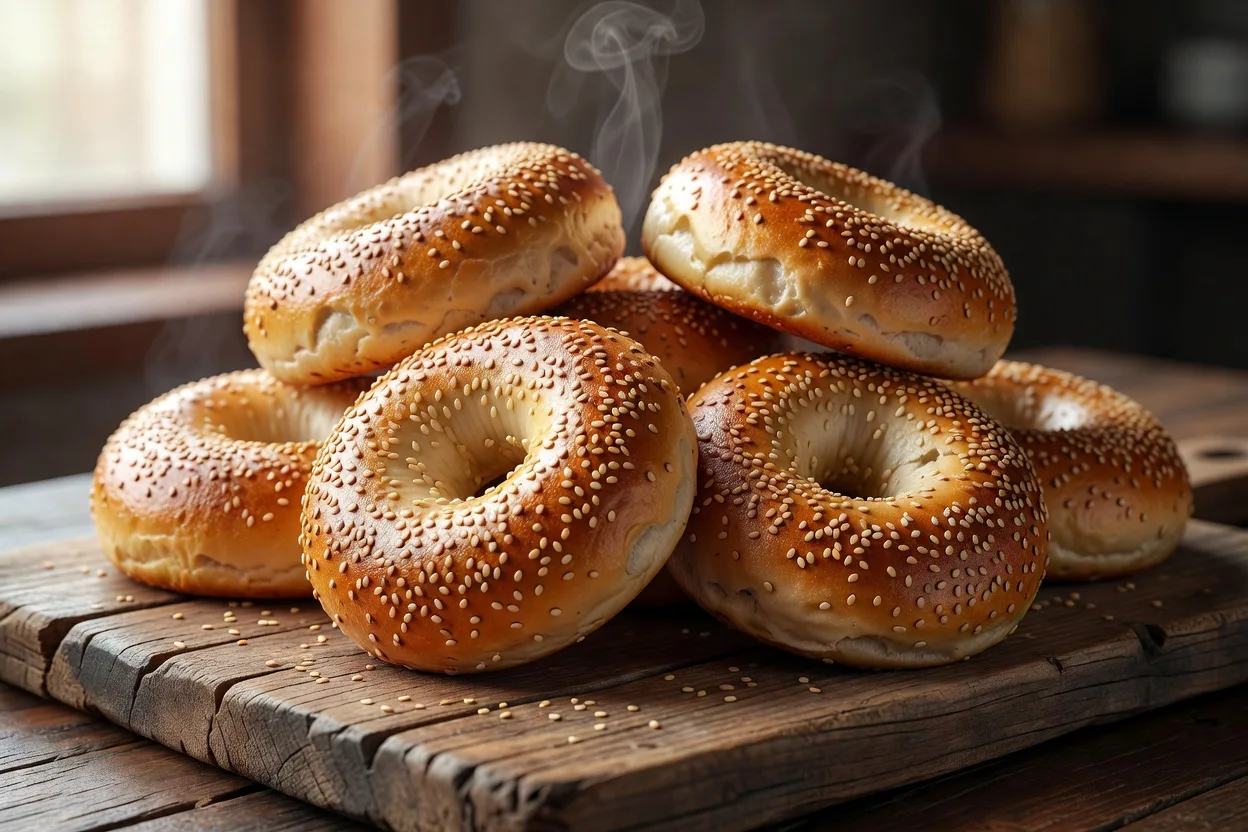
PAREVE
Quick answer: The bracha on a bagel is hamotzi (המוציא לחם מן הארץ) for virtually all authorities. Boiling before baking does not change the bread’s classification — once the final form is baked bread, the baking determines the bracha. The full reasoning is below.
The Question: Does Boiling Change the Bracha?
Bagels are unusual in the world of bread: the raw dough rings are boiled in water (or water with malt, honey, or baking soda) for 30–90 seconds before going into the oven. This two-step process raises a genuine halachic question: does the boiling step transform the dough into a bishul (cooked food), making the bracha mezonot or shehakol, rather than hamotzi?
The short answer across virtually all poskim is no — the bracha remains hamotzi. Here is why.
The Halachic Analysis
1. The Determining Stage is the Final Preparation
The rule for brachot on foods that undergo multiple cooking stages is that we follow the ikar (primary, defining) preparation. For a bagel, the boiling is a brief pre-treatment that gelatinises the outer starch and sets the crust. It does not cook the dough all the way through. The final and defining step is baking in an oven — and baked bread is the paradigm of pat (bread) subject to hamotzi.
This principle is drawn from the Shulchan Aruch (Orach Chaim 168:13), which rules that bread that was first baked and then cooked retains its hamotzi status because the baking is the primary act of preparation. The inverse — boiled then baked — follows the same logic: the baking is the act that produces recognisable bread.
2. The Shibolet HaLeket Precedent
The Rishonim discuss a very similar food: lachuch or cooked-then-baked pancakes. The Shibolet HaLeket (13th century, Italy) rules that if a dough product ends in baking, the final form is bread, and the bracha follows accordingly. This is the baseline that later authorities apply to bagels.
3. The Form Argument
A bagel looks, smells, and functions like bread. It is served in place of bread, holds sandwich fillings, and is eaten as a substantial food at meals. Even if one could argue the boiling introduces a bishul element, the Zocher Yosef and later the Aruch HaShulchan rule that whenever a food has the full tzurat ha-pat (form of bread) after baking, hamotzi applies.
4. Enough Bread to Constitute a Meal
The bracha hamotzi also applies when you eat enough bread to constitute a kevi’at se’udah (establishing a meal). A bagel typically weighs 80–120 g — well above the minimum thresholds discussed by most poskim (around 55 g baked / ke-beitzah). Eating a single bagel at a sit-down meal fully obligates hamotzi, washing (netilat yadaim), and birkat hamazon.
Sephardic vs. Ashkenazi Variations
This is one halachic question where Sephardic and Ashkenazi practice align:
- Ashkenazi poskim (Mishnah Berurah 168, Igrot Moshe OC 3:33): Hamotzi. The brief boil before baking is not sufficient to reclassify the product.
- Sephardic poskim (Yalkut Yosef, Hazon Ish): Also hamotzi, with the same reasoning — baking is the final and defining act.
- Yemenite practice: No unique ruling known; follows the general consensus.
There is a minority opinion (cited in Piskei Teshuvot) that if the bagel were boiled until fully cooked (like a dumpling cooked all the way through) and then just dried in the oven rather than baked, the bracha might shift. This scenario does not apply to any commercially produced bagel, which is never fully cooked by boiling alone.
Practical Ruling: What to Do
| Situation | Bracha Before | Bracha After |
|---|---|---|
| Eating a bagel as part of a meal | Hamotzi (after washing) | Birkat Hamazon |
| Eating a small piece of bagel as a snack (less than ke-beitzah) | Mezonot | Al Hamichya |
| Eating enough bagel to establish a meal (typical: 1 full bagel) | Hamotzi (after washing) | Birkat Hamazon |
| Bagel chips / very thin slices eaten as a snack | Mezonot (if snack quantity) | Al Hamichya |
Note on washing: Even if you eat only a small amount of bagel, if you plan to eat the bagel as your bread course at a meal you have already established with hamotzi, you do not need to re-wash — the original netilat yadaim covers the entire meal.
What About Shabbat and Yom Tov?
Bagels make excellent Shabbat rolls. When serving bagels at Shabbat lunch or Friday night dinner:
- Use full-size bagels (not mini bagels or bagel chips) to ensure you are serving bread with the proper form.
- Two lechem mishneh (two whole loaves) are required. Two bagels fulfill this — they are whole, complete baked items.
- Cover the bagels during Kiddush as you would challah.
- Bagels baked before Shabbat and reheated are perfectly permitted. Those baked by a non-Jew raise Pas Akum / Pas Palter considerations — check your rabbi’s ruling or use the Kosher Challah recipe for guaranteed Pas Yisroel.
Frequently Asked Questions
Is a bagel that’s boiled then baked still hamotzi?
Yes. In halacha the bracha follows the final stage of preparation: a bagel is shaped from bread dough, briefly boiled, and then baked — so it is fully bread, and the bracha is HaMotzi, never Mezonot. The short boil only gelatinises the crust and sets the ring shape; it does not turn the dough into a “cooked” food the way boiling pasta does. Wash (netilat yadaim) and recite HaMotzi.
Is the bracha on a bagel hamotzi or mezonot?
Hamotzi — for all major Ashkenazi and Sephardic authorities. The bagel is baked bread whose final form is produced by baking. The brief boiling step before baking does not reclassify it as a cooked food. You must wash hands (netilat yadaim) before eating a bagel as part of a meal.
Why is a bagel boiled before baking?
Boiling gelatinises the outer starch, creating the characteristic shiny crust and dense, chewy crumb. It also sets the ring shape so it holds during baking. Traditional New York bagels are boiled for 30–60 seconds; Montreal-style bagels are boiled longer in honey water for extra sweetness. The technique produces a result impossible to achieve by baking alone.
Does the bracha change if you eat only a small piece of bagel?
Yes. If you eat less than a ke-beitzah (roughly 55 ml volume, which corresponds to roughly 27–55 g depending on the authority) and you are not eating it as part of a bread meal, the bracha is mezonot and the after-bracha is al hamichya. If you eat a full bagel, even as a snack sitting at a table, most poskim recommend washing and saying hamotzi because of the quantity.
What is the bracha for bagel chips?
Bagel chips are typically mezonot when eaten as a snack. They are made from sliced bagels that are re-baked until crispy — the form is no longer that of a whole bread item. Eat them by the bowlful without washing.
Do I need to separate challah (hafrashat challah) from bagel dough?
Yes, if you bake a full batch of bagels at home and the dough weight exceeds the shiur. Most home recipes using 500–800 g of flour fall in the range requiring hafrashat challah without a bracha. Dough using more than approximately 1,666 g of flour (volume equivalent: ~10 cups) requires separation with a bracha. See our Kosher Challah recipe for the full hafrashat challah guide.
Ready to Bake Your Own Bagels?
Now that you know the bracha, make them at home — boiled, baked, and fully kosher.
