Kosher for Passover
There is one recipe that has conquered every Jewish household in America, from the most meticulous kosher kitchen to the most casual Pesach observer, and it goes by a name that tells you everything: matzo crack. Not matzo toffee. Not chocolate-covered matzo. Crack. Because once you make it, once you taste that first shard of caramelized toffee fused to crisp matzo and cloaked in dark chocolate, you will understand that the name is not hyperbole—it is a clinical description.
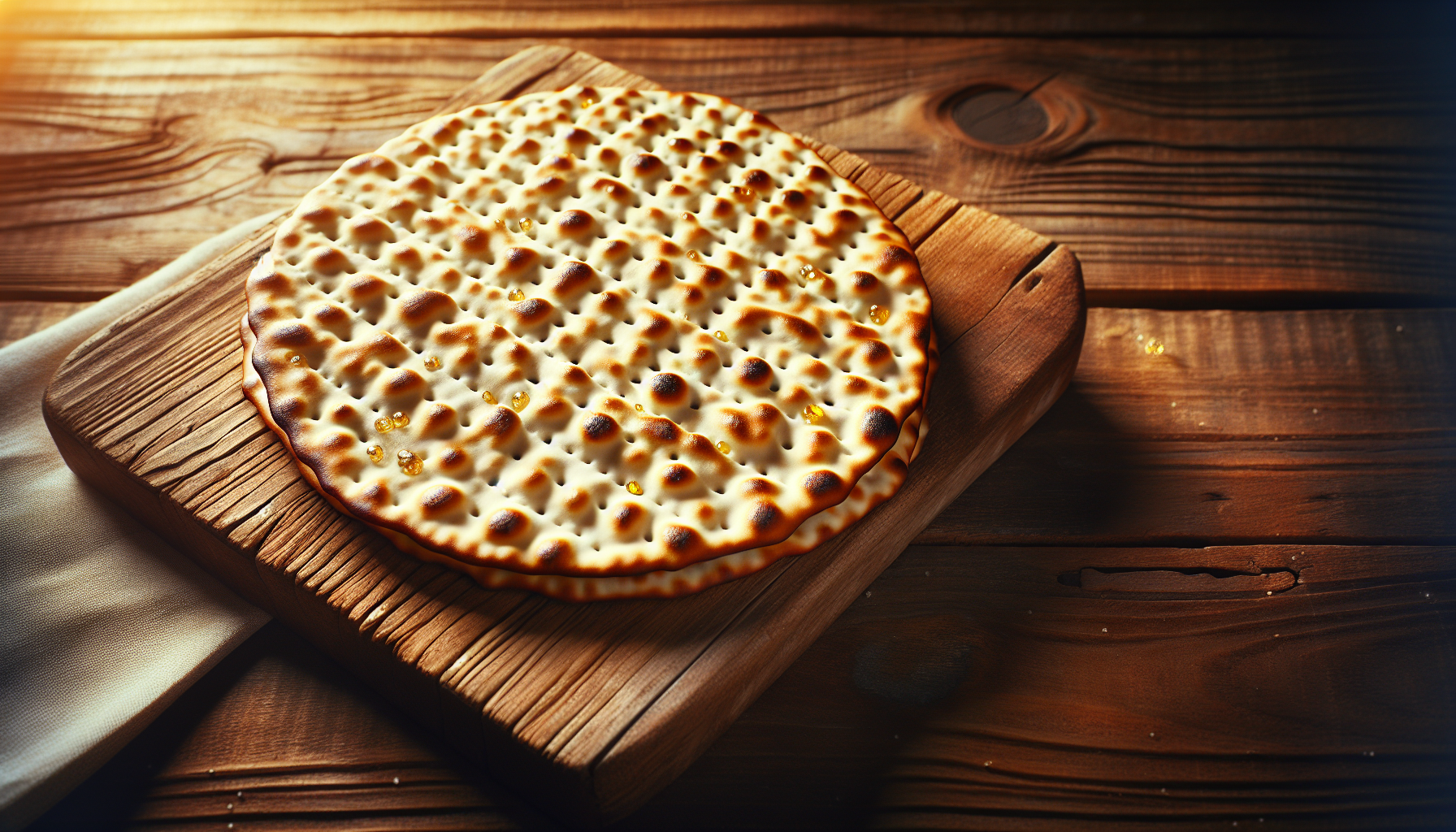
The genius of matzo crack is its simplicity. You take the most humble ingredient of Pesach—plain matzo, the bread of affliction—and transform it into something so luxurious, so addictive, that it vanishes from the table faster than any elaborate dessert you spent hours preparing. Four sheets of matzo. A quick toffee made from butter and brown sugar. A layer of melted chocolate. A scattering of sea salt. That is all. The oven does the rest, turning matzo into a candy that shatters and melts and makes people close their eyes when they eat it.
This recipe has been passed around Jewish communities for decades, but it became a viral sensation in the early 2000s when food blogs discovered what bubbies already knew: the Maillard reaction between caramelized sugar and matzo creates something that transcends both of its parts. The toffee layer bubbles and darkens, bonding to the matzo and turning its bland cracker surface into something that tastes like the best English toffee you have ever had, but better, because the matzo gives it an ethereal crunch that no other base can match.
I am writing this as a dairy recipe using butter and milk chocolate, because butter makes the finest toffee—richer, more complex, with deeper caramel notes. But I have included a pareve variation below for those who want to serve it after a meat meal, and I promise you the pareve version is nearly as magnificent.
What Makes This Recipe Special
- Four ingredients, infinite addiction — Matzo, butter, brown sugar, chocolate. Nothing complicated, nothing fussy, yet the result is more compelling than desserts with twenty components
- Foolproof toffee technique — A full rolling boil for exactly 3 minutes creates the perfect caramel consistency every time, no candy thermometer required
- Sweet-salty perfection — The interplay of buttery toffee, bittersweet chocolate, and flaky sea salt hits every pleasure receptor at once
- Makes ahead beautifully — Keeps for over a week and actually improves as the toffee fully sets, making it the ideal early Pesach prep project
- Endlessly customizable — Once you master the base recipe, add toasted nuts, dried fruit, coconut, or candy on top for dozens of variations
Halachic Notes
- Kosher Classification: Dairy as written (butter and milk chocolate). See pareve variation below using margarine and pareve chocolate for serving after a meat meal.
- Chametz & Kitniyot: This recipe contains no chametz beyond the matzo itself, and no kitniyot. Ensure chocolate is free of soy lecithin (kitniyot for Ashkenazi practice)—look for sunflower lecithin or lecithin-free chocolate with a KFP hechsher.
- Gebrokts Consideration: This recipe is not technically gebrokts (matzo mixed with water), as the matzo is combined only with fat and sugar, not water or water-based liquids. However, some families who are strict about gebrokts may avoid any matzo-based confection as a chumra. Follow your family’s minhag.
- Matzo: Use plain, unflavored matzo with a reliable Kosher for Passover hechsher. Shmura matzo works but is thinner and more fragile—regular KFP machine matzo is ideal here.
- Brown Sugar: Must carry KFP certification. Some brands process on shared equipment or use molasses derived from chametz sources.
- Hafrashat Challah: Not required—no dough is being made in this recipe.
- Brachot: Mezonot before (the matzo base is the primary component, and it is being eaten as a confection, not as bread for the mitzvah of matzo). Al Ha’michya after. Note: if eaten during the Pesach Seder as part of the meal, brachot follow Seder protocol.
Ingredients
Toffee Base
| Ingredient | Grams | Volume |
|---|---|---|
| Plain matzo sheets (KFP certified) | 120g | 4–6 sheets |
| Unsalted butter | 225g | 1 cup (2 sticks) |
| Packed dark brown sugar (KFP certified) | 220g | 1 cup, firmly packed |
| Fine sea salt | 2g | ¼ tsp |
| Pure vanilla extract (KFP certified) | 5g | 1 tsp |
Chocolate Topping
| Ingredient | Grams | Volume |
|---|---|---|
| Semisweet or milk chocolate chips (KFP certified) | 300g | about 2 cups |
| Flaky sea salt (Maldon or similar) | 3g | ½ tsp |
Optional Toppings (choose one or mix)
| Topping | Amount |
|---|---|
| Chopped toasted almonds or pecans | 60g (½ cup) |
| Shredded coconut (toasted) | 30g (¼ cup) |
| Dried cranberries or cherries | 40g (¼ cup) |
| Crushed freeze-dried raspberries | 15g (2 tbsp) |
Instructions
Step 1: Prepare the Pan
Preheat oven to 175°C (350°F). Line a large rimmed baking sheet (about 30×40 cm / 12×17 inches) with aluminum foil, making sure to cover the sides completely. Place a sheet of parchment paper over the foil. The foil prevents toffee leaks; the parchment prevents sticking. This double-lining is non-negotiable—skip it and you will be chiseling caramel off your pan for days.
Step 2: Arrange the Matzo
Line the prepared baking sheet with matzo in a single layer. Break pieces to fit as needed, filling the pan edge-to-edge with no large gaps. It is perfectly fine—in fact, expected—to snap matzo into irregular shapes to fill corners and edges. A tight, snug layer ensures even toffee coverage. Set aside.
Step 3: Make the Toffee
In a medium heavy-bottomed saucepan, combine the butter and brown sugar over medium heat. Stir constantly with a heatproof spatula or wooden spoon until the butter melts completely and the mixture is smooth. Once fully combined, increase the heat to medium-high and bring to a full, rolling boil—you want large bubbles breaking across the entire surface, not just around the edges.
Step 4: Boil the Toffee
Once at a full boil, stir constantly and boil for exactly 3 minutes. The mixture will thicken, darken slightly, and begin to pull away from the sides of the pan. It will smell deeply of caramel. Do not walk away during this step—toffee can burn in seconds. Remove from heat, add the salt and vanilla extract (careful—it will bubble vigorously), and stir to combine.
Step 5: Pour Toffee over Matzo
Immediately pour the hot toffee over the matzo layer, working quickly before it begins to set. Use an offset spatula or the back of a spoon to spread the toffee evenly, making sure to cover every piece of matzo. Pay special attention to corners and edges. The toffee does not need to be perfectly smooth, but every piece of matzo should have a coating.
Step 6: Bake
Place the pan in the preheated oven and bake for 12–15 minutes. The toffee will bubble vigorously across the entire surface and darken to a deep amber. Watch carefully after 10 minutes—the difference between perfectly caramelized and burnt is about 90 seconds. If you see any very dark spots forming, the toffee is done. Remove from the oven immediately.
Step 7: Add Chocolate
Working quickly, scatter the chocolate chips evenly over the hot toffee surface. Wait 3–5 minutes for the residual heat to melt the chocolate. You will see the chips begin to soften and turn glossy. Using an offset spatula, spread the melted chocolate into a smooth, even layer covering the entire surface. If some chips haven’t fully melted, the toffee has cooled slightly—return the pan to the turned-off but still-warm oven for 1–2 minutes.
Step 8: Add Toppings
While the chocolate is still warm and glossy, sprinkle generously with flaky sea salt. If using optional toppings—chopped nuts, coconut, dried fruit, or crushed freeze-dried berries—scatter them over the chocolate now, pressing gently so they adhere. The contrast of crunchy salt and nuts against smooth chocolate is what elevates this from good to extraordinary.
Step 9: Chill and Set
Allow the pan to cool at room temperature for 15 minutes, then transfer to the refrigerator. Chill for at least 30 minutes, until the chocolate is completely firm and the toffee has hardened. For the cleanest break, chill for a full hour.
Step 10: Break into Pieces
Remove the matzo toffee from the refrigerator. Peel away the parchment paper and foil. Break or cut into irregular pieces, about 24 shards of varying sizes. The irregular, rustic shape is part of the charm—do not try to cut perfect squares. Store immediately in an airtight container.
Storage & Make-Ahead
- Room temperature: Up to 1 week in an airtight container in a cool, dry place. Avoid warm environments—the chocolate will soften and the toffee may become sticky above 22°C (72°F).
- Refrigerated: Up to 2 weeks in an airtight container with parchment between layers. The toffee stays crunchier when chilled.
- Frozen: Up to 2 months. Freeze in a single layer on a sheet pan until solid, then stack with parchment between layers in a freezer-safe container. Thaw in the refrigerator.
- Make-ahead for Pesach: This is one of the first things to make during Pesach prep. Prepare up to 10 days ahead and store refrigerated. It travels beautifully in tins for gifts and makes an excellent addition to shalach manot or mishloach manot-style Pesach gift packages.
Troubleshooting
| Problem | Cause | Solution |
|---|---|---|
| Toffee is chewy, not crisp | Underbaked or not boiled long enough | Boil the butter-sugar mixture for a full 3 minutes at a rolling boil; bake until deep amber and bubbling vigorously |
| Toffee tastes burnt | Overbaked or toffee boiled too long | Watch carefully after 10 minutes of baking. Remove at the first sign of very dark spots. Boil toffee for exactly 3 minutes, not longer |
| Toffee separated (oily layer on top) | Butter and sugar emulsion broke during boiling | Stir constantly and vigorously during the 3-minute boil. Use medium-high heat, not high. If separation occurs, remove from heat and whisk vigorously to re-emulsify |
| Chocolate won’t melt or spread evenly | Toffee cooled too much before adding chips | Add chocolate immediately after removing from oven. If chips don’t melt, return pan to turned-off warm oven for 1–2 minutes |
| Chocolate has white streaks (bloom) | Temperature fluctuation during storage | Store at a consistent temperature. Bloom is cosmetic only—the toffee is still safe and delicious |
| Matzo soggy underneath | Toffee did not fully cover the matzo, or underbaked | Spread toffee edge-to-edge. Bake until the entire surface bubbles evenly, at least 12 minutes |
| Pieces stick to foil | Parchment paper was not used over the foil | Always use foil plus parchment. If stuck, place in freezer for 20 minutes and peel while very cold |
Frequently Asked Questions
Is matzo toffee considered gebrokts?
Technically, no. Gebrokts refers specifically to matzo that comes into contact with water or water-based liquids, which some Ashkenazi families avoid during Pesach. This recipe combines matzo only with fat (butter or margarine) and sugar—no water is involved. However, some families who are very strict about gebrokts extend the chumra to any matzo preparation beyond eating it plain. If your family follows this stricter interpretation, consult your rav. For most families, matzo toffee is perfectly acceptable.
Can I use shmura matzo?
You can, but regular KFP machine matzo works better here. Shmura matzo is thinner and more irregular, which means the toffee coverage is less even and the pieces are more fragile. Regular machine matzo has a consistent thickness that produces a more uniform result with a satisfying snap. Save the shmura for the Seder and use regular matzo for your crack.
Why butter instead of margarine?
Butter produces a toffee with deeper caramel flavor, richer mouthfeel, and a more satisfying snap when cooled. The milk solids in butter participate in the Maillard reaction during caramelization, creating hundreds of flavor compounds that margarine simply cannot replicate. That said, the pareve version with margarine is still excellent—the brown sugar and vanilla do heavy lifting. If you need pareve for a meat meal, do not hesitate to use margarine.
Can I make this with white chocolate?
Absolutely. White chocolate creates a beautiful contrast against the amber toffee and looks stunning with dried cranberries or freeze-dried raspberries on top. Ensure the white chocolate carries a KFP hechsher and contains cocoa butter (not just vegetable oil). You can also do half dark, half white for a dramatic two-tone effect—spread dark chocolate on one half and white on the other before adding toppings.
How do I prevent the toffee from leaking off the pan?
The foil-and-parchment double lining is your insurance policy. Press the foil tightly up the sides of the baking sheet, creating a sealed edge. If your baking sheet has low sides, use a half sheet pan (with 2.5 cm / 1 inch sides) instead. A flat cookie sheet without raised edges is a recipe for a very messy oven. Also, arrange the matzo snugly—gaps allow toffee to pool and potentially overflow.
Chag Pesach Sameach!
This matzo crack is proof that the simplest recipes are often the most irresistible. Make a double batch—you will need it.