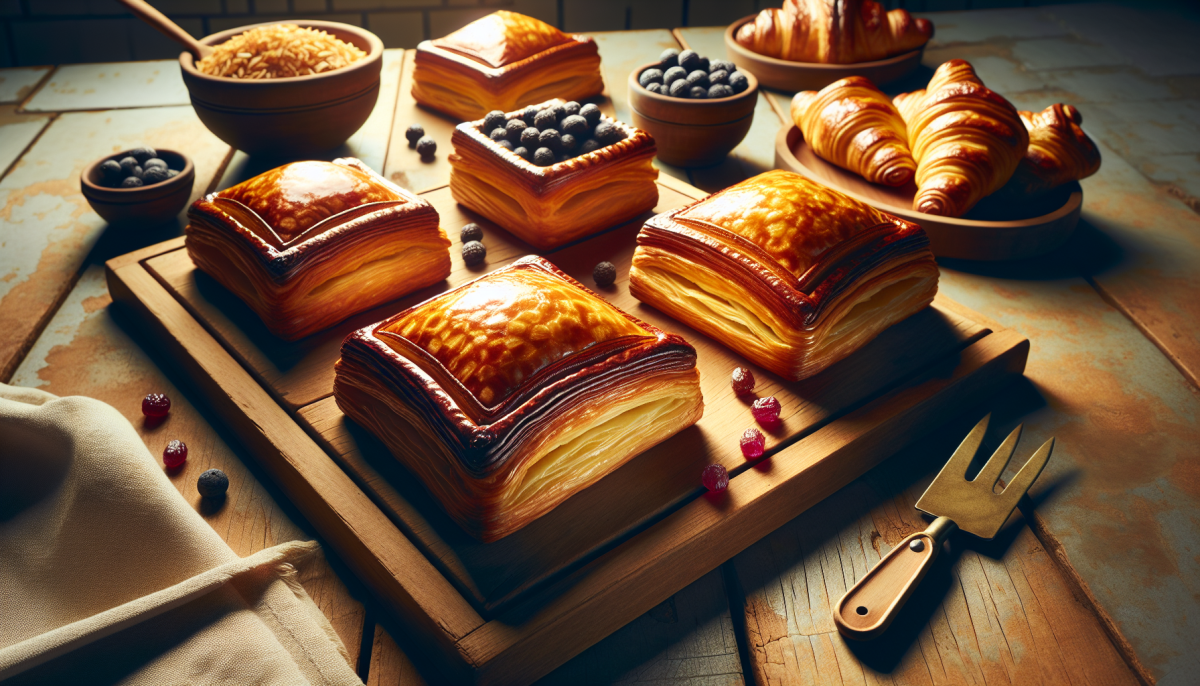
Flodni is the crown jewel of Hungarian Jewish pastry—a magnificent layered creation that tells the story of Budapest’s once-thriving Jewish bakery culture in every bite. This architectural marvel stacks four distinct fillings between five layers of tender, flaky pastry: ground poppy seed, crushed walnut, spiced apple, and rich plum jam, each layer a distinct flavor and texture that harmonizes into something far greater than the sum of its parts.
The origins of flodni trace back to the Jewish quarter of Budapest, where bakeries along Kazinczy Street produced these elaborate pastries for Shabbat, holidays, and celebrations. Each filling carries symbolic weight—the apple for Rosh Hashanah sweetness, the poppy seed for Purim, the walnut for abundance, and the plum jam (lekvar) for the preserved flavors of harvest. Together, they represent the full cycle of the Jewish year in a single confection.
Making flodni is an act of devotion. The process requires patience and care—preparing four separate fillings, rolling out five layers of dough, and assembling everything with precision. But the reward is extraordinary: a pastry that slices into perfect layers of contrasting colors and textures, each bite offering the earthy warmth of poppy seeds, the buttery crunch of walnuts, the bright acidity of apples, and the deep sweetness of plum. It’s the kind of baking that connects you to generations of Hungarian Jewish bakers who understood that the most beautiful things take time.
What Makes This Recipe Special
- Four distinct fillings — Each layer is prepared separately, creating a stunning cross-section when sliced
- Pareve pastry dough — Uses oil instead of butter, making this suitable for any meal while maintaining flaky tenderness
- Authentic Hungarian technique — Follows the traditional Budapest bakery method with properly cooked fillings that won’t weep or separate
- Make-ahead friendly — Improves overnight as flavors meld; keeps beautifully for days
- Cultural preservation — Maintains a recipe tradition from Budapest’s historic Jewish quarter
Halachic Notes
- Kosher Classification: Pareve — contains no dairy or meat ingredients. Eggs must be checked for blood spots before use.
- Hafrashat Challah: This recipe uses approximately 600g of flour, which is below the shiur for separating challah. If doubling, separate challah without a bracha at 1.2 kg of flour, or with the bracha "ברוך אתה ה׳ אלקינו מלך העולם אשר קדשנו במצותיו וצונו להפריש חלה" at 2.25 kg.
- Pas Yisroel: When a Jewish person lights the oven or contributes to the baking process, this pastry fulfills the Pas Yisroel requirement.
- Brachot: Borei minei mezonot before; Al hamichya after (when eating a normal portion as a snack).
Ingredients
Pastry Dough (5 layers)
| Ingredient | Grams | Volume | Baker’s % |
|---|---|---|---|
| All-purpose flour | 600g | 4¾ cups | 100% |
| Granulated sugar | 80g | ⅓ cup + 1 Tbsp | 13.3% |
| Fine sea salt | 5g | 1 tsp | 0.8% |
| Neutral oil | 120g | ½ cup | 20% |
| Large eggs | 100g (2 large) | 2 eggs | 16.7% |
| Cold water | 80g | ⅓ cup | 13.3% |
| Baking powder | 8g | 2 tsp | 1.3% |
Poppy Seed Filling
| Ingredient | Amount |
|---|---|
| Ground poppy seeds | 200g |
| Granulated sugar | 100g |
| Honey | 40g (2 Tbsp) |
| Lemon zest | 1 lemon |
| Water | 120ml |
Walnut Filling
| Ingredient | Amount |
|---|---|
| Walnuts, finely ground | 200g |
| Granulated sugar | 100g |
| Cinnamon | 1 tsp |
| Water | 80ml |
Apple Filling
| Ingredient | Amount |
|---|---|
| Granny Smith apples, peeled and grated | 4 medium (about 500g) |
| Granulated sugar | 60g |
| Cinnamon | ½ tsp |
| Lemon juice | 1 Tbsp |
Plum Jam Layer
| Ingredient | Amount |
|---|---|
| Plum jam (lekvar) | 250g (about 1 cup) |
Instructions
Step 1: Make the Pastry Dough
In a large bowl, whisk together the flour, sugar, salt, and baking powder. Make a well in the center and add the oil, eggs, and cold water. Mix until a smooth, pliable dough forms. Divide into 5 equal pieces (approximately 200g each), wrap in plastic, and refrigerate for at least 30 minutes.
Step 2: Prepare the Poppy Seed Filling
Combine the ground poppy seeds, sugar, honey, lemon zest, and water in a small saucepan. Cook over medium-low heat, stirring frequently, for 8–10 minutes until thickened and the mixture pulls away from the sides of the pan. Transfer to a bowl and cool completely.
Step 3: Prepare the Walnut Filling
Combine the ground walnuts, sugar, cinnamon, and water in a small saucepan. Cook over medium-low heat for 5–7 minutes, stirring, until the mixture thickens into a spreadable paste. Cool completely.
Step 4: Prepare the Apple Filling
Toss the grated apples with sugar, cinnamon, and lemon juice. Cook in a skillet over medium heat for 8–10 minutes, stirring occasionally, until the apples are soft and most of the liquid has evaporated. Cool completely and drain any remaining liquid.
Step 5: Assemble the Flodni
Preheat the oven to 175°C (350°F). Line a 23 x 33 cm (9 x 13 in) baking pan with parchment paper, leaving overhang for easy removal.
Roll out the first piece of dough to fit the pan. Place it in the bottom of the pan. Spread the poppy seed filling evenly over the dough. Roll out the second piece of dough and place it over the poppy seed layer. Spread the walnut filling on top. Continue layering: third dough layer, then apple filling, fourth dough layer, then plum jam, and finally the fifth dough layer on top.
Step 6: Bake
Brush the top layer with a beaten egg for shine. Score the top dough lightly with a knife into 24 pieces (6 rows by 4 columns)—this prevents cracking during baking and makes slicing easier. Bake for 45–55 minutes until the top is deep golden brown. Let cool completely in the pan before cutting along the scored lines. For the cleanest slices, refrigerate overnight before cutting.
Storage & Make-Ahead
- Room temperature: Store covered at room temperature for up to 4 days. Flodni actually improves overnight as the flavors meld.
- Refrigerated: Wrap tightly and refrigerate for up to 1 week. Bring to room temperature before serving for best texture.
- Freezing: Wrap individual slices tightly in plastic wrap, then foil. Freeze for up to 2 months. Thaw at room temperature for 2–3 hours.
- Make-ahead: All four fillings can be prepared up to 2 days in advance and refrigerated. The dough can be refrigerated overnight. Assemble and bake on the day of serving.
Troubleshooting
| Problem | Cause | Solution |
|---|---|---|
| Layers collapsing or blending together | Fillings too wet or dough too thin | Cook fillings until thick; roll dough to 3mm thickness minimum |
| Soggy bottom | Apple filling released too much liquid | Cook and drain apple filling thoroughly; squeeze out excess moisture |
| Top crust cracking | Oven too hot or scoring too shallow | Score deeply before baking; bake at 175°C, not higher |
| Messy slices | Cut while still warm | Cool completely; refrigerate overnight for cleanest cuts |
| Dough too crumbly | Not enough liquid or over-mixed | Add water 1 tsp at a time until dough is pliable but not sticky |
Frequently Asked Questions
What are traditional flodni fillings?
The classic Budapest flodni always features four fillings: poppy seed, walnut, apple, and plum jam (lekvar). While some modern versions experiment with chocolate or other fillings, the traditional four are essential to an authentic flodni. Each represents flavors deeply embedded in Hungarian Jewish baking.
Can I use store-bought poppy seed filling?
Yes, look for kosher-certified poppy seed filling (Solo brand is widely available). You’ll need about 350g of prepared filling. However, homemade filling has a fresher, more nuanced flavor. If using store-bought, check that it doesn’t contain dairy ingredients.
Why is flodni associated with Budapest specifically?
Flodni became the signature pastry of Budapest’s Jewish quarter (the 7th district), where bakeries competed to produce the most impressive versions. After the devastation of the Holocaust, the recipe nearly disappeared but has been revived as part of efforts to preserve Hungarian Jewish culinary heritage. Today, the annual Budapest Jewish Food Festival features flodni prominently.
Can flodni be made for Pesach?
The standard recipe uses flour and baking powder, making it chametz and unsuitable for Pesach. However, a Pesach-friendly version can be made using a nut-based crust with ground almonds, potato starch, and eggs. The fillings (except the pastry layers) are naturally kosher for Pesach.
How do I get perfectly even layers?
The key is rolling each dough piece to exactly the size of your pan. Use the pan as a template—flip it over and trace the outline on parchment, then roll to match. Spread each filling in an even layer using an offset spatula, leaving a 1 cm border at the edges.
Enjoy Your Flodni!
A magnificent Hungarian Jewish pastry celebrating the rich flavors of Budapest’s bakery tradition.
🍞 Get a New Kosher Recipe Every Week
Join our baking community. One recipe, one tip, one story — delivered every Friday before Shabbat.
No spam. Just bread. Unsubscribe anytime.
You Might Also Enjoy
- Beigli — Hungarian walnut roll
- Apple Strudel — Layered apple pastry
- Poppy Seed Roll — Classic poppy roll
- Kokosh Cake — Hungarian chocolate roll
- Baklava — Layered nut pastry