Pareve
1 large loaf
Intermediate
40 minutes
3–4 hours
HaMotzi (on GF flour)
For those who cannot eat gluten, Shabbat challah can feel like the hardest thing to give up. Every Friday, the aroma of baking challah fills homes across the Jewish world, and for the gluten-free baker, that experience has traditionally meant dense, crumbly substitutes that bear little resemblance to the real thing. This recipe changes that.
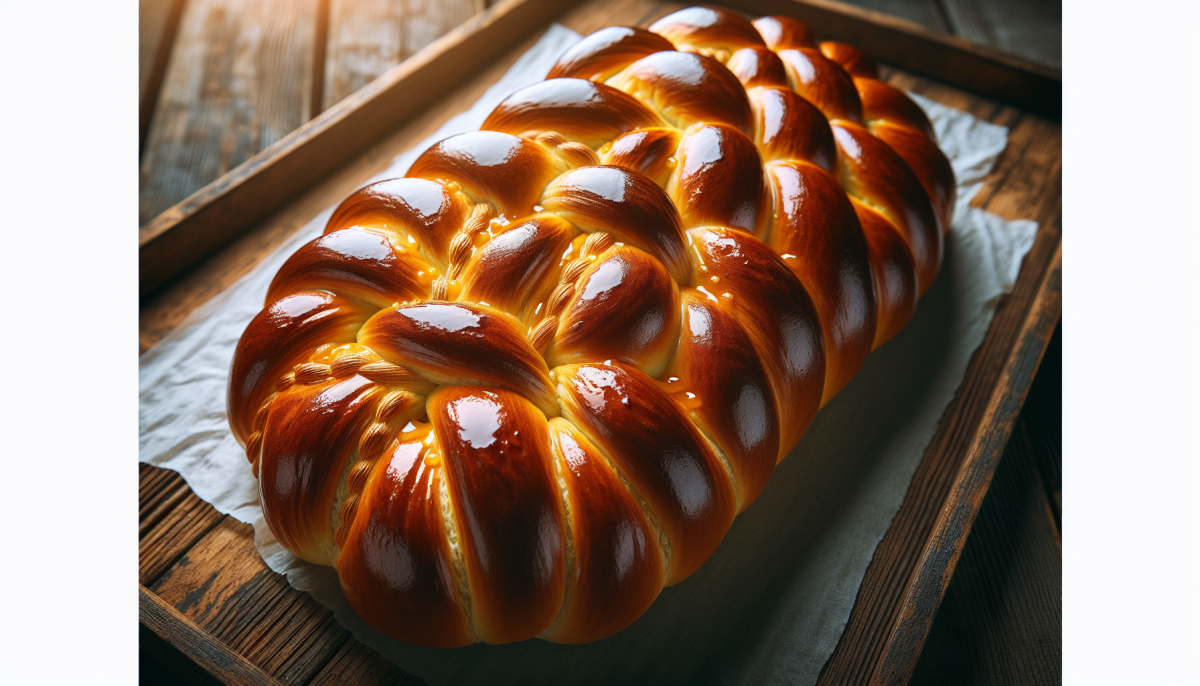
Through careful flour blending — a mix of tapioca starch, potato starch, white rice flour, and a touch of xanthan gum for structure — this gluten-free challah achieves what most GF breads cannot: a braided shape that holds, a golden crust that cracks, and a soft, pull-apart interior. It is not identical to wheat challah — nothing gluten-free truly is — but it is beautiful, delicious, and worthy of your Shabbat table.
The technique differs from wheat challah in important ways. The dough is stickier and softer, more like a thick batter than a traditional dough. You shape it with oiled hands. It gets one rise instead of two. But the result, glazed with egg wash and sprinkled with sesame seeds, looks every bit the part.
What Makes This Special
- Braidable GF dough — A flour blend designed specifically for braiding, not just loaf pans.
- Multi-flour approach — Tapioca, potato starch, and rice flour for the best texture and flavor.
- Beautiful presentation — Egg-washed and braided, this looks like real challah on the table.
- Inclusive Shabbat — Everyone at the table can share the same challah.
Halachic Notes
- Kosher Classification: Pareve — Gluten-free. Verify all flours and starches are certified kosher and gluten-free.
- Hafrashat Challah: Hafrashat challah applies to gluten-free doughs made from the five grains (wheat, barley, spelt, rye, oats). If using rice/tapioca flour only, some authorities hold challah separation does not apply. Consult your rabbi.
- Checking Eggs: Each egg must be checked individually for blood spots before adding.
- Pas Yisroel: Homemade bread baked by a Jewish person fulfills Pas Yisroel.
- Brachot: The bracha on gluten-free bread depends on its ingredients. If it contains one of the five grains (even a minority), the bracha is HaMotzi. If entirely non-grain based, consult your rabbi.
- Note: Many GF challah recipes add a small amount of oat flour to ensure HaMotzi status. This recipe includes that option.
Ingredients
| Ingredient | Grams | Volume | Baker’s % |
|---|---|---|---|
| White rice flour | 160 g | 1¼ cups | — |
| Tapioca starch | 120 g | 1 cup | — |
| Potato starch | 80 g | ½ cup + 2 tbsp | — |
| Oat flour (GF certified, optional) | 40 g | ⅓ cup | — |
| Xanthan gum | 8 g | 2 tsp | — |
| Granulated sugar | 50 g | ¼ cup | — |
| Fine sea salt | 7 g | 1¼ tsp | — |
| Instant yeast | 7 g | 2¼ tsp | — |
| Eggs | 200 g (4 large) | 4 large | — |
| Vegetable oil | 60 g | ¼ cup | — |
| Honey | 30 g | 1½ tbsp | — |
| Warm water | 180 g | ¾ cup | — |
| Apple cider vinegar | 5 g | 1 tsp | — |
Warm water helps activate the yeast quickly since GF doughs rise faster.
Step-by-Step Instructions
Step 1: Blend Dry Ingredients
Whisk rice flour, tapioca starch, potato starch, oat flour (if using), xanthan gum, sugar, salt, and yeast in a large bowl until thoroughly combined.
Step 2: Mix the Dough
Add eggs, oil, honey, warm water, and vinegar. Beat with a stand mixer fitted with the paddle attachment for 3–4 minutes on medium speed. The dough will be thick, sticky, and stretchy — more like a thick batter than wheat dough. This is correct.
Step 3: Shape
Oil your hands generously. Divide the dough into 3 portions. With oiled hands, roll each portion on a lightly oiled surface into a strand about 35 cm (14 in) long. The dough is sticky; re-oil your hands as needed. Braid the three strands, pinch ends, and tuck under. Place on a parchment-lined baking sheet.
Step 4: Rise
Cover loosely and let rise in a warm place 45–60 minutes until puffy and visibly expanded. GF doughs do not double like wheat doughs, but should look noticeably puffed.
Step 5: Bake
Preheat oven to 180°C / 355°F. Brush gently with egg wash (beat 1 egg with a pinch of salt). Sprinkle with sesame seeds if desired. Bake 30–35 minutes until golden brown and internal temperature reaches 93°C / 200°F. GF breads need a slightly higher internal temp to set properly. Cool completely before slicing — the structure firms as it cools.
Storage & Make-Ahead
- Room temperature: Best day-of. Keeps 1–2 days but may dry out faster than wheat challah.
- Freezing: Slice and freeze individually. Toast slices directly from frozen for best results.
- Tip: GF challah makes excellent French toast the next day.
Troubleshooting
| Problem | Cause | Solution |
|---|---|---|
| Challah crumbling | Not enough xanthan gum or under-baked | Measure xanthan precisely; bake to 93°C internal temp; cool completely before slicing |
| Gummy center | Under-baked | GF breads need higher internal temp (93°C); tent with foil if crust browns too fast |
| Cannot shape | Dough too sticky | Oil hands generously; work quickly; keep dough portions small |
| Flat loaf | Over-proofed or too little yeast | GF doughs can collapse if over-proofed; watch carefully during rise |
Frequently Asked Questions
Is this challah suitable for Pesach?
No. While gluten-free, this recipe contains yeast (chametz). For Pesach, matzo or matzo-based recipes are required.
Can I omit the oat flour?
Yes, but the oat flour helps with flavor and ensures the bracha is HaMotzi. Without it, increase rice flour by 40 g and consult your rabbi regarding the appropriate bracha.
Why apple cider vinegar?
The acid helps strengthen the xanthan gum network and improves the rise. It is undetectable in the finished bread.
Can I use a commercial GF flour blend?
Blends like Bob’s Red Mill 1-to-1 can work, but results vary. This recipe’s custom blend is optimized for challah’s specific needs: braidability, golden color, and soft crumb.
🍞 Get a New Kosher Recipe Every Week
Join our baking community. One recipe, one tip, one story — delivered every Friday before Shabbat.
No spam. Just bread. Unsubscribe anytime.
You Might Also Enjoy
- Classic Kosher Challah — The wheat-based traditional version
- Spelt Challah — Lower gluten ancient grain option
- Water Challah — Simple and allergen-friendly
- Whole Wheat Challah — Nutty alternative flour challah