
Is Auntie Anne’s Kosher? (And How to Make Your Own)
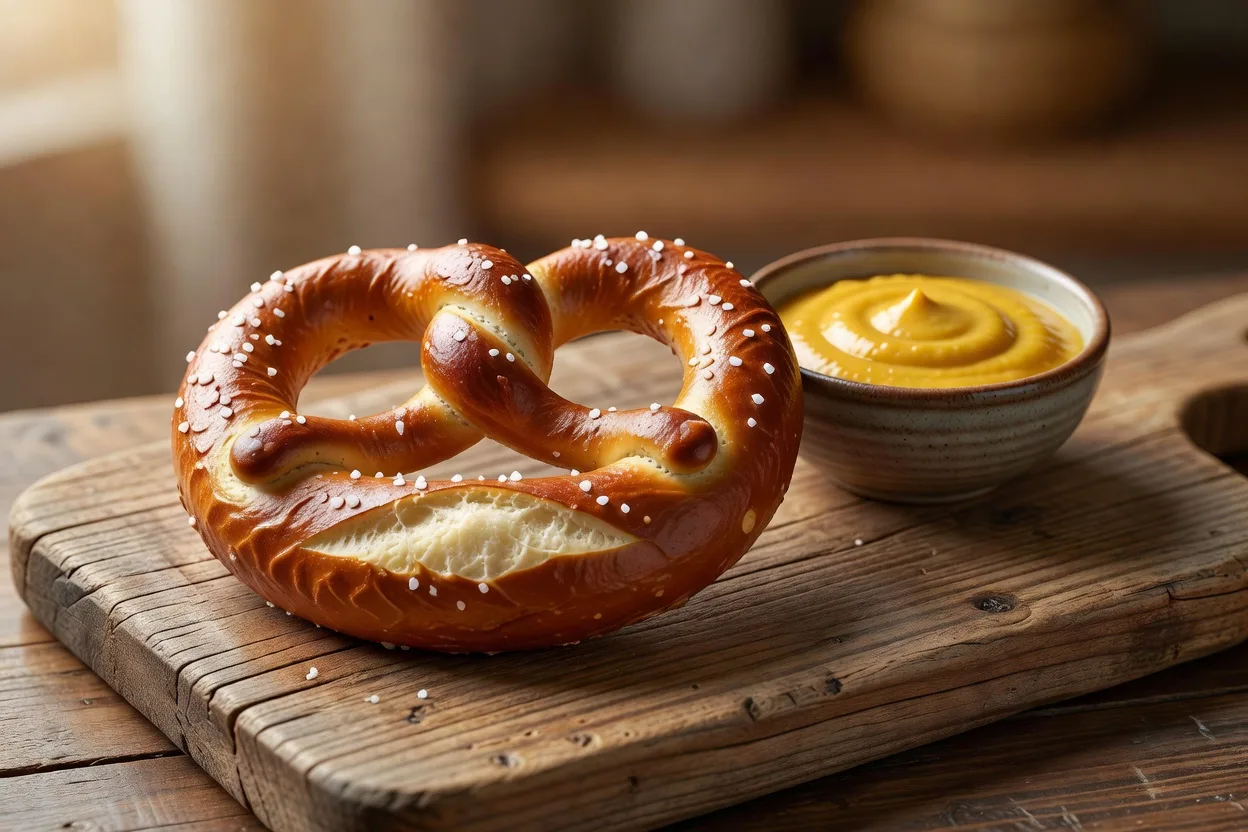
Quick answer: Most Auntie Anne’s locations in the United States are not kosher certified. A small number of franchise locations — primarily in the New York/New Jersey area and in kosher food courts — do carry individual-store certification. You must verify the specific location before eating. The practical solution is to make soft pretzels at home: they take 90 minutes, cost less, and are unambiguously kosher.
The Kosher Status Problem with Auntie Anne’s
Auntie Anne’s is a franchise chain, not a centrally certified kosher operation. This is the root of the confusion. Unlike a food product that carries a kosher symbol on its packaging (certified at the factory level, valid for every unit sold everywhere), restaurant and food-court kashrut is location-specific. Each Auntie Anne’s franchise is a separate business that must obtain its own local certification — and most do not.
The ingredients in the Auntie Anne’s pretzel formula are not inherently non-kosher. The base recipe — flour, water, yeast, salt, sugar, butter — uses ingredients that can all be sourced with kosher certification. The problems are:
- Butter. Auntie Anne’s pretzels are brushed with butter. Whether the butter used at a specific location is kosher-certified varies by franchisee purchasing decisions.
- Shared equipment. Many mall food courts have shared preparation surfaces, fryers, and warming ovens. Even if the pretzel ingredients are kosher, cross-contamination with non-kosher food products at neighboring stalls or in shared equipment makes the pretzels non-kosher by contact.
- No rabbi on-site. Kosher certification requires ongoing supervision by a mashgiach (kashrut inspector). Without a supervising authority and a posted kosher certificate, there is no way to verify kashrus compliance.
Which Auntie Anne’s Locations Are Kosher?
A small number of Auntie Anne’s locations carry kosher certification — primarily in markets with significant Jewish populations where franchisees have pursued certification as a business advantage. Known certified locations have historically included certain stores in New York City, New Jersey, and Lakewood (NJ), but this changes as franchise ownership changes and certifications expire.
Auntie Anne’s corporate does not maintain a central kosher certification program. The company’s website does not provide kosher status information for specific locations. This is a franchisee-by-franchisee question every time.
The Dairy Question
Even at a certified Auntie Anne’s location, the pretzels are dairy (chalavi). The signature Auntie Anne’s pretzel is brushed with real butter after baking — this is fundamental to the product. A certified Auntie Anne’s is not a pareve option. You cannot eat a certified Auntie Anne’s pretzel within six hours of a meat meal (per Ashkenazi practice), or at a meat meal at all.
Some certified locations may offer specific items without butter on request — but this requires verification with the mashgiach, not just asking the counter staff. Do not assume a “no butter” request produces a pareve pretzel if the same equipment is used to prepare buttered pretzels throughout the day.
The Bracha on a Soft Pretzel
Assuming you are eating at a certified location: a soft pretzel is made from wheat dough and baked, making it pat — bread. The bracha is hamotzi if eaten as a substantial food (which a full-size soft pretzel typically is), or mezonot if eaten as a small snack in a quantity that does not constitute kevi’at se’udah.
In practice, most poskim rule that eating one standard Auntie Anne’s pretzel as a snack while walking through a mall is mezonot — it is not eaten in the manner of a meal. Eating two or more as a seated meal-replacement warrants hamotzi and netilat yadaim.
The Better Solution: Make Your Own
Homemade kosher soft pretzels are not a consolation prize. The Auntie Anne’s formula — a dough dipped in an alkaline solution before baking, brushed with butter, salted — is reproducible at home with simple ingredients. A kosher home-baked pretzel is:
- Unambiguously kosher — you control every ingredient
- Pareve or dairy — your choice (use oil instead of butter for pareve)
- Pas Yisroel automatically — you are a Jewish baker who turned on the oven
- Cheaper — a full batch of 8–10 pretzels costs less than two mall pretzels
- Better — fresher, properly salted, with real pretzel character from the lye-adjacent dip
The Key Technique: The Alkaline Dip
What gives a soft pretzel its characteristic dark-brown, chewy, slightly bitter crust is the alkaline bath before baking. Traditional pretzel bakeries use food-grade lye (sodium hydroxide), which is safe but requires care. For home baking, baked baking soda is the accessible substitute: spread regular baking soda on a baking sheet and bake at 120°C (250°F) for one hour. This converts sodium bicarbonate to sodium carbonate — a gentler alkali that produces 80% of the crust quality at zero risk.
Dissolve the baked baking soda in water (50 g per 1 litre), dip each shaped pretzel for 30 seconds, then bake immediately. Brush with melted butter (dairy) or oil (pareve) the moment they come out of the oven while the crust is still hot. Finish with coarse sea salt.
Skip the mall. Make better pretzels at home.
Our pretzel challah recipe uses the same alkaline dip technique — braided challah format, pretzel crust, completely kosher.
FAQ
Is Auntie Anne’s certified kosher?
Most locations are not. A small number of individual franchise locations in high-Jewish-population areas carry local certification. You must verify the specific store by looking for a posted kosher certificate from a recognized agency. Do not assume based on location or staff assurances.
Is Auntie Anne’s dairy or pareve?
Dairy. The standard Auntie Anne’s pretzel is brushed with butter as part of the recipe. Even at certified locations, it is not a pareve food and cannot be eaten at or after a meat meal.
What certifying agency covers Auntie Anne’s?
There is no single certifying agency — each certified location has its own certification from a local or regional agency. Check the OU, OK, Star-K, or cRc location databases, or call the specific store and ask for the certificate details.
Can I ask Auntie Anne’s to make my pretzel without butter?
You can ask, but a “no butter” request does not produce a kosher pretzel at a non-certified location. The equipment, preparation surfaces, and other ingredients are still not under kosher supervision. At a certified location, verify with the mashgiach whether a pareve preparation is available and how cross-contamination is managed.
What is the bracha on a soft pretzel?
Hamotzi if eaten as a substantial food at a sitting; mezonot if eaten as a small mall snack in passing. One full-size pretzel eaten as a meal-replacement warrants careful consideration — many poskim rule hamotzi for a single substantial pretzel consumed at a meal. When in doubt, treat it as hamotzi, wash, and recite birkat hamazon after.
