Dairy-Free • Egg-Free • Contains Gluten
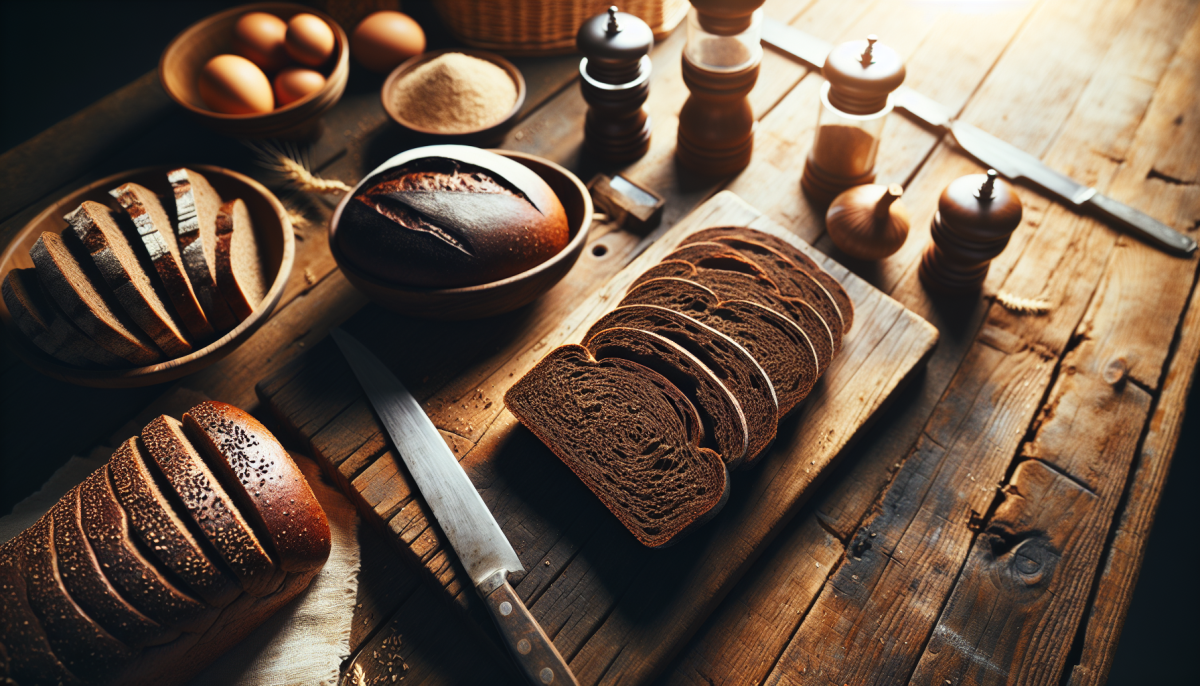
Marble rye is the bread that built the Jewish deli. Slice into any great loaf and you will find it — two doughs, one light and one dark, swirled together in an embrace that is as beautiful as it is delicious. The light rye is tangy, wheaty, and mild. The dark pumpernickel is earthy, slightly bitter, sweetened with molasses and deepened with cocoa. Together they create something neither could achieve alone: a bread of contrasts, of light and shadow, of the Old World and the New.
Every great Jewish deli in America — from Katz’s on Houston Street to Langer’s in Los Angeles — has built its reputation on the bread that cradles the pastrami. That bread is marble rye. It is the bread of the Reuben sandwich, of smoked meat platters, of Sunday morning lox and cream cheese. It is so deeply woven into Jewish-American food culture that most people never stop to consider how remarkable it is: two separate doughs, mixed independently, then twisted and shaped into a single loaf.
The technique traces back to the rye bread traditions of Eastern Europe, where Jewish bakers in Poland, Lithuania, and Russia worked with whatever grains they could afford. Dark, coarse rye was the bread of the poor; lighter wheat-rye blends were for those who could pay more. Somewhere along the way, a baker combined the two — and marble rye was born. In America, Jewish bakeries refined the technique, adding cocoa and molasses to deepen the dark dough and caraway seeds for that unmistakable aroma.
If you love our Classic Challah for Shabbat, marble rye is its weekday counterpart — the bread that turns an ordinary sandwich into something worth savoring.
What Makes This Marble Rye Special
- Two distinct doughs, one extraordinary loaf — a light rye dough and a dark pumpernickel dough are made separately, then twisted together. Each bite delivers both flavors in unpredictable, beautiful swirls.
- Authentic Jewish deli character — caraway seeds, a tangy crumb, and a crust that crackles when you slice it. This is the real thing, not the soft supermarket imitation.
- Cocoa and molasses for depth, not sweetness — the dark dough gets its color from unsweetened cocoa and dark molasses, creating an earthy complexity without making the bread sweet.
- No eggs, no dairy, fully pareve — serve it alongside any meal, meat or dairy. This is a lean dough bread, as tradition demands.
- Baked with steam for a shattering crust — a burst of steam in the first minutes of baking creates the thin, crackly crust that defines great deli rye.
Marble Rye in Jewish-American Deli Culture
The Jewish deli is one of America’s great culinary institutions, and at its heart is rye bread. When millions of Eastern European Jews arrived in New York, Philadelphia, and Chicago between 1880 and 1920, they brought their bread traditions with them. Jewish bakeries on the Lower East Side, in Brownsville, and in the Bronx produced thousands of rye loaves daily — light rye, dark rye, seeded rye, and the showpiece: marble rye.
Marble rye became the prestige bread of the Jewish deli. Its dramatic swirl pattern made it visually striking on the sandwich board, and its complex flavor — tangy, earthy, with the warm perfume of caraway — could stand up to the bold flavors of pastrami, corned beef, and pickles. A great Reuben sandwich demands marble rye. Nothing else will do.
Today, as industrial bakeries have hollowed out the category with soft, flavorless imitations, baking your own marble rye is an act of reclamation. The real thing — with its shatteringly crisp crust, its tangy crumb, its honest swirl of two hand-made doughs — is a revelation. Once you bake it, you will never go back to store-bought.
Kosher Observance & Halachic Notes
Kosher Classification: Pareve
This recipe is entirely pareve. It contains no dairy, eggs, or meat products. The doughs use vegetable oil. Marble rye can be served alongside both meat and dairy meals without restriction.
Hafrashat Challah (Separating Challah)
This recipe uses a combined 700 g of flour across both doughs. This requires separating challah without a bracha according to most Ashkenazi poskim. If you double the recipe, separate challah with a bracha.
How to perform Hafrashat Challah:
- After both doughs are mixed, combine a small piece from each and pinch off at least a kezayit (roughly 28 g / 1 oz).
- If the total flour exceeds the bracha threshold, recite:
Hebrew:
בָּרוּךְ אַתָּה ה’ אֱלֹהֵינוּ מֶלֶךְ הָעוֹלָם אֲשֶׁר קִדְּשָׁנוּ בְּמִצְוֹתָיו וְצִוָּנוּ לְהַפְרִישׁ חַלָּהTransliteration:
Baruch Atah Adonai, Eloheinu Melech ha’olam, asher kid’shanu b’mitzvotav v’tzivanu l’hafrish challah.Translation:
“Blessed are You, Lord our God, King of the universe, Who has sanctified us with His commandments and commanded us to separate challah.”
- Say: “Harei zu challah” (“This is challah”).
- Wrap the separated piece in foil and burn it.
Checking Eggs for Blood Spots
This recipe does not contain eggs. If you add an egg wash, check each egg individually in a clear glass before use.
Pas Yisroel
When a Jewish person sets the oven temperature or contributes to the baking, the bread fulfills Pas Yisroel requirements.
Brachot (Blessings)
- Before eating: HaMotzi Lechem Min Ha’Aretz — marble rye is bread in every halachic sense.
- After eating: Birkat HaMazon (Grace After Meals).
Ingredients
Light Rye Dough
| Ingredient | Grams | Volume | Baker’s % |
|---|---|---|---|
| Bread flour | 280 g | 2¼ cups | 80% |
| Light rye flour | 70 g | ½ cup | 20% |
| Water | 220 g | ~1 cup | 63% |
| Instant yeast | 4 g | 1¼ tsp | 1.1% |
| Fine sea salt | 6 g | 1 tsp | 1.7% |
| Caraway seeds | 5 g | 1½ tsp | 1.4% |
| Vegetable oil | 10 g | 2 tsp | 2.9% |
Dark Pumpernickel Dough
| Ingredient | Grams | Volume | Baker’s % |
|---|---|---|---|
| Bread flour | 210 g | 1⅔ cups | 60% |
| Dark rye flour (pumpernickel grind) | 140 g | 1 cup | 40% |
| Water | 230 g | 1 cup | 66% |
| Unsweetened cocoa powder | 15 g | 2 Tbsp | 4.3% |
| Dark molasses | 20 g | 1 Tbsp | 5.7% |
| Instant yeast | 4 g | 1¼ tsp | 1.1% |
| Fine sea salt | 6 g | 1 tsp | 1.7% |
| Caraway seeds | 5 g | 1½ tsp | 1.4% |
| Vegetable oil | 10 g | 2 tsp | 2.9% |
Desired Dough Temperature (DDT)
Target DDT: 24°C (75°F)
Both doughs should reach the same temperature for even fermentation. To calculate your water temperature:
Water Temp = (DDT × 3) − Flour Temp − Room Temp
Keep water below 38°C (100°F) to avoid overactivating the yeast.
Step-by-Step Instructions
Step 1: Mix the Light Rye Dough
In a stand mixer bowl, combine the bread flour, light rye flour, water, yeast, salt, caraway seeds, and oil. Mix on low speed for 2 minutes until combined, then increase to medium and knead for 8–10 minutes until smooth and elastic. The dough should be slightly tacky but pull cleanly from the bowl.
Transfer to a lightly oiled bowl, cover, and set aside.
Step 2: Mix the Dark Pumpernickel Dough
Clean the mixer bowl (or use a second bowl). Dissolve the molasses in the water. Add the bread flour, dark rye flour, cocoa powder, yeast, salt, caraway seeds, and oil. Mix on low for 2 minutes, then knead on medium for 8–10 minutes. This dough will be stickier than the light dough due to the higher rye content — this is normal.
Transfer to a separate oiled bowl, cover, and set aside.
Step 3: Bulk Fermentation
Let both doughs rise side by side at room temperature for 1.5 to 2 hours until each has roughly doubled. The dark dough may rise slightly less due to the higher rye content — this is expected.
Step 4: Shape the Marble Loaf
This is where the magic happens — creating the marble swirl:
- Deflate both doughs gently on a lightly floured surface.
- Roll each dough into a rough rectangle, approximately 30 × 20 cm (12 × 8 inches).
- Stack the dark dough on top of the light dough.
- Roll up tightly from the long side, like a jelly roll, pinching the seam closed.
- Twist the log 3–4 times along its length to create the marble pattern.
- Tuck the ends under and shape into a tight oval loaf.
- Place seam-side down on a parchment-lined baking sheet dusted with cornmeal.
Don’t over-twist — you want distinct swirls, not a muddy blend. Three to four twists is ideal.
Step 5: Final Proof
Cover the shaped loaf loosely with a kitchen towel or oiled plastic wrap. Let proof at room temperature for 45–60 minutes until the loaf has expanded by about 50% and springs back slowly when poked gently.
Meanwhile, preheat your oven to 220°C (425°F) with a baking stone or heavy baking sheet on the middle rack. Place a metal pan on the bottom rack for steam.
Step 6: Score and Bake
Using a sharp razor blade or lame, slash the top of the loaf with 3–4 diagonal cuts, about 1 cm (½ inch) deep.
Slide the loaf (on its parchment) onto the hot baking stone. Pour 1 cup of hot water into the metal pan on the bottom rack and quickly close the oven door to trap the steam.
Bake at 220°C (425°F) for 15 minutes with steam, then reduce temperature to 190°C (375°F) and continue baking for 20–25 minutes more. The loaf is done when the crust is deeply browned and the internal temperature reads 93°C (200°F).
Step 7: Cool Completely
Transfer to a wire rack and let cool for at least 1 hour before slicing. Rye bread must cool completely — cutting too early results in a gummy, compressed crumb. Patience here is non-negotiable.
Storage & Reheating
- Room temperature: Wrap tightly in plastic wrap or store in a bread bag. Marble rye keeps well for 3–4 days at room temperature — the rye flour acts as a natural preservative.
- Freezing: Slice before freezing for easy access. Wrap tightly in plastic, then foil, and freeze for up to 2 months. Toast slices directly from frozen.
- Reheating: Place the whole loaf in a 175°C (350°F) oven for 8–10 minutes to refresh the crust. Individual slices toast beautifully in a dry skillet or toaster.
Troubleshooting Guide
| Problem | Likely Cause | Solution |
|---|---|---|
| Swirl pattern is muddy | Over-twisted or over-kneaded during shaping | Limit to 3–4 twists. Handle gently when tucking ends under. The less you work it, the more distinct the swirl. |
| Doughs separated after baking | Doughs were at different hydration levels or proofed unevenly | Ensure both doughs are at similar consistency. Press them together firmly when stacking. A light misting of water between layers helps adhesion. |
| Gummy interior | Under-baked or sliced too soon | Bake until internal temp reaches 93°C (200°F). Cool for at least 1 full hour. Rye breads set their crumb as they cool. |
| Crust is too pale | Insufficient oven heat or no steam | Start at 220°C (425°F) with steam. The initial blast of heat and moisture is essential for crust color and crackle. |
| Dark dough didn’t rise enough | Higher rye percentage slows fermentation | Give the dark dough an extra 15–30 minutes. Dark rye ferments more slowly — this is normal and expected. |
Frequently Asked Questions
What is the difference between marble rye and regular rye bread?
Regular rye bread uses a single dough — either light rye (mostly wheat flour with some rye) or dark rye (higher rye percentage with added color). Marble rye combines both: a light rye dough and a dark pumpernickel dough are made separately, then twisted together to create the distinctive swirled pattern. The result is a bread with two textures and two flavor profiles in every slice.
Why does the dark dough use cocoa powder? Is that traditional?
In the American Jewish deli tradition, yes. The deep, almost black color of the dark dough comes from a combination of dark rye flour, unsweetened cocoa powder, and dark molasses. This is the American Jewish baker’s method — distinct from German pumpernickel, which achieves its color through extremely long, low-temperature baking. The cocoa adds depth without chocolate flavor. It is a coloring and flavor agent, not a sweetener.
Can I make this bread without caraway seeds?
You can, though you will lose a signature element of the bread’s character. Caraway is deeply associated with Jewish rye bread — its warm, slightly anise-like aroma is what most people think of when they think of “rye bread.” If you dislike caraway, omit it entirely rather than substituting another seed. The bread will still be excellent, just different.
How do I get the best marble pattern?
The key is restraint. Roll both doughs to similar-sized rectangles, stack them, roll up tightly from the long side, then twist the log 3–4 times. Do not knead or fold further. Every additional manipulation blurs the pattern. When you slice the finished loaf, each piece should show distinct, dramatic swirls of light and dark — like geological strata in stone.
Can I use a loaf pan instead of free-forming?
Absolutely. A 23 × 13 cm (9 × 5 inch) loaf pan works well and gives the bread a more uniform sandwich shape. Oil the pan, place the twisted dough seam-side down, and proof until the dough crowns about 2 cm (1 inch) above the rim. Baking time may increase by 5–10 minutes in a pan due to the insulation.
🍞 Get a New Kosher Recipe Every Week
Join our baking community. One recipe, one tip, one story — delivered every Friday before Shabbat.
No spam. Just bread. Unsubscribe anytime.
The Bread That Built the Deli
Every swirl tells a story — of Old World rye traditions meeting New World ambition. Bake this loaf, slice it thick, pile on the pastrami, and taste history.
Save This Recipe
Bake Our Bialys Next →
Have questions? Tag us @kosherbreadpro on Instagram or leave a comment below.
You Might Also Enjoy
- Jewish Rye — The single-tone classic
- Pumpernickel — The dark half of marble rye
- Corn Rye — Cornmeal-crusted deli style
- Sourdough Rye — Tangy fermented version
- Marble Challah — Another beautiful two-tone bread