
Matzo Recipe: Homemade Kosher Unleavened Bread
Search 150+ Kosher Recipes
Matzo is the most ancient and symbolically rich bread in Jewish tradition—a flat, unleavened cracker that has connected the Jewish people to the story of the Exodus for over three thousand years. Every Pesach, we eat matzo to remember that when our ancestors fled Egypt, they left in such haste that their bread had no time to rise. That urgency is built into the very process of making matzo: from the moment water touches flour, you have exactly 18 minutes to mix, roll, perforate, and bake before the dough is considered chametz (leavened).
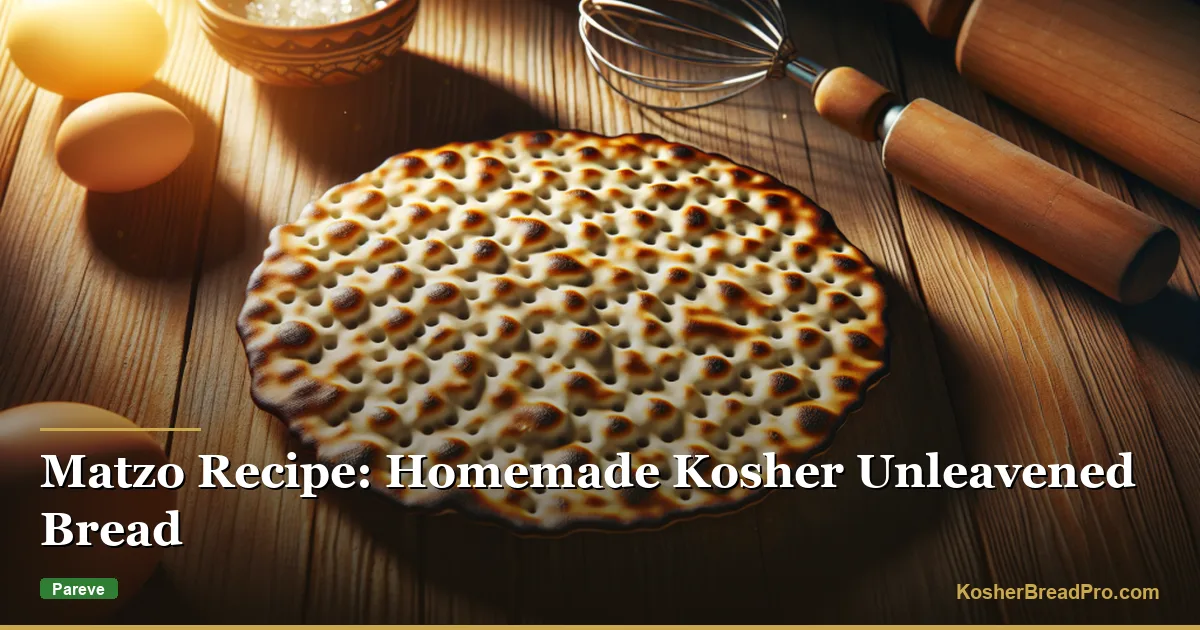
Making matzo at home is a profound experience. The speed and intentionality required—working with focus, moving quickly from mixing bowl to oven—transforms a simple act of baking into something almost meditative. The result is remarkably different from the machine-made matzot most of us grew up with: handmade matzo (shmura matzo) has irregular edges, charred bubbles, and a flavor that is wheaty, slightly smoky, and deeply satisfying.
While shmura matzo for the Seder is typically purchased from certified bakeries where every step is supervised, making matzo at home is a wonderful educational and spiritual activity for the weeks before Pesach. It connects you physically to the mitzvah and teaches the 18-minute principle in a way no textbook can. Whether you use your homemade matzo for the Seder or as a pre-Pesach family activity, the process itself is the reward.
What Is Matzo? History, Meaning, and Types
Matzo (also spelled matzah or matza) is unleavened flatbread — wheat flour and water mixed and baked before fermentation can begin. The word comes from the Hebrew root mem-tzadi-heh (מצה), meaning to drain or press — describing the flatness pressed into the dough. Matzo is one of the oldest documented foods in human history: the Torah records that the Israelites baked it during the Exodus from Egypt, when their bread had no time to rise as they fled in haste. That urgency is preserved in the halacha: the 18-minute rule (water to oven, no exceptions) re-enacts the original speed of that departure every time a batch is made.
For most of the year, matzo is simply a food — eaten at any meal, brought to Shabbat as a pareve bread alternative, crumbled into matzo brei, or broken into soups. During the seven days of Passover (eight in the Diaspora), matzo becomes mandatory: it replaces all chametz (leavened grain products) and carries a positive Torah commandment of its own. Eating matzo on the first night of the Seder is a biblical mitzvah (mitzvah d’oraita). On the remaining days of Pesach, eating matzo is a mitzvah but not obligatory — though chametz remains completely forbidden.
Types of Matzo
Not all matzo is equivalent — for halachic, dietary, and flavour reasons, understanding the types helps you choose the right one for your purpose.
| Type | Description | Kosher for Pesach? | Best use |
|---|---|---|---|
| Machine matzo | Factory-produced; consistent thickness, certified kosher for Pesach. Most widely available. | Yes, with hashgacha | Year-round eating, matzo brei, soup |
| Shmura matzo (hand) | Flour supervised from harvest; hand-rolled by a team in a certified bakery. Round, irregular, charred. Highest halachic standard. | Yes — required by many for the Seder | Seder (afikomen, lechem mishneh), Pesach meals |
| Shmura matzo (machine) | Supervised flour, machine-rolled. Square. Less expensive than hand-shmura but higher supervision than standard machine matzo. | Yes | Pesach meals, Seder (varies by minhag) |
| Whole wheat matzo | Made from whole wheat flour. Nuttier, denser flavour. Must still complete the 18-minute process. | Yes, with hashgacha | Year-round eating; Pesach for those who prefer whole grain |
| Spelt matzo | Made from spelt flour (dinkel), one of the five halachic grains. Softer texture. Some prefer it for digestibility. | Yes, with hashgacha | Those with wheat sensitivity (not coeliac) |
| Oat matzo | Made from oats, one of the five grains. Used for those with wheat allergies. Less common; requires hashgacha. | Yes, with hashgacha | Wheat-allergic Pesach observance |
| Matzo meal / matzo cake meal | Ground matzo. Cake meal is finely ground. Neither is matzo itself — they are matzo-based products used in Passover baking. | Yes, with hashgacha | Pesach baking: cakes, matzo balls, coatings |
Matzo in Ashkenazi and Sephardic Tradition
Matzo is universal across Jewish communities, but customs around it differ significantly between Ashkenazi and Sephardic traditions — and these differences affect Pesach observance in practical ways.
Gebrokts (wetted matzo): Many Ashkenazi families, particularly Chassidic communities, do not eat gebrokts — matzo that has been wetted and combined with liquid (matzo balls, matzo brei, matzo kugel). The concern is that uncooked flour remained in the matzo and wetting it might create a leavening condition retroactively. On the last day of Pesach, most who avoid gebrokts relax this restriction as a one-day leniency. Sephardic communities generally do not observe this restriction and freely use matzo in soups, kugels, and stuffings throughout Pesach.
Matzo ashira (egg matzo): Standard Ashkenazi practice treats egg matzo as not kosher for Passover except for elderly or ill people who cannot digest plain matzo. Sephardic communities generally permit egg matzo for Pesach use. This distinction matters if you are baking for a mixed-community Seder.
Hand vs machine shmura: The debate between hand-rolled and machine-rolled shmura matzo for the Seder has occupied halachic authorities since machine matzo was introduced in the 19th century. The consensus today: both are valid for the Seder; hand shmura is preferred by many as the higher standard of the two. For the three matzot at the Seder table (lechem mishneh), whole round hand-shmura is the most widely accepted choice.
What Makes This Recipe Special
- 18-minute discipline — Full guidance on maintaining the halachic time limit from water contact to oven entry
- Two-ingredient simplicity — Just flour and water, as matzo has been made for millennia
- High-heat technique — Baked at maximum oven temperature for characteristic charred spots and crisp texture
- Family-friendly activity — Perfect for involving children in the rolling and perforating process
- Historical connection — Follows the traditional method used in Jewish communities worldwide
Halachic Notes
- Kosher Classification: Pareve — flour and water only.
- The 18-Minute Rule: From the moment water contacts the flour, the entire process—mixing, kneading, rolling, perforating, and placing in the oven—must be completed within 18 minutes. This is the halachic boundary beyond which dough is considered chametz.
- For Pesach Use: Matzo baked for Pesach use requires specific halachic supervision (shmirah). For the Seder mitzvah of eating matzo, most authorities require matzo baked with the explicit intent of “l’shem matzat mitzvah.” Consult your rabbi regarding whether homemade matzo is suitable for your Seder.
- Hafrashat Challah: If making a batch with more than 1.2 kg of flour, separate challah without a bracha. With the bracha at 2.25 kg.
- Shmura (Guarded) Flour: For the strictest observance, use shmura flour that has been supervised from the time of harvest. Available at kosher specialty stores before Pesach.
- Brachot: Hamotzi lechem min ha’aretz before; Birkat Hamazon after. At the Seder, the additional bracha al achilat matza is said.
Ingredients
| Ingredient | Grams | Volume | Baker’s % |
|---|---|---|---|
| Unbleached all-purpose flour (or shmura flour) | 500g | 4 cups | 100% |
| Cold water | 200g | ⅔ cup + 2 Tbsp | 40% |
Instructions
Step 1: Prepare Your Workspace
Before touching any ingredients, ensure everything is ready. Preheat your oven to its maximum temperature (260–290°C / 500–550°F) with a baking stone or inverted sheet pan inside for at least 30 minutes. Have a clean, dry work surface, a rolling pin, a fork or matzo docker (perforating tool), a timer, and a pizza peel or flat board ready. Clean and dry all equipment thoroughly—any residual dough from previous use could constitute chametz.
Step 2: Mix the Dough (Start the 18-Minute Timer)
Place the flour on your work surface in a mound. Make a well in the center. Pour the cold water into the well and start your timer immediately. Use a fork to gradually incorporate the flour into the water, then quickly bring the dough together with your hands. Knead briefly—just 1–2 minutes—until the dough is smooth and cohesive. Do not over-knead; the goal is a workable dough, not a fully developed one.
Step 3: Divide and Roll
Immediately divide the dough into 8 equal pieces (about 85g each). Working with one piece at a time (keep the rest covered with a clean, dry cloth), roll each piece as thin as possible—ideally 1–2 mm thick. The thinner the matzo, the crisper and more authentic the result. Roll quickly and decisively; don’t worry about perfect circles. Traditional matzo has irregular, rustic edges.
Step 4: Perforate
Using a fork, quickly dock (perforate) the entire surface of the rolled dough. The holes prevent large air bubbles from forming during baking, which would constitute rising. Press firmly enough to go through the dough. Work fast but thoroughly.
Step 5: Bake
Transfer the perforated dough immediately onto the preheated baking stone using a pizza peel. Bake for 2–4 minutes, watching closely. The matzo is done when it has characteristic brown spots and blisters, the surface is dry, and it feels rigid. It will crisp further as it cools. Remove and cool on a wire rack. Repeat with remaining pieces, working within the 18-minute window. If you cannot complete all pieces in time, discard any unbaked dough and start a fresh batch with new flour and water.
Storage & Make-Ahead
- Room temperature: Once fully cooled and crisp, store matzo in a paper bag or loosely covered container at room temperature. Keeps for weeks in a dry environment.
- Avoid moisture: Do not store in sealed plastic bags, which trap humidity and soften the matzo. Paper bags allow moisture to escape.
- Freezing: Not necessary—matzo keeps indefinitely at room temperature when dry.
- Pre-Pesach prep: If making matzo as a family activity before Pesach, bake at least a day in advance. Matzo for Seder use should follow your community’s minhag (custom) regarding timing.
Troubleshooting
| Problem | Cause | Solution |
|---|---|---|
| Matzo is soft and chewy, not crisp | Rolled too thick or under-baked | Roll as thin as possible (1–2 mm); bake until brown spots appear |
| Large bubbles forming | Insufficient docking | Pierce the dough thoroughly and frequently across entire surface |
| Dough too sticky to roll | Too much water | Add flour sparingly; use a well-floured surface and rolling pin |
| Running out of time | Working too slowly or too many pieces | Work in smaller batches (4 pieces at a time); have a helper for rolling |
| Matzo burning | Oven too hot or matzo left too long | Watch constantly; matzot bake in 2–4 minutes. Brown spots are fine; black is too far |
Frequently Asked Questions
Why is the 18-minute rule so important?
The Talmud (Pesachim 46a) establishes that flour and water begin to leaven (become chametz) after 18 minutes of contact. This applies from the moment water touches the flour. After 18 minutes, the dough must be in the oven or discarded. This strict timing is what distinguishes matzo from chametz and is central to its role in Pesach observance.
Can I use whole wheat flour?
Yes, whole wheat matzo is traditional in many communities and has a nuttier, more robust flavor. Any of the five grains mentioned in the Talmud (wheat, barley, spelt, rye, oat) can be used. Whole wheat flour may require slightly more water. Oat matzo is available for those who need a gluten-free option, though it must be certified kosher for Pesach.
Is homemade matzo kosher for Pesach?
This depends on your community’s standards. The basic halachic requirements are: kosher-for-Pesach flour (ideally shmura), cold water, completion within 18 minutes, and baking with the intent of fulfilling the mitzvah. Many families make matzo as an educational activity but still use certified shmura matzo for the Seder. Consult your rabbi for guidance specific to your practice.
What is shmura matzo?
Shmura (“guarded”) matzo is made from grain that has been supervised from the time of harvest (or at minimum from the time of milling) to ensure it has not come into contact with water. This represents the highest level of matzo for Pesach. Hand-made shmura matzo from certified bakeries is the standard for the Seder in many communities.
Can children help make matzo?
Making matzo is one of the best pre-Pesach activities for children. Assign them age-appropriate tasks: younger children can dock the matzo with forks, while older children can help with rolling. Having everything pre-measured and ready before starting the timer makes the process exciting rather than stressful. It’s a wonderful way to teach the meaning of the holiday through hands-on experience.
Gluten-Free for Pesach?
Try our Gluten-Free Matzo Balls — light, fluffy, and made with GF matzo meal and potato starch. No gummy sinkers.
Baking for Pesach?
Complete your Passover dessert table with our Passover Rainbow Cookies — flourless Italian tricolor cookies with almond paste, apricot jam, and chocolate coating. No chametz, no kitniyot, all delicious.
Experience the Mitzvah of Making Matzo!
Connect to three thousand years of Jewish tradition through the simple, powerful act of baking unleavened bread.
🍞 Get a New Kosher Recipe Every Week
Join our baking community. One recipe, one tip, one story — delivered every Friday before Shabbat.
No spam. Just bread. Unsubscribe anytime.
You Might Also Enjoy
- Mufleta — Moroccan post-Pesach bread
- Shlissel Challah — First challah after Pesach
- Classic Kosher Challah — Return to leavened bread
- Water Challah — Simple unleavened-style bread
