Dairy-Free • Egg-Free • Contains Gluten
Pumpernickel is the darkest, densest, most mysterious bread in the Jewish baker’s repertoire. Where corn rye is light and accommodating, pumpernickel is brooding and intense — a bread so dark it is nearly black, with a flavor that is earthy, slightly bitter, and deeply complex. It is the bread of smoked fish platters, of cream cheese and lox, of sturdy deli sandwiches where delicate bread would simply surrender.
American pumpernickel — the kind sold in Jewish delis and bakeries from New York to Chicago — gets its dramatic color from a combination of dark rye flour, unsweetened cocoa powder, dark molasses, and instant coffee. This is distinct from traditional Westphalian pumpernickel, which achieves its color through 12–24 hours of extremely low-temperature baking. The American Jewish version is a practical adaptation: all the color and much of the flavor, achieved in a normal baking timeframe.
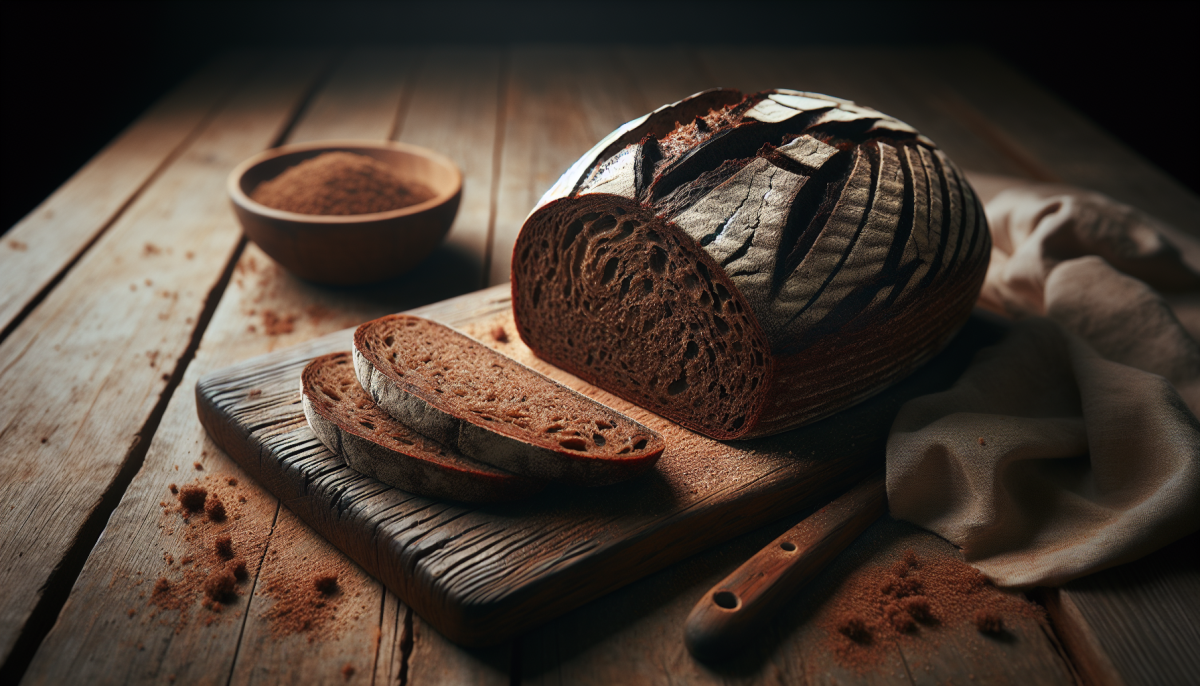
The crumb is dense and moist, almost cake-like, with a tight texture that holds up to heavy spreads and thick-sliced deli meats. The crust is dark and firm but not hard. The flavor is rich and complex — earthy from the rye, bitter-sweet from the cocoa and molasses, warm from the optional caraway. It is not a bread for the timid, but for those who love it, nothing else comes close.
Try this alongside our Corn Rye and Marble Rye for the complete Jewish deli rye bread trilogy.
What Makes This Pumpernickel Special
- Deeply dark, naturally — cocoa powder, dark molasses, and instant coffee create the signature near-black color without artificial coloring.
- Dense, moist crumb — a high rye percentage and low baking temperature produce a tight, moist texture that slices beautifully.
- Low and slow baking — baked at 165°C (325°F) for nearly an hour. The gentle heat develops flavor without drying the bread.
- Outstanding keeper — pumpernickel improves over 2–3 days and keeps up to a week at room temperature.
Kosher Observance & Halachic Notes
Kosher Classification: Pareve
This recipe is entirely pareve. No dairy, eggs, or meat.
Hafrashat Challah
This recipe calls for 550 g of flour total. This requires separating challah without a bracha.
Baruch Atah Adonai, Eloheinu Melech ha’olam, asher kid’shanu b’mitzvotav v’tzivanu l’hafrish challah.
Checking Eggs
This recipe does not contain eggs.
Pas Yisroel
When a Jewish person sets the oven temperature, this fulfills Pas Yisroel requirements.
Brachot
- Before: HaMotzi Lechem Min Ha’Aretz. Wash and make HaMotzi.
- After: Birkat HaMazon.
Ingredients
| Ingredient | Grams | Volume | Baker’s % |
|---|---|---|---|
| Bread flour | 300 g | 2⅓ cups | 55% |
| Dark rye flour (pumpernickel grind) | 250 g | 2 cups | 45% |
| Water | 370 g | 1½ cups | 67% |
| Unsweetened cocoa powder | 20 g | 3 Tbsp | 3.6% |
| Dark molasses | 40 g | 2 Tbsp | 7.3% |
| Instant coffee powder | 4 g | 1 tsp | 0.7% |
| Vegetable oil | 15 g | 1 Tbsp | 2.7% |
| Instant yeast | 5 g | 1½ tsp | 0.9% |
| Fine sea salt | 10 g | 1¾ tsp | 1.8% |
| Caraway seeds (optional) | 5 g | 1½ tsp | 0.9% |
Step-by-Step Instructions
Step 1: Mix
Dissolve molasses, cocoa, and instant coffee in the warm water. In a stand mixer, combine both flours, yeast, salt, caraway, and oil. Add the liquid. Knead on medium for 8–10 minutes. The dough will be very sticky — this is normal for high-rye doughs.
Step 2: Bulk Fermentation
Oil the bowl, cover, rise 2 hours until roughly doubled. High-rye dough rises slowly.
Step 3: Shape
Turn onto a floured surface. Shape into a tight oval or round. Place in a greased 23 × 13 cm (9 × 5 inch) loaf pan or on a parchment-lined sheet.
Step 4: Final Proof
Cover, proof 45–60 minutes. Preheat oven to 165°C (325°F).
Step 5: Bake
Bake for 50–60 minutes until the internal temperature reaches 93°C (200°F) and the crust is very dark and firm. Cool completely — at least 2 hours — before slicing.
Storage & Reheating
- Room temperature: Pumpernickel keeps exceptionally well — 5–7 days wrapped tightly.
- Improves with age: Flavor develops over 1–2 days. Many bakers prefer day-old pumpernickel.
- Freezing: Slice and freeze for up to 3 months. Toast from frozen.
Troubleshooting Guide
| Problem | Cause | Solution |
|---|---|---|
| Gummy interior | Under-baked; sliced too soon | Bake to 93°C internal. Cool 2 full hours. Pumpernickel sets as it cools. |
| Didn’t rise | High rye inhibits gluten; dead yeast | Allow extra rise time. Test yeast before using. Don’t expect tall rise — pumpernickel is naturally dense. |
| Not dark enough | Not enough cocoa/molasses | Measure carefully. Use dark (not light) rye flour and dark (not mild) molasses. |
Frequently Asked Questions
Why does pumpernickel use cocoa? Doesn’t that make it chocolate bread?
The cocoa is unsweetened and used in small quantities — it adds color and a subtle bitter depth, not chocolate flavor. Combined with molasses and instant coffee, it creates the characteristic dark color of American Jewish pumpernickel. You cannot taste chocolate in the finished bread.
What is the difference between pumpernickel and corn rye?
Corn rye is lighter (20–25% rye flour), with an open crumb and crackly crust. Pumpernickel is denser (45% rye), darker (cocoa + molasses), and baked low and slow. They are the light and dark sides of Jewish deli rye.
Can I make this in a Dutch oven?
Yes. A covered Dutch oven creates a steam environment that helps the crust develop. Preheat the Dutch oven, place the shaped dough inside, cover, and bake at 165°C (325°F) for 45 minutes covered, then 15 minutes uncovered.
🍞 Get a New Kosher Recipe Every Week
Join our baking community. One recipe, one tip, one story — delivered every Friday before Shabbat.
No spam. Just bread. Unsubscribe anytime.
The Dark Side of Jewish Rye
Dense, dark, deeply flavored — pumpernickel is the bread that takes no shortcuts. Slice it thin, top it generously, and savor every bite.
Save This Recipe
Try Our Corn Rye →
Tag us @kosherbreadpro on Instagram.
You Might Also Enjoy
- Jewish Rye — The lighter rye version
- Marble Rye — Swirled with light rye
- Sourdough Rye — Tangy naturally leavened
- Corn Rye — Another classic deli rye