Categories
Recipes

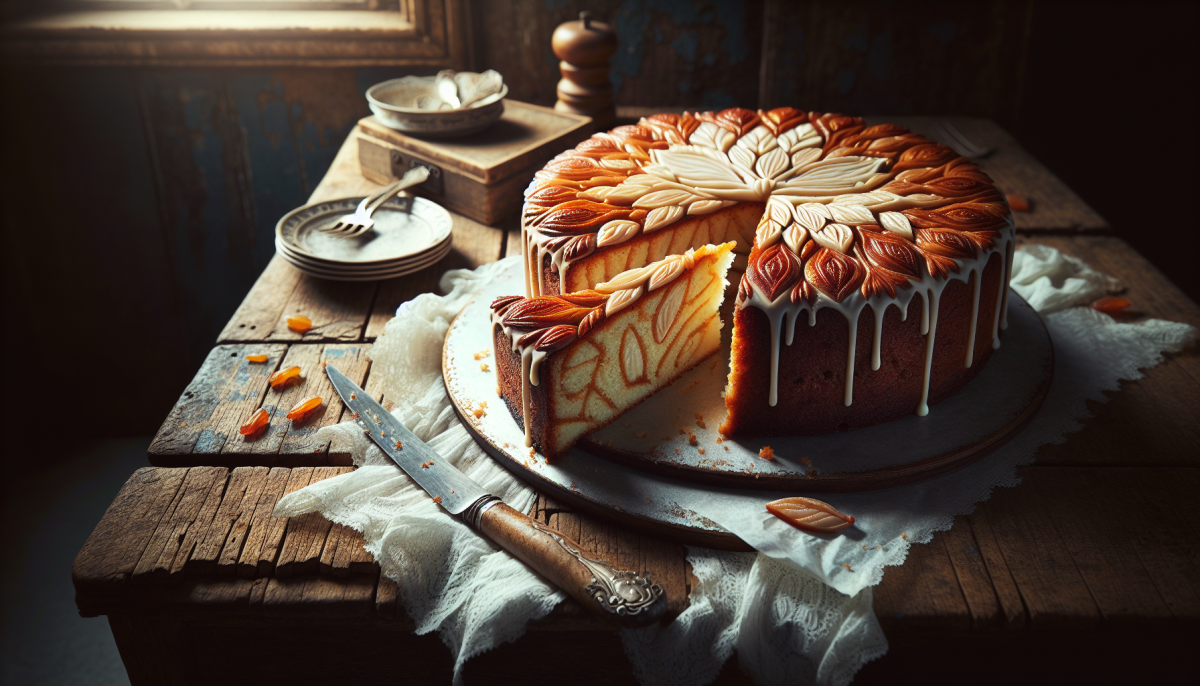
Challah Rolls Recipe: Individual Shabbat Dinner Rolls

✔ Pareve
Yield: 12 rolls  |  Difficulty: Easy–Intermediate  |  Active Time: 40 minutes  |  Total Time: 3½ hours  |  Bracha: Hamotzi

There’s something undeniably charming about a basket of golden challah rolls gracing the Shabbat table. Each guest receives their own perfectly portioned roll—warm, soft, and fragrant with the same egg-enriched richness that makes a full-sized challah so beloved, but in a form that feels personal and special.

These individual challah rolls carry all the hallmarks of the classic loaf: a tender, slightly sweet crumb that pulls apart in gossamer layers, a burnished crust painted with egg wash, and that unmistakable aroma that signals the arrival of Shabbat. The difference is in the intimacy—each roll is its own small celebration, a personal portion that eliminates the need for slicing and ensures every seat at the table gets that coveted combination of crisp exterior and pillowy interior.

The shaping options are endlessly adaptable. A simple round knot creates an elegant presentation, while a three-strand mini braid delivers the traditional look in miniature. For holidays, you can shape them into small round spirals for Rosh Hashanah or elongated rolls for weekday use. Whatever the shape, the technique remains the same: a well-developed dough, gentle handling, and a generous brush of egg wash for that bakery-worthy shine.

Categories
Recipes

Tahini Challah Recipe: Modern Israeli Braided Bread

PareveDairy-Free • Contains Eggs • Contains Gluten
Yield1 large loaf
DifficultyIntermediate
Active Time30 minutes
Total Time4–5 hours
BrachaHaMotzi

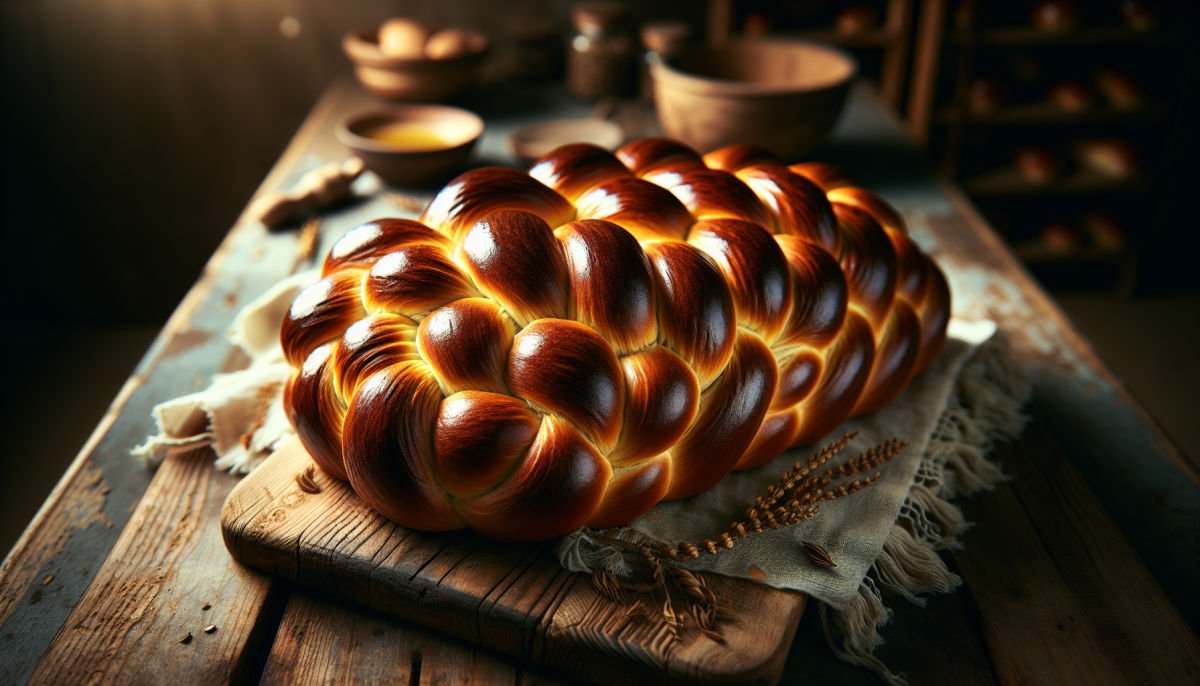
Tahini challah is where ancient Jewish tradition meets modern Israeli flavor. Take the classic challah dough — enriched, eggy, slightly sweet — and weave through it a ribbon of tahini and date syrup (silan). The result is a bread that is unmistakably challah in form but entirely new in flavor: nutty, slightly bitter from the sesame, sweet and caramel-like from the dates, with a golden crust that carries the aroma of a Middle Eastern kitchen.

This recipe reflects the beautiful fusion happening in Israeli baking today, where Ashkenazi and Sephardic traditions meet and inspire each other. Challah is quintessentially Ashkenazi; tahini is quintessentially Middle Eastern. Together they create something that belongs to neither tradition alone but to the new, evolving food culture of Israel.

The tahini-date swirl runs through the braid, creating pockets of flavor that reveal themselves as you tear the bread apart. On Shabbat morning, each pull releases the scent of toasted sesame. It is a challah for people who love challah but want something unexpected.

For the classic version, see our Classic Challah. For another variation, try our Honey Challah.

Categories
Recipes

Schnecken Recipe: Jewish Cinnamon Pecan Sticky Buns

DairyContains Dairy • Contains Eggs • Contains Gluten
Yield12 buns
DifficultyIntermediate
Active Time40 minutes
Total Time4–5 hours
BrachaMezonot

Schnecken — the word means “snails” in German and Yiddish — are the Jewish answer to the cinnamon roll, and they are infinitely better. Where a cinnamon roll is merely sweet, schnecken are complex: a rich, buttery yeast dough rolled with cinnamon sugar, nestled over a layer of caramelized pecan topping that becomes sticky, golden, and irresistible when the pan is inverted after baking.

Schnecken were a staple of every Jewish bakery in America from the 1920s through the 1970s — the golden age of Jewish baking. They were displayed in the window alongside babka and rugelach, their glossy caramel tops glistening under the bakery lights. They were the special-occasion breakfast, the treat brought to a bris, the indulgence that made Sunday morning worth waking up for.

This recipe uses a classic enriched dairy dough — butter, eggs, and milk create a tender, brioche-like crumb. The caramel topping is a simple mixture of butter, brown sugar, and pecans that goes into the pan first and transforms during baking into a gorgeous, sticky glaze.

For the chocolate version of Jewish enriched dough, try our Babka Buns or Chocolate Babka.

Categories
Recipes

Kichel Recipe: Traditional Bow-Tie Sugar Cookies

Pareve
Dairy-Free • Contains Eggs • Contains Gluten
Yield~40 cookies
DifficultyEasy
Active Time20 minutes
Total Time1½ hours
BrachaMezonot

Kichel are the lightest, crispiest, most addictive cookies in the Ashkenazi repertoire — and they contain exactly four ingredients. Flour, eggs, oil, and sugar. That is all. No butter, no leavening, no vanilla. Just a simple dough rolled impossibly thin, cut into rectangles, twisted into bow-ties, and baked until they puff, blister, and turn golden. The result is a cookie that shatters at first bite, dissolves on the tongue, and leaves nothing but sweetness behind.

Kichel (pronounced “KIH-khul,” from the Yiddish for “little cake”) were the kiddush cookie — the ones set out on platters at every Shabbat morning kiddush in every Ashkenazi synagogue from Warsaw to Williamsburg. They are the cookies of simchas and shivas, of afternoon tea and midnight snacking. They cost almost nothing to make, keep for weeks, and disappear faster than any other cookie on the table.

The secret to great kichel is in the rolling: the dough must be stretched paper-thin, almost translucent. When baked, this thin dough puffs dramatically, creating airy, blistered layers that are more cracker than cookie, more air than substance. Roll them thick and you get a dense, doughy disappointment. Roll them thin and you get magic.

Serve alongside our Mandelbrot and Rugelach for the ultimate Ashkenazi cookie platter.

Categories
Recipes

Potato Knish Recipe: Classic Jewish Baked Filled Pastry

Pareve
Dairy-Free • Contains Eggs • Contains Gluten
Yield12 knishes
DifficultyIntermediate
Active Time45 minutes
Total Time2½–3 hours
BrachaMezonot

The knish is Jewish comfort food in its purest form — a thin, golden shell of pastry wrapped around a filling so creamy and savory that one bite can transport you to a Lower East Side pushcart in 1920. For more than a century, the potato knish has been the street food of Jewish New York: sold hot from carts on Houston Street, steaming in deli windows on the Upper West Side, and piled on platters at every kiddush and shiva from Brooklyn to the Bronx.

The word knish comes from the Ukrainian or Polish word for a dumpling or filled pastry. Eastern European Jews brought the concept to America, where it evolved into something distinctly their own: a larger, more substantial pastry with a flaky, golden crust and a filling of mashed potatoes enriched with deeply caramelized onions, salt, and pepper. Nothing more. The genius of the knish is its simplicity — and the quality of its execution.

This recipe produces baked knishes, not the fried version you might find at a hot dog stand. Baking creates a lighter, flakier pastry with a golden exterior that crackles when you bite through it. The filling is smooth, creamy, and loaded with sweet caramelized onions. These are the knishes you remember from your grandmother’s kitchen — or wish you did.

Knishes pair beautifully with our Bialys and Corn Rye Bread for a complete Jewish deli spread.

Categories
Recipes

Babka Buns Recipe — Individual Chocolate Babka Rolls

Dairy
Contains Dairy • Contains Eggs • Contains Gluten
Yield12 buns
DifficultyIntermediate
Active Time50 minutes
Total Time4–5 hours
BrachaMezonot

What if babka came in individual portions? That is the idea behind babka buns — the same rich, buttery, chocolate-swirled dough that makes classic babka irresistible, shaped into individual rolls that fit perfectly in a muffin tin. Each bun is a miniature babka: layers of enriched dough spiraling around a dark chocolate filling, glazed with simple syrup while still warm, and absolutely impossible to eat just one of.

Babka buns solve the eternal babka problem: the uneven slicing, the crumbling, the debate over who gets the chocolatey end piece versus the leaner middle. With individual buns, every portion is perfect — each one a self-contained swirl of dough and chocolate, with maximum filling-to-bread ratio and a glossy, sticky finish.

These buns use the same enriched dough as our Chocolate Babka — butter, eggs, milk, and vanilla create a tender, brioche-like crumb. The filling is a simple but intense chocolate paste enriched with espresso powder, which deepens the chocolate flavor without adding coffee taste. Baked in a muffin tin, the buns emerge tall and swirled, ready to be brushed with warm simple syrup for a bakery-quality finish.

For the classic loaf version, see our Chocolate Babka. For a cinnamon variation, try our Cinnamon Babka.

Categories
Recipes

Pumpernickel Bread Recipe — Dark Jewish Rye Bread

Pareve
Dairy-Free • Egg-Free • Contains Gluten
Yield1 large loaf
DifficultyAdvanced
Active Time30 minutes
Total Time5–6 hours
BrachaHaMotzi

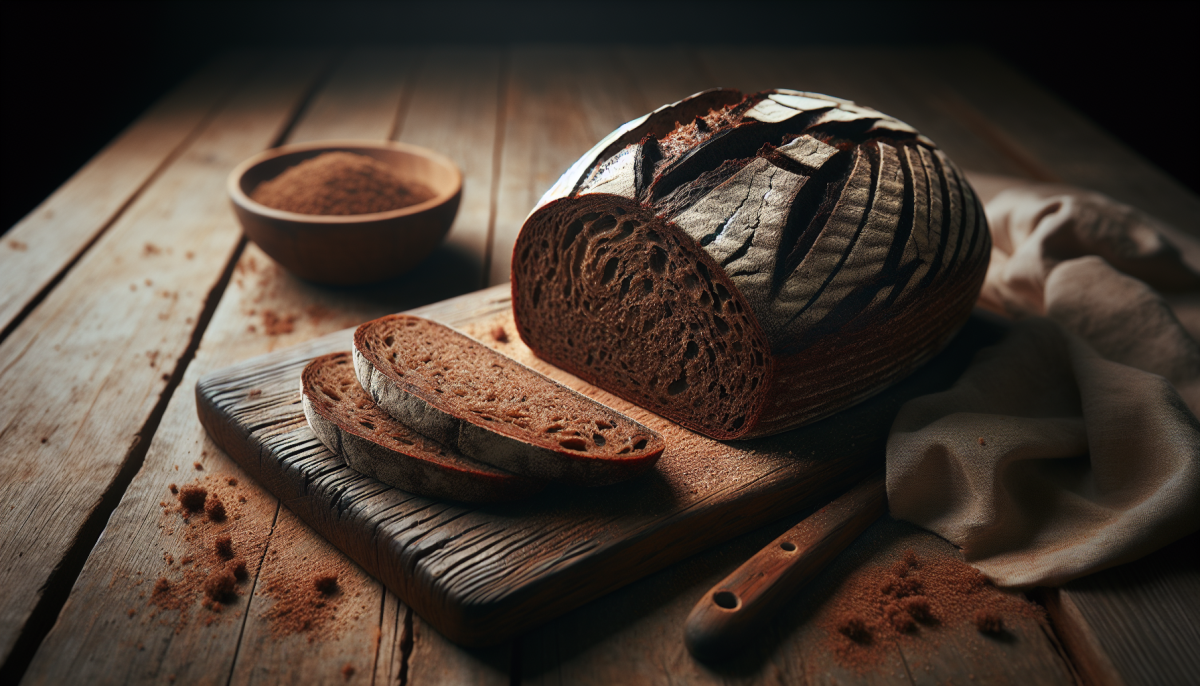
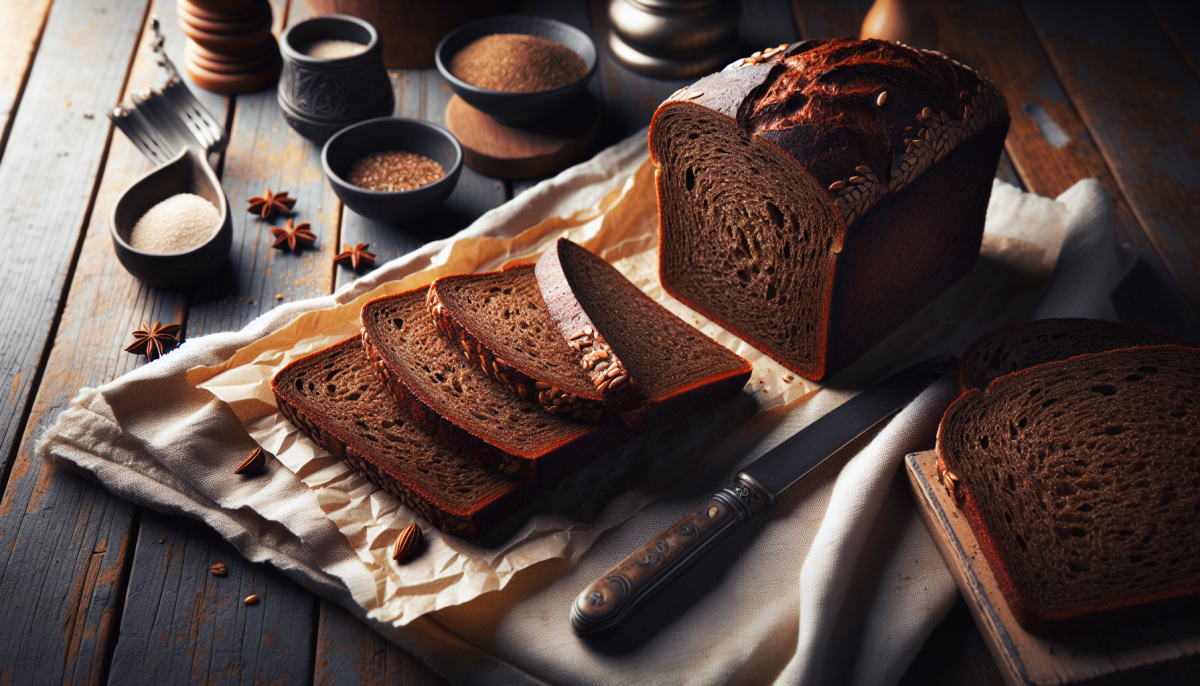
Pumpernickel is the darkest, densest, most mysterious bread in the Jewish baker’s repertoire. Where corn rye is light and accommodating, pumpernickel is brooding and intense — a bread so dark it is nearly black, with a flavor that is earthy, slightly bitter, and deeply complex. It is the bread of smoked fish platters, of cream cheese and lox, of sturdy deli sandwiches where delicate bread would simply surrender.

American pumpernickel — the kind sold in Jewish delis and bakeries from New York to Chicago — gets its dramatic color from a combination of dark rye flour, unsweetened cocoa powder, dark molasses, and instant coffee. This is distinct from traditional Westphalian pumpernickel, which achieves its color through 12–24 hours of extremely low-temperature baking. The American Jewish version is a practical adaptation: all the color and much of the flavor, achieved in a normal baking timeframe.

The crumb is dense and moist, almost cake-like, with a tight texture that holds up to heavy spreads and thick-sliced deli meats. The crust is dark and firm but not hard. The flavor is rich and complex — earthy from the rye, bitter-sweet from the cocoa and molasses, warm from the optional caraway. It is not a bread for the timid, but for those who love it, nothing else comes close.

Try this alongside our Corn Rye and Marble Rye for the complete Jewish deli rye bread trilogy.

Categories
Recipes

Onion Pletzl Recipe — Classic Jewish Onion Flatbread

Pareve
Dairy-Free • Egg-Free • Contains Gluten
Yield2 large flatbreads
DifficultyEasy
Active Time25 minutes
Total Time2½–3 hours
BrachaHaMotzi

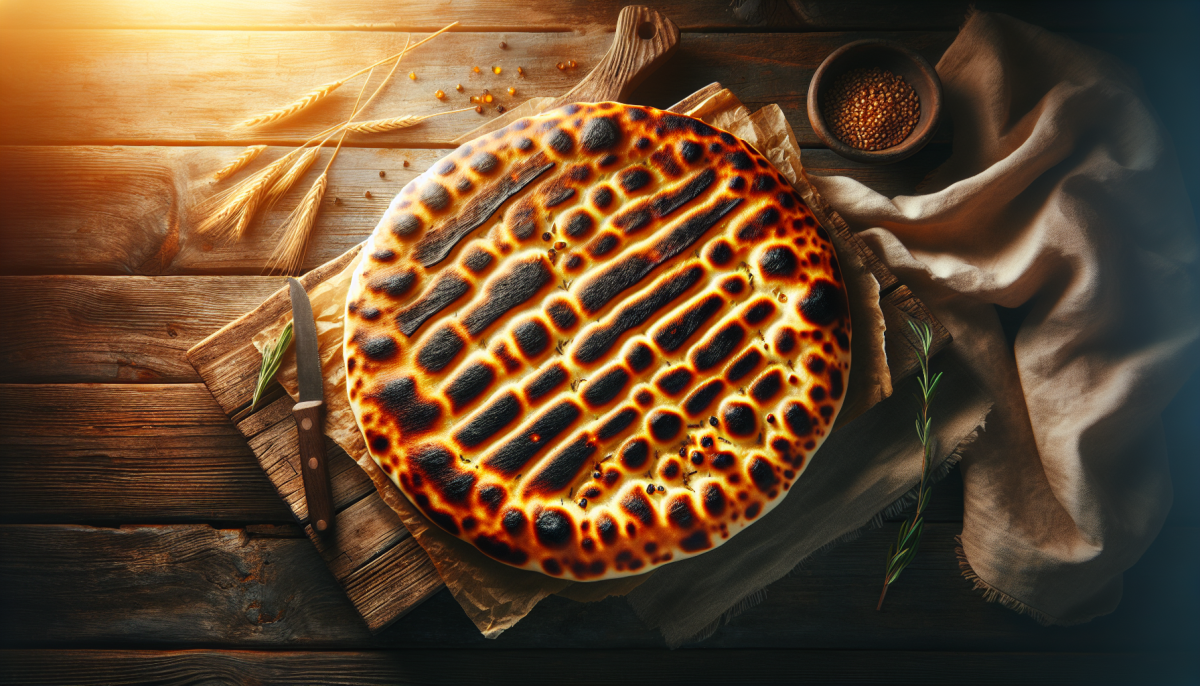
Pletzl is the Jewish flatbread that nobody knows by name but everyone loves at first bite. Imagine focaccia — but thinner, crispier, and topped with a generous layer of caramelized onions and poppy seeds instead of olive oil and rosemary. That is pletzl: a flat, dimpled bread from the Ashkenazi baking tradition that deserves to be as famous as its Italian cousin.

The name pletzl comes from the Yiddish word for “flat” or “board,” which describes both its shape and its essential character. It is a simple lean dough — flour, water, yeast, salt, and a touch of oil — pressed flat on a sheet pan, dimpled with fingertips, and covered with sliced onions and poppy seeds before baking. The result is a bread that is crispy on the edges, soft and chewy in the center, and covered in sweet, caramelized onions.

Pletzl is closely related to the bialy — both come from the same Ashkenazi tradition of onion-topped breads. But where the bialy is an individual roll with a filled crater, pletzl is a large communal flatbread, torn apart and shared at the table. It is the bread you put in the center of a Shabbat lunch spread, the bread that disappears before anything else on the table.

Love onion-topped breads? Try our Bialys for the individual-roll version of this same delicious tradition.

Categories
Recipes

Corn Rye Bread Recipe — Classic Jewish Deli Rye Bread

Pareve
Dairy-Free • Egg-Free • Contains Gluten
Yield1 large loaf
DifficultyIntermediate
Active Time30 minutes
Total Time4–5 hours
BrachaHaMotzi

When someone says “Jewish rye bread,” this is the bread they mean. Corn rye is the quintessential American Jewish deli bread — the bread of Katz’s Deli, of Carnegie Deli, of every great Jewish delicatessen that ever stacked pastrami high and served it with a pickle. The name is a small mystery: there is no corn in the bread. “Corn” refers to the cornmeal dusted on the bottom of the loaf before baking, preventing sticking and adding a subtle crunch to the crust.

What defines corn rye is its restraint. It is not a heavy, dense, European-style rye. It is a lighter bread — predominantly wheat flour with 20–30% rye flour blended in — that has just enough rye character to be interesting without being overwhelming. The crumb is moderately open, slightly chewy, with a faint tang. The crust is thin and crackly, baked with steam. And then there are the caraway seeds, scattered through the dough, releasing their warm, anise-like aroma with every bite.

This is a lean bread — no eggs, no fat, no sugar beyond a touch of malt. It is honest and unadorned, designed to support rather than compete with the bold flavors of deli meats, mustard, and pickles. It is the most democratic bread in the Jewish repertoire: affordable, satisfying, and universally loved.

Pair this with our Bialys for the complete Jewish deli bread experience, or try our Marble Rye for the dramatic two-tone version.

Categories
Recipes

Kokosh Cake Recipe — Hungarian Jewish Chocolate Roll

Dairy
Contains Dairy • Contains Eggs • Contains Gluten
Yield2 loaves (~16 slices)
DifficultyIntermediate
Active Time40 minutes
Total Time3–4 hours
BrachaMezonot

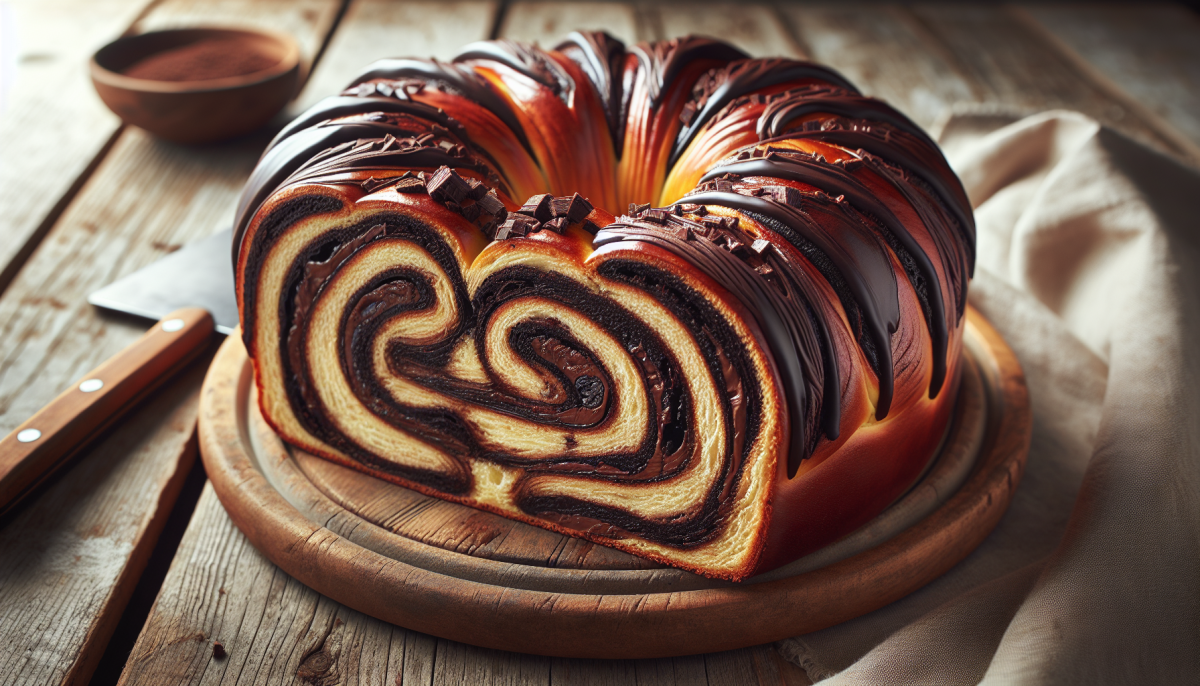
Kokosh cake is babka’s quieter, denser, more intensely chocolatey cousin. Where babka is braided and dramatic, kokosh is a simple roll — enriched yeast dough spread thick with a cocoa-sugar-butter filling, rolled up tightly, and baked until the exterior is golden and the interior is a swirl of dark chocolate layers. It is less showy than babka but, many would argue, more satisfying to eat: denser, moister, with a higher filling-to-dough ratio that means every bite delivers a hit of chocolate.

Kokosh cake (also called kokosh, kokush, or simply “chocolate roll”) traces its origins to the Jewish communities of Hungary and the Austro-Hungarian Empire. Hungarian Jewish bakers, renowned for their pastry skills, created an entire repertoire of rolled and filled cakes — and kokosh was among the most beloved. When Hungarian Jews emigrated to America, particularly to Brooklyn, they brought kokosh with them. Today, it is a staple of Jewish bakeries throughout Borough Park, Williamsburg, and Flatbush.

The filling is the heart of kokosh cake: a generous layer of cocoa powder, sugar, and melted butter, sometimes enriched with chocolate chips or a splash of espresso. Unlike babka, which often uses a nutella-style spread, kokosh filling is grittier, more intensely cocoa-forward, and less sweet. The dough is soft and enriched — similar to babka dough but rolled rather than braided, which means the filling stays in distinct layers rather than getting swirled and mixed.

If you love our Chocolate Babka, kokosh cake is the next step in your Jewish chocolate bread education. Same family, different personality.