Dairy-Free • Contains Eggs • Contains Nuts • Contains Gluten
Mandelbrot — “almond bread” in Yiddish — is the twice-baked cookie that every Jewish grandmother made better than anyone else’s. Long before Italian biscotti became fashionable in American coffee shops, Ashkenazi bakers were slicing logs of almond-studded dough and baking them twice until they achieved that perfect, shattering crunch. Mandelbrot was the cookie jar staple of every Eastern European Jewish home, the cookie you reached for with your afternoon glass of tea, the cookie that traveled in care packages and lasted for weeks.
The word itself tells you everything: mandel means almond, brot means bread. But mandelbrot is no bread — it is a cookie, crisp and golden, enriched with oil (never butter, always pareve), fragrant with vanilla and citrus zest, studded with toasted almonds and, in many family versions, chocolate chips. It is twice-baked for the same reason biscotti is: the first bake sets the structure, the second bake drives out moisture and creates that dry, crunchy texture that makes the cookie a perfect companion for dunking.
Unlike Italian biscotti, which tends to be tooth-breakingly hard, mandelbrot strikes a gentler balance — crisp on the outside, with a slightly tender interior that yields without requiring you to soak it in coffee first. This is because mandelbrot dough contains more fat (from oil and eggs) than traditional biscotti. The result is a cookie that is firm enough to dunk but forgiving enough to eat on its own.
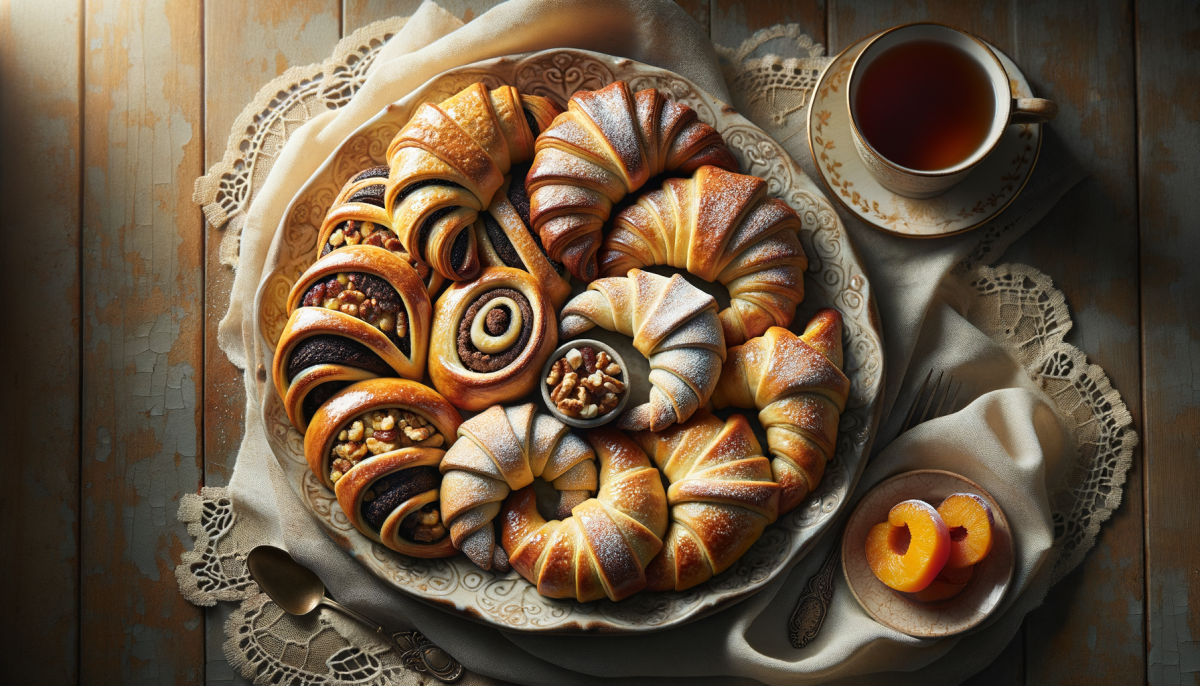
Mandelbrot is the perfect pareve dessert — serve it after any meal, meat or dairy. Pair it with our Rugelach for a complete Jewish cookie platter that will disappear in minutes.