Dairy-Free (with margarine) • Egg-Free • Contains Gluten
8 flatbreads
Intermediate
45 minutes
2–3 hours (includes resting)
Mezonot
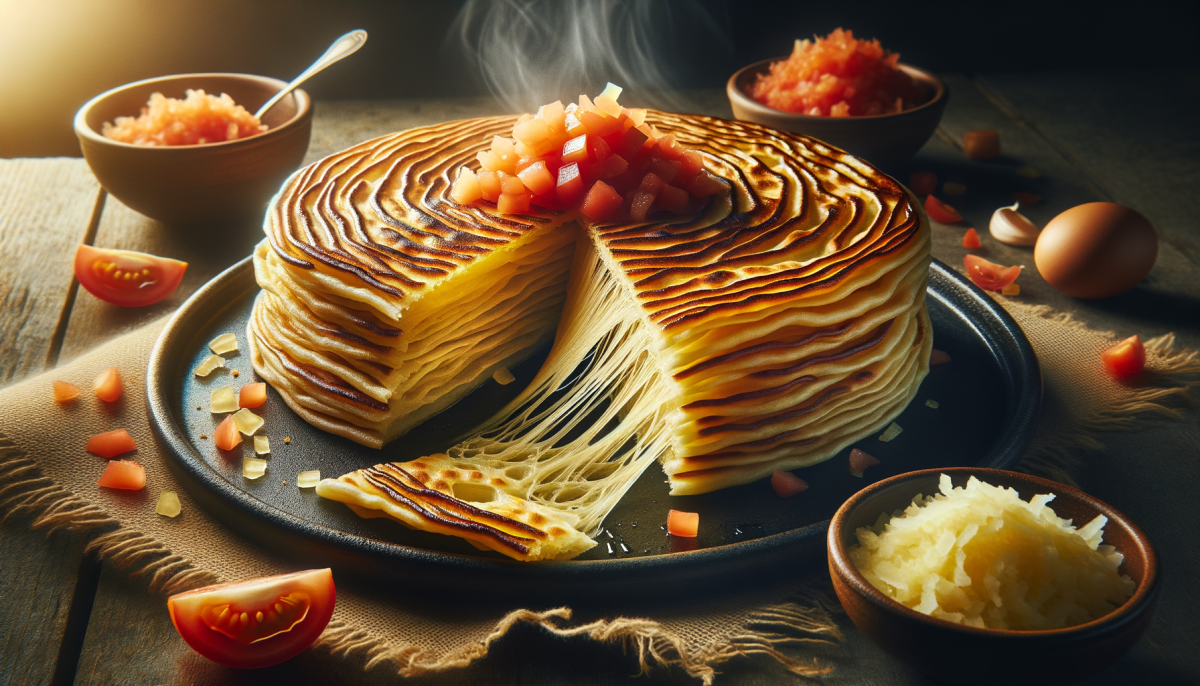
Malawach is the bread that shatters. Imagine lifting a golden disc from a hot skillet, its surface blistered and crackling, and tearing it open to reveal dozens of tissue-thin layers that peel apart like the pages of a parchment manuscript. Steam rises from every stratum, carrying the warm scent of toasted fat and flour. This is malawach — the flaky, laminated flatbread of the Yemenite Jewish table, and one of the most magnificent breads in the entire Jewish baking tradition.
Malawach (malawach, מלאווח) is, at its heart, deceptively simple: flour, water, salt, a pinch of sugar, and generous amounts of fat worked into impossibly thin layers. There is no yeast, no leavening agent of any kind. The magic is entirely structural — the same principle that gives croissants their shatter, that gives puff pastry its lift, but achieved here not with cold butter and precise folding but with warm hands, melted margarine, and a technique perfected over centuries in the kitchens of Sana’a, Aden, and the mountain villages of Yemen.
Where kubaneh is patient and slow, baked overnight in a sealed pot, malawach is bold and immediate. It goes from dough to plate in minutes once shaped — pan-fried in a dry or lightly greased skillet until each side is deeply golden and the layers have puffed with steam. The contrast between the two breads is part of what makes the Yemenite bread tradition so rich: one bread for long waiting, another for the satisfying immediacy of hot fat and a cast-iron pan.
Malawach is traditionally served with grated fresh tomato (resek agvaniyot), hard-boiled eggs, and a generous spoonful of s’chug — the fiery Yemenite chile paste. Tear it open, dip, and eat with your hands. This is Yemenite street food elevated to an art form.