Categories
Recipes

Honey Challah Recipe — Round Rosh Hashanah Bread

Pareve
Dairy-Free • Egg • Contains Gluten
Yield
2 round challahs
Difficulty
Beginner–Intermediate
Active Time
30 minutes
Total Time
3½–4 hours
Bracha
HaMotzi

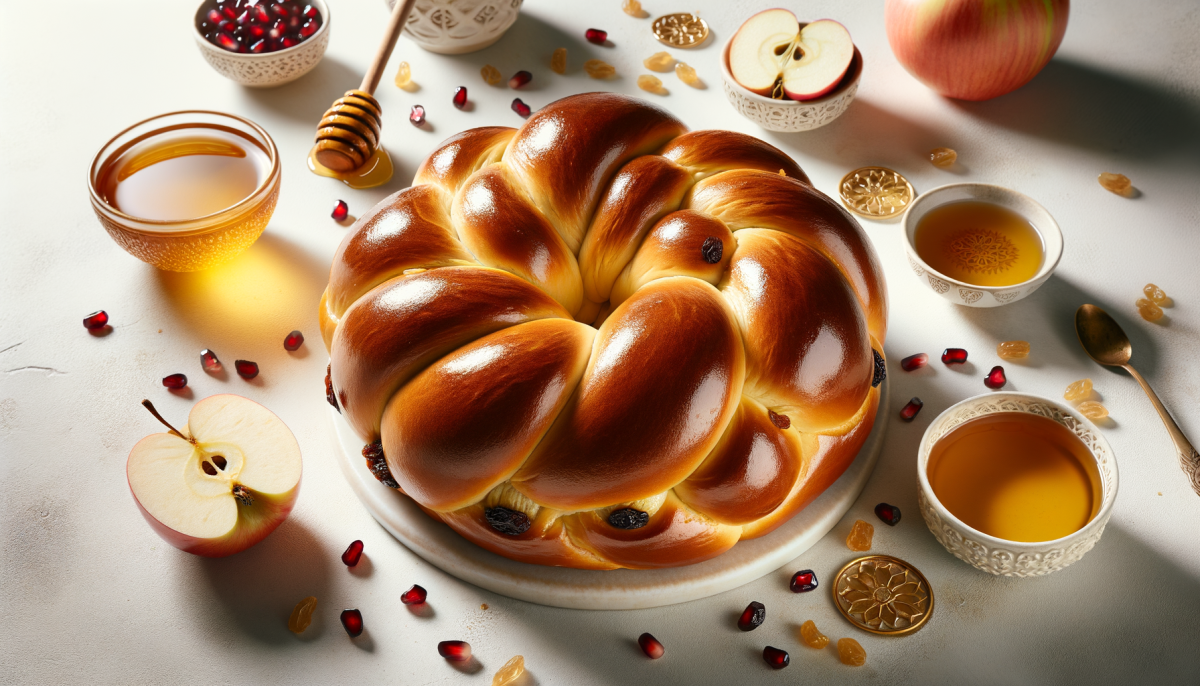
Round honey challah is THE bread of Rosh Hashanah. If there is one loaf that defines the Jewish New Year, this is it — golden, glistening with honey glaze, shaped into a tight spiral that speaks of cycles, continuity, and hope. From the first night of Rosh Hashanah through the final meal of Sukkot, this round, honey-sweetened challah replaces the traditional braided loaf on every observant Jewish table.

The symbolism is woven into every element. The round shape represents the cycle of the year — no beginning, no end, the eternal turning of seasons and festivals. Honey replaces sugar in the dough, because we ask God for a shanah tovah u’metukah — a good and sweet new year. And the spiral, rising upward from the center, is said to evoke a crown, a reminder of God’s sovereignty on the Day of Judgment.

If you have baked our Classic Kosher Challah, you already have the foundation. Honey challah uses the same core technique but swaps most of the sugar for rich, floral honey and reshapes the dough from a braid into a beautiful round coil. It is a small shift in method that carries enormous meaning.

On Rosh Hashanah night, the round challah is dipped in honey before eating — doubling the sweetness. Some families place a bowl of honey at the center of the table and let each person tear a piece and dip it themselves, making the wish for a sweet new year a communal, tactile act.
Categories
Recipes

Mufleta Recipe — Moroccan Mimouna Celebration Flatbread

Pareve
Dough is Pareve • Dairy when served with butter • Contains Gluten
Yield
12–15 mufletas
Difficulty
Intermediate
Active Time
45 minutes
Total Time
2 hours
Bracha
Mezonot

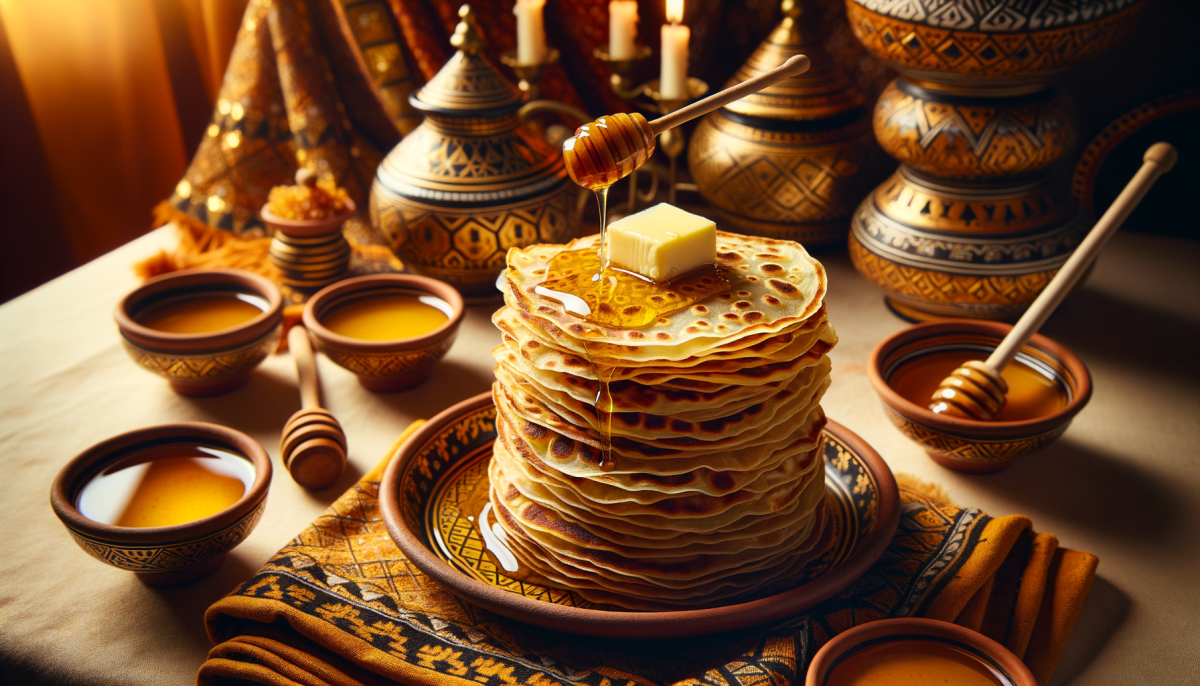
Mufleta is the first bread after Pesach — and it tastes like freedom all over again. For seven (or eight) days, Moroccan Jews have lived without chametz. No flour, no yeast, no risen dough. And then, the moment Pesach ends — sometimes literally minutes after havdalah — the flour comes out, the griddle heats up, and the kitchen fills with the scent of something extraordinary: paper-thin rounds of dough, stretched by hand until nearly translucent, sizzling on a hot surface, stacking up in a warm, glistening tower drizzled with honey and melted butter.

This is mufleta (mufleta, מופלטה), the iconic bread of Mimouna — the jubilant Moroccan Jewish celebration that marks the end of Pesach and the joyful return to chametz. It is not merely a recipe. It is a ritual, a homecoming, a communal act of sweetness and abundance. In Moroccan Jewish homes from Casablanca to Fez to Marrakech, and today across Israel and the diaspora, mufleta is the bread that announces: the holiday is over, and the good life continues.

The dough itself could not be simpler — flour, water, salt, a pinch of sugar, and oil. No yeast, no eggs, no dairy. But the technique is everything. Each ball of dough is oiled generously, rested until supple, then stretched by hand on an oiled surface until it becomes a gossamer-thin disc — so thin you can read a newspaper through it. Cooked on a blazing-hot griddle for just seconds per side, the mufletas are stacked one atop another, the residual heat steaming them into pliable, silky sheets. Drizzled with warm honey and a generous pat of butter, rolled or folded, eaten with the fingers — this is Mimouna.

Mufleta is traditionally prepared and served on the evening immediately after Pesach ends (Motzei Pesach). The timing is deliberate and deeply meaningful: this is the very first chametz touching your lips after a week of abstention. The sweetness of the honey, the richness of the butter, the tender warmth of fresh-cooked dough — it is a sensory celebration of abundance, gratitude, and renewal.

Categories
Recipes

Sufganiyot Recipe — Pillowy Hanukkah Donuts Filled with Joy

Pareve
Oil-Based • Egg • Contains Gluten • Dairy Variation Below
Yield
16–20 donuts
Difficulty
Intermediate
Active Time
1 hour
Total Time
3–4 hours
Bracha
Mezonot

This sufganiyot recipe will make you forget everything you know about donuts. These are sufganiyot — and they carry 2,000 years of miracles in every bite.

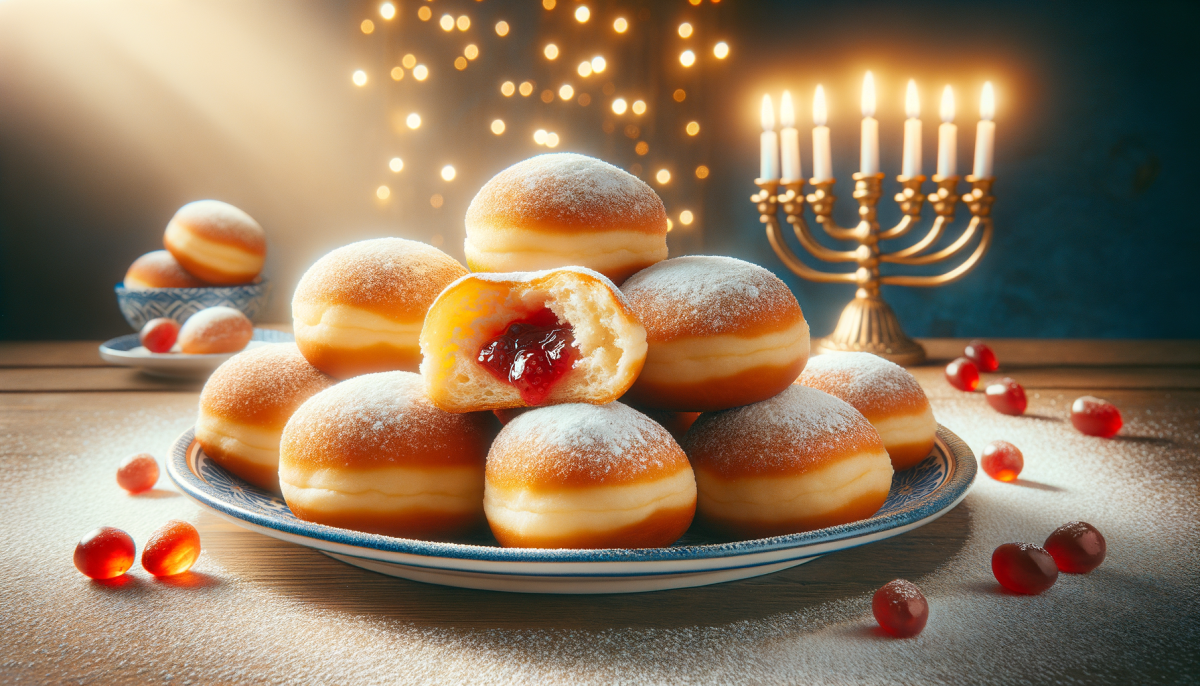
Close your eyes and picture this: a pillow of warm, golden dough, impossibly light, yielding under the slightest pressure. You bite in and the center erupts — a bright ribbon of raspberry jam, or a slick of dark chocolate, or a cloud of silky vanilla custard. Powdered sugar drifts down your sleeve like snowfall. The kitchen smells of warm oil and sweetness and something ancient, something that connects this Hanukkah to every Hanukkah that came before.

Sufganiyot are Israel’s gift to the holiday table. While Ashkenazi Jews in the diaspora have long celebrated Hanukkah with crispy potato latkes, Israeli bakeries transformed the season into a national obsession with these filled, fried donuts — each one a reminder of the miracle of oil. The cruse that should have lasted one day burned for eight. We fry in oil to remember. We fill with sweetness to celebrate.

This recipe will give you sufganiyot that rival the best bakeries on Jaffa Road. Pillowy, never greasy. Golden, never pale. Filled to bursting, never hollow. You will never buy store-bought sufganiyot again.

This is the taste of Hanukkah. And this year, it is coming from your kitchen.

Categories
Recipes

Hamantaschen Recipe — Classic Purim Cookies That Stay Closed

Version A — Milchig (Dairy)
Butter-based • Egg • Contains Gluten
Version B — Pareve
Oil-based • Dairy-Free • Egg • Contains Gluten
Yield
36–40 cookies
Difficulty
Beginner
Active Time
1 hour
Total Time
3–4 hours
Bracha
Mezonot

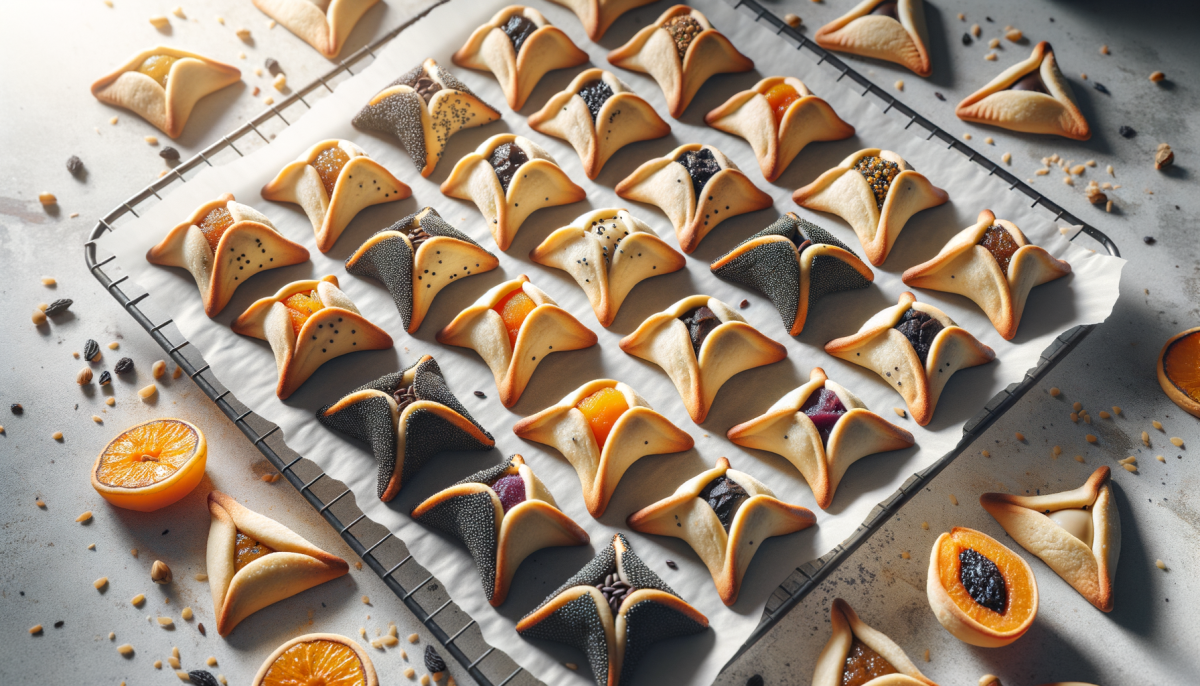
This hamantaschen recipe gives you the one cookie that tells a story of survival, triumph, and a lot of poppy seeds.

Purim is March 3 this year, and if you have not started planning your baking, now is the time. These small, triangular cookies — golden at the edges, tender in the center, hiding a pocket of sweet filling — are not just a holiday treat. They are a tradition you can hold in your hand. Every fold carries the memory of a people who refused to be destroyed, wrapped in butter and sugar and a generous spoonful of mohn.

Hamantaschen are the centerpiece of mishloach manot, the Purim mitzvah of sending food gifts to friends and neighbors. Bake one batch and you have enough to fill plates for everyone you love. Wrap them up, walk them over, leave them on a doorstep. This is what Purim tastes like — the joy of giving, sealed inside a triangle of cookie dough.

Below you will find everything: two complete dough versions (dairy and pareve), five filling options including a traditional poppy seed filling made from scratch, the precise folding technique that keeps your hamantaschen closed during baking, and complete kosher guidance for every ingredient. Whether you are baking your first batch or your fiftieth, this recipe will not let you down.

Purim 2026 falls on Tuesday, March 3. Start baking now — hamantaschen freeze beautifully and mishloach manot plates do not assemble themselves. Bake once, gift to everyone you love.