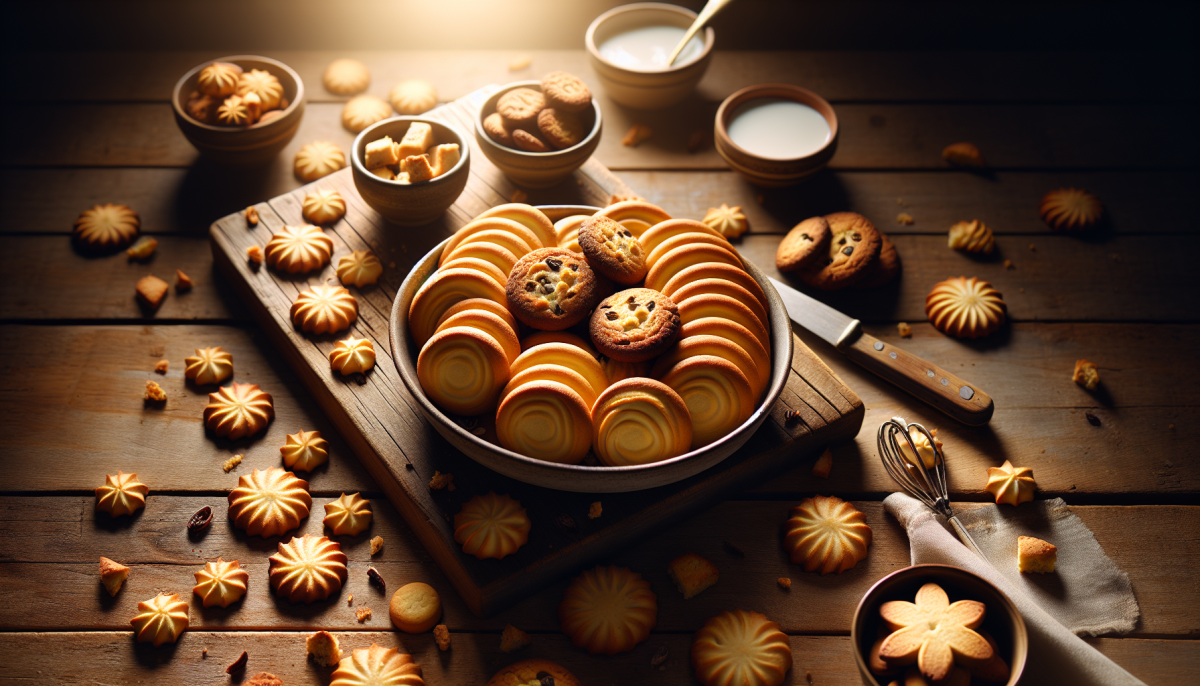
Ma’amoul are the jewels of Levantine Jewish baking—delicate, crumbly cookies made from semolina and flour, filled with a luscious paste of dates, cinnamon, and cardamom, then shaped by hand or pressed into ornate wooden molds that give each cookie its distinctive patterned surface. These cookies have graced the tables of Syrian, Lebanese, Iraqi, and Egyptian Jewish communities for centuries, served at celebrations, holidays, and as a gesture of hospitality.
The ma’amoul tradition runs deep in Sephardic and Mizrahi Jewish communities. In Aleppo, families of bakers prepared thousands of these cookies for Purim, filling them with dates, walnuts, or pistachios. In Baghdad, ma’amoul filled with dates were a staple for Shabbat. In Cairo, they appeared at every simcha (celebration). The art of making ma’amoul was passed from mother to daughter, and the wooden molds (tabi) were treasured family heirlooms, their carved patterns as distinctive as fingerprints.
This recipe focuses on the most classic filling: dates. Medjool dates, processed into a smooth paste and perfumed with cinnamon, cardamom, and a whisper of orange blossom water, are encased in a tender semolina shell that shatters on first bite and melts on the tongue. The contrast between the sandy, buttery exterior and the sticky-sweet, spiced interior is what makes ma’amoul one of the most addictive cookies in the Jewish baking repertoire.