Categories
Recipes

Apple Strudel Recipe: Classic Jewish Bakery Pastry

✔ Pareve
Yield: 1 large strudel (10 slices)  |  Difficulty: Advanced  |  Active Time: 1 hour  |  Total Time: 2½ hours  |  Bracha: Mezonot

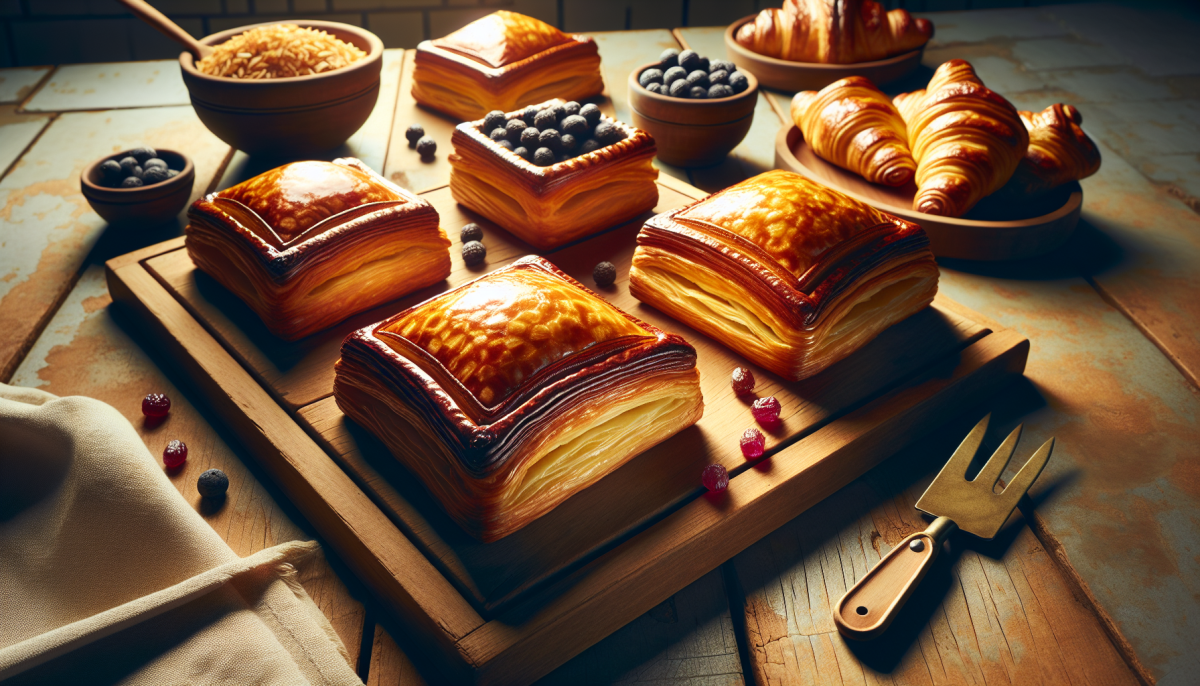
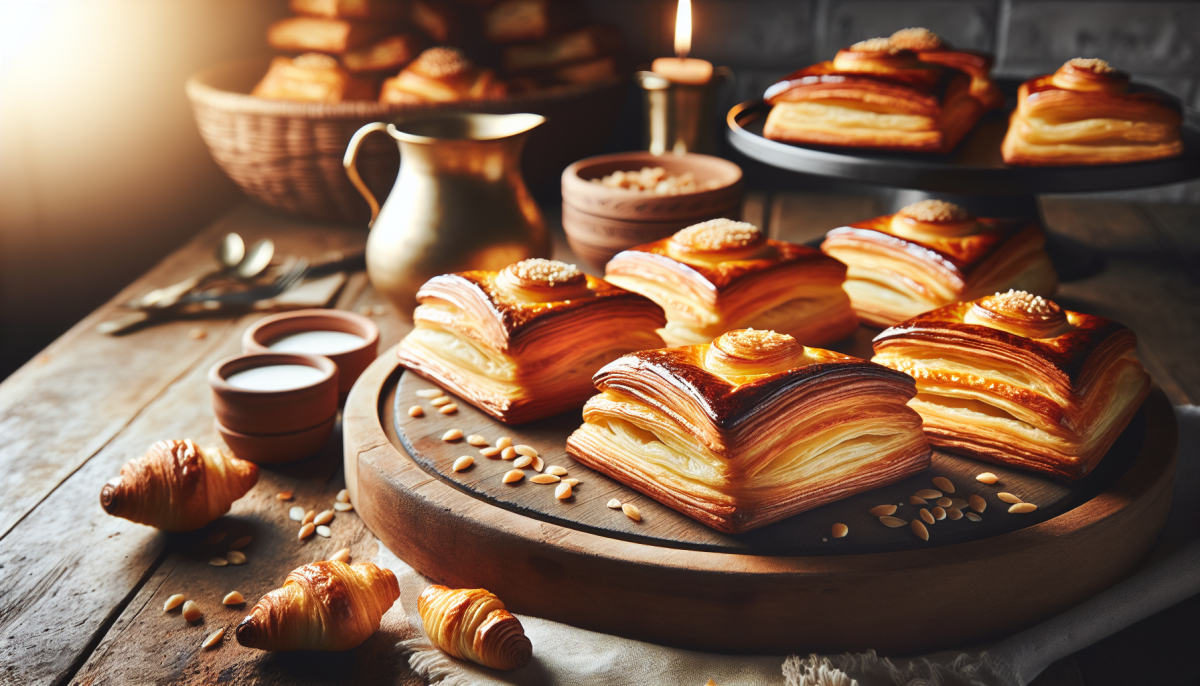
Apple strudel is one of the great achievements of Ashkenazi Jewish baking—a paper-thin sheet of hand-stretched dough rolled around a filling of spiced, caramelized apples and toasted breadcrumbs, then baked until the pastry shatters into a thousand golden, flaky layers. It’s the kind of baking that requires skill, patience, and a clean kitchen towel, and the result is something that no store-bought version can approach.

The strudel tradition came to Jewish bakeries through the Austro-Hungarian Empire, where Viennese Apfelstrudel was the queen of pastries. Jewish bakers adapted it by replacing butter with oil, creating a pareve version that could be served after meat meals. The hand-stretched dough—pulled so thin you can read a newspaper through it—became a point of pride among Jewish grandmothers, a skill passed down through generations and demonstrated with theatrical flair at family gatherings.

Making strudel dough from scratch is an exercise in trust. The high-gluten dough, rested until relaxed and extensible, is stretched by hand over a tablecloth until it becomes nearly transparent. Rolled around a fragrant filling of tart apples, sugar, cinnamon, golden raisins, and toasted breadcrumbs (which absorb the apple juices and prevent sogginess), the strudel bakes into a pastry that crackles at the touch and reveals layer upon delicate layer within.
Categories
Recipes

Date Ma’amoul Recipe: Levantine Jewish Filled Cookies

✔ Pareve
Yield: 24 cookies  |  Difficulty: Intermediate  |  Active Time: 1 hour  |  Total Time: 2½ hours  |  Bracha: Mezonot

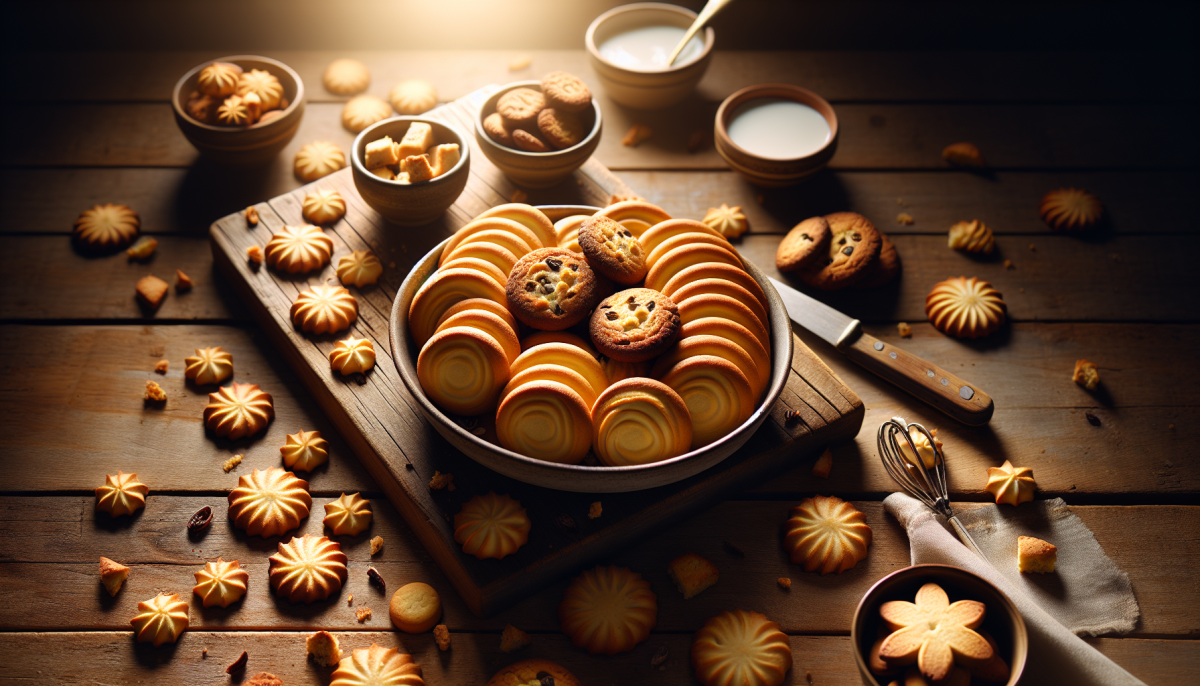
Ma’amoul are the jewels of Levantine Jewish baking—delicate, crumbly cookies made from semolina and flour, filled with a luscious paste of dates, cinnamon, and cardamom, then shaped by hand or pressed into ornate wooden molds that give each cookie its distinctive patterned surface. These cookies have graced the tables of Syrian, Lebanese, Iraqi, and Egyptian Jewish communities for centuries, served at celebrations, holidays, and as a gesture of hospitality.

The ma’amoul tradition runs deep in Sephardic and Mizrahi Jewish communities. In Aleppo, families of bakers prepared thousands of these cookies for Purim, filling them with dates, walnuts, or pistachios. In Baghdad, ma’amoul filled with dates were a staple for Shabbat. In Cairo, they appeared at every simcha (celebration). The art of making ma’amoul was passed from mother to daughter, and the wooden molds (tabi) were treasured family heirlooms, their carved patterns as distinctive as fingerprints.

This recipe focuses on the most classic filling: dates. Medjool dates, processed into a smooth paste and perfumed with cinnamon, cardamom, and a whisper of orange blossom water, are encased in a tender semolina shell that shatters on first bite and melts on the tongue. The contrast between the sandy, buttery exterior and the sticky-sweet, spiced interior is what makes ma’amoul one of the most addictive cookies in the Jewish baking repertoire.

Categories
Recipes

Black and White Cookies Recipe: NYC Jewish Bakery Classic

✔ Pareve
Yield: 12 large cookies  |  Difficulty: Intermediate  |  Active Time: 45 minutes  |  Total Time: 2 hours  |  Bracha: Mezonot

The black and white cookie is as New York as the Brooklyn Bridge and as Jewish as a Sunday morning at Zabar’s. Half-moon of vanilla fondant, half-moon of chocolate—this oversized, cake-like cookie has been a fixture in Jewish bakeries, delis, and appetizing shops across the five boroughs since the early 20th century. It’s the cookie that launched a thousand Seinfeld references, the one Jerry called “the symbol of racial harmony”—two colors coming together on a single cookie.

The origins of the black and white trace back to the German and Eastern European Jewish bakers who established themselves in New York in the late 1800s. Known as Halbmonde (half-moons) in German baking tradition, these cookies were adapted by Jewish bakeries like Glaser’s, Zabar’s, and William Greenberg to become something distinctly New York. The key is in the base: not a crunchy cookie but a soft, cakey round that’s really more of an individually portioned sponge—tender, lemony, and yielding.

A truly great black and white cookie has three non-negotiable qualities: the base must be soft and cake-like (never crunchy), the fondant icing must be smooth and just-set (not dry or chalky), and the dividing line between black and white must be crisp and clean. This recipe delivers all three, with a pareve formula that makes these cookies suitable for any occasion—from a Shabbat kiddush spread to a weeknight treat.

Categories
Recipes

Flodni Recipe: Hungarian Jewish Layered Pastry

✔ Pareve
Yield: 24 pieces  |  Difficulty: Intermediate–Advanced  |  Active Time: 1½ hours  |  Total Time: 5 hours  |  Bracha: Mezonot

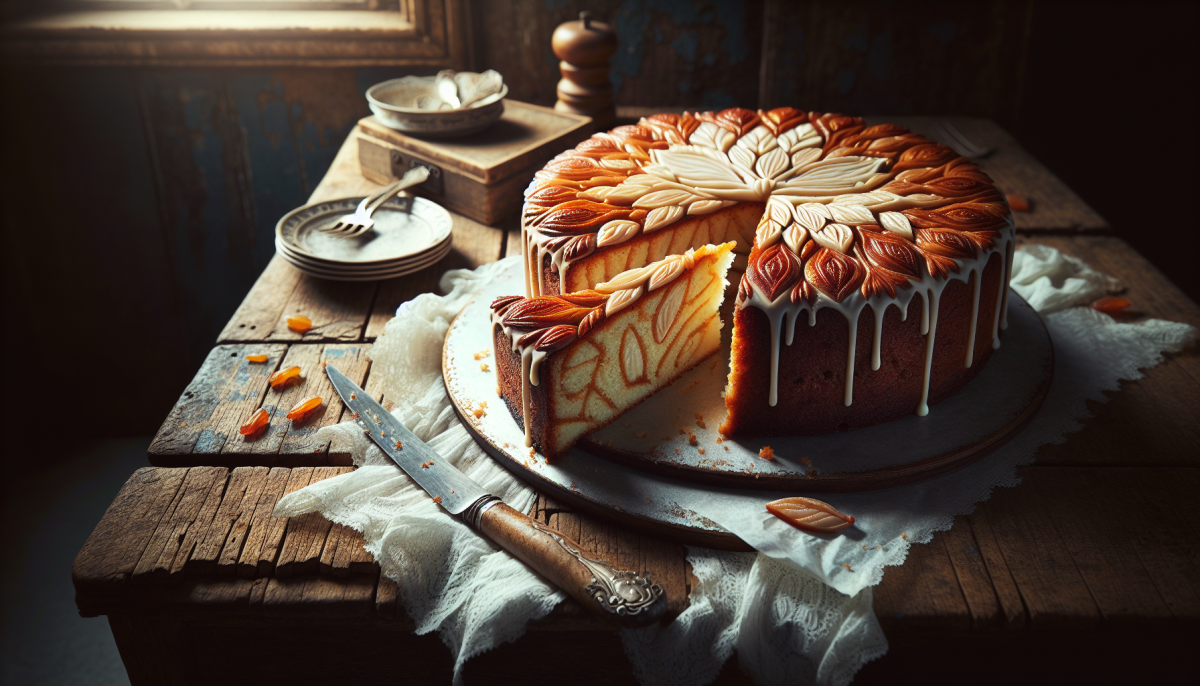
Flodni is the crown jewel of Hungarian Jewish pastry—a magnificent layered creation that tells the story of Budapest’s once-thriving Jewish bakery culture in every bite. This architectural marvel stacks four distinct fillings between five layers of tender, flaky pastry: ground poppy seed, crushed walnut, spiced apple, and rich plum jam, each layer a distinct flavor and texture that harmonizes into something far greater than the sum of its parts.

The origins of flodni trace back to the Jewish quarter of Budapest, where bakeries along Kazinczy Street produced these elaborate pastries for Shabbat, holidays, and celebrations. Each filling carries symbolic weight—the apple for Rosh Hashanah sweetness, the poppy seed for Purim, the walnut for abundance, and the plum jam (lekvar) for the preserved flavors of harvest. Together, they represent the full cycle of the Jewish year in a single confection.

Making flodni is an act of devotion. The process requires patience and care—preparing four separate fillings, rolling out five layers of dough, and assembling everything with precision. But the reward is extraordinary: a pastry that slices into perfect layers of contrasting colors and textures, each bite offering the earthy warmth of poppy seeds, the buttery crunch of walnuts, the bright acidity of apples, and the deep sweetness of plum. It’s the kind of baking that connects you to generations of Hungarian Jewish bakers who understood that the most beautiful things take time.

Categories
Recipes

Schnecken Recipe: Jewish Cinnamon Pecan Sticky Buns

DairyContains Dairy • Contains Eggs • Contains Gluten
Yield12 buns
DifficultyIntermediate
Active Time40 minutes
Total Time4–5 hours
BrachaMezonot

Schnecken — the word means “snails” in German and Yiddish — are the Jewish answer to the cinnamon roll, and they are infinitely better. Where a cinnamon roll is merely sweet, schnecken are complex: a rich, buttery yeast dough rolled with cinnamon sugar, nestled over a layer of caramelized pecan topping that becomes sticky, golden, and irresistible when the pan is inverted after baking.

Schnecken were a staple of every Jewish bakery in America from the 1920s through the 1970s — the golden age of Jewish baking. They were displayed in the window alongside babka and rugelach, their glossy caramel tops glistening under the bakery lights. They were the special-occasion breakfast, the treat brought to a bris, the indulgence that made Sunday morning worth waking up for.

This recipe uses a classic enriched dairy dough — butter, eggs, and milk create a tender, brioche-like crumb. The caramel topping is a simple mixture of butter, brown sugar, and pecans that goes into the pan first and transforms during baking into a gorgeous, sticky glaze.

For the chocolate version of Jewish enriched dough, try our Babka Buns or Chocolate Babka.

Categories
Recipes

Kichel Recipe: Traditional Bow-Tie Sugar Cookies

Pareve
Dairy-Free • Contains Eggs • Contains Gluten
Yield~40 cookies
DifficultyEasy
Active Time20 minutes
Total Time1½ hours
BrachaMezonot

Kichel are the lightest, crispiest, most addictive cookies in the Ashkenazi repertoire — and they contain exactly four ingredients. Flour, eggs, oil, and sugar. That is all. No butter, no leavening, no vanilla. Just a simple dough rolled impossibly thin, cut into rectangles, twisted into bow-ties, and baked until they puff, blister, and turn golden. The result is a cookie that shatters at first bite, dissolves on the tongue, and leaves nothing but sweetness behind.

Kichel (pronounced “KIH-khul,” from the Yiddish for “little cake”) were the kiddush cookie — the ones set out on platters at every Shabbat morning kiddush in every Ashkenazi synagogue from Warsaw to Williamsburg. They are the cookies of simchas and shivas, of afternoon tea and midnight snacking. They cost almost nothing to make, keep for weeks, and disappear faster than any other cookie on the table.

The secret to great kichel is in the rolling: the dough must be stretched paper-thin, almost translucent. When baked, this thin dough puffs dramatically, creating airy, blistered layers that are more cracker than cookie, more air than substance. Roll them thick and you get a dense, doughy disappointment. Roll them thin and you get magic.

Serve alongside our Mandelbrot and Rugelach for the ultimate Ashkenazi cookie platter.

Categories
Recipes

Potato Knish Recipe: Classic Jewish Baked Filled Pastry

Pareve
Dairy-Free • Contains Eggs • Contains Gluten
Yield12 knishes
DifficultyIntermediate
Active Time45 minutes
Total Time2½–3 hours
BrachaMezonot

The knish is Jewish comfort food in its purest form — a thin, golden shell of pastry wrapped around a filling so creamy and savory that one bite can transport you to a Lower East Side pushcart in 1920. For more than a century, the potato knish has been the street food of Jewish New York: sold hot from carts on Houston Street, steaming in deli windows on the Upper West Side, and piled on platters at every kiddush and shiva from Brooklyn to the Bronx.

The word knish comes from the Ukrainian or Polish word for a dumpling or filled pastry. Eastern European Jews brought the concept to America, where it evolved into something distinctly their own: a larger, more substantial pastry with a flaky, golden crust and a filling of mashed potatoes enriched with deeply caramelized onions, salt, and pepper. Nothing more. The genius of the knish is its simplicity — and the quality of its execution.

This recipe produces baked knishes, not the fried version you might find at a hot dog stand. Baking creates a lighter, flakier pastry with a golden exterior that crackles when you bite through it. The filling is smooth, creamy, and loaded with sweet caramelized onions. These are the knishes you remember from your grandmother’s kitchen — or wish you did.

Knishes pair beautifully with our Bialys and Corn Rye Bread for a complete Jewish deli spread.

Categories
Recipes

Burekas Recipe — Sephardic Cheese-Filled Pastries

Dairy
Contains Dairy • Contains Eggs • Contains Gluten
Yield24 burekas
DifficultyIntermediate
Active Time45 minutes
Total Time2½–3 hours
BrachaMezonot

Burekas are the Sephardic pastry that conquered Israel. Walk down any street in Tel Aviv, Jerusalem, or Haifa and you will find them: golden, flaky, sesame-crusted crescents and triangles filled with salty cheese, creamy potatoes, or wilted spinach. They are the ultimate Israeli street food, sold from bakery windows for breakfast, lunch, and every snack in between. They are also one of the great Sephardic Jewish contributions to the world’s pastry canon.

The word burekas (also spelled börek, bourekas, or burek) traces back to the Ottoman Empire, where filled pastries were a staple of Turkish, Greek, and Balkan cuisines. Sephardic Jews throughout the Ottoman world — in Istanbul, Salonica, Izmir, and Rhodes — adopted and adapted the tradition, creating their own versions filled with the cheeses and vegetables available in their communities. When these Jews immigrated to Israel, they brought their burekas with them.

In Israeli bakeries, the shape of a burekas tells you its filling — a code that every Israeli learns as a child: triangles are cheese, half-moons are potato, rectangles are spinach. This system allows you to grab what you want without asking, even at the busiest bakery counter. It is an elegant solution born from practical necessity.

For another Sephardic filled pastry tradition, try our Sambusak. For Ashkenazi filled pastries, see our Hamantaschen.

Categories
Recipes

Kokosh Cake Recipe — Hungarian Jewish Chocolate Roll

Dairy
Contains Dairy • Contains Eggs • Contains Gluten
Yield2 loaves (~16 slices)
DifficultyIntermediate
Active Time40 minutes
Total Time3–4 hours
BrachaMezonot

Kokosh cake is babka’s quieter, denser, more intensely chocolatey cousin. Where babka is braided and dramatic, kokosh is a simple roll — enriched yeast dough spread thick with a cocoa-sugar-butter filling, rolled up tightly, and baked until the exterior is golden and the interior is a swirl of dark chocolate layers. It is less showy than babka but, many would argue, more satisfying to eat: denser, moister, with a higher filling-to-dough ratio that means every bite delivers a hit of chocolate.

Kokosh cake (also called kokosh, kokush, or simply “chocolate roll”) traces its origins to the Jewish communities of Hungary and the Austro-Hungarian Empire. Hungarian Jewish bakers, renowned for their pastry skills, created an entire repertoire of rolled and filled cakes — and kokosh was among the most beloved. When Hungarian Jews emigrated to America, particularly to Brooklyn, they brought kokosh with them. Today, it is a staple of Jewish bakeries throughout Borough Park, Williamsburg, and Flatbush.

The filling is the heart of kokosh cake: a generous layer of cocoa powder, sugar, and melted butter, sometimes enriched with chocolate chips or a splash of espresso. Unlike babka, which often uses a nutella-style spread, kokosh filling is grittier, more intensely cocoa-forward, and less sweet. The dough is soft and enriched — similar to babka dough but rolled rather than braided, which means the filling stays in distinct layers rather than getting swirled and mixed.

If you love our Chocolate Babka, kokosh cake is the next step in your Jewish chocolate bread education. Same family, different personality.

Categories
Recipes

Mandelbrot Recipe — Classic Jewish Almond Biscotti

Pareve
Dairy-Free • Contains Eggs • Contains Nuts • Contains Gluten
Yield~30 cookies
DifficultyEasy
Active Time25 minutes
Total Time2 hours
BrachaMezonot

Mandelbrot — “almond bread” in Yiddish — is the twice-baked cookie that every Jewish grandmother made better than anyone else’s. Long before Italian biscotti became fashionable in American coffee shops, Ashkenazi bakers were slicing logs of almond-studded dough and baking them twice until they achieved that perfect, shattering crunch. Mandelbrot was the cookie jar staple of every Eastern European Jewish home, the cookie you reached for with your afternoon glass of tea, the cookie that traveled in care packages and lasted for weeks.

The word itself tells you everything: mandel means almond, brot means bread. But mandelbrot is no bread — it is a cookie, crisp and golden, enriched with oil (never butter, always pareve), fragrant with vanilla and citrus zest, studded with toasted almonds and, in many family versions, chocolate chips. It is twice-baked for the same reason biscotti is: the first bake sets the structure, the second bake drives out moisture and creates that dry, crunchy texture that makes the cookie a perfect companion for dunking.

Unlike Italian biscotti, which tends to be tooth-breakingly hard, mandelbrot strikes a gentler balance — crisp on the outside, with a slightly tender interior that yields without requiring you to soak it in coffee first. This is because mandelbrot dough contains more fat (from oil and eggs) than traditional biscotti. The result is a cookie that is firm enough to dunk but forgiving enough to eat on its own.

Mandelbrot is the perfect pareve dessert — serve it after any meal, meat or dairy. Pair it with our Rugelach for a complete Jewish cookie platter that will disappear in minutes.