Categories
Recipes

Sambusak Recipe — Iraqi Jewish Filled Pastries

Pareve
Chickpea Filling • Contains Gluten • Meat option below
Yield
~30 pastries
Difficulty
Intermediate
Active Time
1 hour
Total Time
2–2.5 hours
Bracha
Mezonot

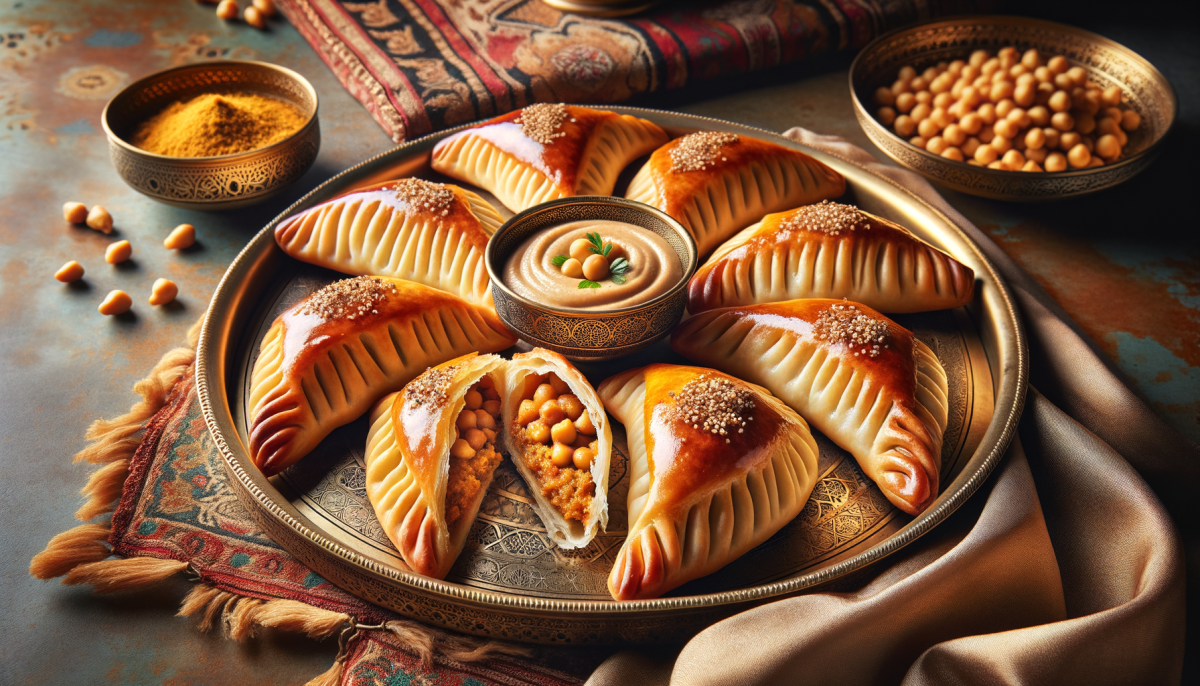
Sambusak are the golden, half-moon pastries that have graced the Shabbat tables of Iraqi and Syrian Jewish families for centuries. Imagine biting through a thin, shatteringly crisp shell — enriched with semolina for a sandy, delicate crunch — into a warm, fragrant filling of spiced chickpeas or seasoned lamb. These are not dumplings, not empanadas, not samosas, though they share ancient DNA with all of them. Sambusak are something entirely their own: the quintessential savory pastry of Babylonian Jewry.

In Iraqi Jewish homes, sambusak (sambusak, סמבוסק) were a labor of love, often made in large batches by mothers and grandmothers on Thursday or Friday morning, the kitchen fragrant with cumin and turmeric. The chickpea version — pareve and endlessly versatile — was the most common, served alongside Shabbat lunch, at kiddush, during holidays, and at every celebration from brit milah to Purim. The meat version, rich with spiced ground lamb or beef, appeared at more festive occasions.

What sets sambusak apart from similar pastries around the Middle East is the dough. Iraqi Jewish bakers developed a distinctive mixture of flour and fine semolina, bound with oil rather than butter, creating a crust that is simultaneously flaky, crisp, and tender — and always pareve. The traditional decorative crimping along the sealed edge is not merely beautiful; it ensures a tight seal that keeps the filling inside during baking and announces to everyone at the table that these were made by hand, with care.

Sambusak are one of the great unifying foods of Mizrachi Jewry. From Baghdad to Aleppo, from Calcutta to Tehran, variations appear under different names — sambousek, samsa, sanbusaj — but the spirit is the same: a humble pastry that transforms simple ingredients into something extraordinary through technique, spice, and generations of practice.
Categories
Recipes

Hamantaschen Recipe — Classic Purim Cookies That Stay Closed

Version A — Milchig (Dairy)
Butter-based • Egg • Contains Gluten
Version B — Pareve
Oil-based • Dairy-Free • Egg • Contains Gluten
Yield
36–40 cookies
Difficulty
Beginner
Active Time
1 hour
Total Time
3–4 hours
Bracha
Mezonot

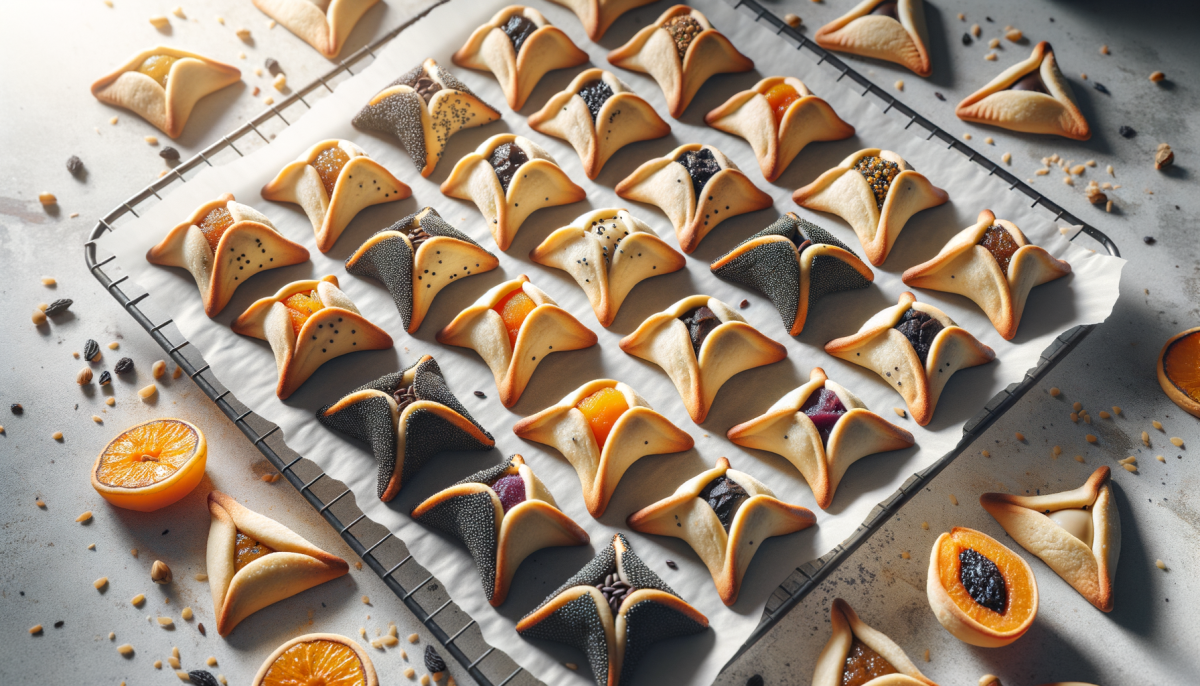
This hamantaschen recipe gives you the one cookie that tells a story of survival, triumph, and a lot of poppy seeds.

Purim is March 3 this year, and if you have not started planning your baking, now is the time. These small, triangular cookies — golden at the edges, tender in the center, hiding a pocket of sweet filling — are not just a holiday treat. They are a tradition you can hold in your hand. Every fold carries the memory of a people who refused to be destroyed, wrapped in butter and sugar and a generous spoonful of mohn.

Hamantaschen are the centerpiece of mishloach manot, the Purim mitzvah of sending food gifts to friends and neighbors. Bake one batch and you have enough to fill plates for everyone you love. Wrap them up, walk them over, leave them on a doorstep. This is what Purim tastes like — the joy of giving, sealed inside a triangle of cookie dough.

Below you will find everything: two complete dough versions (dairy and pareve), five filling options including a traditional poppy seed filling made from scratch, the precise folding technique that keeps your hamantaschen closed during baking, and complete kosher guidance for every ingredient. Whether you are baking your first batch or your fiftieth, this recipe will not let you down.

Purim 2026 falls on Tuesday, March 3. Start baking now — hamantaschen freeze beautifully and mishloach manot plates do not assemble themselves. Bake once, gift to everyone you love.

Categories
Recipes

Rugelach Recipe — Flaky, Filled, and Perfectly Jewish

Option A: Milchig
Dairy • Cream Cheese Dough • Contains Gluten
Option B: Pareve
Dairy-Free • Oil-Based Dough • Contains Gluten
Yield
48 rugelach
Difficulty
Beginner–Intermediate
Active Time
45 minutes
Total Time
3–4 hours
Bracha
Mezonot

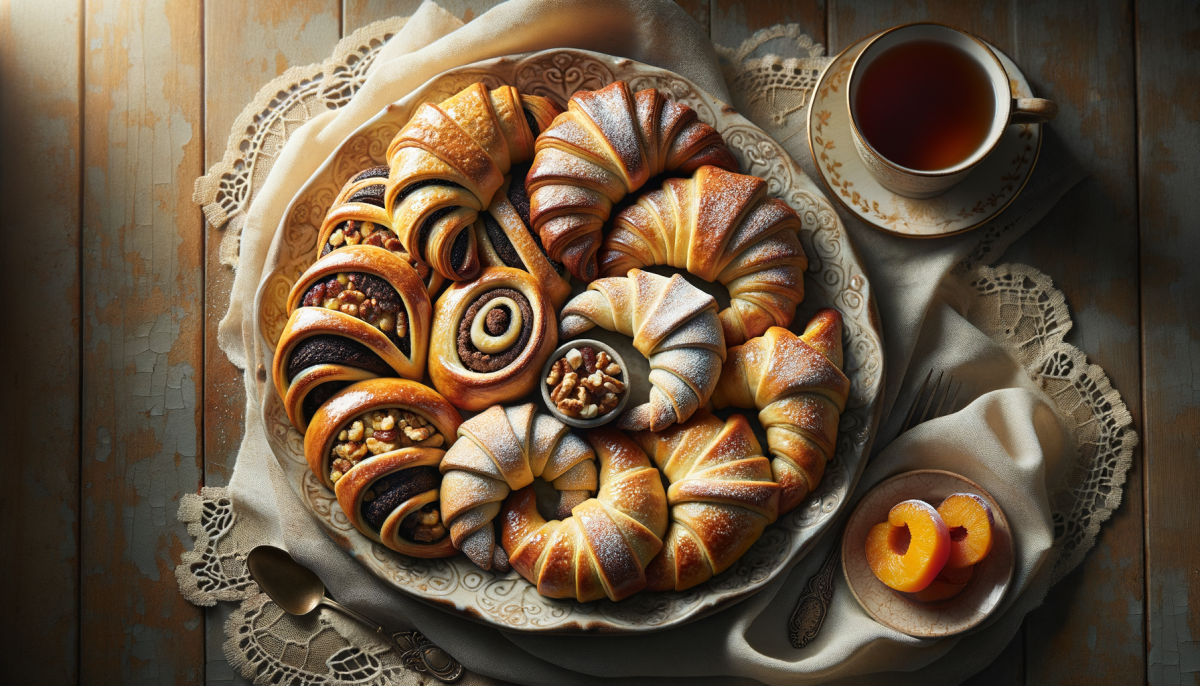
This rugelach recipe delivers the cookie that isn’t a cookie — flaky, buttery crescents filled with everything wonderful.

There is a moment, somewhere between the rolling and the shaping, when you realize what rugelach actually is. It is not a cookie. It is not quite a pastry. It is something in between — a crescent of impossibly tender, flaky dough wrapped around a filling that oozes and caramelizes and perfumes your kitchen with cinnamon, chocolate, or the sweet tang of apricot. Every layer shatters just slightly when you bite through it. The filling clings to the crumb. The cinnamon sugar coating on the outside crackles between your teeth. And then it is gone, and you are reaching for another one before you have finished chewing the first.

Every Jewish grandmother has a rugelach recipe. It lives in a handwritten card in a recipe box, or in the muscle memory of hands that have shaped a thousand crescents. Some use cream cheese dough, rich and tangy. Others use a pareve version that can travel to any table. The fillings vary by family, by season, by whatever is in the pantry. But the shape is always the same — that elegant rolled crescent, wider at one end and curling to a delicate point at the other.

Now you have yours. This recipe gives you two dough options, three filling variations, and a shaping technique so clear you will get it right on the first try. Forty-eight perfect crescents from one batch. Enough to fill a platter, a gift box, or a Friday night table — assuming they survive that long.

This recipe is designed for two dough choices: a classic cream cheese dough (dairy/milchig) and a pareve oil-based dough that can accompany any meal. Choose one based on your table, your guests, and your preference. Both produce exceptional rugelach.