Dough is Pareve • Dairy when served with butter • Contains Gluten
12–15 mufletas
Intermediate
45 minutes
2 hours
Mezonot
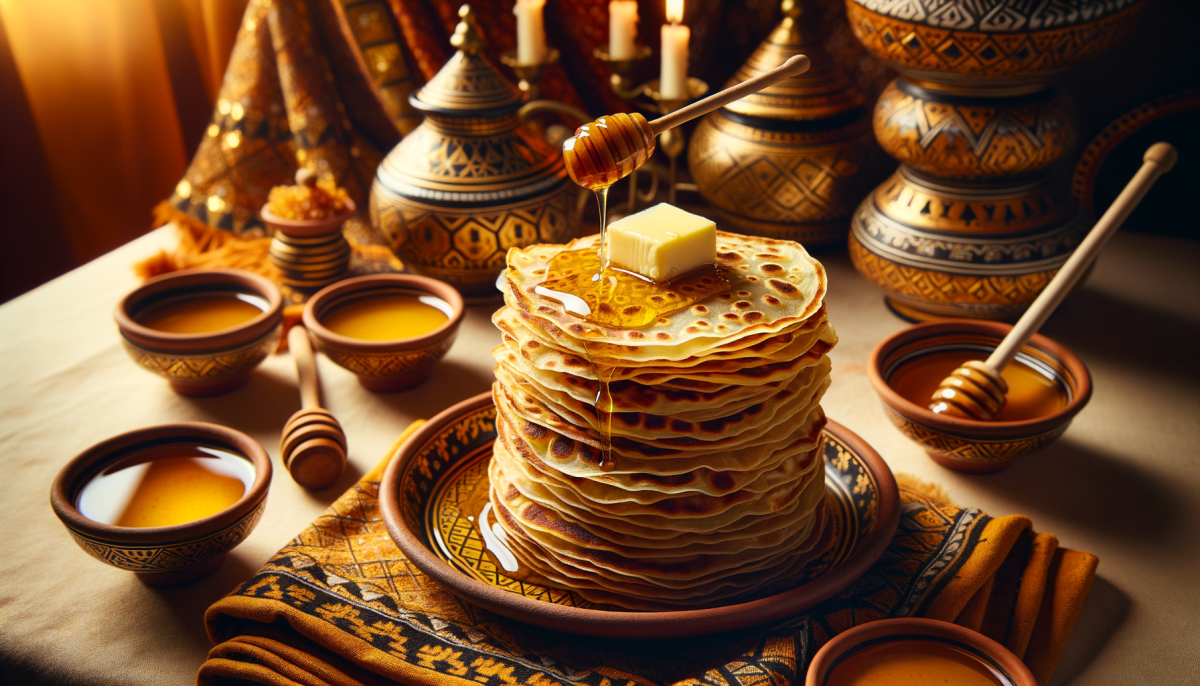
Mufleta is the first bread after Pesach — and it tastes like freedom all over again. For seven (or eight) days, Moroccan Jews have lived without chametz. No flour, no yeast, no risen dough. And then, the moment Pesach ends — sometimes literally minutes after havdalah — the flour comes out, the griddle heats up, and the kitchen fills with the scent of something extraordinary: paper-thin rounds of dough, stretched by hand until nearly translucent, sizzling on a hot surface, stacking up in a warm, glistening tower drizzled with honey and melted butter.
This is mufleta (mufleta, מופלטה), the iconic bread of Mimouna — the jubilant Moroccan Jewish celebration that marks the end of Pesach and the joyful return to chametz. It is not merely a recipe. It is a ritual, a homecoming, a communal act of sweetness and abundance. In Moroccan Jewish homes from Casablanca to Fez to Marrakech, and today across Israel and the diaspora, mufleta is the bread that announces: the holiday is over, and the good life continues.
The dough itself could not be simpler — flour, water, salt, a pinch of sugar, and oil. No yeast, no eggs, no dairy. But the technique is everything. Each ball of dough is oiled generously, rested until supple, then stretched by hand on an oiled surface until it becomes a gossamer-thin disc — so thin you can read a newspaper through it. Cooked on a blazing-hot griddle for just seconds per side, the mufletas are stacked one atop another, the residual heat steaming them into pliable, silky sheets. Drizzled with warm honey and a generous pat of butter, rolled or folded, eaten with the fingers — this is Mimouna.
Mufleta is traditionally prepared and served on the evening immediately after Pesach ends (Motzei Pesach). The timing is deliberate and deeply meaningful: this is the very first chametz touching your lips after a week of abstention. The sweetness of the honey, the richness of the butter, the tender warmth of fresh-cooked dough — it is a sensory celebration of abundance, gratitude, and renewal.