Categories
Recipes

Lachuch Recipe — Spongy Yemenite Jewish Pancake Bread

Pareve
Dairy-Free • Egg-Free • Contains Gluten
Yield8–10 lachuch
DifficultyEasy
Active Time20 minutes
Total Time1½–2 hours
BrachaMezonot / HaMotzi

Lachuch is the bread that bubbles. Pour the thin, fermented batter into a hot covered skillet and watch as hundreds of tiny craters form across the surface, creating a honeycomb pattern that is as mesmerizing to watch as it is satisfying to eat. Cooked on one side only, lachuch emerges spongy and soft on top, lightly crisp on the bottom — a bread of contrasts, like the Yemenite Jewish kitchen that created it.

In Yemen, lachuch (also spelled lahoh or laxoox) was an everyday bread, made from the simplest of ingredients: flour, water, yeast, and a pinch of salt. The batter ferments for an hour or more, developing a pleasant tanginess that gives lachuch its distinctive flavor. It is cooked in a covered pan, the steam trapped inside causing the top surface to cook gently while remaining pale and spongy. The bottom develops a thin, golden crust. The result is a bread that is simultaneously a pancake, a crumpet, and something entirely its own.

Yemenite Jews brought lachuch to Israel, where it became a beloved part of the country’s diverse bread landscape. Today, it is served in Yemenite restaurants throughout Israel alongside zhug (fiery green or red chili paste), crushed fresh tomato, hard-boiled eggs, and hilbeh (fenugreek paste). It is the bread of leisurely Shabbat mornings, of slow weekend breakfasts, of meals where the bread is not just an accompaniment but the centerpiece.

Lachuch completes the Yemenite bread family on our site. Pair it with our Kubaneh and Jachnun for a full Yemenite Shabbat bread spread.
Categories
Recipes

Shlissel Challah Recipe — Key Challah After Pesach

Pareve
Dairy-Free • Egg • Contains Gluten
Yield
2 challahs
Difficulty
Intermediate
Active Time
45 minutes
Total Time
3–4 hours
Bracha
HaMotzi

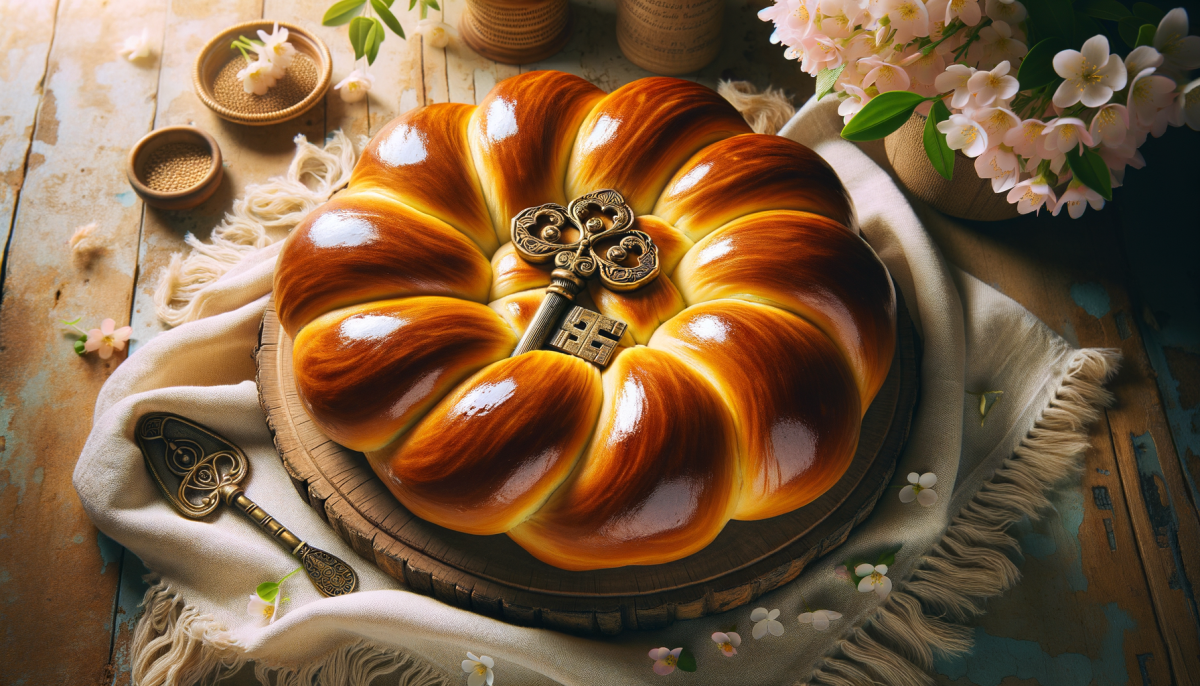
Shlissel challah is the first challah you bake after Pesach — and it carries the weight of an entire week of longing. For eight days you have eaten matzah: flat, humble, the bread of affliction and of freedom. And now, on the first Shabbat after the holiday ends, you return to chametz. You return to yeast, to rising dough, to the golden braided loaf that anchors the Jewish table. But this is no ordinary challah. This one is shaped like a key, or bears a key pressed into its surface, or hides a key wrapped in foil inside its braids. This is shlissel challah — the key challah — and it is baked as a segulah (spiritual remedy) for parnassah, for livelihood and sustenance.

The word shlissel comes from the Yiddish shlisl (שליסל), meaning “key.” The tradition holds that on the Shabbat immediately following Pesach, the gates of heaven that were opened during the holiday begin to close. By baking a challah in the shape of a key — or with a key — we symbolically ask that the gates of parnassah remain open for us and for our families. It is a prayer you can hold in your hands, a petition baked in dough.

There is something deeply moving about this minhag. After a week without bread, the first challah you bake is not just for Shabbat — it is an act of faith. You are saying: I trust that sustenance will come. I am opening the door. And so you shape the dough into a key and place it in the oven, and you wait for it to rise.

Shlissel challah is baked on the first Shabbat after Pesach. In 2026, Pesach ends on Saturday evening, April 11, making the shlissel challah Shabbat on April 17–18. Mark your calendar — this is a once-a-year bake.

Categories
Recipes

Honey Challah Recipe — Round Rosh Hashanah Bread

Pareve
Dairy-Free • Egg • Contains Gluten
Yield
2 round challahs
Difficulty
Beginner–Intermediate
Active Time
30 minutes
Total Time
3½–4 hours
Bracha
HaMotzi

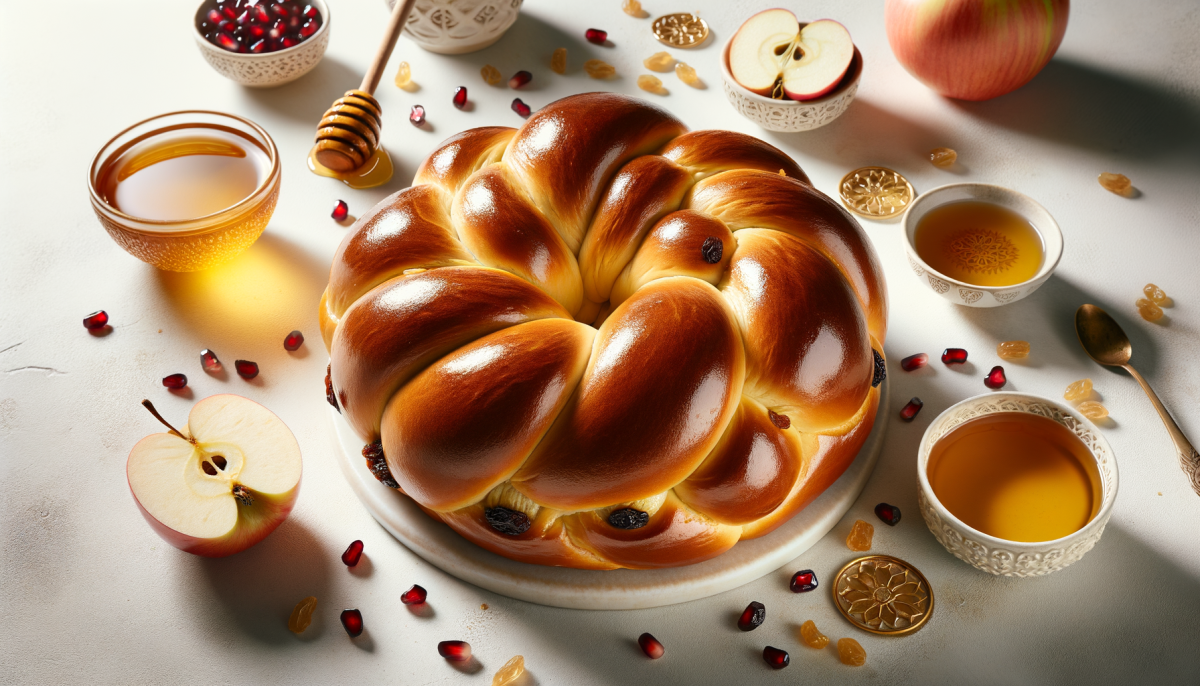
Round honey challah is THE bread of Rosh Hashanah. If there is one loaf that defines the Jewish New Year, this is it — golden, glistening with honey glaze, shaped into a tight spiral that speaks of cycles, continuity, and hope. From the first night of Rosh Hashanah through the final meal of Sukkot, this round, honey-sweetened challah replaces the traditional braided loaf on every observant Jewish table.

The symbolism is woven into every element. The round shape represents the cycle of the year — no beginning, no end, the eternal turning of seasons and festivals. Honey replaces sugar in the dough, because we ask God for a shanah tovah u’metukah — a good and sweet new year. And the spiral, rising upward from the center, is said to evoke a crown, a reminder of God’s sovereignty on the Day of Judgment.

If you have baked our Classic Kosher Challah, you already have the foundation. Honey challah uses the same core technique but swaps most of the sugar for rich, floral honey and reshapes the dough from a braid into a beautiful round coil. It is a small shift in method that carries enormous meaning.

On Rosh Hashanah night, the round challah is dipped in honey before eating — doubling the sweetness. Some families place a bowl of honey at the center of the table and let each person tear a piece and dip it themselves, making the wish for a sweet new year a communal, tactile act.

Categories
Recipes

Jerusalem Kugel Bread — Caramelized Pepper Shabbat Loaf

Pareve
Dairy-Free • Egg • Contains Gluten
Yield
1 large loaf (10–12 servings)
Difficulty
Intermediate
Active Time
45 minutes
Total Time
4–5 hours
Bracha
HaMotzi

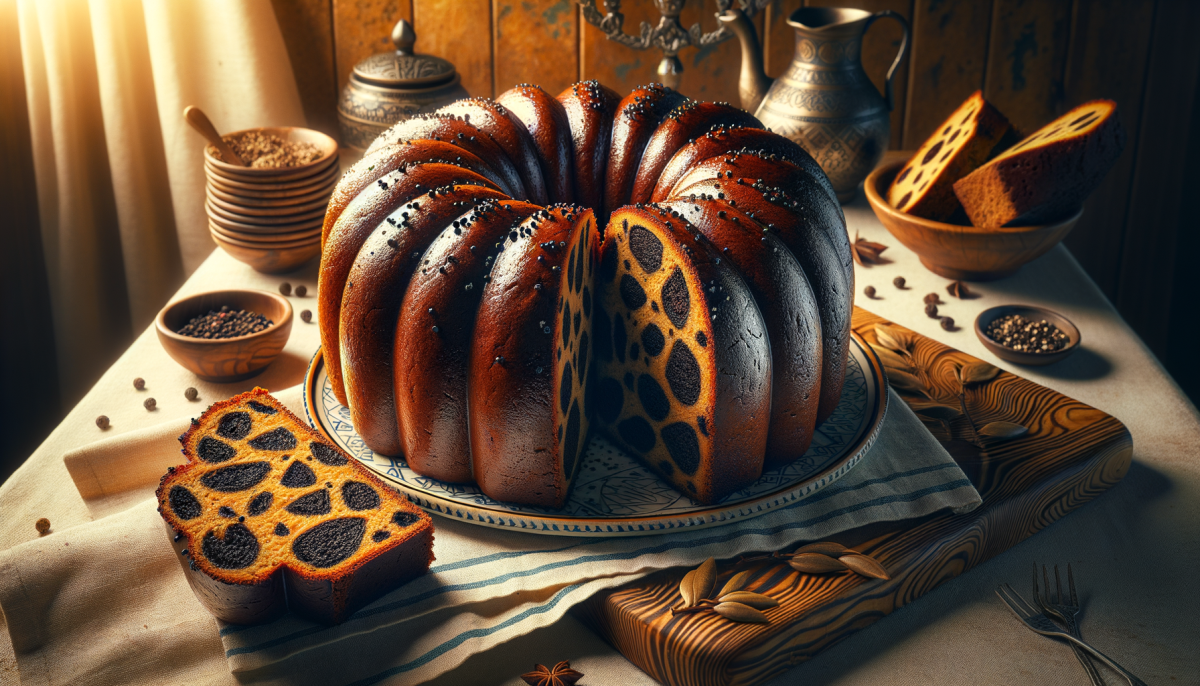
Jerusalem Kugel Bread is a bread that captures the soul of Yerushalmi kugel — caramelized sugar, bold black pepper, and a sweet-savory-spicy warmth that is unlike anything else in Jewish baking. If you have ever tasted Yerushalmi kugel, you know the flavor: that deep, amber caramel that walks the line between bitter and sweet, shot through with enough black pepper to make your lips tingle. Now imagine those flavors woven into a soft, enriched, pull-apart bread. That is what we are making here.

This is not a kugel shaped like bread. It is a true yeasted bread — enriched with eggs and oil, layered with a caramelized sugar-pepper syrup, shaped into a pull-apart loaf that tears into glossy, amber-streaked pieces. The caramel melts into the dough during proofing and baking, creating pockets of bittersweet intensity. The black pepper, far more than a whisper, provides the signature counterpoint that makes Yerushalmi flavors so addictive.

Where classic challah is golden and mild, Jerusalem Kugel Bread is dark-streaked and assertive. It is the bread for the baker who loves contrast — sweet against spicy, soft against sticky, the familiar comfort of bread against the startling depth of burnt caramel. Serve it on Shabbat and watch it disappear before the main course arrives.

The combination of caramelized sugar and black pepper is ancient and unmistakable — the signature of Jerusalem’s Old Yishuv. This bread brings those flavors from the kugel pot to the bread basket, creating something entirely new yet deeply rooted in tradition.

Categories
Recipes

Pretzel Challah Recipe — Dark, Salty, Braided Perfection

Dairy
Butter Wash (Pareve Option Below) • Egg • Contains Gluten
Yield
1 large loaf (8–10 servings)
Difficulty
Intermediate
Active Time
45 minutes
Total Time
3½–4 hours
Bracha
HaMotzi

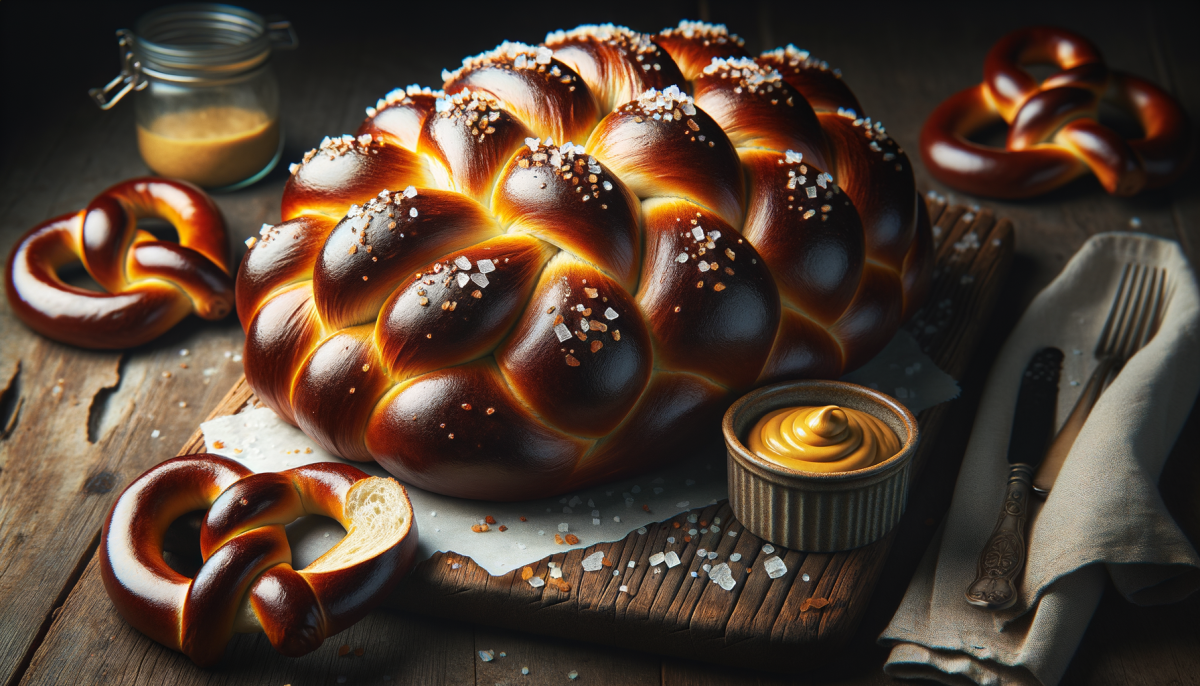
Pretzel challah is the bread that happens when two beloved traditions collide — and the result is better than either one alone. Take the soft, pillowy, egg-enriched dough of a classic challah. Braid it into that iconic six-strand pattern. Then, just before baking, dip the entire loaf into a baking soda bath that transforms its surface into something extraordinary: a dark, mahogany-brown pretzel crust with that unmistakable alkaline tang, sprinkled with flakes of coarse salt that crunch against the tender crumb beneath.

The magic is in the contrast. Outside, you get the deep color and slight chewiness of a Bavarian soft pretzel — that rich, almost caramel-like crust that no amount of egg wash alone can produce. Inside, the bread remains pure challah: soft, slightly sweet, golden from eggs and oil, pulling apart in long, tender strands. Every bite delivers both textures at once, and it is genuinely difficult to stop eating.

Pretzel challah has swept through Jewish bakeries across America in the last decade, and for good reason. It respects the halachic and spiritual role of challah — this is still lechem mishneh, still HaMotzi bread, still the anchor of the Shabbat table — while adding a playful, modern twist that delights everyone from the youngest child reaching for a salt crystal to the most seasoned baker admiring that burnished crust.

If you have already mastered our Classic Kosher Challah, pretzel challah is the next natural step. The dough is nearly identical — the transformation happens entirely in the baking soda bath and that final shower of coarse salt.

Categories
Recipes

Malawach Recipe — Flaky Yemenite Pan-Fried Flatbread

Pareve
Dairy-Free (with margarine) • Egg-Free • Contains Gluten
Yield
8 flatbreads
Difficulty
Intermediate
Active Time
45 minutes
Total Time
2–3 hours (includes resting)
Bracha
Mezonot

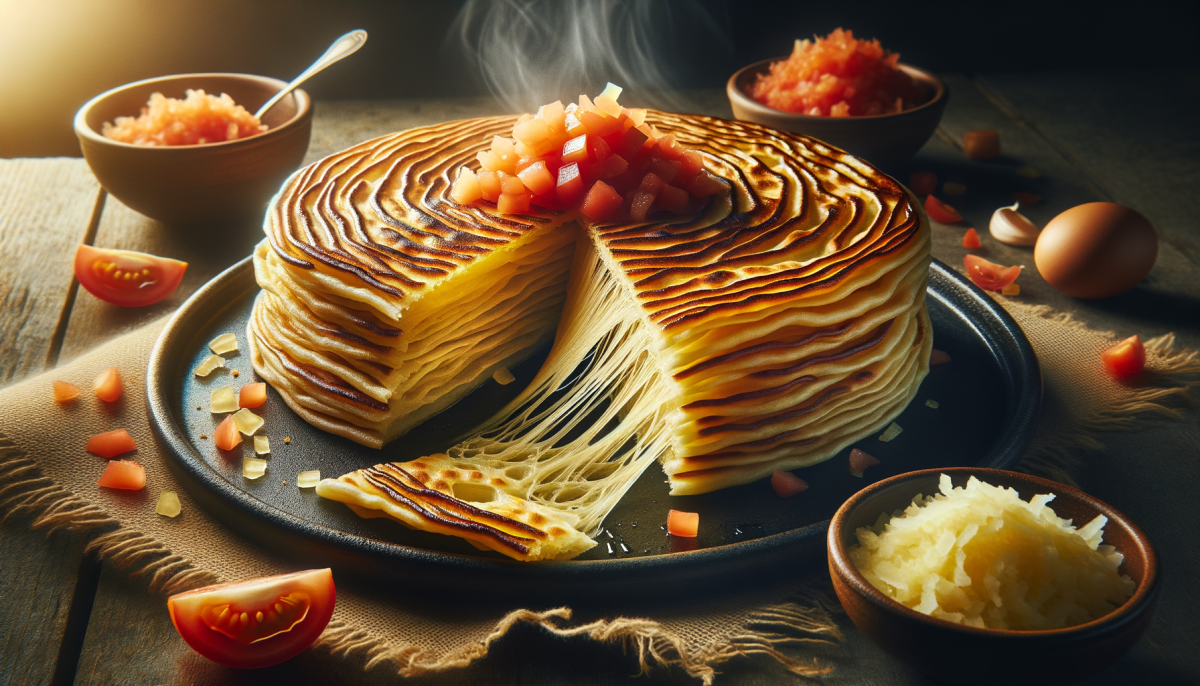
Malawach is the bread that shatters. Imagine lifting a golden disc from a hot skillet, its surface blistered and crackling, and tearing it open to reveal dozens of tissue-thin layers that peel apart like the pages of a parchment manuscript. Steam rises from every stratum, carrying the warm scent of toasted fat and flour. This is malawach — the flaky, laminated flatbread of the Yemenite Jewish table, and one of the most magnificent breads in the entire Jewish baking tradition.

Malawach (malawach, מלאווח) is, at its heart, deceptively simple: flour, water, salt, a pinch of sugar, and generous amounts of fat worked into impossibly thin layers. There is no yeast, no leavening agent of any kind. The magic is entirely structural — the same principle that gives croissants their shatter, that gives puff pastry its lift, but achieved here not with cold butter and precise folding but with warm hands, melted margarine, and a technique perfected over centuries in the kitchens of Sana’a, Aden, and the mountain villages of Yemen.

Where kubaneh is patient and slow, baked overnight in a sealed pot, malawach is bold and immediate. It goes from dough to plate in minutes once shaped — pan-fried in a dry or lightly greased skillet until each side is deeply golden and the layers have puffed with steam. The contrast between the two breads is part of what makes the Yemenite bread tradition so rich: one bread for long waiting, another for the satisfying immediacy of hot fat and a cast-iron pan.

Malawach is traditionally served with grated fresh tomato (resek agvaniyot), hard-boiled eggs, and a generous spoonful of s’chug — the fiery Yemenite chile paste. Tear it open, dip, and eat with your hands. This is Yemenite street food elevated to an art form.

Categories
Recipes

Jachnun Recipe — Flaky Yemenite Overnight Shabbat Pastry

Pareve
Dairy-Free (with margarine) • Egg-Free • Contains Gluten
Yield
8 rolls (8 servings)
Difficulty
Intermediate
Active Time
45 minutes
Total Time
12–14 hours (overnight)
Bracha
Mezonot / HaMotzi

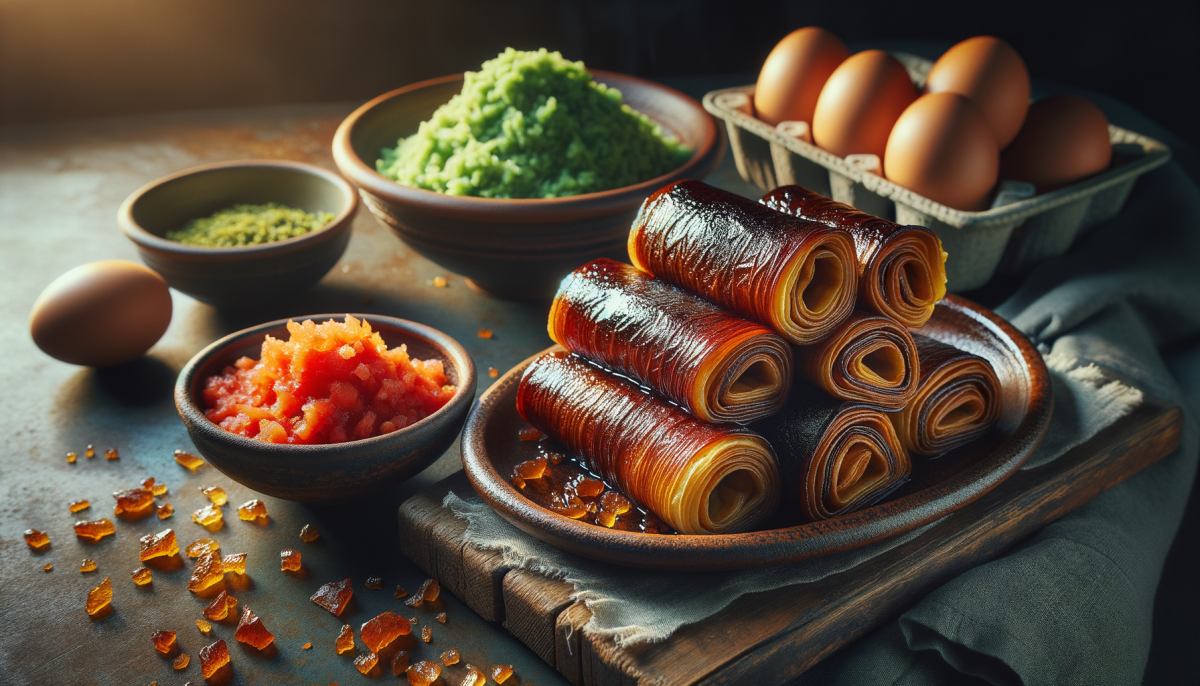
Jachnun is the dark, sweet, impossibly flaky pastry that Yemenite Jews have been baking overnight for centuries. There is no bread quite like it. You slide a sealed pot into a low oven on Friday afternoon, and by Shabbat morning something extraordinary has happened: thin sheets of simple dough and fat have transformed into mahogany-colored spirals, caramelized and glistening, with a sweetness that comes entirely from patience and heat — not from sugar.

This is jachnun (jachnun, גַחְנון). Where kubaneh is soft and pull-apart, jachnun is dense, flaky, and deeply caramelized. Where challah celebrates the start of Shabbat on Friday night, jachnun rewards you on Saturday morning with a flavor so rich and complex it seems impossible that it began as nothing more than flour, water, and fat.

If you have already baked our Kubaneh, you know the magic of Yemenite overnight bread. Jachnun is its sibling — born in the same kitchens, shaped by the same Shabbat laws, but utterly different in character. Kubaneh is gentle; jachnun is bold. Together, they form one of the most distinctive Shabbat morning tables in the entire Jewish world.

Jachnun is always served with grated fresh tomato (resek agvaniyot), hard-boiled eggs cooked overnight in their shells, and a fiery Yemenite s’chug. The combination of sweet caramelized pastry, cool acidic tomato, and sharp chile heat is one of the great flavor experiences in all of Jewish cuisine.

Categories
Recipes

Kubaneh Recipe — Golden Yemenite Shabbat Pull-Apart Bread

Pareve
Dairy-Free (with margarine) • Egg • Contains Gluten
Yield
1 large loaf (8–10 servings)
Difficulty
Intermediate
Active Time
40 minutes
Total Time
12–14 hours (overnight)
Bracha
HaMotzi

Kubaneh is the golden bread that greets Shabbat morning in every Yemenite Jewish home. Imagine waking on a Saturday to an aroma that has been building all night long — warm, buttery, deeply caramelized, with a sweetness that comes not from sugar but from patience. You lift the lid of a heavy pot and there it is: a towering, mahogany-crowned bread, its layers pulling apart in soft, steaming sheets like the pages of a very old and very beautiful book.

This is kubaneh (kubaneh, כובאנה). Born in the Jewish communities of Yemen, perfected over centuries of Shabbat mornings, and now cherished across Israel and the diaspora. It is the opposite of a quick bread. Kubaneh asks you to slow down, to layer dough with fat, to seal a pot and trust the oven through the long night. And it rewards that trust completely.

Where challah anchors Friday night, kubaneh owns Saturday morning. The two are natural companions — one braided and golden-crusted, the other layered and pull-apart soft. If you have been baking our Classic Kosher Challah for Shabbat dinner, kubaneh is the missing half of your Shabbat bread tradition.

Kubaneh is traditionally served with grated fresh tomato (resek agvaniyot), hard-boiled eggs cooked in their shells alongside the bread, and a generous drizzle of s’chug — the fiery Yemenite green or red chile paste. This is Shabbat morning, Yemenite style.

Categories
Recipes

Sourdough Challah Recipe — Ancient Craft, Extraordinary Bread

Pareve
Dairy-Free • Egg • Contains Gluten • No Commercial Yeast
Yield
2 large loaves
Difficulty
Advanced
Active Time
1 hour
Total Time
18–24 hours
Bracha
HaMotzi

This sourdough challah recipe recreates the bread your great-great-grandmother made — before commercial yeast existed.

For thousands of years, every loaf of bread that rose on a Jewish table did so without a single packet of instant yeast. There was only flour, water, wild fermentation, and time. The sourdough starter — a living culture of wild yeast and beneficial bacteria, sustained by nothing more than regular feedings of flour and water — was the original leavening. It was the engine behind every challah pulled from a wood-fired oven in Vilna, in Kraków, in the shtetls of the Pale of Settlement. This is not a modern twist on an old recipe. This is the old recipe. Everything else came later.

What you will discover here is a challah unlike anything commercial yeast can produce. The crumb is open and tender, laced with a complex tang that plays against the sweetness of honey in a way that is deeply, unmistakably alive. The crust bakes to a deep caramel brown with a fragrance that fills the entire house — warm, wheaty, faintly acidic, ancient. It demands patience. It rewards attention. And when you pull these braided loaves from the oven on a Friday afternoon, you are not just baking bread. You are reaching back through centuries of Jewish baking tradition and carrying it forward with your own hands.

Advanced bakers, this is your summit. If you have mastered our Classic Challah, you are ready. If you have not, start there first — then come back here when you are ready to climb.

Categories
Recipes

Classic Kosher Challah Recipe — The Perfect Shabbat Bread

Pareve
Dairy-Free • Egg • Contains Gluten
Yield
2 large loaves
Difficulty
Intermediate
Active Time
45 minutes
Total Time
4–5 hours
Bracha
HaMotzi

This classic kosher challah recipe is the one you will come back to every Friday. Close your eyes for a moment. It is Friday afternoon. The house hums with quiet purpose. Sunlight slants through the kitchen window onto a cutting board dusted with flour. The oven radiates warmth. And somewhere between the kneading and the braiding, between the rising dough and the setting sun, the week begins to loosen its grip.

This is challah. Not just bread — a weekly homecoming. The pillowy, golden-crusted loaf that has anchored the Shabbat table for generations, its glossy braids catching candlelight as families gather, breathe, and begin again.

Whether you grew up watching your grandmother shape these loaves by feel, or you are braiding your very first strand today, this recipe meets you where you are. We have spent years refining every gram, every fold, every minute of fermentation to give you a challah that is deeply soft, subtly sweet, impossibly tender — and unmistakably yours.

Join thousands of home bakers who have made this their go-to Friday recipe. This is the one you will come back to, week after week.