
What Is Kokosh Cake? The Hungarian Jewish Roll Nobody Explains
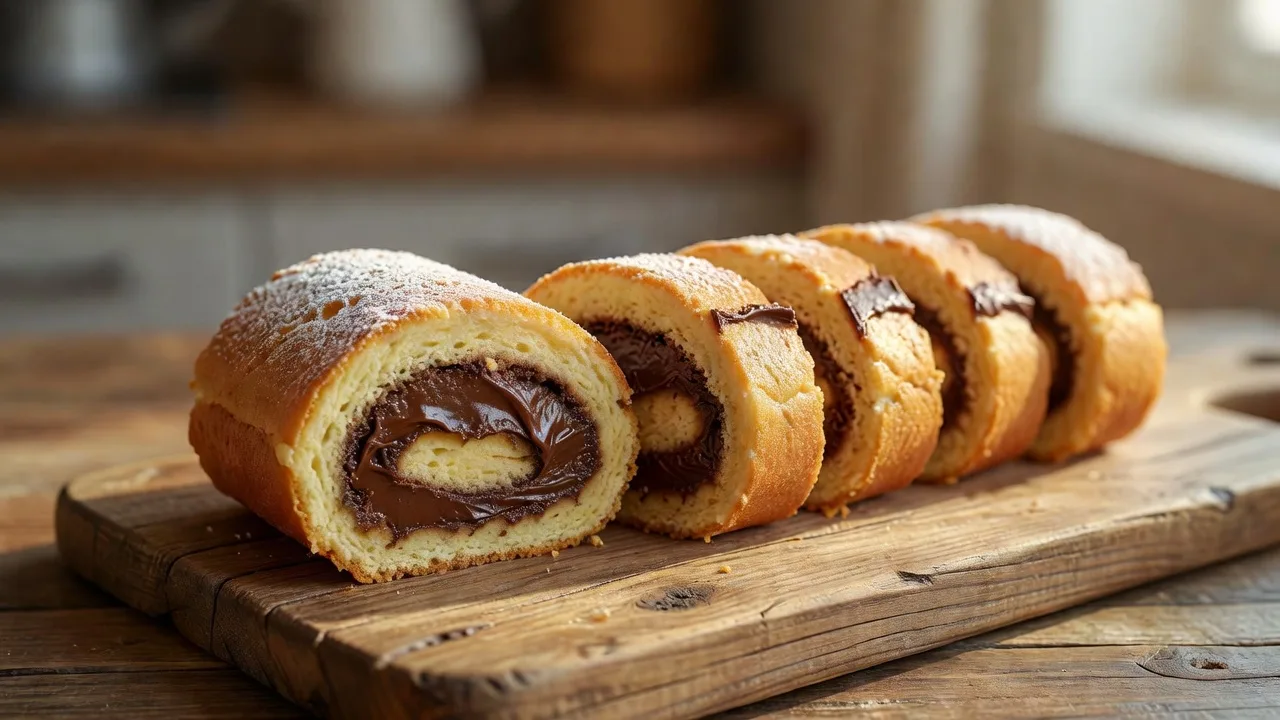
Quick answer: Kokosh (also spelled kokos, kakaós csiga) is a Hungarian Jewish pastry — a filled, rolled yeasted dough baked as an individual log or coil. The filling is traditionally chocolate or poppy seed. It is the Hungarian cousin of babka: same enriched dough, same filling approach, but shaped and portioned differently. It disappeared from American Jewish bakeries in the mid-20th century and is now a niche find outside of Hungary and certain Ashkenazi communities.
The Name and Its Confusion
The word kokosh causes consistent spelling confusion in English because it is a transliteration of the Hungarian kakaós (meaning “cocoa”) combined with the Yiddish diminutive form. You will see it spelled kokosh, kokos, kakosh, kakaos, and — in Hungarian Jewish cookbooks — kakaós tekercs (cocoa roll). All of these refer to the same pastry.
In some Ashkenazi communities, “kokosh” specifically refers to the chocolate version, while the poppy seed version is called mohn kokosh (poppy seed kokosh) or simply the mohn roll. In others, kokosh covers both fillings. The naming is community-specific.
Where Kokosh Comes From
Kokosh is Ashkenazi — specifically, it emerged from the Jewish communities of Hungary, which had a distinctive baking tradition shaped by the intersection of Hungarian pastry culture (known for its sophisticated use of poppy seed, walnut, and cocoa in rolled pastries) and the Jewish home-baking practices of the Pale of Settlement.
Hungary’s Jewish population was concentrated in Budapest and its surroundings, and the Budapest Jewish bakery tradition was rich: beigli (poppy seed and walnut rolls at Rosh Hashanah and Christmas), flodni (the four-layer cake of walnut, poppy seed, apple, and plum jam), and kokosh all emerged from this community. The cocoa filling — rare in Ashkenazi baking until the 20th century — became a Hungarian Jewish specialty, appearing in kokosh and babka before it spread more widely.
When Hungarian Jews emigrated to the United States, Israel, and elsewhere in the early and mid-20th century, they brought these pastries with them. Kokosh appeared in Hungarian Jewish bakeries in New York and in certain Israeli neighborhoods, but never achieved the mainstream reach of babka — partly because of its form factor (a log-shaped roll that does not slice as dramatically as a babka), and partly because the marketing power of the New York deli machine attached itself to babka first.
Kokosh vs Babka: What Is Actually Different?
Kokosh and babka share the same DNA but differ in construction and scale:
| Feature | Kokosh | Babka |
|---|---|---|
| Shape | Individual logs or coils, rolled and baked without twisting | Full loaf, twisted and baked in a loaf pan |
| Twist | No — the roll is not twisted; filling is a tight spiral | Yes — the loaf is twisted or the log is cut and braided |
| Serving size | Individual roll (one per person) or a small shared log | Full loaf, sliced at the table |
| Filling ratio | Higher filling-to-dough ratio; the roll is tightly packed | Variable — depends on how thin the dough is rolled |
| Sugar syrup | Sometimes; not universal in Hungarian tradition | Standard — the lacquered crust is a babka signature |
| Origin | Hungarian Jewish specifically | Broadly Ashkenazi (Polish, Ukrainian, Russian Jewish) |
The key distinction: babka is defined by the twist. Kokosh is defined by the tight spiral — the filling is visible at each end of the roll, and the cross-section shows a snail-shell of filling with no dramatic braid structure.
Chocolate or Poppy Seed?
Both are traditional. The chocolate filling (cocoa mixed with sugar, oil or butter, and sometimes a little ground walnut) is the version most commonly encountered in bakeries today and the one that most closely parallels the chocolate babka. It is the richer, more festive filling.
The poppy seed version — mohn filling, made from ground poppy seeds cooked with honey, sugar, lemon zest, and sometimes raisins — is the older, more traditional form. It is less sweet, more complex, and distinctly Ashkenazi. For anyone who grew up eating mohn cake or mohn cookies in a Hungarian or Polish Jewish household, the poppy seed kokosh is the version that triggers memory.
A few Hungarian bakeries also make a walnut (diós) version — the same ground walnut filling used in beigli — which is the least common but arguably the most interesting.
Is Kokosh Kosher?
Kokosh’s kosher status is determined by the fat in the dough and the filling:
- Pareve: Oil-based dough, cocoa-and-oil chocolate filling. The traditional bakery version. Can be served at any meal.
- Dairy: Butter in the dough or a milk-chocolate filling. Cannot be served at a meat meal.
The bracha on kokosh is mezonot — it is a sweet filled pastry, not eaten as bread at a meal. The after-bracha is al hamichya. If eaten in sufficient quantity to constitute a full meal, hamotzi applies.
Where to Find Kokosh Today
Outside of Hungary, kokosh is genuinely hard to find. A handful of Ashkenazi bakeries in Brooklyn (New York), certain Israeli neighborhood bakeries, and Jewish community bakers in Toronto and Melbourne still make it. It has not had a babka-style cultural revival — yet. Part of the reason is the name: “kokosh” is harder to say and market than “babka,” and the product does not slice as dramatically for display.
The surest way to eat kokosh is to bake it.
Bake the real thing at home
Our kokosh cake recipe includes both chocolate and poppy seed fillings, with a step-by-step rolling guide and the exact dough ratios from Hungarian Jewish bakery tradition.
FAQ
Is kokosh the same as babka?
They are closely related but not the same. Both are enriched yeasted doughs with chocolate or poppy seed filling. The difference is in the shaping: babka is twisted into a loaf and baked in a pan; kokosh is rolled into a tight individual log or coil without twisting. Kokosh also has a specifically Hungarian Jewish origin, while babka is more broadly Ashkenazi.
How do you pronounce kokosh?
KOH-kosh (two syllables, stress on the first). The “o” is like the “o” in “go.” In Hungarian, the cocoa version is kakaós tekercs (kah-kah-OSH TEH-kerts), meaning cocoa roll.
What is the bracha on kokosh?
Mezonot. Kokosh is a sweet filled pastry, not bread eaten at a meal. The after-bracha is al hamichya. If you eat a large enough quantity to constitute a meal (kevi’at se’udah), hamotzi applies instead.
Can you freeze kokosh?
Yes. Cool completely, wrap in two layers (cling film + foil or freezer bag), and freeze for up to three months. Reheat at 170°C (340°F) for 10–12 minutes still wrapped, then unwrap for 2 minutes to crisp the exterior. Individual rolls thaw faster than whole logs.
What is the difference between kokosh and beigli?
Both are Hungarian Jewish rolled pastries with similar fillings (poppy seed and walnut are the traditional beigli fillings; chocolate and poppy seed for kokosh). Beigli uses a leaner, more biscuit-like dough — richer in fat relative to yeast, producing a denser, crumblier texture. Beigli is specifically associated with Rosh Hashanah and Hanukkah. Kokosh uses a yeasted, bread-like dough (more like challah) and has a softer, more open crumb. They look similar from the outside but taste quite different.
