
What Is Sourdough Challah — Is It Still Challah?
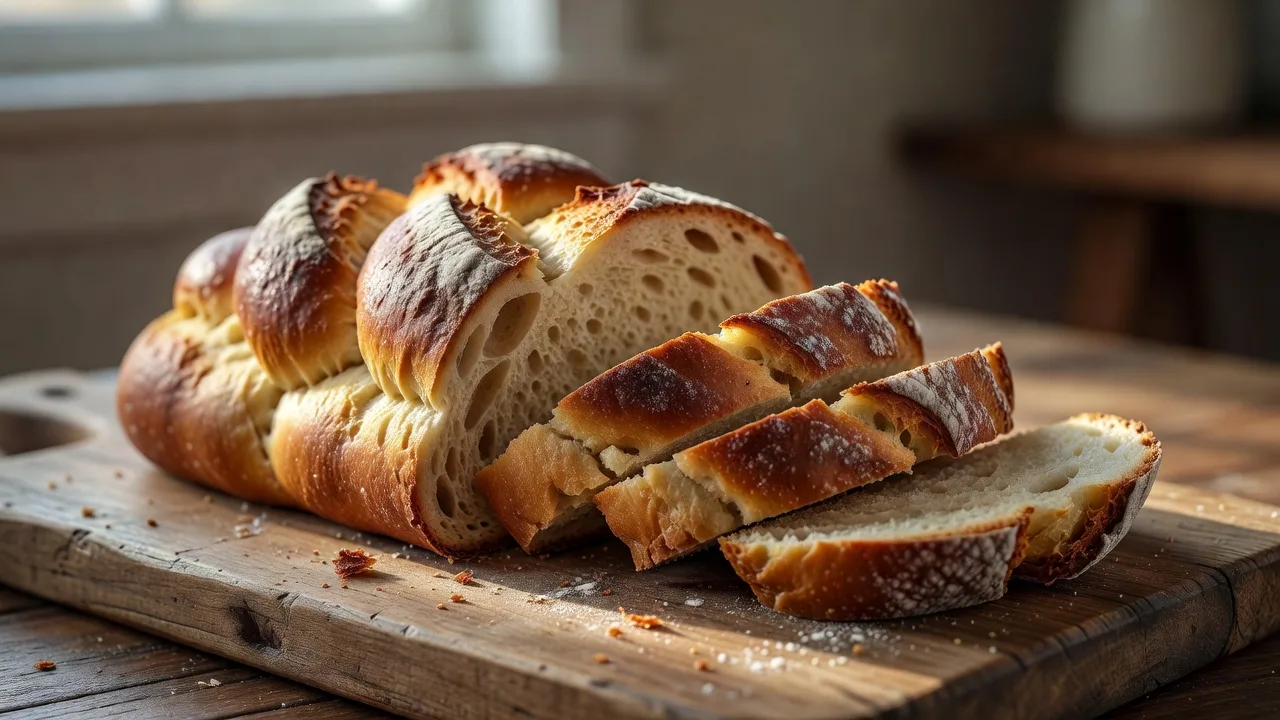
Quick answer: Yes — sourdough challah is fully and unambiguously challah. The halachic status (hafrashat challah, brachot, Pas Yisroel, lechem mishneh) is identical to commercial-yeast challah. The difference is practical: longer fermentation (typically 12–24 hours), more complex flavor, a more open crumb, and slightly better keeping quality. The braid is the same. The Shabbat table is the same.
What Makes Challah “Challah” Under Jewish Law
The halachic definition of challah has nothing to do with commercial yeast. The obligations around challah — hafrashat challah, hamotzi, lechem mishneh on Shabbat, Pas Yisroel, checking eggs — all apply to any bread made from one of the five grains (wheat, barley, spelt, oats, rye) that is baked as bread. The leavening agent is irrelevant to the definition.
Sourdough challah uses a naturally fermented starter (a culture of wild yeast and lactic acid bacteria) instead of commercial dried or fresh yeast. The starter leavens the dough more slowly — but the resulting bread is wheat bread, baked as bread, in a bread form. Every mitzvah and bracha that applies to commercial-yeast challah applies to sourdough challah without exception.
How Sourdough Challah Differs in Practice
| Feature | Commercial-yeast challah | Sourdough challah |
|---|---|---|
| Total time | 3–4 hours | 12–24 hours (mostly hands-off fridge ferment) |
| Active work | Same: mix, bulk proof, shape, final proof, bake | Same, plus feeding the starter 4–12 hrs before mixing |
| Flavor | Sweet, clean, egg-forward | Complex, slightly tangy, deeper wheat flavor; sweetness present but more rounded |
| Crumb | Very soft, pillowy, uniform | Slightly more open, chewier, pulls in more defined strands |
| Crust | Shiny, tender from egg-wash glaze | Slightly more robust; holds the glaze well; can develop a deeper mahogany color |
| Keeping quality | 2–3 days at room temperature | 3–4 days; the acids from fermentation slow staling |
| Rise predictability | Consistent and fast; easy to time | Slower and more variable; depends on starter activity and ambient temperature |
| Skill level | Beginner-accessible | Intermediate; requires an active starter and timing awareness |
The Flavor Argument
The defining characteristic of sourdough challah is not the tang (which is minimal in a well-made enriched sourdough — far less assertive than sourdough boule) but the complexity. The long, cold fermentation allows the dough’s naturally occurring enzymes to break down starches into simpler sugars, which in turn feed the wild yeast and create a spectrum of flavor compounds that commercial yeast simply cannot replicate in a 3-hour window.
The result is a challah that tastes more like bread — in the best sense. The wheat is present. The sweetness is there but it does not dominate. The egg flavor comes through clearly. It is the challah for people who love bread as much as they love Shabbat — and for Shabbat tables where challah is eaten slowly, torn and savored, rather than used primarily as a vehicle for soup or cholent.
The Timing Question for Shabbat
The practical challenge of sourdough challah is scheduling the 12–24 hour ferment to land correctly for Friday afternoon baking. The most reliable approach:
- Wednesday evening: Feed the starter so it peaks Thursday morning.
- Thursday morning: Mix the dough. Bulk ferment at room temperature for 3–4 hours, then transfer to the fridge.
- Friday late morning: Remove from fridge, shape, final proof at room temperature for 2–3 hours.
- Friday afternoon: Glaze, bake. Out of the oven 2–3 hours before Shabbat.
The cold fridge ferment (12–18 hours) does most of the flavor development hands-off while you sleep. This schedule adds no meaningful extra work to the Shabbat prep — it just moves some of the steps to Thursday.
Does Sourdough Challah Require Hafrashat Challah?
Yes — the leavening agent does not affect the hafrashat challah obligation. Sourdough challah is wheat bread baked from wheat dough. When the flour quantity exceeds approximately 1,250 g, separation is required. Above approximately 1,666 g, a bracha is recited. The method of leavening (sourdough starter vs. commercial yeast) is irrelevant to the obligation.
Sourdough Challah for Shabbat: Is There a Preference?
There is no halachic preference for commercial yeast over sourdough for lechem mishneh on Shabbat. The requirement is for two loaves of bread made from the five grains. Sourdough challah satisfies this fully. Some families use sourdough challah exclusively; some alternate. The Shabbat table is indifferent to the leavening method.
Note for Passover: sourdough starter is chametz and must be disposed of before Passover. Sourdough challah cannot be made during Passover. This is not a complication for regular Shabbat baking but worth noting for the weeks leading up to Pesach.
Ready to try the 24-hour version?
Our sourdough challah recipe includes the full starter timing schedule, hydration guidance for an enriched sourdough crumb, and a troubleshooting section for slow starters.
FAQ
Is sourdough challah halachically valid for lechem mishneh?
Yes. Lechem mishneh requires two complete loaves of bread made from one of the five grains. Sourdough challah satisfies this requirement fully. There is no halachic distinction between commercial-yeast challah and sourdough challah for Shabbat purposes.
Can I use sourdough challah for the Shabbat seudah?
Yes — in every respect. The hamotzi, birkat hamazon, and all other Shabbat bread obligations apply to sourdough challah identically to commercial-yeast challah.
How much starter do I use for sourdough challah?
Typical sourdough challah recipes use 15–25% starter by flour weight (baker’s percentage). Because the dough is enriched with eggs and oil, which slow the wild yeast, the starter percentage tends to be higher than in lean sourdough breads. A 20% starter at peak activity will give a reliable rise over 12–18 hours in the fridge.
Why is my sourdough challah not rising?
The most common cause is an under-active starter. Your starter should be at peak activity when you mix — domed, bubbly, and at least doubled since its last feeding. If the starter is sluggish, the challah will barely rise in the fridge. Feed the starter 6–12 hours before mixing and look for consistent activity before adding it to the dough. Second most common cause: too cold a fridge (below 3°C / 37°F). The yeast becomes dormant rather than fermenting slowly.
Does sourdough challah taste sour?
A well-made sourdough challah is only mildly tangy — much less assertive than a country sourdough boule. The enrichment (eggs, oil, sugar) buffers the acidity and produces a primarily sweet, complex flavor. If your challah is noticeably sour, the fermentation went too long or the starter was over-ripe when mixed. Reduce the bulk ferment time or use a slightly younger, less acidic starter.
