Dairy-Free • Egg • Contains Gluten
1 large loaf (10–12 servings)
Intermediate
45 minutes
4–5 hours
HaMotzi
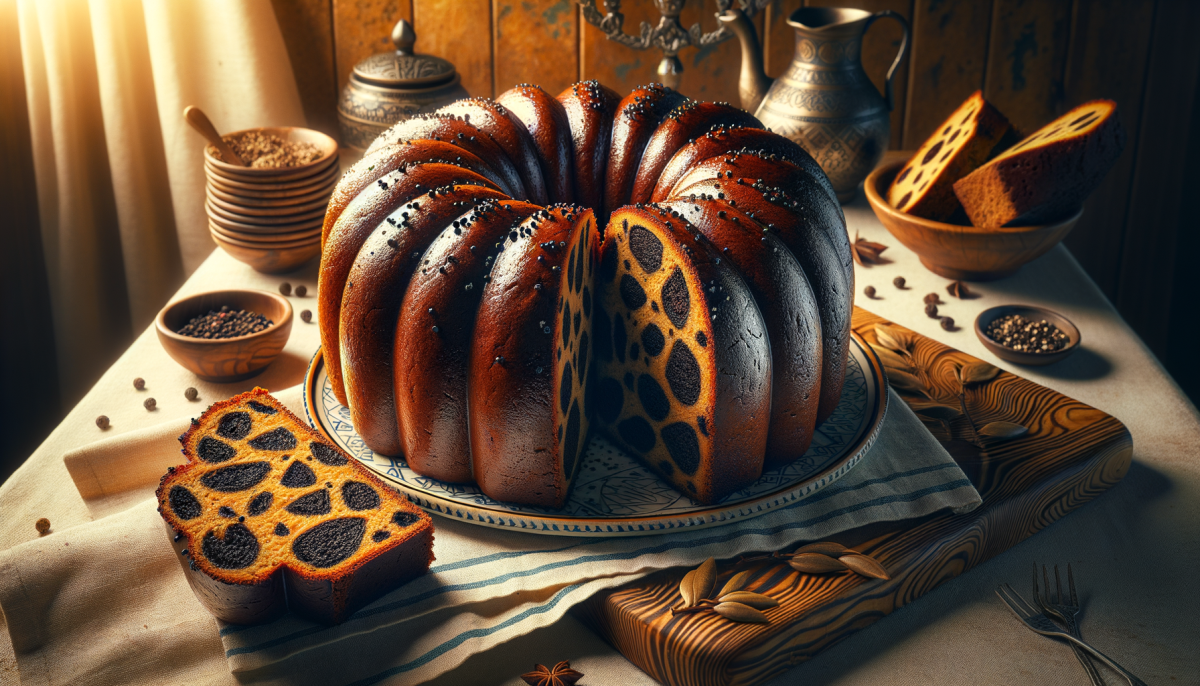
Jerusalem Kugel Bread is a bread that captures the soul of Yerushalmi kugel — caramelized sugar, bold black pepper, and a sweet-savory-spicy warmth that is unlike anything else in Jewish baking. If you have ever tasted Yerushalmi kugel, you know the flavor: that deep, amber caramel that walks the line between bitter and sweet, shot through with enough black pepper to make your lips tingle. Now imagine those flavors woven into a soft, enriched, pull-apart bread. That is what we are making here.
This is not a kugel shaped like bread. It is a true yeasted bread — enriched with eggs and oil, layered with a caramelized sugar-pepper syrup, shaped into a pull-apart loaf that tears into glossy, amber-streaked pieces. The caramel melts into the dough during proofing and baking, creating pockets of bittersweet intensity. The black pepper, far more than a whisper, provides the signature counterpoint that makes Yerushalmi flavors so addictive.
Where classic challah is golden and mild, Jerusalem Kugel Bread is dark-streaked and assertive. It is the bread for the baker who loves contrast — sweet against spicy, soft against sticky, the familiar comfort of bread against the startling depth of burnt caramel. Serve it on Shabbat and watch it disappear before the main course arrives.
The combination of caramelized sugar and black pepper is ancient and unmistakable — the signature of Jerusalem’s Old Yishuv. This bread brings those flavors from the kugel pot to the bread basket, creating something entirely new yet deeply rooted in tradition.
What Makes This Jerusalem Kugel Bread Special
This bread takes the iconic flavor profile of Yerushalmi kugel and reimagines it in bread form. Every element is deliberate:
- Caramelized sugar syrup folded into the dough — real caramel, cooked to a deep amber, is cooled and incorporated into the dough layers. This is not a sugar glaze — it is the same bittersweet caramel that defines authentic Yerushalmi kugel, creating pockets of dark, sticky sweetness throughout the bread.
- Generous black pepper throughout — 2 full tablespoons of freshly ground black pepper, far more than any conventional bread. The pepper is the soul of the Yerushalmi flavor profile, providing warmth and spice that plays against the caramel in every bite.
- A unique sweet-savory-spicy profile — no other bread in the Jewish baking tradition tastes like this. The interplay of bitter caramel, sharp pepper, and soft enriched dough is addictive and entirely original.
- Pull-apart shaping — the dough is rolled with the caramel-pepper filling, coiled, and arranged in a pan so each piece tears away with swirls of amber caramel visible in the crumb.
- Inspired by the iconic Jerusalem Shabbat dish — Yerushalmi kugel is one of the most beloved and distinctive foods in all of Jewish cuisine. This bread pays homage to its flavors while standing entirely on its own as a baked creation.
The Story Behind the Flavors: Yerushalmi Kugel & the Old Yishuv
Yerushalmi kugel — Jerusalem kugel — is the iconic Shabbat dish of the Old Yishuv, the pre-state Jewish community of Jerusalem. Specifically, it is the creation of the Perushim, the Lithuanian Jewish community that settled in Jerusalem in the early 19th century, followers of the Vilna Gaon. These Jews brought Eastern European kugel traditions with them and, in the holy city, transformed them into something entirely new.
The genius of Yerushalmi kugel lies in its caramel. Sugar is cooked in oil until it reaches a deep, almost burnt amber — far past the point where most cooks would lose their nerve. This bitter-sweet caramel is then mixed with cooked noodles, eggs, and an audacious amount of black pepper. The result, baked for hours until the edges darken and the interior sets into a dense, sweet-peppery mass, is unlike any other kugel in the Jewish world. It is served cold or at room temperature, sliced from a towering cylinder, each slice revealing a dark, glistening cross-section.
The dish became so identified with Jerusalem that it is virtually impossible to find a Shabbat table in the city’s religious neighborhoods — Meah Shearim, Geulah, the Jewish Quarter — without it. Bakeries sell it by the slice, families guard their recipes jealously, and debates over the correct ratio of pepper to caramel can escalate with Talmudic intensity.
This bread channels those unmistakable flavors into a new form. The caramelized sugar syrup, the aggressive black pepper, the deep amber color — all are present. But instead of noodles, they are layered into an enriched bread dough, creating a pull-apart loaf that brings Yerushalmi kugel to the bread basket.
Kosher Observance & Halachic Notes
Kosher Classification: Pareve
This bread is made with vegetable oil (no butter or dairy), making it fully pareve. It can be served alongside both meat and dairy Shabbat meals. Verify that all ingredients, including the sugar and oil, bear a reliable hechsher.
Hafrashat Challah (Separating Challah)
This recipe calls for 500 g of flour. According to most Ashkenazi poskim, this amount requires separating challah without a bracha. If you double the recipe (1,000 g flour), you should separate challah with a bracha. Sephardi practice may differ — consult your community’s minhag.
How to perform Hafrashat Challah:
- After the dough is fully mixed, pinch off a small piece — at least a kezayit (roughly 28 g / 1 oz).
- If the total flour exceeds the bracha threshold for your community, recite the bracha:
Hebrew:
בָּרוּךְ אַתָּה ה’ אֱלֹהֵינוּ מֶלֶךְ הָעוֹלָם אֲשֶׁר קִדְּשָׁנוּ בְּמִצְוֹתָיו וְצִוָּנוּ לְהַפְרִישׁ חַלָּהTransliteration:
Baruch Atah Adonai, Eloheinu Melech ha’olam, asher kid’shanu b’mitzvotav v’tzivanu l’hafrish challah.Translation:
“Blessed are You, Lord our God, King of the universe, Who has sanctified us with His commandments and commanded us to separate challah.”
- Say: “Harei zu challah” (“This is challah”).
- Wrap the separated piece in foil and burn it. It may not be eaten.
Checking Eggs for Blood Spots
Each egg should be cracked individually into a clear glass or small bowl and inspected before adding to the dough. If a blood spot is found, the egg must be discarded entirely.
Pas Yisroel
When a Jewish person sets the oven temperature or contributes to the baking in any way, the bread fulfills Pas Yisroel requirements. This is particularly relevant during the Aseret Yemei Teshuvah.
Brachot (Blessings)
- Before eating: HaMotzi Lechem Min Ha’Aretz — this is bread in every halachic sense. Wash and make HaMotzi.
- After eating: Birkat HaMazon (Grace After Meals).
Shabbat Serving
Jerusalem Kugel Bread is ideal for Shabbat lunch, echoing the traditional role of Yerushalmi kugel as a Shabbat day dish. Bake it on Friday before candle-lighting and serve at room temperature or slightly warm on Shabbat. Its sweet-peppery flavor pairs beautifully with cholent and other Shabbat day fare. As a pareve bread, it works alongside both meat and dairy menus.
Ingredients
Enriched Dough
| Ingredient | Grams | Volume | Baker’s % |
|---|---|---|---|
| Bread flour (or strong all-purpose flour) | 500 g | 4 cups | 100% |
| Fine sea salt | 8 g | 1½ tsp | 1.6% |
| Instant (rapid-rise) yeast | 7 g | 2¼ tsp | 1.4% |
| Large eggs, room temperature (check for blood spots) | 100 g | 2 large eggs | 20% |
| Vegetable oil (neutral, such as canola or sunflower) | 60 g | ¼ cup + 1 Tbsp | 12% |
| Warm water (see DDT note below) | 180 g | ¾ cup | 36% |
| Granulated sugar (for the dough) | 25 g | 2 Tbsp | 5% |
| Total Dough Weight | ~880 g | — | — |
Caramelized Pepper Filling
| Ingredient | Grams | Volume | Notes |
|---|---|---|---|
| Granulated sugar (for the caramel) | 150 g | ¾ cup | Cooked to deep amber |
| Water (for the caramel) | 60 g | ¼ cup | Added to stop cooking |
| Vegetable oil (for the caramel) | 30 g | 2 Tbsp | Creates spreadable consistency |
| Freshly ground black pepper | 12 g | 2 Tbsp | Coarsely ground for maximum impact |
For the Pan
- Additional 15 g (1 Tbsp) vegetable oil for greasing the pan
- 1 egg yolk + 1 Tbsp water for egg wash (optional)
Use a 25 cm (10-inch) round springform pan, bundt pan, or deep cake pan. A bundt pan creates a particularly dramatic presentation.
Equipment
- Medium heavy-bottomed saucepan for making caramel
- 25 cm (10-inch) bundt pan, springform pan, or deep round cake pan
- Stand mixer with dough hook (or large bowl for hand kneading)
- Kitchen scale
- Rolling pin
- Offset spatula or pastry brush for spreading caramel
- Pepper mill or mortar and pestle for coarse grinding
- Clear glass or small bowl for egg checking
- Parchment paper (for lining pan bottom)
Desired Dough Temperature (DDT)
Target DDT: 26°C (78°F)
A moderately warm dough ensures consistent fermentation and a soft, enriched crumb. To calculate your water temperature:
Water Temp = (DDT × 3) − Flour Temp − Room Temp
Example: If your kitchen is 22°C and your flour is 21°C:
Water = (26 × 3) − 22 − 21 = 35°C (95°F)
The water should feel comfortably warm — like bath water. Never exceed 43°C (110°F).
Step-by-Step Instructions
Step 1: Make the Caramelized Pepper Syrup
This is the signature step. Take your time and do not rush the caramel.
- Place the 150 g sugar in a medium heavy-bottomed saucepan over medium heat. Do not stir. Let the sugar melt from the edges inward, swirling the pan gently as needed.
- Cook until the sugar reaches a deep amber color — dark like strong tea, almost the color of mahogany. This takes 5–8 minutes. It should smell bittersweet and intensely caramelized, not burnt. Watch carefully: the line between deep amber and burnt is thin.
- Carefully add the 30 g oil — the mixture will bubble vigorously. Stir with a heat-proof spatula until combined.
- Carefully add the 60 g water — it will splutter and steam violently. Stand back. Stir until smooth. If any hardened caramel remains, keep stirring over low heat until it dissolves.
- Remove from heat. Stir in the 12 g freshly ground black pepper. The mixture will be fragrant, dark, and syrupy.
- Let the caramel cool to room temperature (about 30–40 minutes). It should be thick and spreadable, like warm honey. If it hardens too much, warm it gently before using.
Safety note: Caramel is extremely hot — well over 170°C (340°F). Use a deep saucepan, keep children away, and never touch the molten sugar.
Step 2: Make the Dough
While the caramel cools, prepare the dough. Crack each egg individually into a clear glass and inspect for blood spots. If clear, add to the bowl of a stand mixer along with the warm water, 25 g sugar, and oil. Stir briefly to combine.
Add the flour, salt, and instant yeast (keep salt and yeast on opposite sides). Mix on low speed (speed 1–2) for 2–3 minutes until a shaggy dough forms.
Increase to medium speed (speed 3–4) and knead for 8–10 minutes until the dough is:
- Smooth and elastic — it should pull away from the bowl sides cleanly.
- Soft and slightly tacky — enriched with eggs and oil, it will be softer than a lean dough. It should not cling to dry fingers.
- Passes a windowpane test — you can stretch a small piece thin enough to see light through it without tearing.
Hand kneading: Combine in a large bowl, turn onto a lightly oiled surface, and knead 12–15 minutes. The enriched dough takes longer by hand.
Step 3: First Rise
Lightly oil a large bowl. Place the dough inside, turn to coat, and cover tightly with plastic wrap or a damp towel.
Let rise at room temperature for 1 to 1.5 hours until doubled in volume. The dough should be puffy, soft, and pillowy when you press it gently.
Step 4: Roll Out and Apply the Caramel-Pepper Filling
This is where the bread becomes Jerusalem Kugel Bread — the caramel-pepper filling layered into the dough.
- Turn the risen dough out onto a lightly oiled work surface (not floured — flour will create dry patches). Gently deflate.
- Roll the dough into a large rectangle, roughly 40 × 50 cm (16 × 20 inches). It should be about 5 mm (¼ inch) thick. If the dough springs back, cover it with a towel and let it rest 5 minutes, then continue.
- Spread the cooled caramel-pepper syrup evenly over the entire surface of the dough, leaving a 1 cm (½ inch) border along one long edge. Use an offset spatula for even coverage. You should see the dark caramel and specks of black pepper covering the dough like a map of flavors.
- Roll up tightly from the long edge (the one without the border), creating a long, snug log. Pinch the seam closed.
- Using a sharp knife or bench scraper, cut the log into 8–10 equal pieces, each about 5 cm (2 inches) wide.
The caramel will be sticky. This is correct. Lightly oil your hands and the knife between cuts. The stickiness is what creates the gorgeous, glossy swirls in the finished bread.
Step 5: Arrange in the Pan
Generously grease your chosen pan with oil. If using a springform pan, line the bottom with parchment.
Bundt pan: Place the cut pieces on their sides (swirl facing up) in the pan, fitting them snugly in a single layer around the ring. The pieces should be touching but not compressed.
Round pan / springform: Place one piece in the center (cut side up), then arrange the remaining pieces around it in a snug spiral pattern, swirl sides facing up. They will expand to fill any gaps.
Drizzle any remaining caramel from the work surface over the top of the arranged pieces.
Step 6: Second Rise
Cover the pan loosely with plastic wrap or a damp towel. Let rise in a warm place for 45 minutes to 1 hour until the pieces have puffed noticeably and are pressing against each other, filling the pan.
While the bread rises, preheat your oven to 175°C (350°F). Position a rack in the lower third of the oven.
Step 7: Bake
Optional: brush the tops of the rolls with egg wash (1 yolk beaten with 1 Tbsp water) for a glossy finish.
Bake for 30–35 minutes until the top is deep golden-brown and the internal temperature reaches 88–92°C (190–198°F). The caramel will bubble around the edges and the kitchen will smell intensely of burnt sugar and pepper — this is exactly right.
If the top browns too quickly, tent loosely with aluminum foil for the final 10 minutes.
Step 8: Cool and Serve
Let the bread cool in the pan for 10–15 minutes. This allows the caramel to set slightly so it does not all run out when you unmold.
Invert onto a serving plate or board (or release the springform ring). The bottom, now facing up, will be glossy and amber-streaked. If using a bundt pan, the dramatic ring shape with its dark caramel glaze needs no garnish.
Pull apart at the seams. Each piece will reveal swirls of dark caramel and flecks of black pepper against the soft, golden crumb. Serve warm or at room temperature.
Storage & Make-Ahead
- Same day: Jerusalem Kugel Bread is at its best the day it is baked, when the caramel is still slightly sticky and the crumb is supremely soft.
- Room temperature: Wrap tightly in foil and store at room temperature for up to 2 days. The caramel keeps the bread moist longer than a plain loaf.
- Reheating: Wrap in foil and warm in a 150°C (300°F) oven for 10–15 minutes. The caramel will soften and the bread will taste nearly fresh-baked. Do not microwave — it will make the bread gummy and the caramel rubbery.
- Freezing: Wrap cooled bread tightly in plastic wrap, then foil. Freeze for up to 2 months. Thaw at room temperature for 2–3 hours, then reheat in foil in the oven.
- Make-ahead option: Prepare through Step 5 (shaping and arranging in pan), cover tightly with plastic wrap, and refrigerate overnight. In the morning, remove from the fridge, let stand at room temperature for 45–60 minutes to take the chill off, then bake as directed.
Troubleshooting Guide
| Problem | Likely Cause | Solution |
|---|---|---|
| Caramel tastes burnt and acrid | Sugar was cooked past deep amber to black | Discard and start over — there is no fixing burnt caramel. Watch the color: deep amber (like dark tea) is correct; black is too far. Work over medium heat, not high. |
| Caramel hardened and will not spread | Cooled too much; not enough liquid added | Warm the caramel gently over low heat, stirring, until it is spreadable again. Add 1–2 Tbsp additional warm water if needed. |
| Bread is underbaked in the center | Caramel insulates the interior; oven temperature too high (browning top before center bakes) | Use an instant-read thermometer — center should reach 88–92°C (190–198°F). Tent with foil if top browns early, and continue baking. |
| Bread sticks to pan | Insufficient greasing; caramel bonded to pan surface | Grease generously with oil. Use parchment on the bottom. If stuck, place a warm damp towel on the inverted pan for 2 minutes to soften the caramel. |
| Not enough pepper flavor | Pre-ground pepper used; pepper too fine; too little used | Grind pepper fresh and coarsely — you should see visible flecks. Use the full 2 Tbsp. Yerushalmi kugel is assertively peppery; do not hold back. |
| Filling leaked out during baking | Dough rolled too thin; seams not sealed; caramel too liquid | Some leaking is normal and creates a delicious glaze. To minimize: seal the log seam well, let caramel cool fully before spreading, and do not over-fill. |
Frequently Asked Questions
What is Yerushalmi kugel?
Yerushalmi kugel (Jerusalem kugel) is a traditional Shabbat dish from the Old Yishuv — the pre-state Jewish community of Jerusalem, particularly the Lithuanian Perushim community. It is made by cooking thin egg noodles, then mixing them with a deeply caramelized sugar-and-oil syrup and a generous amount of black pepper. The mixture is baked for hours until dense and dark. Served cold or at room temperature in thick slices, it is intensely sweet, peppery, and unlike any other kugel. It remains one of the most iconic and beloved Shabbat foods in Jerusalem today.
How spicy is this bread? Can I reduce the pepper?
The black pepper provides a warm, tingling heat — not fiery like chili, but distinctly present and aromatic. It is the defining characteristic of Yerushalmi flavors. You can reduce the pepper to 1 tablespoon for a milder version, but we encourage you to try the full 2 tablespoons at least once. The interplay between the bittersweet caramel and the bold pepper is what makes this bread extraordinary. The heat mellows slightly during baking.
Can I make this bread dairy instead of pareve?
Yes. Replace the vegetable oil in the dough with 60 g melted unsalted butter, and use 30 g melted butter in the caramel instead of oil. The dairy version will have a richer flavor and slightly more tender crumb. However, you will lose the flexibility to serve it alongside a meat meal. Always clearly label the bread as dairy if you make this substitution.
Can I prepare the caramel in advance?
Absolutely. The caramelized pepper syrup can be made up to 3 days in advance and stored in an airtight container at room temperature. It will thicken as it sits. Before using, warm it gently over low heat or in a microwave for 15–20 seconds, stirring until it reaches a spreadable, honey-like consistency. Making the caramel ahead actually makes baking day smoother and less stressful.
Is this bread suitable for Yom Tov or just Shabbat?
Jerusalem Kugel Bread is wonderful for any occasion. It is particularly fitting for Shabbat (echoing the traditional Yerushalmi kugel served at the Shabbat day meal), but also makes an impressive addition to a Yom Tov table. For Rosh Hashanah, the sweetness of the caramel is a beautiful symbol of a sweet new year. For a seudah shlishit (third Shabbat meal), serve it with fresh fruit and tea. It also makes a memorable lechem mishneh partner alongside a classic challah.
Bring the Flavors of Old Jerusalem to Your Bread Basket
Caramelized sugar, bold black pepper, soft enriched bread — this is the taste of Jerusalem’s most iconic dish, reimagined. Bake it once and it will become part of your Shabbat tradition.
Save This Recipe
Bake Our Classic Challah Too →
Have questions? Tag us @kosherbreadpro on Instagram or leave a comment below. We answer every one.