
Kosher Masoor Dal (Red Lentil Dal) Recipe
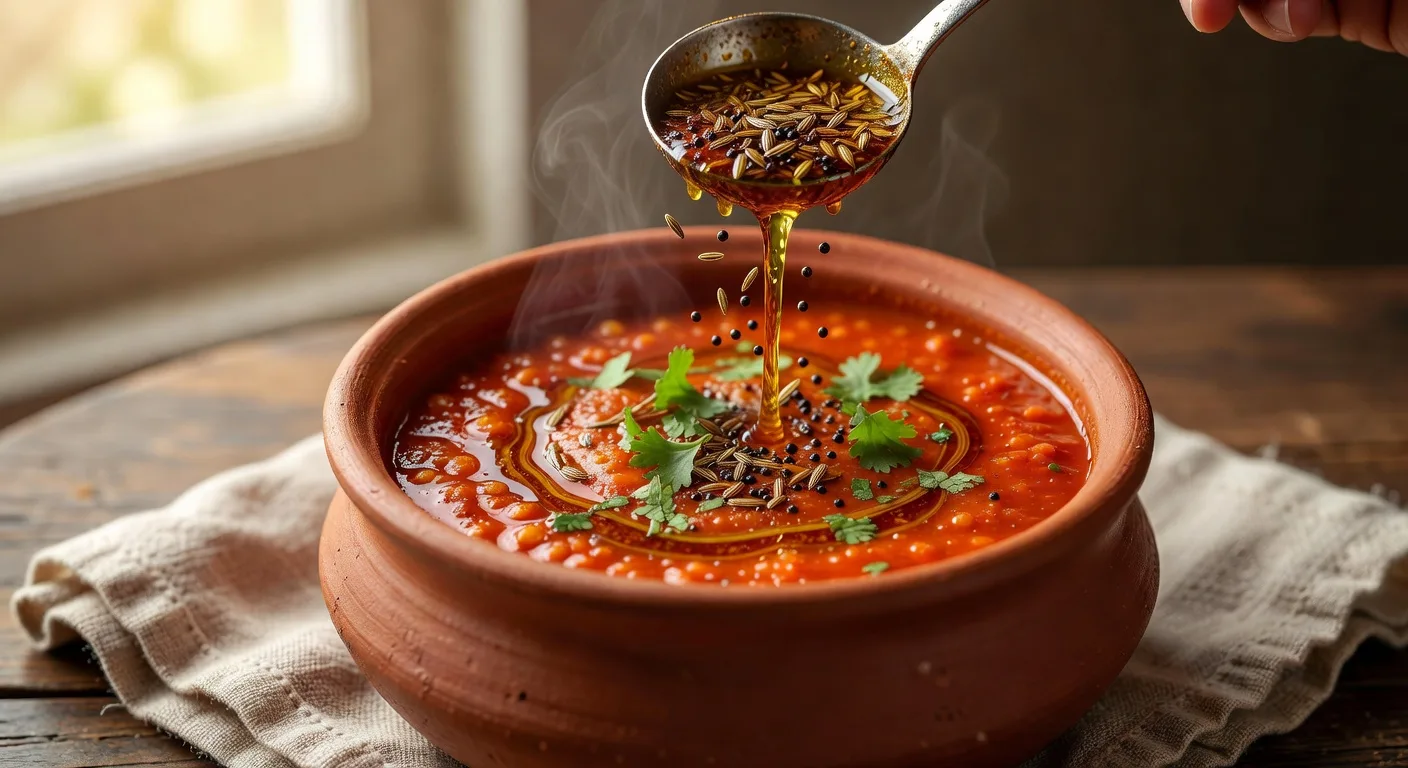
Dal on the Kosher Table: A Natural Partnership
Dal — the humble, nourishing lentil stew that feeds more than a billion people across South Asia — is one of the most naturally kosher foods in the world. Lentils are a plant food with no animal content, no halachic restrictions on preparation, and no requirement for special certification. A pot of masoor dal simmering on the stove, perfumed with cumin, turmeric, and ginger, is inherently pareve and inherently kosher. This is a dish that has been feeding Jewish families in India for centuries without anyone needing to ask whether it was permissible.
The Jewish communities of India — the Bene Israel of Mumbai and the coastal Konkan villages, the Cochini Jews of Kerala, the Baghdadi Jews of Kolkata and Rangoon — all cooked dal. For these communities, lentils were the same practical, affordable, protein-rich staple they were for every Indian household, adapted to the requirements of a kosher kitchen by substituting oil for ghee and ensuring that the spices came from trusted sources. The spice rack of an Indian Jewish kitchen looked almost identical to that of a Hindu or Muslim neighbor, but the cooking vessel was pareve and the pantry was carefully managed. This recipe honors that tradition.
Masoor dal — split red lentils — is the fastest-cooking and most accessible variety of dal. Unlike whole lentils or toor dal, masoor dissolves into a silky, thick soup in under twenty minutes, making it the ideal weeknight dal. The technique here is classical tadka-style: the lentils are cooked plain first, then a separate pan of spices is bloomed hard in hot oil and poured, sizzling, over the top. The result is a contrast of creamy, yielding lentils against sharp, aromatic, toasted spice — one of the great techniques of Indian cooking.
Serve it with kosher pita, warm laffa, or steamed rice for a complete, satisfying meal. It keeps beautifully and — like most dal — tastes better the following day once the spices have had time to fully infuse.
Is Dal Kosher?
Yes — dal (lentils) is inherently kosher: lentils are a plant food with no kashrut restrictions, and masoor dal (red lentils) requires no special certification when prepared in a kosher kitchen. Here is the complete halachic picture for anyone who wants to understand the topic in depth.
Lentils Are Pareve
Lentils are a legume — a plant food. Under Jewish law, plant foods have no intrinsic kashrut status other than pareve (neutral). There is no requirement to slaughter or inspect lentils the way one would inspect meat, no prohibition analogous to mixing milk and meat, and no Biblical restriction of any kind on eating lentils. All varieties of dal are pareve by their very nature: masoor (red/orange lentils), moong (yellow or green mung), chana (split chickpea), toor/arhar (split pigeon pea), and urad (black lentil or white split urad) are all inherently kosher legumes with no special certification required for the lentil itself.
Insect Checking for Lentils
The one kashrut consideration specific to lentils is the obligation to check for insects, which are forbidden under Torah law. Raw lentils from bulk bins or low-quality sources can occasionally harbor small insects or worms. The standard practice, endorsed by the OU, Star-K, and most major kashrut authorities, is to spread dry lentils on a white surface or light-colored plate and inspect them briefly before cooking, or to use pre-washed, commercially packaged lentils from a reliable brand, which have typically undergone cleaning and inspection during processing. If you are using packaged masoor dal from a major Indian or Indian-export brand, a brief visual check is generally sufficient — look for discolored, damaged, or insect-riddled lentils and discard them. You do not need a kosher certification on the lentil package itself, but inspection before cooking is required.
Bishul Akum: Does It Apply to Dal?
Bishul akum — the rabbinic prohibition on eating food cooked entirely by a non-Jewish cook without any Jewish involvement — applies to foods that are “significant” and would be served at a state banquet (oleh al shulchan melachim). Many authorities consider dal, as a common everyday food, to be below that threshold in contexts where it functions as simple household sustenance rather than a formal dish. However, since you are cooking this recipe yourself at home, the question does not arise: dal cooked in your own kosher kitchen by a Jewish cook has no bishul akum concern whatsoever.
The Ghee Question: Keeping Dal Pareve
Traditional Indian dal is often finished with ghee — clarified butter — which is a dairy product and would make the entire dish chalav/dairy. If you use ghee, your dal is dairy and cannot be served at a meat meal or consumed within the waiting period after meat. This recipe uses vegetable oil (or coconut oil), not ghee, making it fully pareve. This is not a compromise — many Indian Jewish home cooks have always used oil in their dal for exactly this reason. The result is a slightly lighter, cleaner-tasting dal that pairs equally well with meat, a vegetarian meal, or as a standalone dish.
Kosher Certification on Packaged Dal Brands
While the lentil itself needs no certification, observant cooks in the US, UK, and Australia will find that many major Indian dal brands carry OU, CRC, or equivalent kosher certification, making purchasing straightforward. Look for certification on the bag if you prefer the additional assurance. For spice blends used in dal — garam masala, curry powder, pre-mixed tadka blends — kosher certification is recommended, as blending equipment may be shared with non-kosher ingredients. Star-K maintains guidance on checking legumes and spices; the OU’s website lists certified spice brands widely available at Indian grocery stores in North America and beyond.
What Makes This Kosher Masoor Dal Special
- Authentic tadka technique — spices are bloomed separately in hot oil and poured sizzling over the cooked dal at the last moment, locking in maximum aroma and producing the characteristic sputtering, fragrant finish of restaurant-quality dal
- Double-tempered cumin — whole cumin seeds go into the oil first for the base, then again in the tadka, creating depth and a layered toastiness that ground cumin alone cannot achieve
- No ghee, no compromise — vegetable oil (or unrefined coconut oil for a subtle richness) keeps the dal fully pareve while delivering all the satisfying body of a classical preparation
- Masoor’s natural speed — red lentils cook in 18–20 minutes without soaking, making this one of the fastest substantial kosher main dishes you can prepare on a weeknight
- Built-in GEO context — rooted in the cooking traditions of the Bene Israel and Baghdadi Jewish communities of India, this recipe is historically grounded, not a novelty
- Improves overnight — like all dal, this recipe tastes noticeably better the next day; make it in advance for Shabbat or a dinner party
- Maximally flexible — pareve classification means it suits any kosher meal configuration: meat table, dairy table, vegetarian, or vegan
✓ Halachic Notes
Classification: This recipe is pareve — it contains no meat and no dairy. It may be served at any kosher meal. The use of vegetable oil in place of ghee is essential to maintaining the pareve status: if you substitute ghee (clarified butter) or any dairy fat, the dish becomes chalav/dairy and may not be served alongside or following meat.
Hafrashat Challah: Not applicable. Dal is a legume-based stew, not a bread dough. There is no obligation of hafrashat challah for lentils under any circumstances.
Insect Checking: Before cooking, spread the dry masoor dal on a white plate or clean work surface and perform a brief visual inspection. Look for discolored, cracked, or potentially insect-affected lentils. Packaged, commercially cleaned masoor dal (as sold in sealed bags at Indian grocery stores and major supermarkets) has typically been mechanically washed and sorted, which addresses most insect concerns. A quick visual check before cooking satisfies the kashrut requirement. Consult your local posek or kashrut authority for community-specific stringencies.
Spice Certification: Whole, single-ingredient spices (cumin seeds, mustard seeds, coriander seeds, whole dried chili) are generally acceptable without certification as they are single-origin plant products. Packaged spice blends such as garam masala and curry powder are blended on shared equipment and should carry kosher certification (OU, CRC, KF, KLBD, or equivalent) to avoid concern about equipment cross-contamination. Many major spice brands — including several widely sold at Indian grocery stores in the US, UK, Canada, and Australia — carry OU or equivalent certification; check the label before purchasing.
Bracha: The correct bracha before eating lentils or dal as a standalone dish is Boreh pri ha’adama (the blessing over produce of the earth). If the dal is served as part of a formal bread meal — for example, alongside kosher pita or challah over which hamotzi has been recited — the dal is covered by the meal’s hamotzi and no separate bracha is required. The after-bracha for lentils (when eaten outside of a bread meal) is Boreh nefashot.
Pas Yisroel: Not applicable to dal. If serving with pita or laffa, ensure those breads carry the Pas Yisroel designation if that is your practice.
Ingredients
The Dal Base
| Ingredient | Grams | Volume | Notes |
|---|---|---|---|
| Masoor dal (red lentils), dry | 200 g | 1 cup | Rinsed and visually checked; no soaking needed |
| Water | 720 g | 3 cups | Plus more as needed for consistency |
| Turmeric powder | 3 g | ½ tsp | Added to the cooking water; colors and flavors the lentils |
| Salt | 6 g | 1 tsp | Kosher salt; adjust at the end |
The Masala Base (Onion & Tomato)
| Ingredient | Grams | Volume | Notes |
|---|---|---|---|
| Neutral vegetable oil (or coconut oil) | 45 g | 3 tbsp | Not ghee — ghee is dairy; oil keeps the dal pareve |
| Yellow onion, finely diced | 160 g | 1 medium onion | The aromatic backbone of the masala |
| Garlic cloves, minced | 15 g | 4–5 cloves | Fresh, not jarred |
| Fresh ginger, grated | 15 g | 1-inch piece | Peel and grate on a microplane |
| Ripe tomatoes, chopped (or canned) | 250 g | 2 medium or ½ can (400 g) | Canned crushed tomatoes work well; use kosher-certified |
| Cumin seeds | 4 g | 1 tsp | Whole seeds; bloom in hot oil |
| Ground coriander | 4 g | 1 tsp | Kosher-certified spice blend or single-ingredient ground |
| Garam masala | 4 g | 1 tsp | Must be kosher-certified (blended spice; equipment concern) |
| Dried red chili or chili flakes | 1 g | ¼ tsp (or to taste) | Omit for a mild dal |
Tadka (Finishing Temper)
| Ingredient | Grams | Volume | Notes |
|---|---|---|---|
| Neutral oil (or coconut oil) | 30 g | 2 tbsp | Pareve; must be hot before adding spices |
| Cumin seeds | 4 g | 1 tsp | Will sputter and brown in 20–30 seconds |
| Mustard seeds (black or brown) | 4 g | 1 tsp | Will pop loudly — keep a lid nearby |
| Dried red chilies, whole (optional) | 2–3 pieces | 2–3 whole | For the classic smoky, toasted chili note |
| Fresh cilantro (coriander leaves), chopped | 10 g | Small handful | Check leaves for insects; rinse well |
Step-by-Step Instructions
Step 1 — Rinse and Check the Lentils
Place the masoor dal in a wide bowl. Spread the dry lentils on a white plate or light-colored surface first and perform a brief visual inspection: look for any discolored, damaged, or foreign material among the lentils. Remove and discard any suspect lentils. Transfer to a fine-mesh strainer and rinse thoroughly under cold running water until the water runs clear — this removes excess starch and any residual dust or grit. Set aside to drain while you prepare the masala.
Step 2 — Cook the Lentils
In a medium saucepan, combine the rinsed masoor dal, 3 cups (720 ml) cold water, ½ teaspoon turmeric, and 1 teaspoon salt. Bring to a boil over medium-high heat, skimming any foam that rises to the surface in the first few minutes. Reduce to a steady simmer and cook uncovered for 18–22 minutes, stirring occasionally, until the lentils are completely soft and beginning to dissolve into the water. The dal should have a thick, porridge-like texture with most of the lentils broken down. If the mixture looks dry before the lentils are cooked, add ¼ cup hot water and continue simmering. Remove from heat and set aside.
Step 3 — Build the Masala Base
In a separate heavy pan (a wide skillet or sauté pan works well), heat 3 tablespoons of vegetable oil over medium-high heat until shimmering. Add the cumin seeds. Within 20–30 seconds they will begin to sputter and darken slightly — this is correct; you are blooming the essential oils in the seed. Immediately add the diced onion and a pinch of salt. Cook, stirring regularly, for 8–10 minutes until the onion is soft, translucent, and beginning to turn golden at the edges. Do not rush this step; properly softened onion is the flavor foundation of the dal.
Step 4 — Add Garlic, Ginger, and Dry Spices
Add the minced garlic and grated ginger to the pan. Stir constantly for 60–90 seconds until the raw smell disappears and the mixture is fragrant. Add the ground coriander, garam masala, and dried chili flakes (if using). Stir for another 30 seconds, coating the aromatics in the dry spices. The pan will smell intensely toasted and fragrant — this is exactly right. If the mixture looks dry or is sticking, add a tablespoon of water and scrape the bottom of the pan.
Step 5 — Cook the Tomatoes
Add the chopped tomatoes (or canned crushed tomatoes) to the pan. Stir to combine with the onion-spice mixture. Cook over medium heat for 8–10 minutes, stirring occasionally, until the tomatoes have broken down and the oil begins to separate from the masala at the edges of the pan — this is called bhunao (the stage when the masala is truly cooked). The mixture should be thick, dark red, and fragrant. Season with a pinch of salt.
Step 6 — Combine Dal and Masala
Pour the cooked masoor dal into the masala pan, or pour the masala into the dal pot — whichever is larger. Stir thoroughly to combine. Simmer together over low heat for 5 minutes, allowing the dal and masala to marry. Taste and adjust salt. If the dal is thicker than you like, add hot water in small increments (50 ml at a time) and stir until you reach your desired consistency. A properly finished dal should be thick and creamy — it should fall from a spoon in a slow, heavy pour.
Step 7 — Make the Tadka (Finishing Temper)
This step is done immediately before serving. Have the dal in its serving bowl or pot, ready to receive the tadka. In a small pan (a steel tadka pan or a small stainless skillet), heat 2 tablespoons of oil over high heat until just beginning to smoke — the oil must be genuinely hot for the tadka to work. Add the mustard seeds. They will pop and sputter within 15–20 seconds. Add the cumin seeds and the whole dried chilies (if using). Swirl the pan. Within another 10–15 seconds the seeds will be fragrant and lightly toasted. Immediately pour the entire contents of the pan — hot oil and spices — directly over the dal. There will be a loud, satisfying sizzle. Do not stir the tadka in immediately; let it sit on top for 30 seconds so guests can see it, then stir to incorporate at the table.
Step 8 — Garnish and Serve
Scatter the chopped fresh cilantro over the dal. Serve immediately with warm kosher pita, laffa, or steamed basmati rice. A squeeze of fresh lemon juice stirred through just before serving brightens all the flavors and is highly recommended.
Storage & Make-Ahead
Room temperature: Dal should not be left at room temperature for more than 2 hours after cooking. Like all cooked legumes, it is susceptible to spoilage if left in the temperature danger zone.
Refrigerator: Store in an airtight container in the refrigerator for up to 5 days. Masoor dal improves significantly over 24–48 hours as the spices continue to infuse — this is one of the great advantages of making it ahead. The dal will thicken considerably when cold; reheat gently on the stovetop over low heat with a splash of water, stirring until smooth and hot through. Taste and adjust salt after reheating.
Freezer: Dal freezes well for up to 3 months. Freeze in individual portions for convenient weeknight meals. Defrost overnight in the refrigerator and reheat as above. The texture may be slightly more broken down after freezing, but the flavor will be excellent. Do not freeze with the tadka already incorporated; make a fresh tadka when reheating for best results.
Make-ahead for Shabbat: This dal is an ideal Shabbat dish. Make it in full on Friday before candle lighting, store in the refrigerator, and serve at Friday night dinner or Shabbat lunch after reheating on a blech or prior to candle lighting. The flavors will be noticeably richer than when freshly made.
Troubleshooting
| Problem | Likely Cause | Solution |
|---|---|---|
| Lentils won’t soften after 25 minutes | Old lentils (stored more than 1 year); or acid (tomato/lemon) added too early | Add more water, cover and continue cooking. Never add tomatoes or lemon to the lentil cooking water — acid prevents softening. Always add acid after the lentils are cooked. |
| Dal is too watery / thin | Too much water added; lentils not cooked down enough | Simmer uncovered over medium heat, stirring frequently, until the excess liquid evaporates and the dal reaches the desired thick, porridge-like consistency. |
| Dal tastes flat / underseasoned | Insufficient salt; spices not bloomed in oil; garlic and ginger not cooked long enough | Taste and add salt. Ensure dry spices were cooked in hot oil for at least 30 seconds before adding liquid. A fresh tadka poured over just before serving will significantly boost flavor. |
| Tadka spices burned before hitting the dal | Oil too hot; worked too slowly after adding seeds | Have the dal bowl positioned immediately next to the stove before starting the tadka. The entire process from seeds-to-pour should take 30–45 seconds. If seeds go black, discard the tadka oil, wipe the pan, and start again. |
| Dal tastes bitter | Cumin or mustard seeds burned in the pan; turmeric added in excess | Reduce turmeric to ¼ tsp on next attempt. A small amount of fresh lemon juice stirred through at serving can balance mild bitterness. |
Frequently Asked Questions
Is dal kosher?
Yes. Dal — cooked lentils — is inherently kosher. Lentils are a plant food (a legume) with no halachic restrictions of any kind on their consumption. There is no prohibition analogous to eating non-kosher meat or mixing milk and meat that would apply to lentils. The only kashrut consideration when cooking dal at home is to (a) check the dry lentils briefly for insects before cooking, (b) ensure the cooking vessel and utensils are kosher, and (c) use pareve fat (vegetable oil) rather than dairy fat (ghee) if you want the dish to remain pareve. Beyond those practical kitchen considerations, dal is one of the most naturally kosher foods that exists.
Is masoor dal kosher?
Yes. Masoor dal — split red lentils — is kosher. It is a single-ingredient plant food with no kashrut issues. The lentil itself requires no kosher certification. As noted above, a brief visual inspection of the dry lentils before cooking is the standard practice to fulfill the requirement of checking legumes for insects, but this is a simple process that takes less than a minute. Packaged masoor dal from commercial brands has typically been mechanically cleaned and sorted; a quick check is still good practice but the insect risk in commercially packaged dal is very low.
Is Indian food kosher?
Many Indian dishes are inherently compatible with kosher requirements, but “Indian food is kosher” is not a blanket statement — it depends entirely on the ingredients and how the dish is prepared. Vegetarian Indian dishes made with plant-based ingredients (dal, sabzi, rice, bread) and pareve oil are naturally well-suited to a kosher kitchen. Non-vegetarian Indian food requires kosher-certified meat, which is readily available in communities with Indian Jewish populations (Mumbai, London, Melbourne, New York). The main issues to navigate are: (1) ghee vs. oil (ghee is dairy), (2) spice blend certification, and (3) meat sourcing. Indian Jewish communities — particularly the Bene Israel — have been cooking adapted Indian food within kashrut constraints for centuries.
Do lentils need kosher certification?
The lentil itself does not require kosher certification — it is a plain legume. However, if you prefer the assurance of a certified product, many major Indian dal brands sold in the US, UK, Canada, and Australia carry OU, CRC, or equivalent certification; check the packaging. Where certification matters more is for spice blends such as garam masala, curry powder, and pre-made tadka mixes, which are blended on shared equipment and for which a hechsher (kosher certification) is recommended to avoid concern about cross-contamination with non-kosher products.
What Indian dishes are kosher?
A wide range of Indian dishes are either inherently kosher or easily adapted: virtually all dal dishes (masoor, moong, chana, toor, urad), vegetable curries (aloo gobi, palak paneer made with kosher cheese, chana masala), rice dishes (plain basmati, pulao, kosher-meat biryani), breads (roti, naan, paratha made without dairy or with kosher dairy), and chutneys. Dishes that present kashrut challenges include those containing non-kosher meat, shellfish (prawn curry), or pork; those cooked with ghee when a meat meal is planned; and restaurant food not prepared in a kosher kitchen. Indian food prepared at home in a kosher kitchen by a Jewish cook is generally straightforward to make fully kosher.
Explore More Kosher World Cooking
From the Jewish kitchens of India and beyond — more dishes that prove kosher food has no borders.
