
Shavuot 2026: Why We Bake Dairy at Zman Matan Torah
By Avi — Kosher & Kashrut Expert • May 2026
On the evening of Thursday, May 25, 2026, Jews around the world will pause everything and gather for Shavuot — the Festival of Weeks, Zman Matan Torah (the Season of the Giving of the Torah). Fifty days after the Exodus from Egypt, at the foot of a surprisingly modest mountain in the Sinai Desert, the entire Nation of Israel stood together and experienced something that has never happened before or since: a national, collective Divine Revelation.
The Midrash teaches something that still stops me every year. When God was preparing to give the Torah, every mountain in the world pushed forward to make its case. “Choose me — I’m the highest!” said one. “No, choose me — I am the mightiest!” said another. They all competed, each declaring its own greatness. In the end, God chose Mount Sinai — the smallest, most humble peak of all — for exactly that reason: anava, humility.
Torah can only rest where there is humility. The baker who approaches the oven with that same quiet reverence — not rushing, not showing off, but serving — understands something deep about what Shavuot asks of us.
Why Do We Eat Dairy on Shavuot?
This is one of the most commonly asked questions in the Jewish kitchen, and the answers are layered — beautifully so. The primary reasons given by halachic authorities include:
- Torah is likened to milk and honey. The verse in Shir HaShirim (4:11) says “devash v’chalav tachat leshonech” — “honey and milk are under your tongue.” Just as a mother’s milk sustains a newborn, Torah nourishes the soul. On the day we received Torah, we eat foods that echo that nourishment.
- The newly given Torah changed the laws of slaughter. The Rema (Orach Chaim 494:3) explains that when the Torah arrived, the people realized their utensils were no longer kosher (having been used without knowledge of shechita requirements). Rather than wait to kasher everything, they ate dairy — which required no slaughter — for the holiday meal.
- Sinai in gematria is 130, the same as sulam (ladder). From the “milk” of Jacob at the ladder (who climbed toward heaven), to the milk we eat at Sinai — the imagery runs deep in Kabbalistic tradition.
- The 49 days of the Omer connected us to the Land. In the time of the Temple, Shavuot was the festival of bikkurim (first fruits) — a land flowing with milk and honey. Dairy foods echo that agricultural abundance.
Whatever your minhag (custom) — some families eat only dairy, others eat both dairy and meat at separate meals with a break in between — the message is the same: this holiday calls for richness, warmth, and the care that only a prepared, mindful kitchen can offer.
Kashrut Essentials for Shavuot Dairy Baking
Before the oven goes on, a few halachic checkpoints every serious kosher baker should run through:
Shavuot Dairy Baking Checklist
- Cholov Yisrael / Chalav Yisrael: Depending on your level of observance and community standard, you may require milk and dairy products with Chalav Yisrael certification (supervised from milking to bottling). This applies to butter, cream, milk, and soft cheeses in your baking.
- Dairy-certified bakeware: Any pans, bowls, or utensils used for dairy baking must be your designated dairy equipment — or brand-new and immersed in a mikveh if they are metal or glass.
- Hafrashat challah: Dairy doughs require the same hafrashat challah (separation of challah portion) as any other bread dough. The thresholds are: below ~1,230g of flour, no separation required; between 1,230g and 1,666g, separate without a bracha; 1,666g and above, separate with the bracha. See individual recipes for specific guidance.
- Checking eggs: Always crack eggs one at a time into a clear glass or bowl to check for blood spots before adding to your dairy batter.
- Pas Yisroel: If your standard requires Pas Yisroel (bread baked with Jewish involvement), ensure your yeast, flours, and any packaged dairy ingredients carry appropriate certification.
- Meat residue: After eating meat at a Shavuot meal, follow your community’s custom for the waiting period before eating dairy (1 hour, 3 hours, or 6 hours depending on Ashkenazi/Sephardi minhag).
What to Bake for Shavuot
The Shavuot table is one of the most joyful baking occasions in the Jewish year. Here is what I recommend:
Dairy Challah — The Centerpiece
A Shavuot dairy challah is enriched with whole milk, butter, and honey — producing a crumb so soft and fragrant it barely needs anything on it. Unlike the pareve challah we bake every Shabbat, this one carries the warmth of a dairy kitchen: golden, pillowy, and faintly sweet. We have a full recipe below (see our Shavuot Dairy Honey Challah) that includes baker’s percentages, step-by-step instructions, and full halachic notes.
Cheese Blintzes
The classic Shavuot dairy food. A thin crepe filled with sweetened farmer’s cheese (gevina levana), pan-fried in butter until golden. Served with sour cream or fresh strawberries. If you have never made blintzes from scratch, Shavuot is the year to learn.
Cheesecake
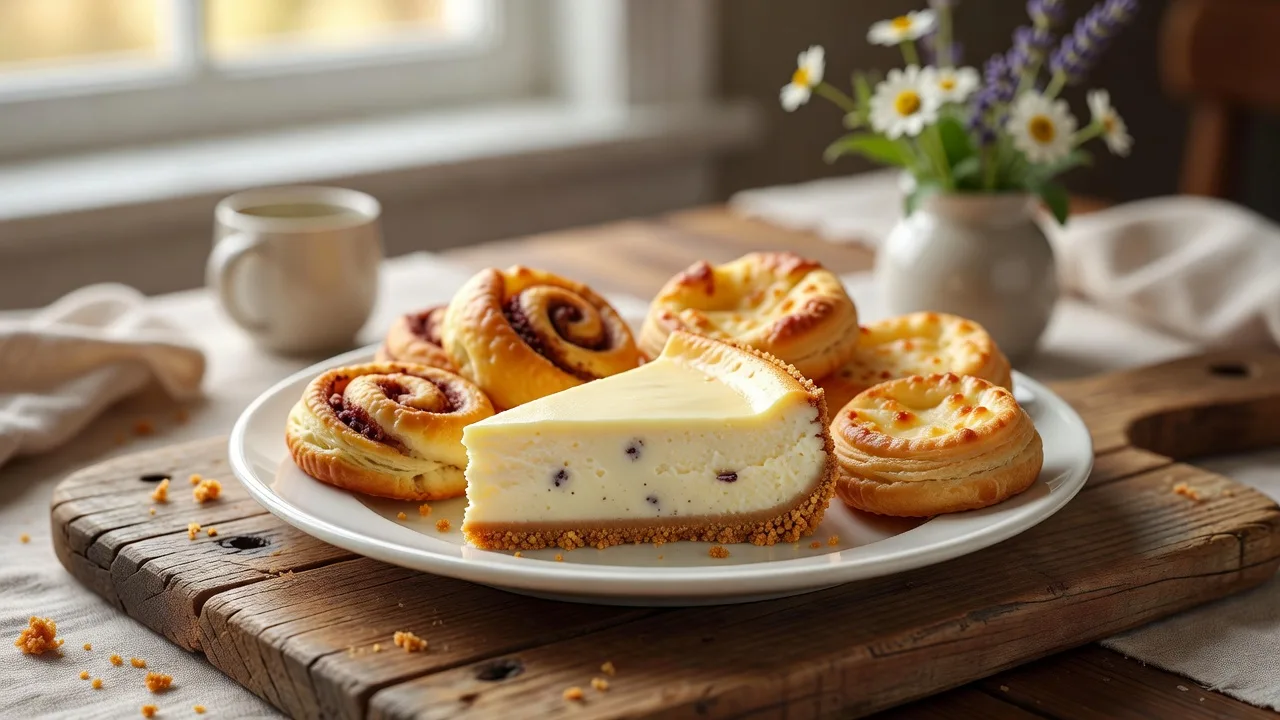
New York-style, Israeli cottage cheese style, or a Galilee-inspired honey-and-labaneh variation — cheesecake is the undisputed Shavuot centerpiece dessert. The dairy richness, the sweetness, the connection to milk and honey: it says Shavuot without a single word.
Shavuot Rugelach (Dairy Version)
The cream-cheese dough version of rugelach — flakier, richer, and more complex than the margarine version we use for pareve batches — is extraordinary. Fill with apricot jam and walnuts, or a cinnamon-sugar butter paste. Our rugelach recipe can be adapted with real butter and cream cheese for Shavuot.
Chocolate Babka — Dairy Version
Our chocolate babka recipe uses a pareve dough for year-round flexibility. For Shavuot, swap the oil for butter and the water for whole milk — the result is a dramatically richer crumb with a brioche-like depth that justifies making two babkas instead of one.
The Deeper Connection
Rabbi Shmuel Veffer of Galilee Green in Tiberias put it beautifully in his Shavuot message this year: “It gives us an opportunity to remind ourselves and focus on our relationship with the Almighty and the plans He has for the world as revealed in our Holy Torah.”
The kitchen, I would add, is one of the places where that relationship becomes tangible. The patience of a bread rise teaches us something about waiting with trust. The precision of baker’s math echoes the exactness of halacha. And the warmth of a dairy challah pulled from the oven on Erev Shavuot — shared at a table lit with holiday candles — is exactly the kind of milk-and-honey the Torah was speaking of.
Chag Sameach — a joyous and sweet Shavuot to all.
Ready to Bake for Shavuot?
Start with our Shavuot Dairy Honey Challah — a fully-guided premium recipe with baker’s percentages, full kashrut notes, and step-by-step instructions.
