Categories
Recipes

Challah Monkey Bread

Pareve

Yield
1 bundt pan (10–12 servings)
Difficulty
Beginner–Intermediate
Active Time
40 minutes
Total Time
3½–4 hours
Bracha
Mezonot

Monkey bread is pure joy — a tumble of small dough pieces coated in cinnamon sugar, baked together until they fuse into a sticky, pull-apart mountain of sweetness. Now imagine that dough is challah: richer, eggier, softer than any standard monkey bread recipe. Every piece pulls away trailing threads of golden, buttery dough and cinnamon-scented caramel.

This is the recipe that disappears before it fully cools. Bake it for a Shabbat morning treat, a Chanukah breakfast celebration, or whenever you want a showstopper that takes minimal skill. Children love helping — tearing dough into pieces, rolling them in cinnamon sugar, and piling them into the pan is the kind of baking project that creates memories.

The bundt pan is traditional but a round cake pan works too. The key is packing the pieces snugly so they bake into each other, creating that irresistible pull-apart texture. A simple caramel sauce poured over the top before baking turns the bottom (which becomes the top when inverted) into a glossy, sticky crown.

Categories
Recipes

Challah Cinnamon Rolls

Pareve

Yield
12 rolls
Difficulty
Intermediate
Active Time
45 minutes
Total Time
3½–4 hours
Bracha
Mezonot

Take the most beloved enriched dough in Jewish baking and turn it into the most beloved breakfast pastry in the world. These challah cinnamon rolls use a slightly enriched challah dough as the base — softer and richer than standard cinnamon roll dough, with the familiar eggy sweetness that makes challah special. Rolled with a generous layer of cinnamon sugar, they emerge from the oven puffy, fragrant, and impossible to resist.

Unlike the mile-high bakery rolls drenched in cream cheese frosting, these stay true to their Jewish roots: pareve, not too sweet, and designed to be eaten at any meal. A simple glaze of powdered sugar and water lets the cinnamon and challah flavors shine. They are stunning for a Shabbat morning brunch, a Chanukah breakfast, or any morning you want the kitchen to smell like a Jewish bakery.

The secret is in the roll — tight enough to create distinct layers, but not so tight that the filling bursts out during baking. Cut them with a sharp knife or dental floss, nestle them close together in the pan so they rise into each other, and bake until just golden. The result is a pull-apart texture that is soft, swirled, and absolutely addictive.

Categories
Recipes

Overnight No-Knead Challah

Pareve

Yield
2 loaves
Difficulty
Beginner
Active Time
20 minutes
Total Time
12–14 hours (overnight)
Bracha
HaMotzi

This is the challah for the baker who thinks they cannot make challah. No kneading, no stand mixer, no muscle required. Just a bowl, a spoon, a night of patience, and the gentle magic of time doing what your hands normally do. You mix the dough in five minutes before bed, let it rise overnight in the refrigerator, and in the morning you have a supple, workable dough ready to braid.

The long, cold fermentation develops flavor that quick-rise challahs cannot match — a subtle tanginess, a more complex wheat character, a depth that makes people ask what your secret ingredient is. The answer is simply time. The yeast works slowly in the cold, producing flavor compounds that fast fermentation never develops.

This recipe is ideal for a Friday morning bake. Mix Thursday night, braid Friday morning, and have fresh challah cooling on the counter well before candle-lighting. It is also the perfect gateway recipe for anyone intimidated by bread baking — the overnight method is nearly foolproof.

Categories
Recipes

Marble Challah

Pareve

Yield
2 loaves
Difficulty
Intermediate–Advanced
Active Time
1 hour
Total Time
5–6 hours
Bracha
HaMotzi

Marble challah is where artistry meets tradition — two doughs, one vanilla-gold and one deep chocolate, braided together into a loaf so striking it stops conversation at the Shabbat table. Each slice reveals a unique swirl pattern, no two cuts alike, a delicious reminder that beauty emerges from the interplay of contrasts.

The technique is simpler than it looks. You make one challah dough, divide it in half, and knead Dutch-process cocoa and a touch more sugar into one portion. Both doughs rise together, get braided together, and bake into a single spectacular loaf. The chocolate portion is subtle — not a dessert, but a gentle bittersweet note that plays against the vanilla-scented plain dough.

Children are mesmerized by marble challah, and it makes a stunning addition to any holiday table. Serve it for Shabbat dinner, bring it to a simcha, or bake it whenever you want your bread to be a centerpiece as much as a food.

Categories
Recipes

Onion Challah

Pareve

Yield
2 loaves
Difficulty
Intermediate
Active Time
1 hour
Total Time
5–6 hours
Bracha
HaMotzi

Onion challah belongs to the savory side of the Jewish bread tradition — the loaf you tear into alongside brisket and roast chicken, the bread that makes a simple egg salad sandwich transcendent. Deeply caramelized onions, cooked low and slow until they surrender every bit of their sweetness, are folded into a rich challah dough. The result is a bread that fills your kitchen with an aroma so compelling that no one can wait for it to cool.

The tradition of onion bread runs deep in Ashkenazi baking. In the shtetl, onions were one of the few flavoring ingredients always available, and Jewish bakers learned to coax extraordinary flavor from this humblest of vegetables. Onion pletzl, onion rolls, onion rye — and at the pinnacle, onion challah, where the sweetness of caramelized onions meets the richness of egg-enriched dough.

The key is taking the time to properly caramelize the onions — a full 30–40 minutes over low heat, stirring occasionally, until they are deep amber and jammy. No shortcuts. The reward is a challah with savory depth that pairs as beautifully with soup as it does with a smear of hummus.

Categories
Recipes

Raisin Challah

Pareve

Yield
2 loaves
Difficulty
Intermediate
Active Time
50 minutes
Total Time
4½–5½ hours
Bracha
HaMotzi

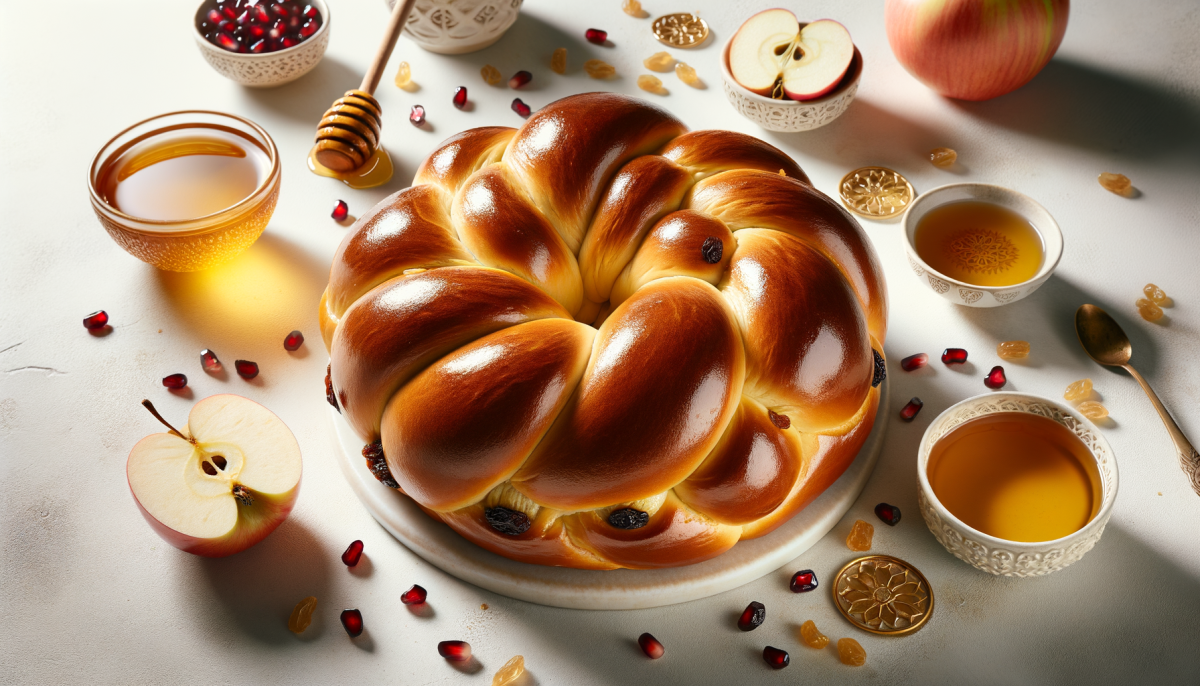
Raisin challah is the bread of sweetness doubled — sweet dough wrapped around sweet fruit, each slice revealing a constellation of plump, wine-dark raisins against golden crumb. This is the challah that grandmothers made for Rosh Hashanah, the one that children reach for first on a Shabbat morning, the bread that makes ordinary toast extraordinary.

The secret is in the preparation of the raisins themselves. Soaked briefly in warm water (or, for a more complex flavor, in sweet wine or orange juice), they plump to bursting and release their sugars slowly into the surrounding dough as it bakes. Fold them in gently at the end of kneading — too early and they break apart; too roughly and they stain the dough purple.

A touch of cinnamon in the dough bridges the sweetness of the raisins and the richness of the eggs. The result is a challah that perfumes your kitchen with the unmistakable scent of Jewish celebration — warm, spiced, sweet, and deeply satisfying.

Categories
Recipes

Egg Challah

Pareve

Yield
2 large loaves
Difficulty
Intermediate
Active Time
45 minutes
Total Time
4–5 hours
Bracha
HaMotzi

There is challah, and then there is egg challah — the version where generosity with yolks transforms an already beautiful bread into something almost impossibly rich. Where a standard challah uses two or three eggs, this recipe calls for six whole eggs plus two extra yolks, creating a dough so golden it looks like it has been painted with saffron. The crumb is softer than any challah you have tasted, with a tender pull that melts on the tongue.

In Ashkenazi tradition, egg challah occupies a special place at celebrations — bar mitzvahs, engagement parties, Yom Tov meals where the ordinary will not do. The extra eggs are not just richness for its own sake; they create a bread with better keeping quality, a more stable crumb, and that unmistakable deep yellow color that signals abundance and joy.

The technique here matters as much as the ingredients. The additional fat from the yolks means the gluten develops differently — more slowly, more gently. You need patience during mixing and a slightly longer bulk fermentation. But the reward is a challah that stays fresh through Shabbat lunch, toasts beautifully on Sunday morning, and makes the finest French toast you have ever eaten.

Categories
Recipes

Whole Wheat Challah

✔ Pareve
Yield: 1 large loaf  |  Difficulty: Intermediate  |  Active Time: 35 min  |  Total Time: 4½ hours  |  Bracha: Hamotzi

This beloved recipe from the Jewish tradition brings authentic flavors to your home kitchen. Following the Kosher Bread Pro template with precise measurements, baker’s percentages, and detailed halachic guidance, this recipe ensures a perfect result every time.

Whether you’re an experienced baker or trying this for the first time, the step-by-step instructions and troubleshooting tips will guide you to success. Every ingredient is carefully chosen and every technique explained for reliable, delicious results.

Categories
Recipes

Pizza Challah

🧀 Dairy
Yield: 1 large loaf  |  Difficulty: Intermediate  |  Active Time: 40 min  |  Total Time: 4 hours  |  Bracha: Hamotzi

This beloved recipe from the Jewish tradition brings authentic flavors to your home kitchen. Following the Kosher Bread Pro template with precise measurements, baker’s percentages, and detailed halachic guidance, this recipe ensures a perfect result every time.

Whether you’re an experienced baker or trying this for the first time, the step-by-step instructions and troubleshooting tips will guide you to success. Every ingredient is carefully chosen and every technique explained for reliable, delicious results.

Categories
Recipes

Challah Stuffing

✔ Pareve
Yield: 8 servings  |  Difficulty: Easy  |  Active Time: 25 min  |  Total Time: 1 hour  |  Bracha: Mezonot

This beloved recipe from the Jewish tradition brings authentic flavors to your home kitchen. Following the Kosher Bread Pro template with precise measurements, baker’s percentages, and detailed halachic guidance, this recipe ensures a perfect result every time.

Whether you’re an experienced baker or trying this for the first time, the step-by-step instructions and troubleshooting tips will guide you to success. Every ingredient is carefully chosen and every technique explained for reliable, delicious results.