Categories
Recipes

Onion Rye Bread

Pareve

Yield
1 large loaf
Difficulty
Intermediate
Active Time
1 hour
Total Time
5–6 hours
Bracha
HaMotzi

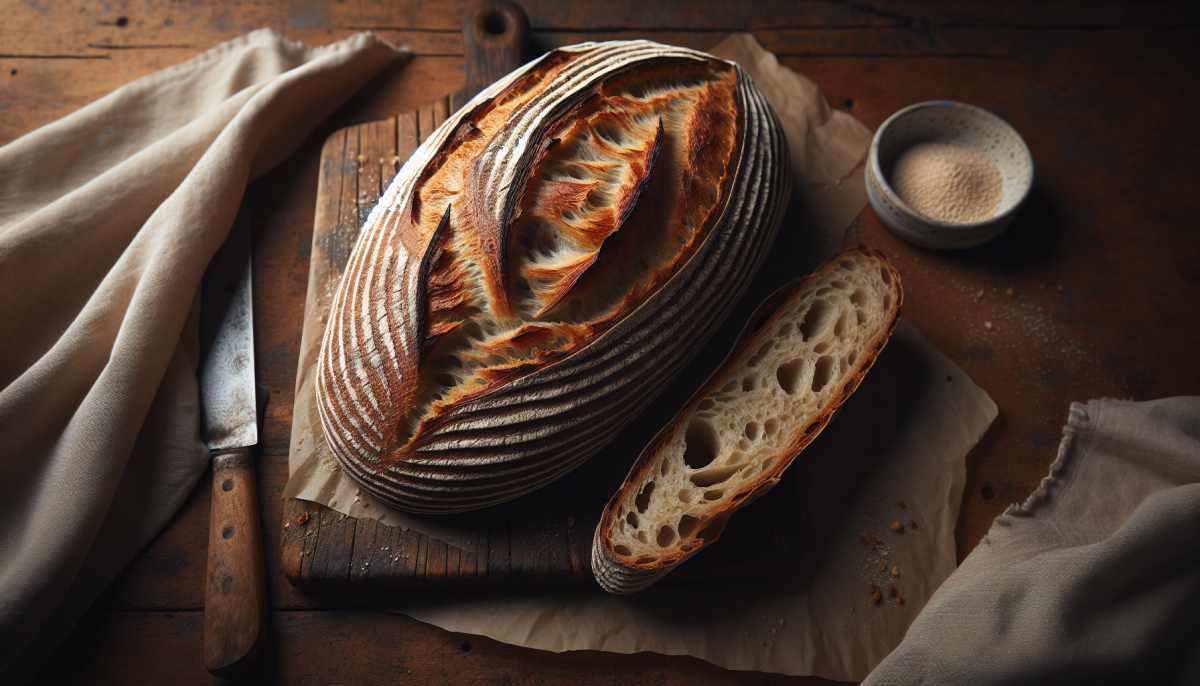
If you have ever sat at a Jewish deli counter and been handed a basket of rye bread so fragrant with onion and caraway that you ate three slices before your pastrami arrived, you know this bread. Onion rye is the unsung hero of the Ashkenazi bread tradition — sturdy enough for a stacked sandwich, flavorful enough to eat on its own, and perfuming your entire home as it bakes.

This recipe builds on the classic Jewish rye formula with generous additions of caramelized onions folded into the dough and more scattered on top. The rye flour gives it that characteristic tang and density, the caraway seeds add their warm, anise-like note, and the onions bring sweetness that rounds everything out.

Shape it as a round boule or an oblong batard — both are traditional. Slash the top deeply before baking for that classic bakery look. The crust should crackle when you press it, and the interior should be moist, tight-crumbed, and deeply flavorful.

Categories
Recipes

Sourdough Rye Bread

✔ Pareve
Yield: 1 large loaf  |  Difficulty: Advanced  |  Active Time: 30 min  |  Total Time: 24 hours  |  Bracha: Hamotzi

This beloved recipe from the Jewish tradition brings authentic flavors to your home kitchen. Following the Kosher Bread Pro template with precise measurements, baker’s percentages, and detailed halachic guidance, this recipe ensures a perfect result every time.

Whether you’re an experienced baker or trying this for the first time, the step-by-step instructions and troubleshooting tips will guide you to success. Every ingredient is carefully chosen and every technique explained for reliable, delicious results.

Categories
Recipes

Jewish Rye Bread Recipe: Classic Deli-Style Caraway Rye

✔ Pareve
Yield: 1 large loaf  |  Difficulty: Intermediate  |  Active Time: 30 minutes  |  Total Time: 5 hours  |  Bracha: Hamotzi

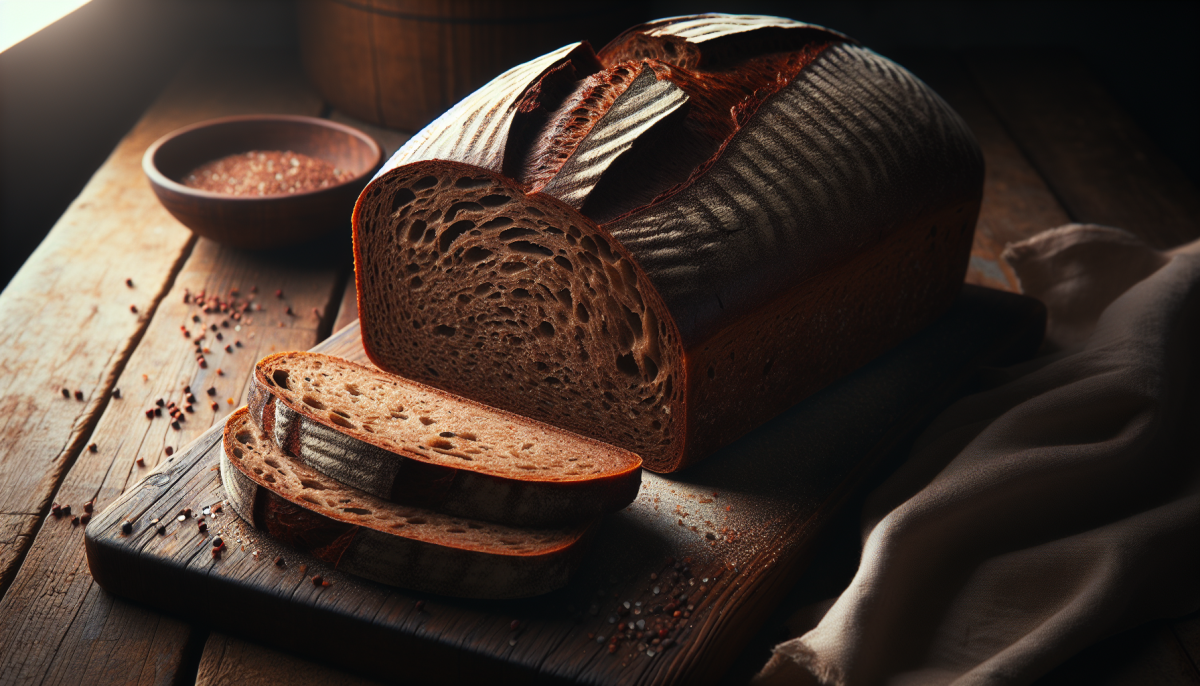
Walk into any great Jewish deli—from Katz’s on the Lower East Side to Schwartz’s in Montreal—and the first thing that arrives at your table is a basket of rye bread. Not just any rye bread, but Jewish rye: a loaf with a tight, slightly sour crumb shot through with the warm, anise-like fragrance of caraway seeds, a crust that crackles when you press it, and a flavor that stands up to the boldest deli meats without ever being overwhelmed.

Jewish rye bread occupies a unique place in the pantheon of American Jewish food. Brought to the Lower East Side by Eastern European immigrants in the late 19th and early 20th centuries, it became the foundation of the Jewish deli sandwich—the bread upon which towers of pastrami, corned beef, and tongue were built. The original bakeries on Hester Street and Rivington Street produced thousands of loaves daily, each one a connection to the rye breads of Lithuania, Poland, and Russia.

This recipe produces the classic “New York Jewish rye”—a medium rye with about 30% rye flour (enough for authentic flavor without the density of a 100% rye), generous caraway seeds, and a cornmeal-dusted bottom crust. The crumb is tight enough to hold a pile of pastrami without collapsing, yet tender enough to eat on its own with just a smear of mustard. It’s the kind of bread that makes you understand why Jewish delis became an American institution.

Categories
Recipes

Pumpernickel Bread Recipe — Dark Jewish Rye Bread

Pareve
Dairy-Free • Egg-Free • Contains Gluten
Yield1 large loaf
DifficultyAdvanced
Active Time30 minutes
Total Time5–6 hours
BrachaHaMotzi

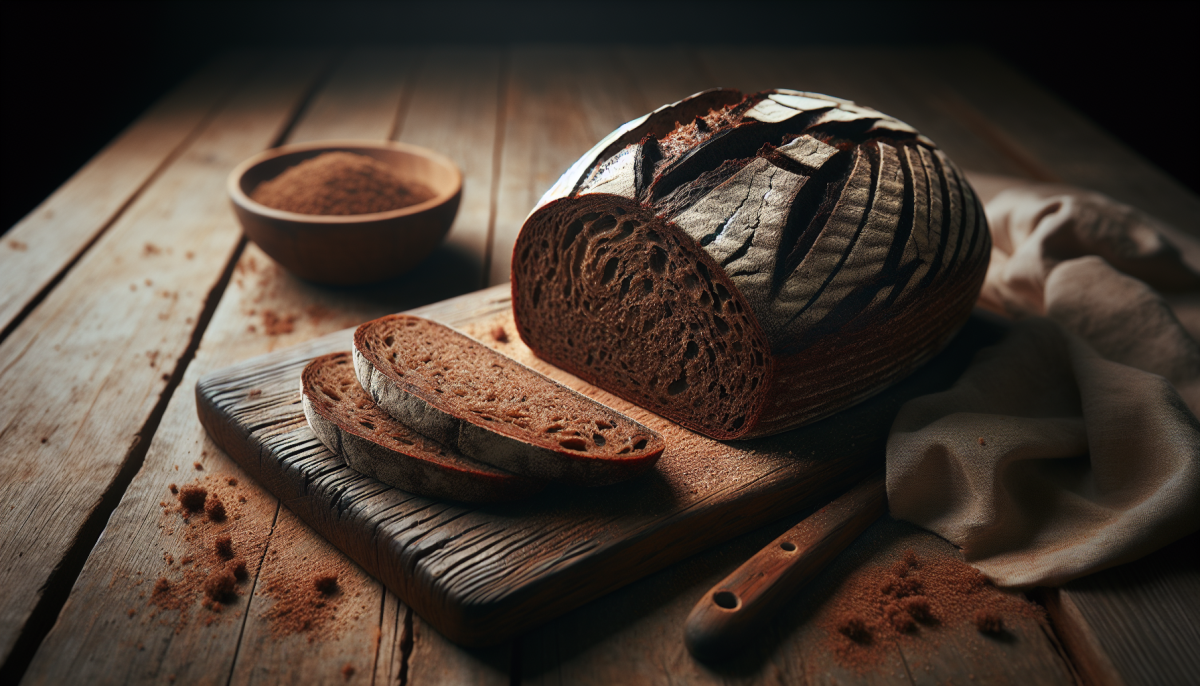
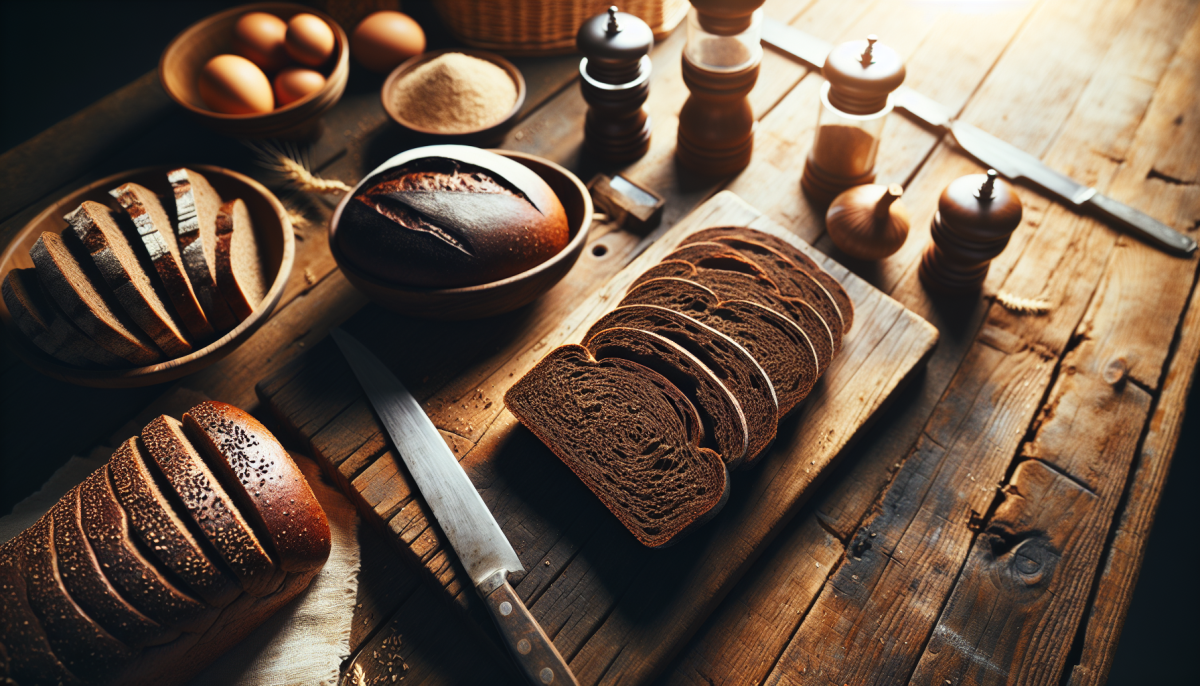
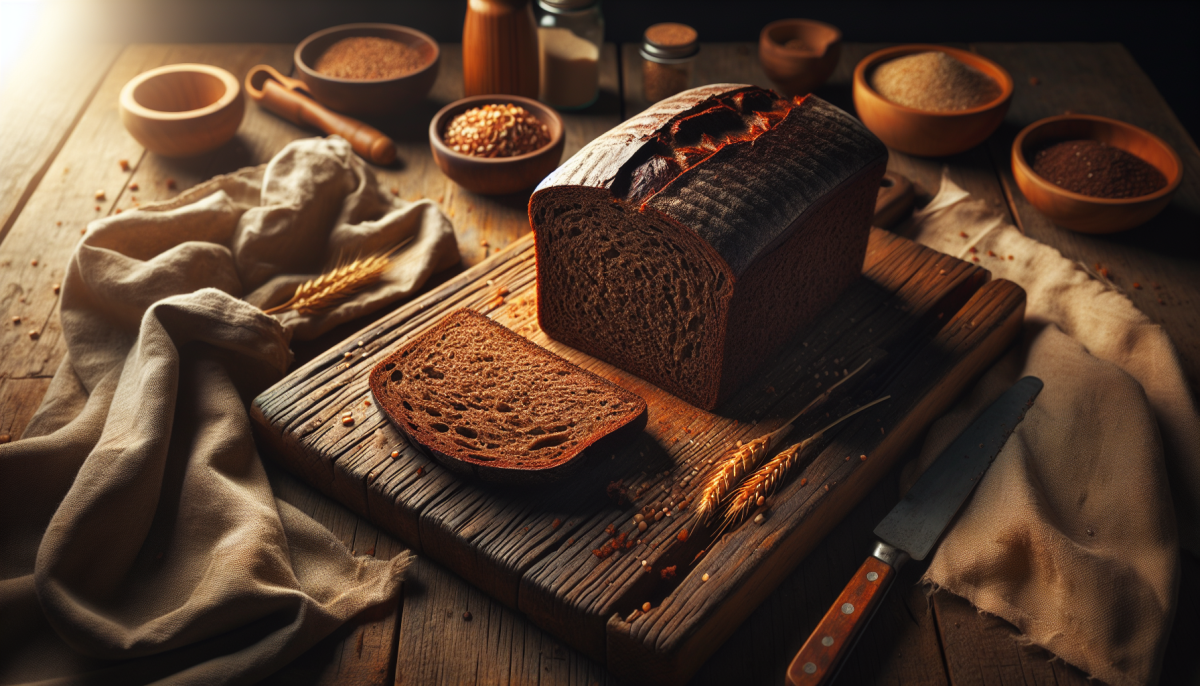
Pumpernickel is the darkest, densest, most mysterious bread in the Jewish baker’s repertoire. Where corn rye is light and accommodating, pumpernickel is brooding and intense — a bread so dark it is nearly black, with a flavor that is earthy, slightly bitter, and deeply complex. It is the bread of smoked fish platters, of cream cheese and lox, of sturdy deli sandwiches where delicate bread would simply surrender.

American pumpernickel — the kind sold in Jewish delis and bakeries from New York to Chicago — gets its dramatic color from a combination of dark rye flour, unsweetened cocoa powder, dark molasses, and instant coffee. This is distinct from traditional Westphalian pumpernickel, which achieves its color through 12–24 hours of extremely low-temperature baking. The American Jewish version is a practical adaptation: all the color and much of the flavor, achieved in a normal baking timeframe.

The crumb is dense and moist, almost cake-like, with a tight texture that holds up to heavy spreads and thick-sliced deli meats. The crust is dark and firm but not hard. The flavor is rich and complex — earthy from the rye, bitter-sweet from the cocoa and molasses, warm from the optional caraway. It is not a bread for the timid, but for those who love it, nothing else comes close.

Try this alongside our Corn Rye and Marble Rye for the complete Jewish deli rye bread trilogy.

Categories
Recipes

Corn Rye Bread Recipe — Classic Jewish Deli Rye Bread

Pareve
Dairy-Free • Egg-Free • Contains Gluten
Yield1 large loaf
DifficultyIntermediate
Active Time30 minutes
Total Time4–5 hours
BrachaHaMotzi

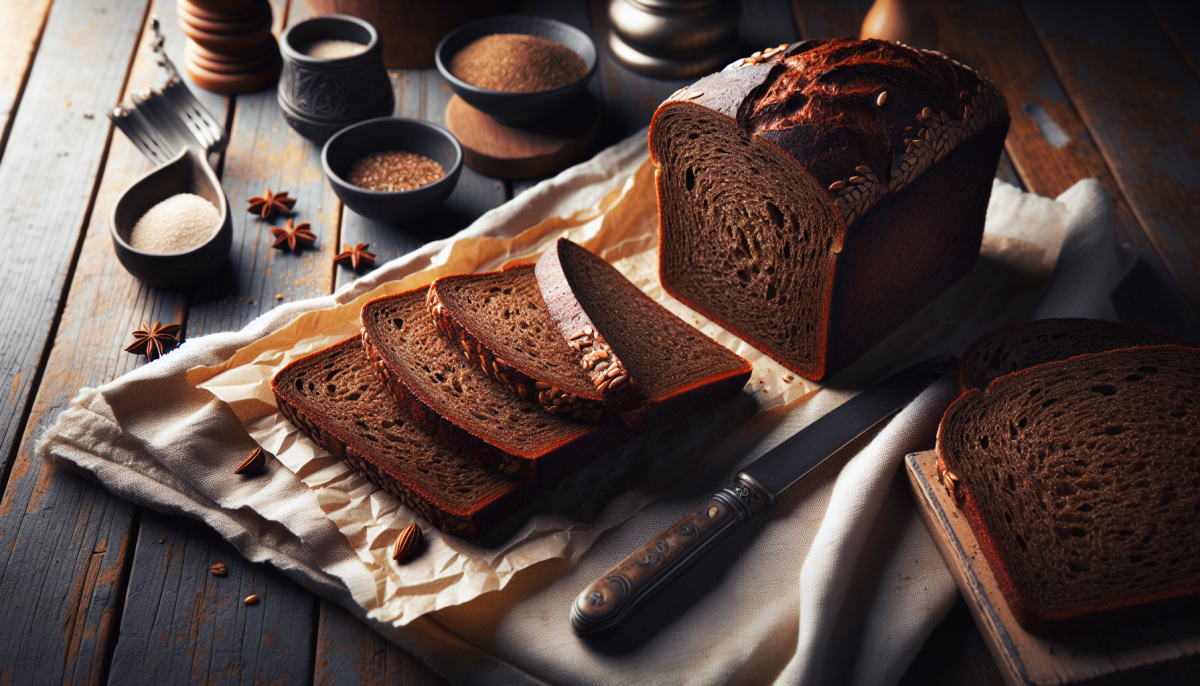
When someone says “Jewish rye bread,” this is the bread they mean. Corn rye is the quintessential American Jewish deli bread — the bread of Katz’s Deli, of Carnegie Deli, of every great Jewish delicatessen that ever stacked pastrami high and served it with a pickle. The name is a small mystery: there is no corn in the bread. “Corn” refers to the cornmeal dusted on the bottom of the loaf before baking, preventing sticking and adding a subtle crunch to the crust.

What defines corn rye is its restraint. It is not a heavy, dense, European-style rye. It is a lighter bread — predominantly wheat flour with 20–30% rye flour blended in — that has just enough rye character to be interesting without being overwhelming. The crumb is moderately open, slightly chewy, with a faint tang. The crust is thin and crackly, baked with steam. And then there are the caraway seeds, scattered through the dough, releasing their warm, anise-like aroma with every bite.

This is a lean bread — no eggs, no fat, no sugar beyond a touch of malt. It is honest and unadorned, designed to support rather than compete with the bold flavors of deli meats, mustard, and pickles. It is the most democratic bread in the Jewish repertoire: affordable, satisfying, and universally loved.

Pair this with our Bialys for the complete Jewish deli bread experience, or try our Marble Rye for the dramatic two-tone version.

Categories
Recipes

Marble Rye Bread Recipe — Classic Jewish Deli Swirled Loaf

Pareve
Dairy-Free • Egg-Free • Contains Gluten
Yield1 large loaf
DifficultyIntermediate
Active Time45 minutes
Total Time5–6 hours
BrachaHaMotzi

Marble rye is the bread that built the Jewish deli. Slice into any great loaf and you will find it — two doughs, one light and one dark, swirled together in an embrace that is as beautiful as it is delicious. The light rye is tangy, wheaty, and mild. The dark pumpernickel is earthy, slightly bitter, sweetened with molasses and deepened with cocoa. Together they create something neither could achieve alone: a bread of contrasts, of light and shadow, of the Old World and the New.

Every great Jewish deli in America — from Katz’s on Houston Street to Langer’s in Los Angeles — has built its reputation on the bread that cradles the pastrami. That bread is marble rye. It is the bread of the Reuben sandwich, of smoked meat platters, of Sunday morning lox and cream cheese. It is so deeply woven into Jewish-American food culture that most people never stop to consider how remarkable it is: two separate doughs, mixed independently, then twisted and shaped into a single loaf.

The technique traces back to the rye bread traditions of Eastern Europe, where Jewish bakers in Poland, Lithuania, and Russia worked with whatever grains they could afford. Dark, coarse rye was the bread of the poor; lighter wheat-rye blends were for those who could pay more. Somewhere along the way, a baker combined the two — and marble rye was born. In America, Jewish bakeries refined the technique, adding cocoa and molasses to deepen the dark dough and caraway seeds for that unmistakable aroma.

If you love our Classic Challah for Shabbat, marble rye is its weekday counterpart — the bread that turns an ordinary sandwich into something worth savoring.