Search 150+ Kosher Recipes
Kosher for Passover
Gebrokts
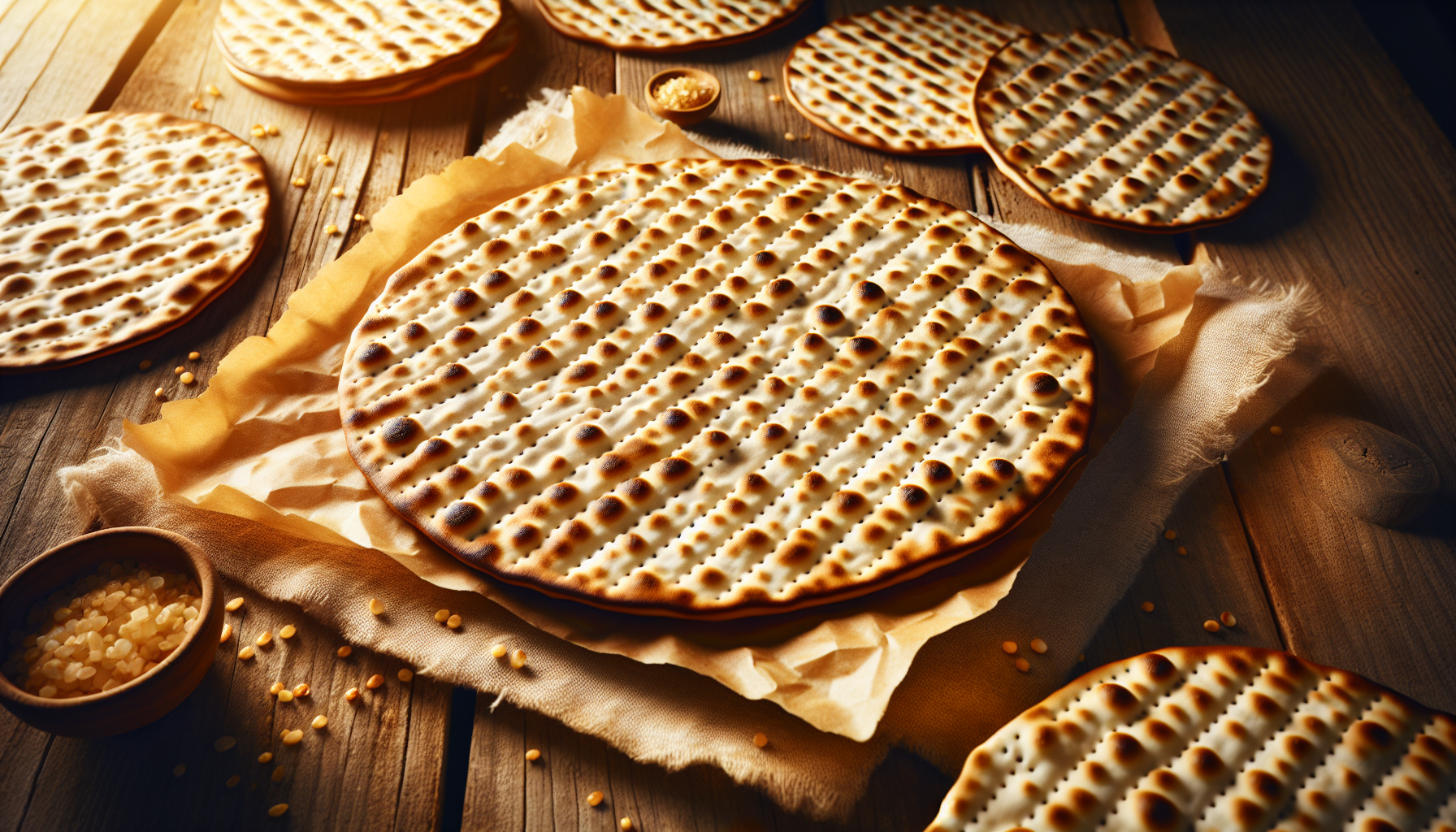
There is no dish more synonymous with Pesach mornings than matzo brei. The name itself tells the story—brei from the Yiddish for “fried”—and the technique is as old as the diaspora kitchens that invented it: soak matzo in water or milk, mix it with beaten eggs, and fry the whole thing in a hot skillet until golden and crisp at the edges, soft and custard-like within. It is the simplest alchemy of the Pesach pantry, turning the bread of affliction into the most comforting breakfast imaginable.
The great matzo brei debate has divided Jewish families for generations, and I will not pretend to settle it here. In one camp: the sweet school, where matzo brei emerges from the pan dusted with cinnamon sugar and drizzled with maple syrup, a Pesach answer to French toast. In the other: the savory loyalists, who insist on salt, black pepper, and perhaps some golden fried onions folded in. Both are correct. Both are glorious. This recipe gives you the complete blueprint for each, because a Pesach kitchen that takes sides on matzo brei is a kitchen that is only half alive.
The secret to great matzo brei is understanding water. Too much, and you get a soggy, falling-apart mess that steams instead of frying. Too little, and the matzo stays rigid and dry, never absorbing the egg, producing something closer to scrambled eggs with crackers. The matzo needs just enough soaking to become pliable—softened but not disintegrating, still holding its shape when you break it into pieces. That brief, controlled soak is the difference between mediocre matzo brei and the kind that makes your family fight over the last piece in the skillet.
This is a gebrokts recipe, meaning the matzo comes into direct contact with liquid. If your family’s custom is to avoid gebrokts during Pesach (common in many Chassidic communities), this dish is traditionally reserved for the last day of Pesach, when gebrokts restrictions are relaxed. For everyone else, it is breakfast, lunch, and midnight snack for all eight days.
What Makes This Recipe Special
- Both sweet and savory versions — Complete instructions for both sides of the great matzo brei debate, so your whole family is satisfied
- The controlled soak method — A precise technique for hydrating matzo to the perfect pliability: softened but not waterlogged, the single most important variable
- Pareve base, dairy option — Made with oil for a pareve version that can follow any meal; butter variation for dairy meals delivers extraordinary richness
- Skillet-to-table speed — Ready in under 20 minutes with pantry staples you already have for Pesach, making it the ideal quick meal during the holiday
- Endlessly adaptable — Master the base technique and customize with your family’s traditions, from cream cheese to sautéed mushrooms to fresh berries
Halachic Notes
- Kosher Classification: Pareve when made with oil. Dairy if butter is used. Verify all ingredients carry reliable Kosher for Passover certification.
- Gebrokts (געבראקטס): This recipe is gebrokts—matzo soaked in water and mixed with other ingredients. Many Ashkenazi communities, especially Chassidic (Chabad, Belz, Satmar, and others), do not eat gebrokts during the first seven days of Pesach, based on the concern that uncooked flour particles in the matzo could become chametz upon contact with water. These communities traditionally prepare matzo brei and other gebrokts dishes only on the last day of Pesach (Acharon shel Pesach), when the custom is relaxed. If you are unsure about your family’s practice, consult your rabbi.
- Checking Eggs: Each egg must be cracked individually into a clear glass and checked for blood spots before use.
- Matzo: Use regular kosher-for-Passover matzo (machine or hand). Egg matzo is not universally accepted as fulfilling the mitzvah of matzo and has separate halachic considerations—consult your posek.
- Hafrashat Challah: Not applicable to matzo brei, as no new dough is being made.
- Pas Yisroel: Matzo brei is cooked by the home cook, so Pas Yisroel is inherently fulfilled.
- Brachot: Mezonot (מזונות) before, as matzo is a grain product that has been broken and fried (not eaten as bread). Al Hamichya after. If matzo brei is eaten as the basis of a full meal (kevi’at seuda), some authorities require Hamotzi and Birkat Hamazon—follow your family’s minhag.
Ingredients
Base Matzo Brei (Serves 4)
| Ingredient | Grams | Volume |
|---|---|---|
| Matzo sheets (Kosher for Passover) | 120g | 4 sheets |
| Large eggs | 200g (4 large) | 4 eggs |
| Warm water (for soaking) | — | enough to cover matzo |
| Neutral oil (or butter for dairy) | 30g | 2 Tbsp |
| Fine sea salt | 3g | ½ tsp |
Sweet Version Add-Ins
| Ingredient | Grams | Volume |
|---|---|---|
| Granulated sugar | 25g | 2 Tbsp |
| Ground cinnamon | 3g | 1 tsp |
| Vanilla extract (KFP certified) | 5g | 1 tsp |
| Pure maple syrup, for serving | — | to taste |
| Fresh berries or sliced banana (optional) | — | for garnish |
Savory Version Add-Ins
| Ingredient | Grams | Volume |
|---|---|---|
| Medium onion, diced | 120g | 1 medium onion |
| Freshly ground black pepper | — | ¼ tsp or to taste |
| Additional oil for frying onions | 15g | 1 Tbsp |
| Fresh chives or scallions, sliced (optional) | — | for garnish |
Instructions
Step 1: Break the Matzo
Break the 4 sheets of matzo into rough, irregular pieces about 4–5 cm (1½–2 inches). You want a variety of sizes—some smaller crumbles, some larger shards. Do not crush to fine crumbs; you want distinct pieces that will develop crispy edges and soft centers. Place the broken matzo in a large bowl.
Step 2: Soak the Matzo (The Critical Step)
Pour warm (not hot) water over the matzo pieces—just enough to submerge them. Let the matzo soak for exactly 30–60 seconds, no more. You want the matzo to become pliable and slightly softened but NOT mushy or falling apart. It should still hold its shape when you pick up a piece, bending without snapping. Immediately drain the matzo in a colander and gently press out excess water with your hands. The matzo should feel damp and flexible, like a wrung-out sponge—not dripping wet.
Chef’s Note: This is the single most important step in the entire recipe. Under-soaked matzo stays rigid and dry, refusing to bind with the egg. Over-soaked matzo disintegrates into a gluey paste that steams instead of frying. Thirty seconds in warm water is usually perfect. If your matzo is particularly thick (hand matzo), you may need up to 60 seconds. Test one piece first.
Step 3: Beat the Eggs
While the matzo drains, crack each egg individually into a clear glass, check for blood spots, then transfer to a mixing bowl. Beat the eggs with the salt until well combined and slightly frothy. For the sweet version, whisk in the sugar, cinnamon, and vanilla extract at this stage. For the savory version, add the black pepper.
Step 4: Combine Matzo and Eggs
Add the drained matzo pieces to the beaten egg mixture. Fold gently with a spatula until every piece of matzo is well coated with egg. Let the mixture sit for 2–3 minutes, giving the egg time to soak into the matzo. The matzo will absorb the egg and the mixture should look cohesive, not soupy. If there is a pool of unabsorbed egg at the bottom, your matzo was too wet—add a few more crumbled matzo pieces to absorb the excess.
Step 5: Prepare the Onions (Savory Version Only)
For the savory version, heat 1 tablespoon of oil in a large nonstick or well-seasoned cast-iron skillet over medium heat. Add the diced onion and cook, stirring occasionally, for 5–7 minutes until soft and golden. The onions should be deeply caramelized at the edges but not burnt. Remove onions to a plate and wipe out the skillet.
Step 6: Heat the Skillet
Place a large nonstick or cast-iron skillet (25–30 cm / 10–12 inches) over medium-high heat. Add the 2 tablespoons of oil (or butter for dairy version) and swirl to coat the entire surface. Heat until the oil shimmers or the butter foams and subsides—about 190°C (375°F) if you have an infrared thermometer. The pan must be properly hot before the matzo mixture goes in; this is what creates the golden crust.
Step 7: Cook the Matzo Brei
Pour the matzo-egg mixture into the hot skillet, spreading it into an even layer. For the savory version, scatter the fried onions over the top and gently press them in. Now you have a choice of two styles:
- Pancake style (my preference): Let the mixture cook undisturbed for 3–4 minutes until the bottom is deeply golden and crisp. Slide it onto a plate, invert back into the skillet, and cook the second side for 2–3 minutes until golden. This gives you a cohesive, sliceable matzo brei with a magnificent crust.
- Scrambled style: After 2 minutes of cooking, begin breaking the matzo brei into large pieces with a spatula, folding and turning every 30 seconds for 3–4 minutes until all sides have golden, crispy patches. This gives you more surface area of crunch in every bite.
Step 8: Serve Immediately
Matzo brei waits for no one. Transfer to warm plates the moment it comes out of the skillet. For the sweet version: dust generously with additional cinnamon sugar and drizzle with warm maple syrup. Top with fresh berries or sliced banana if desired. For the savory version: finish with a sprinkle of flaky sea salt, more black pepper, and sliced chives or scallions. Serve immediately—matzo brei loses its crisp edges within minutes.
Storage & Make-Ahead
- Serve immediately: Matzo brei is at its absolute best straight from the skillet. The contrast between crispy edges and custardy center is fleeting—this is not a make-ahead dish.
- Leftovers: Refrigerate in an airtight container for up to 1 day. Reheat in a hot skillet (not the microwave) with a bit of oil to restore some crispness. It will never be as good as fresh, but reheated matzo brei is still better than no matzo brei.
- Freezing: Not recommended. The texture suffers significantly upon freezing and reheating.
- Prep-ahead tip: You can break the matzo sheets into pieces ahead of time and store in a sealed bag. Beat eggs and prep toppings in advance. But do not combine or soak until ready to cook.
Troubleshooting
| Problem | Cause | Solution |
|---|---|---|
| Matzo brei is soggy and soft, no crisp edges | Matzo soaked too long, or pan not hot enough | Soak matzo only 30–60 seconds and drain thoroughly. Get the skillet properly hot before adding the mixture—oil should shimmer |
| Matzo brei is dry and crumbly | Matzo not soaked enough, or not enough egg | Matzo should be pliable after soaking. Ensure all pieces are coated in egg. Add an extra egg if mixture seems too dry |
| Eggs are rubbery | Heat too high, or cooked too long | Use medium-high heat, not maximum. Remove from skillet while center is still slightly soft—residual heat finishes cooking |
| Sticking to the pan | Not enough oil, or wrong pan | Use a nonstick or well-seasoned cast-iron skillet. Be generous with oil or butter—matzo brei needs fat for proper crisping |
| Pancake version falls apart when flipping | Not cooked long enough on the first side, or too much mixture for pan size | Let it cook undisturbed until the bottom is firmly set and golden, 3–4 minutes. Use the plate-flip method: slide onto plate, invert back into pan |
| Too bland | Under-seasoned | Salt the eggs generously before combining with matzo. Season again after cooking. Matzo absorbs seasoning, so you need more than you think |
| Matzo pieces too uniform, lacking texture | Broken too small or too evenly | Break matzo into a variety of sizes—some 1 cm crumbles, some 4–5 cm shards. The variety creates the textural contrast that makes matzo brei great |
Frequently Asked Questions
Is matzo brei gebrokts?
Yes. Matzo brei is a classic gebrokts dish—matzo that has been soaked in liquid (water, in this case) and combined with other ingredients. The word gebrokts (also spelled gebrochts or gebrokhts) comes from the Yiddish for “broken,” referring to matzo broken and mixed with liquid. Many Chassidic communities avoid gebrokts during the first seven days of Pesach out of concern that uncooked flour in the matzo could become chametz when it contacts water. These communities reserve matzo brei for the eighth day of Pesach (Acharon shel Pesach). Most other Ashkenazi and all Sephardi communities eat gebrokts throughout Pesach without restriction.
Sweet or savory—which is the “right” way?
Both are equally legitimate and deeply traditional. Sweet matzo brei (with cinnamon sugar, jam, or maple syrup) is more common among Eastern European Jews who treated it as a Pesach version of French toast. Savory matzo brei (with salt, pepper, and often onions) tends to be favored by those who view it as an egg-and-bread dish. Many families are fiercely loyal to one side. The correct answer, as with most things in Jewish life, is to try both and argue about it.
Can I use egg matzo instead of regular matzo?
You can, but be aware of the halachic considerations. Egg matzo (matzo ashira) is not universally accepted for fulfilling the mitzvah of matzo at the Seder. For general Pesach use outside the Seder, most authorities permit egg matzo, though some Ashkenazi communities restrict its use to the elderly, ill, or children. Egg matzo will produce a slightly richer, more tender matzo brei. Consult your rabbi if unsure about your community’s practice.
Can I add cheese or other dairy toppings?
Absolutely, if you are making a dairy meal. Cream cheese, sour cream, or cottage cheese are popular additions for the sweet version. Grated cheese melted into the savory version is also delicious. Just be sure to cook in butter rather than oil for a fully dairy version, and clearly label the dish as dairy for kashrut purposes, especially at communal Pesach gatherings.
Why does my matzo brei never taste as good as my grandmother’s?
This is a universal condition that affects all Jewish grandchildren and has no known cure. That said, three factors likely made Bubbe’s version taste better: she used more fat than you think (probably schmaltz or a truly generous amount of butter), she got the pan hotter than you’re comfortable with, and she salted more aggressively. The emotional seasoning of childhood memory cannot be replicated, but using more fat, more heat, and more salt will get you closer than you expect.
Chag Pesach Sameach!
Whether you’re team sweet or team savory, matzo brei is the taste of Pesach mornings. Make it with love, eat it with joy.
Community Bakes
See how other bakers made this recipe.
Loading community bakes…
Leave a Reply
You must be logged in to post a comment.