Categories
Recipes

Kosher Pita Bread — Puffy Homemade Israeli Flatbread Recipe

Pareve
Dairy-Free • Egg-Free • Contains Gluten
Yield
8–10 pitas
Difficulty
Easy–Intermediate
Active Time
30 minutes
Total Time
2–3 hours
Bracha
HaMotzi

Pita is the bread that built a civilization — and it has fed Jewish tables for thousands of years. Walk through the streets of Jerusalem, Tel Aviv, or any Middle Eastern city and you will see it everywhere: stacked high in bakeries, torn open and stuffed with falafel, dragged through pools of hummus, wrapped around shawarma. Pita is so elemental, so ancient, so universally loved that it barely needs an introduction. And yet most people have never tasted a truly fresh one — puffed, steaming, soft as a cloud, straight from a scorching oven.

Homemade pita is a revelation. The dough is simple — flour, water, yeast, salt, a touch of olive oil — and the technique is forgiving. But the magic happens in the oven. When a thin round of dough hits a blazing-hot baking surface, the water in the dough flashes to steam, and in seconds the pita inflates like a balloon, creating that iconic hollow pocket. You will open the oven door, see the pitas puffing dramatically, and understand why this bread has captivated bakers for millennia.

Pita’s roots stretch back to the earliest days of breadmaking in the Levant. Archaeologists have found evidence of flatbread baking in the region dating to at least 14,000 years ago. For Jewish communities across the Middle East and North Africa — Mizrachi and Sephardi Jews — pita and its cousins have been the daily bread for centuries, torn and shared at every meal. In modern Israel, pita is the national bread, as fundamental to the cuisine as challah is to Shabbat.

This recipe produces authentic Israeli-style pita — soft, puffy, with a clean pocket inside. Stuff them with falafel, shawarma, or sabich. Tear them into pieces for scooping hummus, baba ganoush, or labneh. Or simply eat them warm from the oven with nothing but a drizzle of good olive oil and a sprinkle of za’atar.
Categories
Recipes

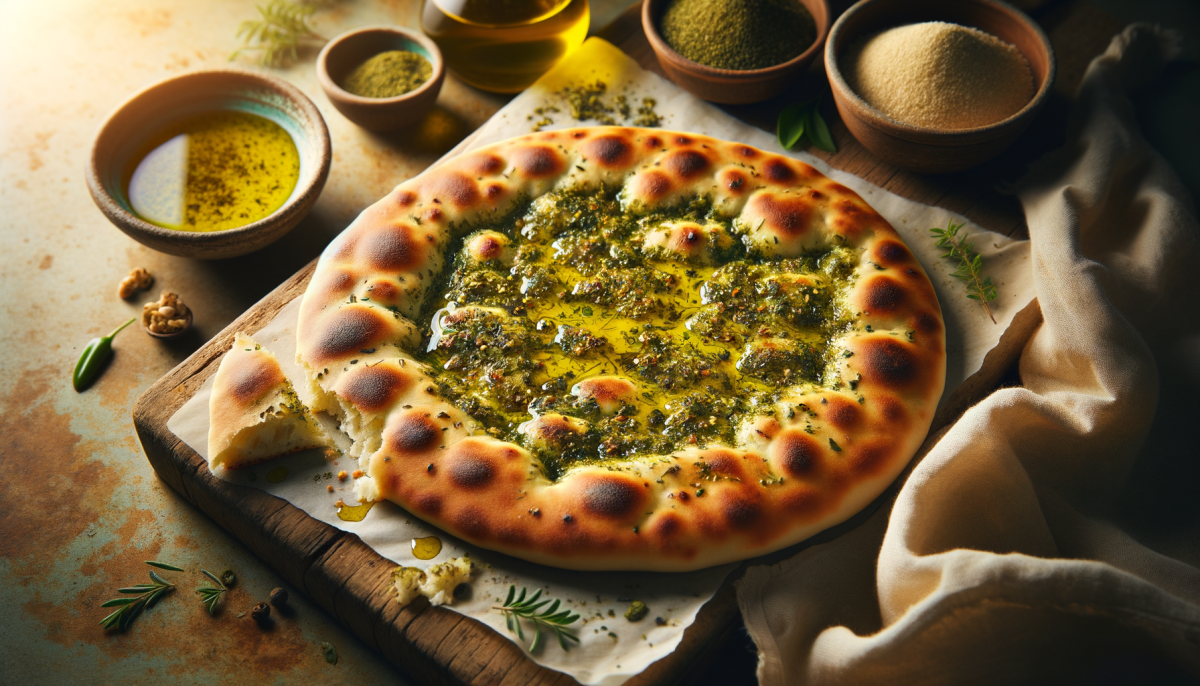
Judean Hills Za’atar Bread — Artisan Kosher Flatbread Recipe

Pareve
Dairy-Free • Egg-Free • Contains Gluten
Yield
8 flatbreads
Difficulty
Easy–Intermediate
Active Time
30 minutes
Total Time
2–3 hours
Bracha
HaMotzi

This bread tastes like the Judean Hills. That is not poetry — it is terroir. The wild hyssop clinging to limestone terraces south of Jerusalem. The ancient olive groves whose roots grip the chalky soil of the Shfela foothills. The dry, warm wind that concentrates the essential oils in every leaf and berry. When you spread hand-blended Judean za’atar over soft, oil-enriched dough and slide it into a blazing oven, you are not just baking flatbread — you are bringing an entire landscape to your table.

Za’atar bread — known as manakish (singular: man’oushe) throughout the Levant — is perhaps the most ancient of daily breads. Long before braided challahs graced the Shabbat table, flatbreads dressed with wild herbs and local olive oil were the everyday sustenance of the region. Baked in communal ovens at dawn, eaten warm with labaneh and fresh vegetables, manakish is comfort in its simplest, most elemental form. For another essential Israeli flatbread, see our Kosher Pita Bread — the puffy pocket bread that’s perfect for scooping the same za’atar and olive oil.

What sets this recipe apart is not technique — the dough is deliberately simple, just six ingredients, no eggs, minimal kneading. What sets it apart is where the ingredients come from. We have sought out artisan producers in the Judean Hills who grow, harvest, and blend these ingredients by hand. The za’atar is wild-harvested from the hillsides of Bat Ayin. The olive oil is cold-pressed from groves that have stood for generations. The honey comes from apiaries surrounded by wildflowers. This is a recipe that asks you to taste the difference that sourcing makes.

This is our first terroir recipe — a bread defined not just by technique, but by the land itself. Three of the Seven Species with which Eretz Yisrael was blessed — wheat, olive, and honey — come together in a single, fragrant flatbread.

Categories
Recipes

Jachnun Recipe — Flaky Yemenite Overnight Shabbat Pastry

Pareve
Dairy-Free (with margarine) • Egg-Free • Contains Gluten
Yield
8 rolls (8 servings)
Difficulty
Intermediate
Active Time
45 minutes
Total Time
12–14 hours (overnight)
Bracha
Mezonot / HaMotzi

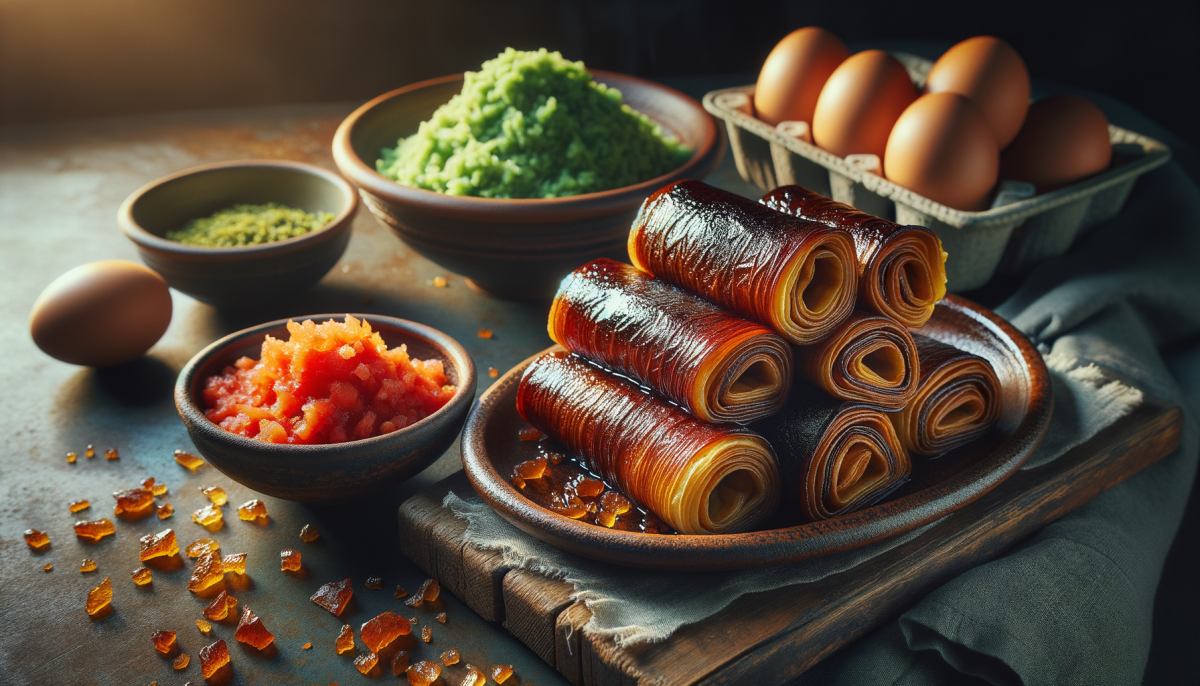
Jachnun is the dark, sweet, impossibly flaky pastry that Yemenite Jews have been baking overnight for centuries. There is no bread quite like it. You slide a sealed pot into a low oven on Friday afternoon, and by Shabbat morning something extraordinary has happened: thin sheets of simple dough and fat have transformed into mahogany-colored spirals, caramelized and glistening, with a sweetness that comes entirely from patience and heat — not from sugar.

This is jachnun (jachnun, גַחְנון). Where kubaneh is soft and pull-apart, jachnun is dense, flaky, and deeply caramelized. Where challah celebrates the start of Shabbat on Friday night, jachnun rewards you on Saturday morning with a flavor so rich and complex it seems impossible that it began as nothing more than flour, water, and fat.

If you have already baked our Kubaneh, you know the magic of Yemenite overnight bread. Jachnun is its sibling — born in the same kitchens, shaped by the same Shabbat laws, but utterly different in character. Kubaneh is gentle; jachnun is bold. Together, they form one of the most distinctive Shabbat morning tables in the entire Jewish world.

Jachnun is always served with grated fresh tomato (resek agvaniyot), hard-boiled eggs cooked overnight in their shells, and a fiery Yemenite s’chug. The combination of sweet caramelized pastry, cool acidic tomato, and sharp chile heat is one of the great flavor experiences in all of Jewish cuisine.

Categories
Recipes

Kubaneh Recipe — Golden Yemenite Shabbat Pull-Apart Bread

Pareve
Dairy-Free (with margarine) • Egg • Contains Gluten
Yield
1 large loaf (8–10 servings)
Difficulty
Intermediate
Active Time
40 minutes
Total Time
12–14 hours (overnight)
Bracha
HaMotzi

Kubaneh is the golden bread that greets Shabbat morning in every Yemenite Jewish home. Imagine waking on a Saturday to an aroma that has been building all night long — warm, buttery, deeply caramelized, with a sweetness that comes not from sugar but from patience. You lift the lid of a heavy pot and there it is: a towering, mahogany-crowned bread, its layers pulling apart in soft, steaming sheets like the pages of a very old and very beautiful book.

This is kubaneh (kubaneh, כובאנה). Born in the Jewish communities of Yemen, perfected over centuries of Shabbat mornings, and now cherished across Israel and the diaspora. It is the opposite of a quick bread. Kubaneh asks you to slow down, to layer dough with fat, to seal a pot and trust the oven through the long night. And it rewards that trust completely.

Where challah anchors Friday night, kubaneh owns Saturday morning. The two are natural companions — one braided and golden-crusted, the other layered and pull-apart soft. If you have been baking our Classic Kosher Challah for Shabbat dinner, kubaneh is the missing half of your Shabbat bread tradition.

Kubaneh is traditionally served with grated fresh tomato (resek agvaniyot), hard-boiled eggs cooked in their shells alongside the bread, and a generous drizzle of s’chug — the fiery Yemenite green or red chile paste. This is Shabbat morning, Yemenite style.

Categories
Recipes

Sufganiyot Recipe — Pillowy Hanukkah Donuts Filled with Joy

Pareve
Oil-Based • Egg • Contains Gluten • Dairy Variation Below
Yield
16–20 donuts
Difficulty
Intermediate
Active Time
1 hour
Total Time
3–4 hours
Bracha
Mezonot

This sufganiyot recipe will make you forget everything you know about donuts. These are sufganiyot — and they carry 2,000 years of miracles in every bite.

Close your eyes and picture this: a pillow of warm, golden dough, impossibly light, yielding under the slightest pressure. You bite in and the center erupts — a bright ribbon of raspberry jam, or a slick of dark chocolate, or a cloud of silky vanilla custard. Powdered sugar drifts down your sleeve like snowfall. The kitchen smells of warm oil and sweetness and something ancient, something that connects this Hanukkah to every Hanukkah that came before.

Sufganiyot are Israel’s gift to the holiday table. While Ashkenazi Jews in the diaspora have long celebrated Hanukkah with crispy potato latkes, Israeli bakeries transformed the season into a national obsession with these filled, fried donuts — each one a reminder of the miracle of oil. The cruse that should have lasted one day burned for eight. We fry in oil to remember. We fill with sweetness to celebrate.

This recipe will give you sufganiyot that rival the best bakeries on Jaffa Road. Pillowy, never greasy. Golden, never pale. Filled to bursting, never hollow. You will never buy store-bought sufganiyot again.

This is the taste of Hanukkah. And this year, it is coming from your kitchen.

Categories
Recipes

Hamantaschen Recipe — Classic Purim Cookies That Stay Closed

Version A — Milchig (Dairy)
Butter-based • Egg • Contains Gluten
Version B — Pareve
Oil-based • Dairy-Free • Egg • Contains Gluten
Yield
36–40 cookies
Difficulty
Beginner
Active Time
1 hour
Total Time
3–4 hours
Bracha
Mezonot

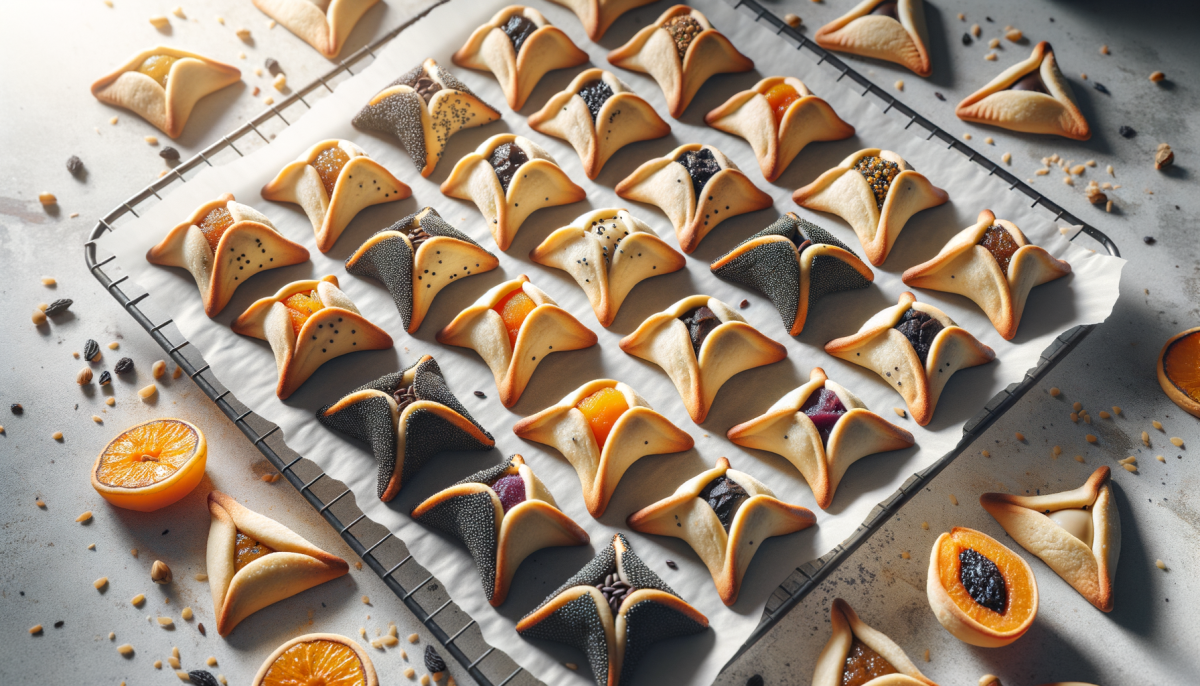
This hamantaschen recipe gives you the one cookie that tells a story of survival, triumph, and a lot of poppy seeds.

Purim is March 3 this year, and if you have not started planning your baking, now is the time. These small, triangular cookies — golden at the edges, tender in the center, hiding a pocket of sweet filling — are not just a holiday treat. They are a tradition you can hold in your hand. Every fold carries the memory of a people who refused to be destroyed, wrapped in butter and sugar and a generous spoonful of mohn.

Hamantaschen are the centerpiece of mishloach manot, the Purim mitzvah of sending food gifts to friends and neighbors. Bake one batch and you have enough to fill plates for everyone you love. Wrap them up, walk them over, leave them on a doorstep. This is what Purim tastes like — the joy of giving, sealed inside a triangle of cookie dough.

Below you will find everything: two complete dough versions (dairy and pareve), five filling options including a traditional poppy seed filling made from scratch, the precise folding technique that keeps your hamantaschen closed during baking, and complete kosher guidance for every ingredient. Whether you are baking your first batch or your fiftieth, this recipe will not let you down.

Purim 2026 falls on Tuesday, March 3. Start baking now — hamantaschen freeze beautifully and mishloach manot plates do not assemble themselves. Bake once, gift to everyone you love.

Categories
Recipes

Rugelach Recipe — Flaky, Filled, and Perfectly Jewish

Option A: Milchig
Dairy • Cream Cheese Dough • Contains Gluten
Option B: Pareve
Dairy-Free • Oil-Based Dough • Contains Gluten
Yield
48 rugelach
Difficulty
Beginner–Intermediate
Active Time
45 minutes
Total Time
3–4 hours
Bracha
Mezonot

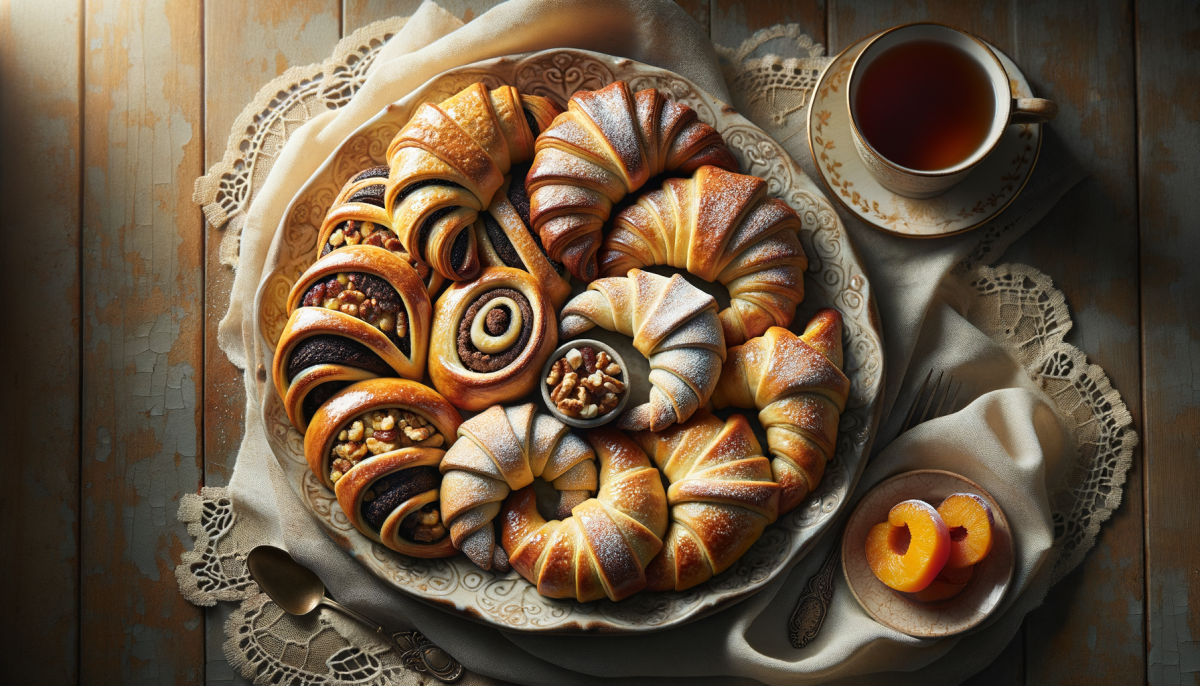
This rugelach recipe delivers the cookie that isn’t a cookie — flaky, buttery crescents filled with everything wonderful.

There is a moment, somewhere between the rolling and the shaping, when you realize what rugelach actually is. It is not a cookie. It is not quite a pastry. It is something in between — a crescent of impossibly tender, flaky dough wrapped around a filling that oozes and caramelizes and perfumes your kitchen with cinnamon, chocolate, or the sweet tang of apricot. Every layer shatters just slightly when you bite through it. The filling clings to the crumb. The cinnamon sugar coating on the outside crackles between your teeth. And then it is gone, and you are reaching for another one before you have finished chewing the first.

Every Jewish grandmother has a rugelach recipe. It lives in a handwritten card in a recipe box, or in the muscle memory of hands that have shaped a thousand crescents. Some use cream cheese dough, rich and tangy. Others use a pareve version that can travel to any table. The fillings vary by family, by season, by whatever is in the pantry. But the shape is always the same — that elegant rolled crescent, wider at one end and curling to a delicate point at the other.

Now you have yours. This recipe gives you two dough options, three filling variations, and a shaping technique so clear you will get it right on the first try. Forty-eight perfect crescents from one batch. Enough to fill a platter, a gift box, or a Friday night table — assuming they survive that long.

This recipe is designed for two dough choices: a classic cream cheese dough (dairy/milchig) and a pareve oil-based dough that can accompany any meal. Choose one based on your table, your guests, and your preference. Both produce exceptional rugelach.

Categories
Recipes

Sourdough Challah Recipe — Ancient Craft, Extraordinary Bread

Pareve
Dairy-Free • Egg • Contains Gluten • No Commercial Yeast
Yield
2 large loaves
Difficulty
Advanced
Active Time
1 hour
Total Time
18–24 hours
Bracha
HaMotzi

This sourdough challah recipe recreates the bread your great-great-grandmother made — before commercial yeast existed.

For thousands of years, every loaf of bread that rose on a Jewish table did so without a single packet of instant yeast. There was only flour, water, wild fermentation, and time. The sourdough starter — a living culture of wild yeast and beneficial bacteria, sustained by nothing more than regular feedings of flour and water — was the original leavening. It was the engine behind every challah pulled from a wood-fired oven in Vilna, in Kraków, in the shtetls of the Pale of Settlement. This is not a modern twist on an old recipe. This is the old recipe. Everything else came later.

What you will discover here is a challah unlike anything commercial yeast can produce. The crumb is open and tender, laced with a complex tang that plays against the sweetness of honey in a way that is deeply, unmistakably alive. The crust bakes to a deep caramel brown with a fragrance that fills the entire house — warm, wheaty, faintly acidic, ancient. It demands patience. It rewards attention. And when you pull these braided loaves from the oven on a Friday afternoon, you are not just baking bread. You are reaching back through centuries of Jewish baking tradition and carrying it forward with your own hands.

Advanced bakers, this is your summit. If you have mastered our Classic Challah, you are ready. If you have not, start there first — then come back here when you are ready to climb.

Categories
Recipes

New York Bagel Recipe — Boiled, Chewy, and Perfectly Kosher

Categories
Recipes

Chocolate Babka Recipe — Rich, Swirled, and Utterly Irresistible

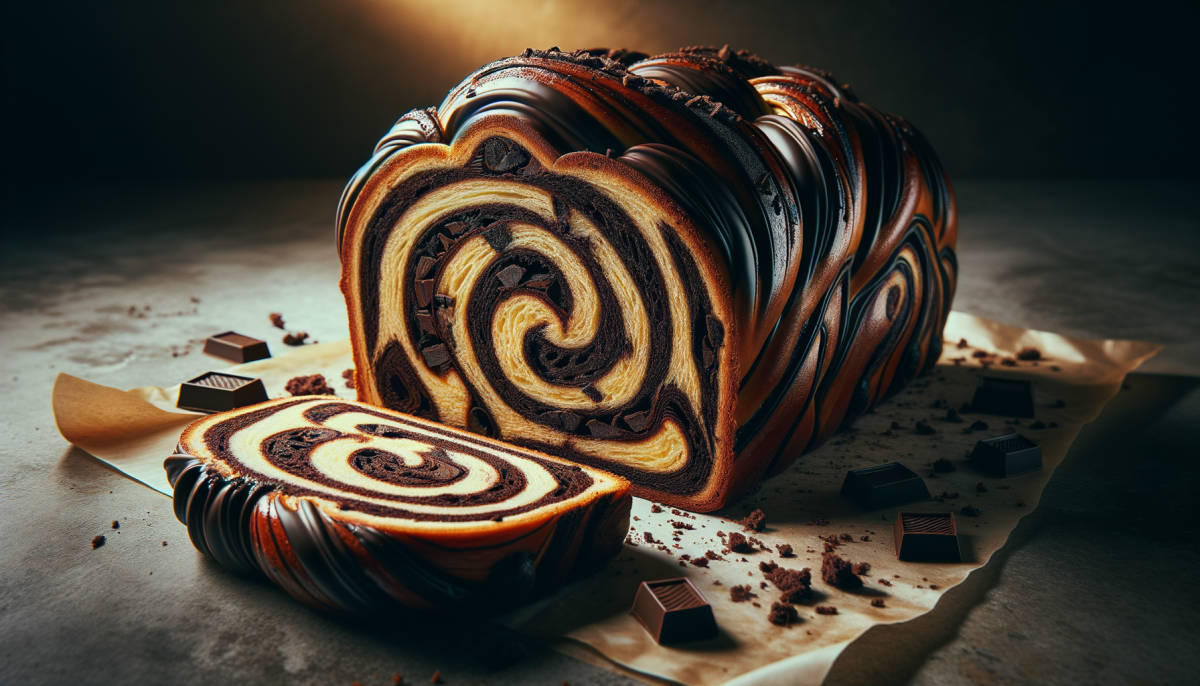
This chocolate babka recipe delivers the babka that makes the whole house smell like a bakery.

There is a moment — right around minute thirty-five in the oven — when the scent crosses some invisible threshold and fills every room. Dark chocolate, warm butter-rich dough, a whisper of vanilla. Your kitchen smells like a Yerushalayim bakery on Erev Shabbos. That is the moment you know you have done something extraordinary.

This chocolate babka is not a quick project. It is a labor of love — the kind of baking that rewards patience with swirls of bittersweet chocolate tucked between tender, pull-apart layers, all drenched in a glistening sugar syrup that keeps every slice impossibly moist for days. This is the recipe that disappears before it cools. We have watched it happen, loaf after loaf.

Below, you will find everything you need: precise gram weights, baker’s percentages, a foolproof chocolate filling, detailed shaping instructions, and complete kosher guidance for both pareve and dairy versions. Whether this is your first babka or your fiftieth, this recipe will elevate your baking.