Category: Recipes

We dig deep in the Internet Archives to find all Kosher related Recipes we can. Before we give them a precise purpose, the Internet Archeology Kosher Recipes are categorized in here.
Bear Stewart Baking Ingredients

How we find Kosher Recipes using Internet Archeology

Using Archive.Org’s WaybackMachine tool, we ressucitate Sitemaps. Those sitemaps are crawled by our Artificial Intelligence Content bot and published on our Kosher Bread Pro blog.

Don’t ask us how we get a Business Model for this… So far, we don’t 😉

  • Kosher Beer Bread

    Kosher Beer Bread

    Pareve

    Yield
    1 loaf
    Difficulty
    Beginner
    Active Time
    10 minutes
    Total Time
    50–60 minutes
    Bracha
    HaMotzi

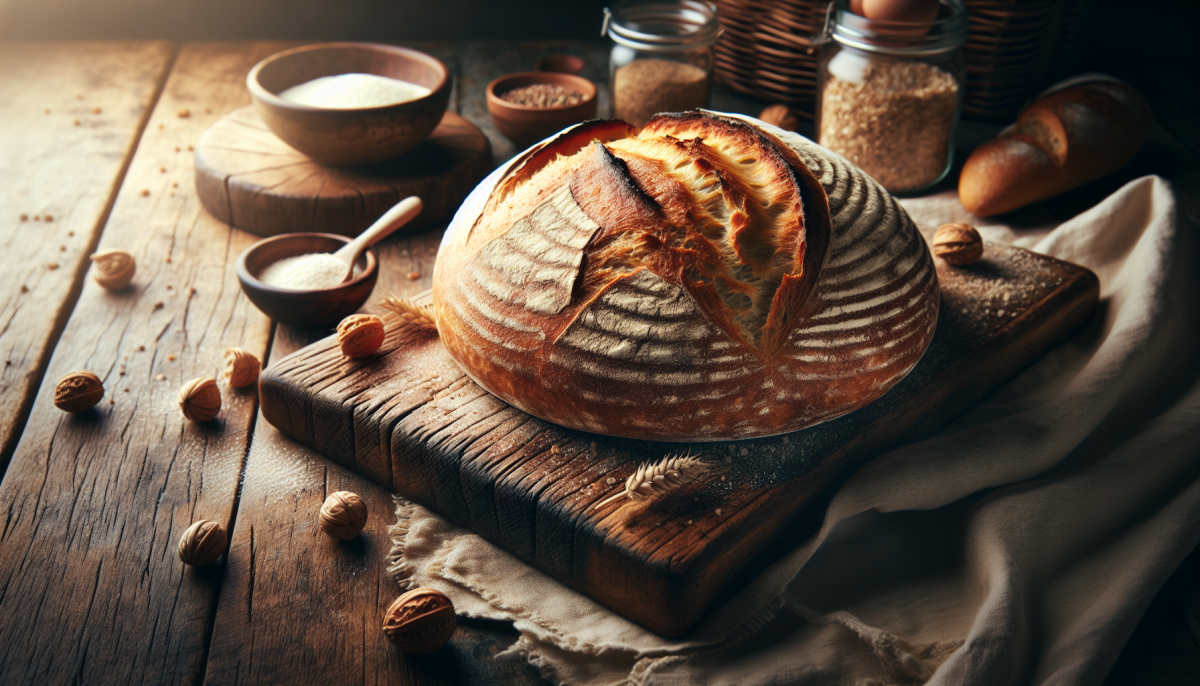
    Beer bread is the great shortcut of the bread world — no yeast, no kneading, no rising time, and a hot, fragrant loaf on your table in under an hour. The beer provides both the leavening (its carbonation creates lift) and deep flavor (malty, slightly bitter, complex). All you do is mix, pour into a pan, and bake.

    For kosher bakers, beer bread is a revelation. Use any kosher-certified beer — a pale lager for a mild loaf, an amber ale for more depth, or a stout for a dark, malty bread. The alcohol bakes off completely, leaving only flavor behind. This is the bread to make when you forgot to start challah dough, when unexpected guests arrive, or when you simply want bread with your soup in less than an hour.

    The texture is somewhere between a quick bread and a soda bread — tender, slightly crumbly, with a crispy crust from the oil brushed on top. It is not challah. It is not trying to be. It is its own wonderful thing: fast, easy, and deeply satisfying.
    (more…)

  • Challah Wreath

    Challah Wreath

    Pareve

    Yield
    1 large wreath
    Difficulty
    Intermediate–Advanced
    Active Time
    1 hour
    Total Time
    4½–5½ hours
    Bracha
    HaMotzi

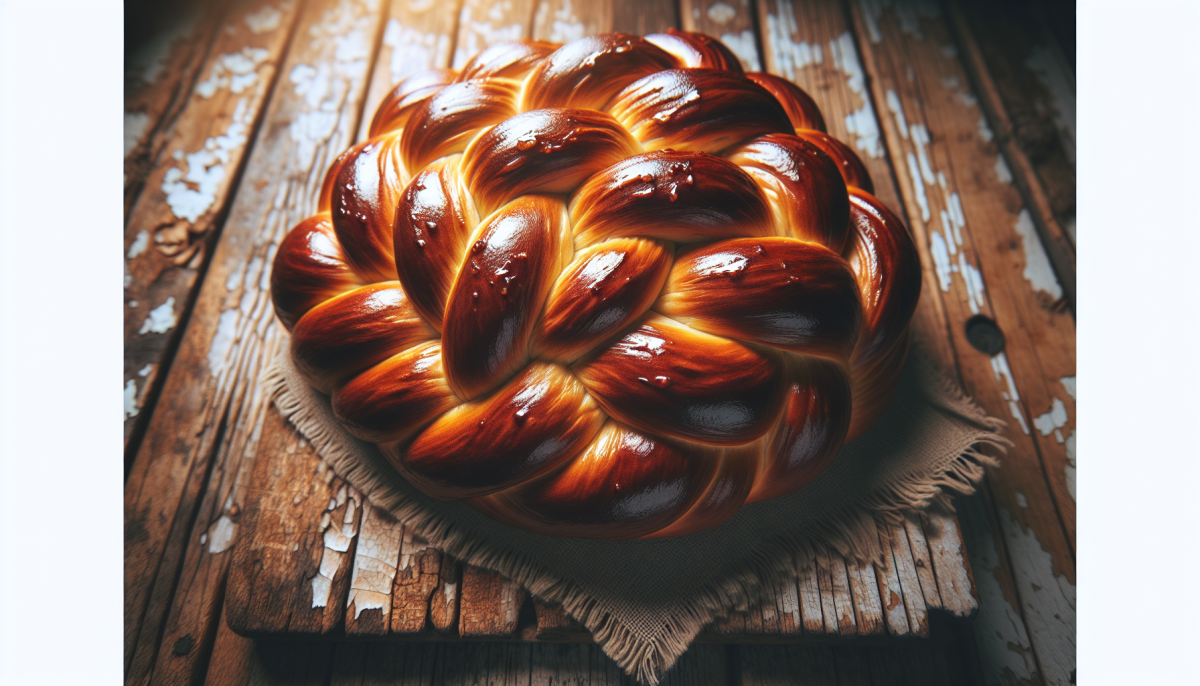
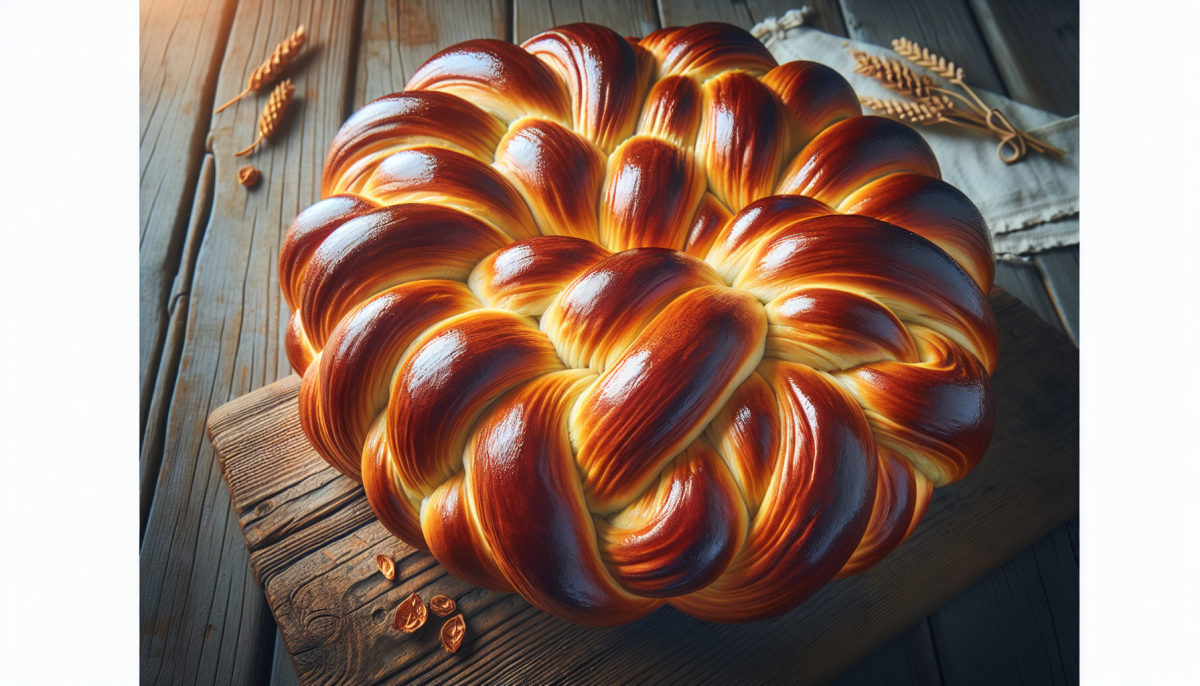
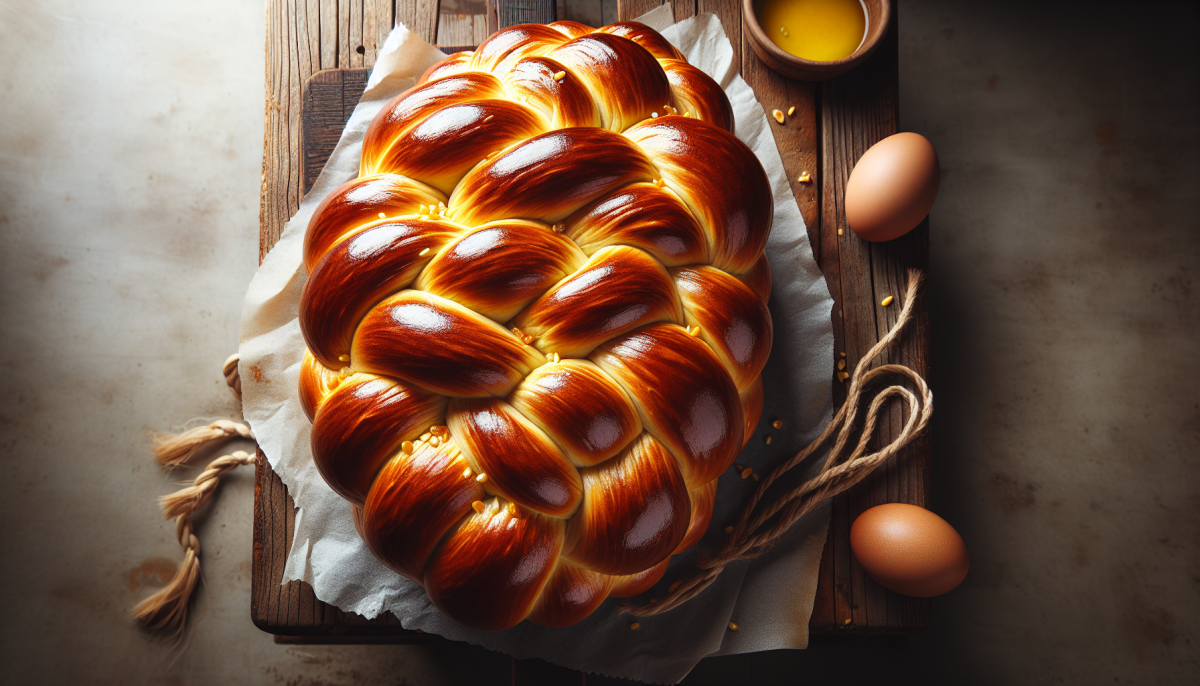
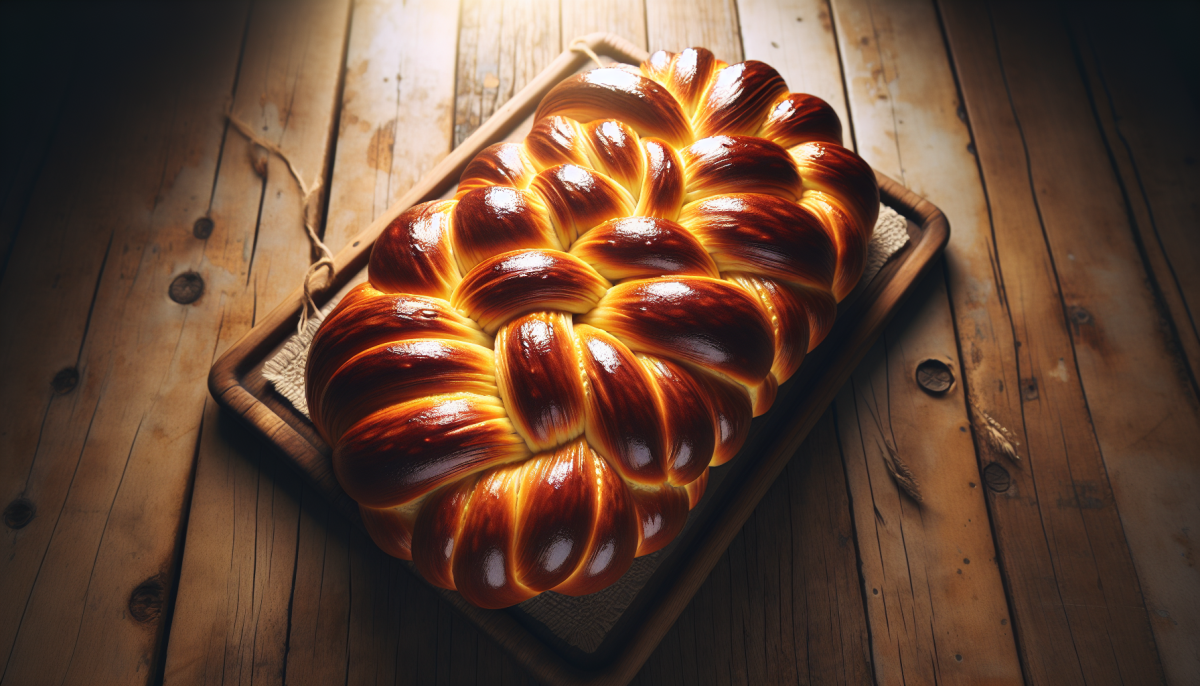
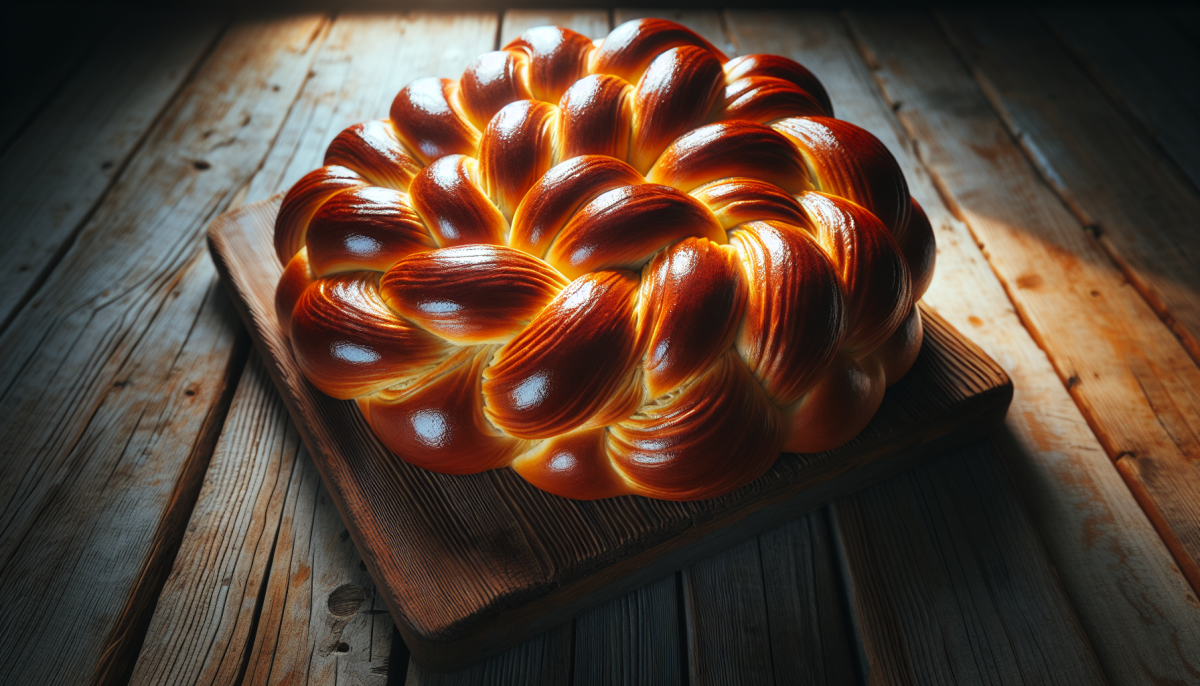
    A challah wreath transforms your Shabbat bread into a centerpiece. This circular braided challah, shaped like a crown, sits at the center of the table and invites everyone to tear off pieces. The technique is simpler than it appears — you braid a long challah, then curve it into a ring and join the ends. The result looks like you spent hours in a pastry school.

    The wreath shape has deep symbolism in Jewish tradition. The circle represents completeness, unity, and the endless cycle of Shabbat. At Rosh Hashanah, it echoes the round challah tradition. At any celebration, it says: this bread was made with intention and love.

    Garnish with sesame seeds, everything seasoning, or fresh rosemary sprigs tucked into the braids. Place a small bowl of olive oil or honey in the center for dipping. This is bread as art, and it is fully within your reach.

    (more…)

  • Mini Challah Buns

    Mini Challah Buns

    Pareve

    Yield
    12 mini challahs
    Difficulty
    Intermediate
    Active Time
    1 hour
    Total Time
    4–5 hours
    Bracha
    HaMotzi

    Mini challah buns are individual-sized braided challahs — each guest at your Shabbat table gets their own personal loaf. There is something deeply special about setting a small, golden, braided challah beside each place setting. It elevates a meal from dinner to event, from ordinary to ceremonial.

    The dough is the same classic challah recipe you know and love, but the shaping requires a lighter touch. Each mini challah uses just 80–90 grams of dough, braided into a tiny three-strand braid about the size of your palm. They bake faster and develop a higher ratio of golden crust to soft interior, which many people prefer.

    These are also wonderful for seudah shlishit (the third Shabbat meal), for a bread basket at a holiday dinner, or packaged as mishloach manot for Purim. Their small size makes them ideal for portion control, and they freeze beautifully for advance preparation.

    (more…)

  • Onion Rye Bread

    Onion Rye Bread

    Pareve

    Yield
    1 large loaf
    Difficulty
    Intermediate
    Active Time
    1 hour
    Total Time
    5–6 hours
    Bracha
    HaMotzi

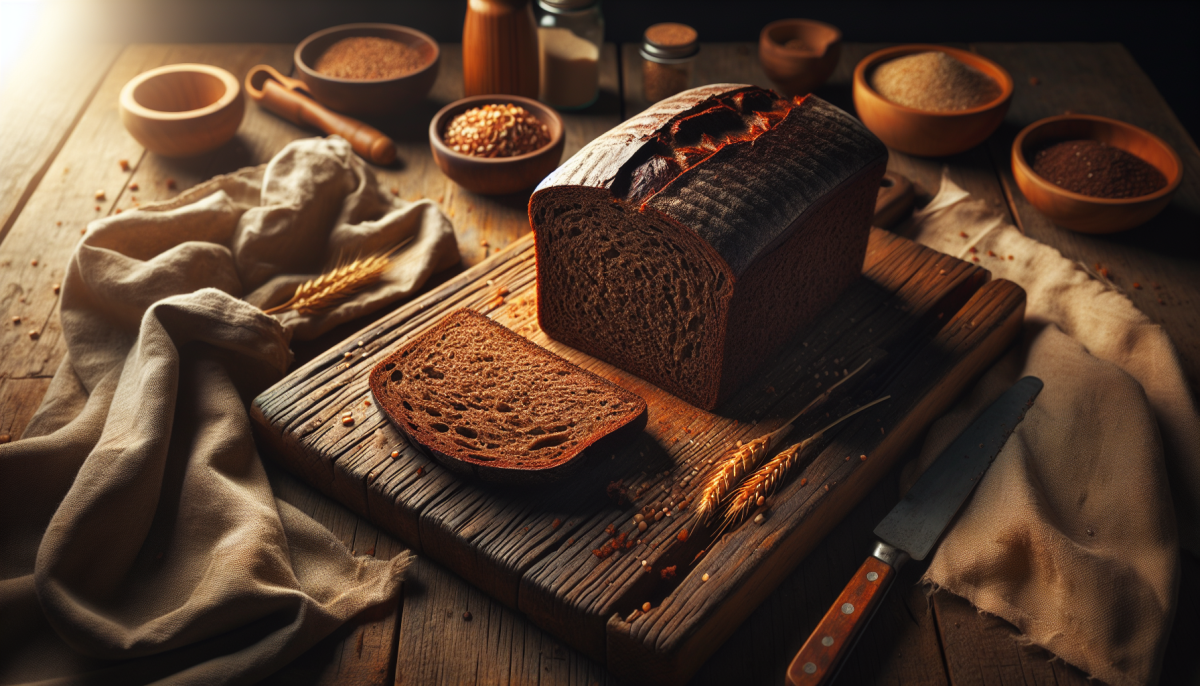
    If you have ever sat at a Jewish deli counter and been handed a basket of rye bread so fragrant with onion and caraway that you ate three slices before your pastrami arrived, you know this bread. Onion rye is the unsung hero of the Ashkenazi bread tradition — sturdy enough for a stacked sandwich, flavorful enough to eat on its own, and perfuming your entire home as it bakes.

    This recipe builds on the classic Jewish rye formula with generous additions of caramelized onions folded into the dough and more scattered on top. The rye flour gives it that characteristic tang and density, the caraway seeds add their warm, anise-like note, and the onions bring sweetness that rounds everything out.

    Shape it as a round boule or an oblong batard — both are traditional. Slash the top deeply before baking for that classic bakery look. The crust should crackle when you press it, and the interior should be moist, tight-crumbed, and deeply flavorful.

    (more…)

  • Gluten-Free Challah

    Gluten-Free Challah

    Pareve

    Yield
    1 large loaf
    Difficulty
    Intermediate
    Active Time
    40 minutes
    Total Time
    3–4 hours
    Bracha
    HaMotzi (on GF flour)

    For those who cannot eat gluten, Shabbat challah can feel like the hardest thing to give up. Every Friday, the aroma of baking challah fills homes across the Jewish world, and for the gluten-free baker, that experience has traditionally meant dense, crumbly substitutes that bear little resemblance to the real thing. This recipe changes that.

    Through careful flour blending — a mix of tapioca starch, potato starch, white rice flour, and a touch of xanthan gum for structure — this gluten-free challah achieves what most GF breads cannot: a braided shape that holds, a golden crust that cracks, and a soft, pull-apart interior. It is not identical to wheat challah — nothing gluten-free truly is — but it is beautiful, delicious, and worthy of your Shabbat table.

    The technique differs from wheat challah in important ways. The dough is stickier and softer, more like a thick batter than a traditional dough. You shape it with oiled hands. It gets one rise instead of two. But the result, glazed with egg wash and sprinkled with sesame seeds, looks every bit the part.

    (more…)

  • Challah Monkey Bread

    Challah Monkey Bread

    Pareve

    Yield
    1 bundt pan (10–12 servings)
    Difficulty
    Beginner–Intermediate
    Active Time
    40 minutes
    Total Time
    3½–4 hours
    Bracha
    Mezonot

    Monkey bread is pure joy — a tumble of small dough pieces coated in cinnamon sugar, baked together until they fuse into a sticky, pull-apart mountain of sweetness. Now imagine that dough is challah: richer, eggier, softer than any standard monkey bread recipe. Every piece pulls away trailing threads of golden, buttery dough and cinnamon-scented caramel.

    This is the recipe that disappears before it fully cools. Bake it for a Shabbat morning treat, a Chanukah breakfast celebration, or whenever you want a showstopper that takes minimal skill. Children love helping — tearing dough into pieces, rolling them in cinnamon sugar, and piling them into the pan is the kind of baking project that creates memories.

    The bundt pan is traditional but a round cake pan works too. The key is packing the pieces snugly so they bake into each other, creating that irresistible pull-apart texture. A simple caramel sauce poured over the top before baking turns the bottom (which becomes the top when inverted) into a glossy, sticky crown.

    (more…)

  • Challah Cinnamon Rolls

    Challah Cinnamon Rolls

    Pareve

    Yield
    12 rolls
    Difficulty
    Intermediate
    Active Time
    45 minutes
    Total Time
    3½–4 hours
    Bracha
    Mezonot

    Take the most beloved enriched dough in Jewish baking and turn it into the most beloved breakfast pastry in the world. These challah cinnamon rolls use a slightly enriched challah dough as the base — softer and richer than standard cinnamon roll dough, with the familiar eggy sweetness that makes challah special. Rolled with a generous layer of cinnamon sugar, they emerge from the oven puffy, fragrant, and impossible to resist.

    Unlike the mile-high bakery rolls drenched in cream cheese frosting, these stay true to their Jewish roots: pareve, not too sweet, and designed to be eaten at any meal. A simple glaze of powdered sugar and water lets the cinnamon and challah flavors shine. They are stunning for a Shabbat morning brunch, a Chanukah breakfast, or any morning you want the kitchen to smell like a Jewish bakery.

    The secret is in the roll — tight enough to create distinct layers, but not so tight that the filling bursts out during baking. Cut them with a sharp knife or dental floss, nestle them close together in the pan so they rise into each other, and bake until just golden. The result is a pull-apart texture that is soft, swirled, and absolutely addictive.

    (more…)

  • Overnight No-Knead Challah

    Overnight No-Knead Challah

    Pareve

    Yield
    2 loaves
    Difficulty
    Beginner
    Active Time
    20 minutes
    Total Time
    12–14 hours (overnight)
    Bracha
    HaMotzi

    This is the challah for the baker who thinks they cannot make challah. No kneading, no stand mixer, no muscle required. Just a bowl, a spoon, a night of patience, and the gentle magic of time doing what your hands normally do. You mix the dough in five minutes before bed, let it rise overnight in the refrigerator, and in the morning you have a supple, workable dough ready to braid.

    The long, cold fermentation develops flavor that quick-rise challahs cannot match — a subtle tanginess, a more complex wheat character, a depth that makes people ask what your secret ingredient is. The answer is simply time. The yeast works slowly in the cold, producing flavor compounds that fast fermentation never develops.

    This recipe is ideal for a Friday morning bake. Mix Thursday night, braid Friday morning, and have fresh challah cooling on the counter well before candle-lighting. It is also the perfect gateway recipe for anyone intimidated by bread baking — the overnight method is nearly foolproof.

    (more…)

  • Marble Challah

    Marble Challah

    Pareve

    Yield
    2 loaves
    Difficulty
    Intermediate–Advanced
    Active Time
    1 hour
    Total Time
    5–6 hours
    Bracha
    HaMotzi

    Marble challah is where artistry meets tradition — two doughs, one vanilla-gold and one deep chocolate, braided together into a loaf so striking it stops conversation at the Shabbat table. Each slice reveals a unique swirl pattern, no two cuts alike, a delicious reminder that beauty emerges from the interplay of contrasts.

    The technique is simpler than it looks. You make one challah dough, divide it in half, and knead Dutch-process cocoa and a touch more sugar into one portion. Both doughs rise together, get braided together, and bake into a single spectacular loaf. The chocolate portion is subtle — not a dessert, but a gentle bittersweet note that plays against the vanilla-scented plain dough.

    Children are mesmerized by marble challah, and it makes a stunning addition to any holiday table. Serve it for Shabbat dinner, bring it to a simcha, or bake it whenever you want your bread to be a centerpiece as much as a food.

    (more…)

  • Onion Challah

    Onion Challah

    Pareve

    Yield
    2 loaves
    Difficulty
    Intermediate
    Active Time
    1 hour
    Total Time
    5–6 hours
    Bracha
    HaMotzi

    Onion challah belongs to the savory side of the Jewish bread tradition — the loaf you tear into alongside brisket and roast chicken, the bread that makes a simple egg salad sandwich transcendent. Deeply caramelized onions, cooked low and slow until they surrender every bit of their sweetness, are folded into a rich challah dough. The result is a bread that fills your kitchen with an aroma so compelling that no one can wait for it to cool.

    The tradition of onion bread runs deep in Ashkenazi baking. In the shtetl, onions were one of the few flavoring ingredients always available, and Jewish bakers learned to coax extraordinary flavor from this humblest of vegetables. Onion pletzl, onion rolls, onion rye — and at the pinnacle, onion challah, where the sweetness of caramelized onions meets the richness of egg-enriched dough.

    The key is taking the time to properly caramelize the onions — a full 30–40 minutes over low heat, stirring occasionally, until they are deep amber and jammy. No shortcuts. The reward is a challah with savory depth that pairs as beautifully with soup as it does with a smear of hummus.

    (more…)