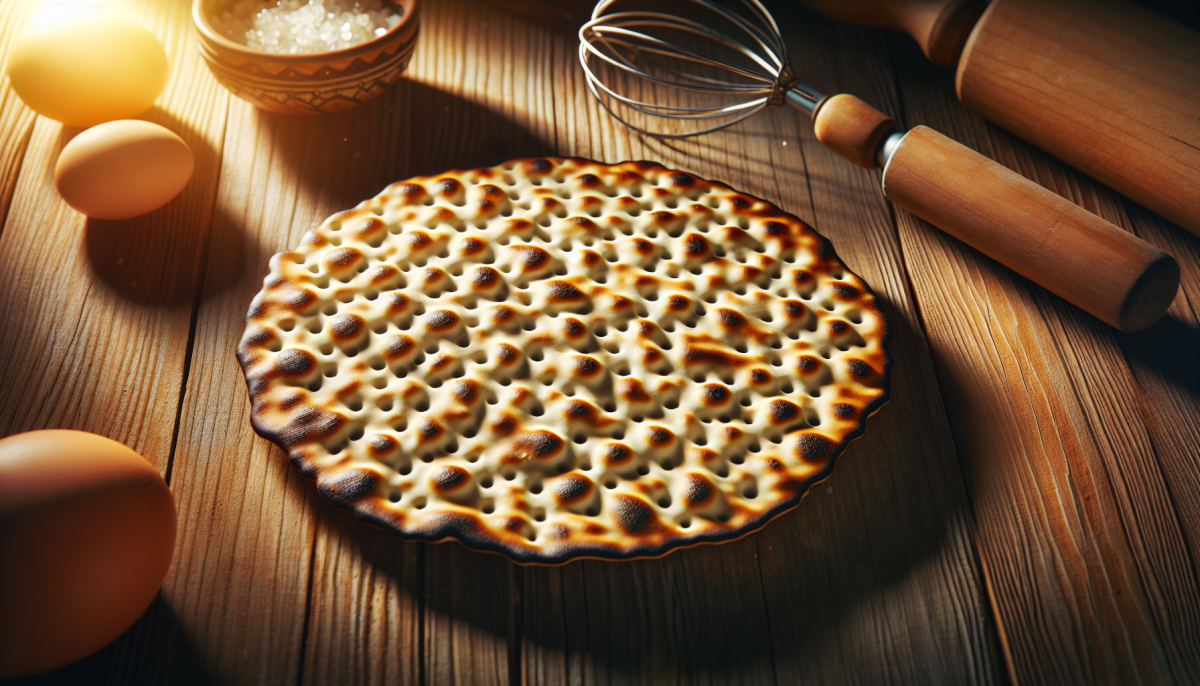
Matzo is the most ancient and symbolically rich bread in Jewish tradition—a flat, unleavened cracker that has connected the Jewish people to the story of the Exodus for over three thousand years. Every Pesach, we eat matzo to remember that when our ancestors fled Egypt, they left in such haste that their bread had no time to rise. That urgency is built into the very process of making matzo: from the moment water touches flour, you have exactly 18 minutes to mix, roll, perforate, and bake before the dough is considered chametz (leavened).
Making matzo at home is a profound experience. The speed and intentionality required—working with focus, moving quickly from mixing bowl to oven—transforms a simple act of baking into something almost meditative. The result is remarkably different from the machine-made matzot most of us grew up with: handmade matzo (shmura matzo) has irregular edges, charred bubbles, and a flavor that is wheaty, slightly smoky, and deeply satisfying.
While shmura matzo for the Seder is typically purchased from certified bakeries where every step is supervised, making matzo at home is a wonderful educational and spiritual activity for the weeks before Pesach. It connects you physically to the mitzvah and teaches the 18-minute principle in a way no textbook can. Whether you use your homemade matzo for the Seder or as a pre-Pesach family activity, the process itself is the reward.