Categories
Recipes

Sufganiyot Recipe — Pillowy Hanukkah Donuts Filled with Joy

Pareve
Oil-Based • Egg • Contains Gluten • Dairy Variation Below
Yield
16–20 donuts
Difficulty
Intermediate
Active Time
1 hour
Total Time
3–4 hours
Bracha
Mezonot

This sufganiyot recipe will make you forget everything you know about donuts. These are sufganiyot — and they carry 2,000 years of miracles in every bite.

Close your eyes and picture this: a pillow of warm, golden dough, impossibly light, yielding under the slightest pressure. You bite in and the center erupts — a bright ribbon of raspberry jam, or a slick of dark chocolate, or a cloud of silky vanilla custard. Powdered sugar drifts down your sleeve like snowfall. The kitchen smells of warm oil and sweetness and something ancient, something that connects this Hanukkah to every Hanukkah that came before.

Sufganiyot are Israel’s gift to the holiday table. While Ashkenazi Jews in the diaspora have long celebrated Hanukkah with crispy potato latkes, Israeli bakeries transformed the season into a national obsession with these filled, fried donuts — each one a reminder of the miracle of oil. The cruse that should have lasted one day burned for eight. We fry in oil to remember. We fill with sweetness to celebrate.

This recipe will give you sufganiyot that rival the best bakeries on Jaffa Road. Pillowy, never greasy. Golden, never pale. Filled to bursting, never hollow. You will never buy store-bought sufganiyot again.

This is the taste of Hanukkah. And this year, it is coming from your kitchen.

What Makes These Sufganiyot Special

Great sufganiyot depend on precision. The dough must be rich enough to stay tender through frying but structured enough to hold a clean round shape. The oil must be exactly the right temperature — too cool and the donuts turn greasy, too hot and the outside burns before the center cooks. Every decision in this recipe has been calibrated for one result: perfection.

  • Enriched yeasted dough — eggs, oil (or butter), sugar, and a touch of vanilla and lemon zest create a dough that fries into something impossibly tender, with a fine crumb and a thin golden crust.
  • Pareve as written, dairy variation included — the base recipe uses oil and water, making it suitable for any Hanukkah meal. A dairy version with butter and milk is noted for those who want extra richness.
  • Deep frying technique, demystified — oil temperature is everything. We walk you through every degree, every visual cue, every timing detail so you can fry with confidence.
  • Three filling options — classic jam, pastry cream custard, and chocolate ganache, each with step-by-step instructions.
  • Baker’s percentages — for experienced bakers who want to scale precisely.

The Hanukkah Connection: Oil, Miracles, and Pirsumei Nisa

The tradition of eating fried foods on Hanukkah commemorates one of the most beloved miracles in Jewish history. When the Maccabees reclaimed and rededicated the Holy Temple in Jerusalem in 165 BCE, they found only a single cruse of pure olive oil — enough to keep the menorah lit for one day. Miraculously, that oil burned for eight days, long enough to prepare a new supply.

Frying sufganiyot in oil is an act of pirsumei nisa — publicizing the miracle. Every golden donut that emerges from the pot is a small, edible declaration: we remember, and we celebrate.

It is worth noting that sufganiyot are primarily an Israeli Hanukkah tradition. In many Ashkenazi diaspora communities, latkes (potato pancakes) are the iconic Hanukkah food, also fried in oil. Some families enjoy both — latkes for the savory course, sufganiyot for dessert. There is no wrong answer, only more miracles to remember.

In Israel, sufganiyot season is a phenomenon. Bakeries debut dozens of flavors — halva, dulce de leche, pistachio, passion fruit — and the country consumes an estimated 18 million sufganiyot each Hanukkah. This recipe gives you the foundation. Where you take it from here is your own tradition.

Kosher Observance & Halachic Notes

Kosher Classification: Pareve (as written)

The base recipe uses vegetable oil and water (no dairy), making it fully pareve. If you use the dairy variation (butter and milk), the sufganiyot become milchig (dairy) and may not be served with or after a meat meal. Similarly, filling with dairy custard renders the sufganiyot milchig regardless of which dough version you used.

Bracha: Mezonot

The bracha for sufganiyot is Mezonot, not HaMotzi. Because suffganiyot are deep-fried rather than baked, and because the dough is enriched with a significant proportion of sugar, eggs, and oil, they are classified as pas haba’ah b’kisnin (snack-type bread products). The after-bracha is Al HaMichya. If a person were to eat a very large quantity as a meal, some poskim hold that HaMotzi and Birkat HaMazon would apply, but this is uncommon with sufganiyot.

Hafrashat Challah

This recipe calls for 500 g of flour. In most Ashkenazi communities, the minimum quantity requiring separation of challah with a bracha is approximately 1,200–1,667 g of flour (depending on the posek). At 500 g, you are below the threshold for a bracha but some hold you should still separate challah without a bracha if the flour exceeds approximately 1,200 g. If you double or triple this recipe for a large Hanukkah party (1,000 g+ of flour), separate challah with the bracha as described in our Classic Challah recipe. Consult your rabbi for your community’s specific practice.

Frying Oil

The oil used for deep frying must bear a reliable hechsher (kosher certification). Most refined vegetable oils (canola, sunflower, peanut) from major brands carry certification. Check the label. Unrefined or specialty oils should be verified individually. The same oil should not be reused from frying non-kosher items.

Fillings: Check Every Ingredient

Jams and preserves must have a hechsher — many commercial brands do, but always verify. Chocolate and cocoa products require certification. If using dairy custard or cream fillings, the sufganiyot become milchig and must be clearly identified to avoid confusion at a fleishig meal. It is a good practice to label or separate dairy-filled sufganiyot from pareve ones.

Checking Eggs

Each egg must be cracked individually into a clear glass and inspected for blood spots before adding to the dough. If a blood spot is found, discard the entire egg.

Ingredients

Sufganiyot Dough — Pareve Version (Base Recipe)

Ingredient Grams Volume Baker’s %
Bread flour (unbleached, 12–13% protein) 500 g 3¾ cups 100%
Granulated sugar 65 g ⅓ cup 13%
Fine sea salt 8 g 1½ tsp 1.6%
Instant (rapid-rise) yeast 10 g 1 Tbsp 2%
Large eggs, room temperature (checked for blood spots) 100 g 2 large eggs 20%
Large egg yolks, room temperature 36 g 2 yolks 7.2%
Neutral vegetable oil (canola, sunflower, or peanut) 45 g 3 Tbsp 9%
Warm water (38°C / 100°F) 160 g ⅔ cup 32%
Pure vanilla extract 6 g 1½ tsp 1.2%
Finely grated lemon zest 4 g ~1 lemon 0.8%
Total Dough Weight ~934 g

Total hydration (water + eggs + yolks): ~59% — a moderately enriched dough that is soft and supple, perfect for frying.

Dairy (Milchig) Variation

For an even richer, more brioche-like donut, make the following substitutions:

  • Replace the 45 g vegetable oil with 60 g unsalted butter, softened to room temperature. Add the butter in small pieces during the last 3 minutes of kneading.
  • Replace the 160 g warm water with 160 g whole milk, warmed to 38°C (100°F).

Kosher note: The dairy version is milchig. Do not serve with or after a meat meal. Label clearly if serving alongside pareve sufganiyot at a gathering. All dairy ingredients must carry a reliable hechsher.

For Deep Frying

  • 2–3 liters (2–3 quarts) neutral, high-smoke-point oil with a hechsher: canola, sunflower, or peanut oil

For Finishing

  • Powdered (confectioners’) sugar, for dusting

Filling Option 1: Classic Jam (Pareve)

  • 300 g (about 1 cup) high-quality seedless strawberry, raspberry, or apricot jam — must have a hechsher
  • If the jam is very thick, warm it gently and stir in 1 Tbsp warm water for easier piping

Filling Option 2: Vanilla Pastry Cream / Custard (Dairy)

  • 360 ml (1½ cups) whole milk
  • 65 g (⅓ cup) granulated sugar
  • 30 g (3 Tbsp) cornstarch
  • 3 large egg yolks (checked for blood spots)
  • 1 tsp pure vanilla extract
  • 15 g (1 Tbsp) unsalted butter, cold
  • Pinch of fine salt

Note: Custard filling makes the sufganiyot milchig (dairy) regardless of which dough version you used.

Filling Option 3: Chocolate Ganache (Dairy or Pareve)

  • 150 g (5 oz) high-quality dark or semi-sweet chocolate (with hechsher), chopped
  • 120 ml (½ cup) heavy cream (dairy) or full-fat coconut cream (pareve)
  • Pinch of fine salt

Using coconut cream keeps the ganache pareve. Using dairy cream makes it milchig.

Equipment

  • Stand mixer with dough hook (preferred) or large bowl for hand kneading
  • Deep-fry or candy thermometer — non-negotiable for proper sufganiyot
  • Heavy-bottomed pot or Dutch oven, at least 15 cm (6 inches) deep
  • Kitchen scale (grams preferred)
  • Rolling pin
  • 3-inch (7.5 cm) round cutter (or a clean can or glass)
  • Spider skimmer or slotted spoon
  • Wire rack set over a sheet pan (for draining)
  • Piping bag fitted with a bismarck tip (long, narrow tip) or a #230 round tip
  • Parchment paper
  • Clear glass or small bowl for egg checking
  • Instant-read thermometer (for checking internal donut temperature)

Step-by-Step Instructions

Step 1: Prepare the Wet Ingredients

Crack each egg one at a time into a clear glass. Inspect for blood spots against the light. If clear, transfer to a medium bowl. Add the egg yolks, warm water (or warm milk for the dairy version), vanilla extract, and vegetable oil (or reserve butter for later if making the dairy version). Whisk until combined.

Step 2: Combine the Dry Ingredients

In the bowl of a stand mixer fitted with the dough hook, whisk together the bread flour, sugar, salt, instant yeast, and lemon zest. Keep the salt and yeast on opposite sides of the bowl to prevent direct contact before mixing.

Step 3: Mix to a Smooth, Elastic Dough

Pour the wet ingredients into the dry. Mix on low speed (speed 1–2) for 2–3 minutes until a shaggy, rough dough forms and no dry flour remains.

Increase to medium speed (speed 3–4) and knead for 8–12 minutes. You are looking for:

  • A dough that pulls cleanly away from the sides of the bowl
  • A surface that looks smooth, slightly glossy, and satiny
  • A texture that is soft, supple, and slightly tacky — not sticky
  • When you pull a small piece, it stretches into a thin, translucent membrane without tearing (the windowpane test)

For the dairy version: After 7 minutes of kneading on medium speed, begin adding the softened butter in 3–4 small pieces, waiting until each piece is incorporated before adding the next. Continue kneading for 4–5 more minutes until the dough is smooth again.

Hand kneading alternative: Turn the dough onto a very lightly floured surface and knead vigorously for 14–16 minutes using a stretch-and-fold technique. The dough will be soft and slightly sticky at first but will smooth out as gluten develops. Resist adding extra flour.

Step 4: Bulk Fermentation (First Rise)

Lightly oil a large, clean bowl. Shape the dough into a smooth ball and place it in the bowl, turning once to coat. Cover tightly with plastic wrap.

Let rise at room temperature (24–27°C / 75–80°F) for 1 to 1½ hours, or until the dough has doubled in volume.

How to tell it has doubled:

  • The dough should be puffy, smooth, and dome above where it started.
  • Press two floured fingers about 1 cm into the surface. If the indentations hold their shape and fill back very slowly, the first rise is complete.
  • If the dough springs right back, give it 15–20 more minutes.

Step 5: Roll and Cut the Rounds

Turn the dough out onto a lightly floured work surface. Gently deflate by pressing with your palms — do not punch or knock the air out aggressively; you want to preserve some of the open structure.

Using a rolling pin, roll the dough to an even 1 cm (½-inch) thickness. Take your time and keep the dough uniform — uneven thickness means uneven frying.

Using a 3-inch (7.5 cm) round cutter, stamp out rounds as close together as possible to minimize scraps. Press the cutter straight down and lift cleanly — do not twist, which seals the edges and inhibits rising.

Re-rolling scraps: Gently gather the scrap dough, press it together (do not re-knead), and roll it out once more to 1 cm thickness. Cut additional rounds. Do not re-roll a second time — the dough will be overworked and the sufganiyot will be tough.

You should have 16–20 rounds total. Place them on parchment-lined sheet pans, spaced at least 3 cm (1 inch) apart.

Step 6: Second Proof — The Critical Step

This proof determines whether your sufganiyot are light and airy or dense and greasy. Pay close attention.

Cover the rounds loosely with plastic wrap or a lightweight towel. Let them proof at room temperature for 30–45 minutes, until they are visibly puffy and pillowy — they should look swollen and feel light when you slide a spatula underneath one.

The risks:

  • Underproofed (less than 30 minutes): The sufganiyot will be dense and heavy, with a tight crumb. They will not puff properly in the oil.
  • Overproofed (more than 50 minutes in a warm kitchen): The dough loses its structure. The sufganiyot will absorb too much oil, turning greasy and flat, and they may deflate or collapse during frying.

The sweet spot: The rounds should jiggle slightly when you tap the pan. When you press very gently with a floured fingertip, the indentation should fill back slowly. If it springs right back, wait. If it does not fill back at all, fry immediately — they are at the edge.

Step 7: Heat the Oil — Temperature Is Everything

Oil temperature management is the single most important factor in sufganiyot quality. Use a thermometer. Do not guess.

Pour 2–3 liters of oil into a heavy-bottomed pot or Dutch oven. The oil should be at least 8 cm (3 inches) deep — the sufganiyot need to float freely and be mostly submerged.

Heat over medium to medium-high heat until the thermometer reads 340–350°F (170–175°C).

Why this temperature range:

  • Below 340°F (170°C): The dough absorbs oil like a sponge. You get heavy, greasy donuts with a pale, sad exterior.
  • Above 360°F (182°C): The outside browns (or burns) before the inside cooks through. You get raw dough in the center.
  • At 340–350°F (170–175°C): A thin, golden crust forms immediately, sealing the surface and preventing oil absorption. The interior steams and cooks through gently. This is the zone.

Oil choice: Use a neutral, high-smoke-point oil with a reliable hechsher. Canola oil (smoke point 400°F / 204°C), sunflower oil (smoke point 440°F / 227°C), and peanut oil (smoke point 450°F / 232°C) are all excellent choices. Peanut oil produces the crispest exterior. Avoid olive oil (too low smoke point, too strong a flavor) and coconut oil (solidifies on cooling).

Step 8: Fry the Sufganiyot

Set up your frying station: pot of hot oil on one side, a wire rack set over a sheet pan on the other (for draining), and a spider skimmer or slotted spoon within reach.

Working in batches of 3–4 sufganiyot at a time (do not crowd the pot — too many will drop the oil temperature), carefully slide each round into the oil using a spatula or your hands. Lower them gently; do not drop from height.

Fry for 2–3 minutes per side, until deep golden brown. Use the skimmer to flip them once, gently. They should puff up visibly in the oil, often developing a pale “belt” around the equator where the dough expanded — this is normal and desirable.

How to know they are done:

  • The color is a deep, even golden brown on all sides — not pale gold, not dark brown.
  • They feel light when lifted with the skimmer. A heavy sufganiya absorbed too much oil.
  • An instant-read thermometer inserted into the center reads 190°F (88°C) or above.

Between batches: Allow the oil to return to 340–350°F (170–175°C) before adding the next batch. Adjust the burner as needed — the temperature will drop each time cold dough enters the pot. Skim out any floating bits of dough between batches to keep the oil clean.

Transfer fried sufganiyot to the wire rack. Do not drain on paper towels — the trapped steam underneath makes the bottoms soggy.

Step 9: Fill the Sufganiyot

Let the sufganiyot cool for 10–15 minutes — warm enough for the powdered sugar to cling, but cool enough to handle and fill without melting the filling.

Fit a piping bag with a bismarck tip (a long, narrow round tip designed for filling donuts — also called a #230 tip). Fill the piping bag with your chosen filling.

To fill:

  1. Using a chopstick, skewer, or the tip of a paring knife, poke a hole into the side of each sufganiya, through the pale “belt” at the equator. Push in about 2 cm (1 inch) to create a small cavity.
  2. Insert the bismarck tip into the hole.
  3. Squeeze gently and steadily until you feel the sufganiya grow slightly heavier in your hand — about 1–2 tablespoons of filling per donut. Do not overfill or the filling will burst out the other side.
  4. Withdraw the tip slowly while giving a final small squeeze to ensure the cavity is full.

Step 10: Dust and Serve

Place powdered sugar in a fine-mesh sieve and dust it generously over the filled sufganiyot. Do this while they are still slightly warm — the residual heat helps the sugar adhere.

Serve immediately. Sufganiyot are at their absolute peak within the first 2–3 hours of frying — the crust still faintly crisp, the interior pillowy and warm, the filling bright and luscious. This is the moment. Do not wait.

Gather your family around the table. Light the menorah. Take a bite. Powdered sugar on your chin, jam on your lip. This is Hanukkah.

Filling Recipes

Vanilla Pastry Cream (Dairy — Milchig)

Make this before you start the dough — it needs time to chill.

  1. In a medium saucepan, heat 300 ml of the milk over medium heat until steaming (do not boil).
  2. In a separate bowl, whisk together the egg yolks, sugar, cornstarch, salt, and remaining 60 ml of cold milk until smooth.
  3. Slowly pour the hot milk into the egg mixture in a thin stream, whisking constantly (this is tempering — it prevents the eggs from scrambling).
  4. Pour the entire mixture back into the saucepan. Cook over medium heat, whisking constantly and vigorously, until the custard thickens dramatically and begins to bubble — about 2–3 minutes. It should be very thick, like pudding.
  5. Remove from heat. Whisk in the butter and vanilla extract until smooth and glossy.
  6. Transfer to a bowl, press plastic wrap directly onto the surface (to prevent a skin from forming), and refrigerate for at least 2 hours, until fully chilled and set.

Chocolate Ganache (Dairy or Pareve)

  1. Place the chopped chocolate and salt in a heatproof bowl.
  2. Heat the cream (or coconut cream) in a small saucepan until just simmering — small bubbles around the edges.
  3. Pour the hot cream over the chocolate. Let stand for 2 minutes without stirring.
  4. Stir gently from the center outward until completely smooth and glossy.
  5. Let cool to room temperature, then refrigerate for 30–60 minutes until thick enough to pipe but still squeezable. It should have the consistency of thick mayonnaise.

Storage Notes

  • Same day (best): Sufganiyot are best eaten within 3–4 hours of frying. The crust softens and the dough absorbs oil over time.
  • Room temperature: Unfilled sufganiyot can be stored in an airtight container at room temperature for up to 1 day. Re-crisp in a 180°C (350°F) oven for 3–4 minutes before filling and serving.
  • Refrigerate filled sufganiyot: If using custard or ganache filling, refrigerate leftovers and consume within 24 hours. Bring to room temperature for 20 minutes before eating.
  • Freezing (unfilled only): Cool completely, then freeze on a parchment-lined tray until solid. Transfer to a freezer bag. Freeze for up to 2 weeks. Thaw at room temperature, re-crisp in the oven, then fill fresh.
  • Do not freeze filled sufganiyot — the filling will make the dough soggy upon thawing.

Troubleshooting Guide

Problem Likely Cause Solution
Greasy, heavy sufganiyot that feel oil-soaked Oil temperature too low; dough was overproofed; too many donuts crowded the pot (dropped the temperature) Maintain 340–350°F (170–175°C) at all times. Use a thermometer. Fry in small batches of 3–4. Do not overproof the dough.
Raw or doughy center Oil temperature too high (outside cooked too fast); dough was rolled too thick; sufganiyot were too large Lower the oil temperature. Roll to exactly 1 cm (½ inch). Use a 3-inch cutter, not larger. Check internal temp — should be 190°F (88°C).
Sufganiyot deflated or collapsed during or after frying Overproofed dough — the gluten structure broke down and could not hold shape Proof for 30–45 minutes maximum. Watch the clock. In a warm kitchen, they may be ready in 25 minutes.
Dense, heavy crumb that did not puff Underproofed; under-kneaded; dough too cold Make sure the dough fully doubled during bulk fermentation. Pass the windowpane test. Ensure the dough is at room temperature before frying.
Pale or unevenly colored exterior Oil was not hot enough; insufficient frying time; did not flip at the right moment Wait for 340°F (170°C) before frying. Give a full 2–3 minutes per side. Flip once, gently.
Filling leaks out the other side when piping Hole was poked too deeply; too much filling; filling was too thin Push the tip only 2 cm in. Fill slowly and stop when you feel resistance. Chill thin fillings until thicker.
Tough or chewy dough after re-rolling scraps Re-rolled the scraps too many times; over-kneaded the scrap dough Gently press scraps together — do not knead. Re-roll only once. Accept that the last few donuts may be slightly less tender.

Frequently Asked Questions

What are sufganiyot?

Sufganiyot (singular: sufganiya) are traditional Israeli Hanukkah donuts — rounds of rich, yeasted dough that are deep-fried in oil and filled with jam, custard, chocolate, or other fillings, then dusted with powdered sugar. The name comes from the Greek word sfog, meaning “sponge,” referring to the dough’s soft, absorbent texture. While they resemble jelly donuts, sufganiyot are distinguished by their enriched dough, their cultural significance, and the specific reason they are fried: to commemorate the miracle of the oil in the Holy Temple during Hanukkah. They have become the single most iconic Hanukkah food in Israel, where millions are consumed each year during the eight-day holiday.

Why do we eat fried food on Hanukkah?

Fried foods on Hanukkah commemorate the miracle of the oil. When the Maccabees liberated and rededicated the Holy Temple in Jerusalem (circa 165 BCE), they found only one small cruse of ritually pure olive oil — enough to keep the Temple’s menorah burning for a single day. Miraculously, the oil lasted for eight days, until new oil could be prepared. Eating foods fried in oil is an act of pirsumei nisa — publicizing the miracle — which is a central theme of Hanukkah observance. This is why both sufganiyot (fried donuts, common in Israel) and latkes (fried potato pancakes, common in Ashkenazi diaspora communities) are traditional Hanukkah foods. The oil is not incidental; it is the entire point.

What is the best oil for frying sufganiyot?

The best oil for frying sufganiyot is a neutral-flavored oil with a high smoke point and a reliable hechsher (kosher certification). The top three choices are peanut oil (produces the crispest exterior and the cleanest flavor, smoke point 450°F / 232°C), sunflower oil (excellent all-around choice, smoke point 440°F / 227°C), and canola oil (widely available and affordable, smoke point 400°F / 204°C). Avoid olive oil (too low a smoke point for deep frying, and its flavor is too assertive), coconut oil (solidifies on the donut surface as it cools), and any oil that lacks kosher certification. Whichever oil you choose, maintain it at 340–350°F (170–175°C) throughout frying.

Can I bake sufganiyot instead of frying them?

Technically, you can bake rounds of this dough at 190°C (375°F) for 12–15 minutes until golden, and you will get a pleasant, soft roll. But let us be honest: they will not be sufganiyot. The entire purpose of sufganiyot is the frying. The oil is the connection to the Hanukkah miracle. A baked sufganiya is missing its neshamah (soul). The thin, crisp crust that forms during frying, the pillowy interior that steams inside that crust, the way the powdered sugar clings to the fried surface — none of these can be replicated in an oven. If you are going to make sufganiyot, commit to the frying. It is easier than you think, and the result is incomparably better.

How far ahead can I make sufganiyot?

Sufganiyot are at their absolute best within 2–3 hours of frying — that is the window where the crust still has a faint crispness and the interior is at peak tenderness. For planning purposes: you can make the dough the morning of your Hanukkah party, let it rise over 1–1.5 hours, cut and proof the rounds, and fry 1–2 hours before guests arrive. Fill and dust just before serving. If you must fry further ahead, store unfilled sufganiyot at room temperature for up to 8 hours and re-crisp them in a 180°C (350°F) oven for 3–4 minutes before filling. The dough itself can be made the night before and cold-proofed in the refrigerator — remove it 30–40 minutes before rolling and cutting to allow it to come to room temperature. Never fill sufganiyot until you are ready to serve.

You Just Learned the Art of Sufganiyot

Hanukkah baking does not stop here. Explore more of our tested, trusted recipes — each one built with the same precision, the same kosher care, and the same love.

Try Our Hamantaschen →
Master Our Classic Challah →

Made these sufganiyot? We want to see. Tag us @kosherbreadpro on Instagram or leave a comment below.
Categories
Recipes

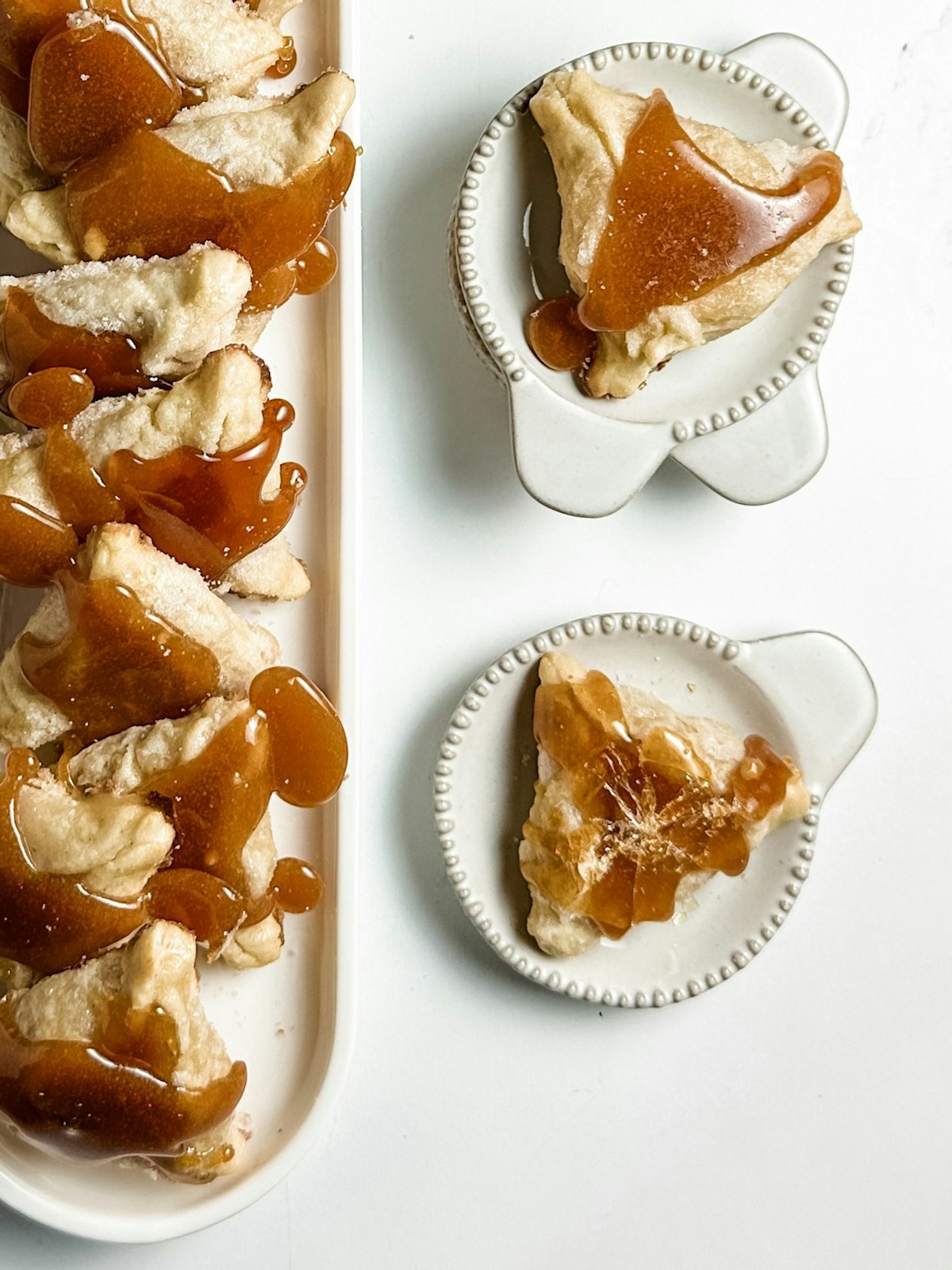
Hamantaschen Recipe — Classic Purim Cookies That Stay Closed

Version A — Milchig (Dairy)
Butter-based • Egg • Contains Gluten
Version B — Pareve
Oil-based • Dairy-Free • Egg • Contains Gluten
Yield
36–40 cookies
Difficulty
Beginner
Active Time
1 hour
Total Time
3–4 hours
Bracha
Mezonot

This hamantaschen recipe gives you the one cookie that tells a story of survival, triumph, and a lot of poppy seeds.

Purim is March 3 this year, and if you have not started planning your baking, now is the time. These small, triangular cookies — golden at the edges, tender in the center, hiding a pocket of sweet filling — are not just a holiday treat. They are a tradition you can hold in your hand. Every fold carries the memory of a people who refused to be destroyed, wrapped in butter and sugar and a generous spoonful of mohn.

Hamantaschen are the centerpiece of mishloach manot, the Purim mitzvah of sending food gifts to friends and neighbors. Bake one batch and you have enough to fill plates for everyone you love. Wrap them up, walk them over, leave them on a doorstep. This is what Purim tastes like — the joy of giving, sealed inside a triangle of cookie dough.

Below you will find everything: two complete dough versions (dairy and pareve), five filling options including a traditional poppy seed filling made from scratch, the precise folding technique that keeps your hamantaschen closed during baking, and complete kosher guidance for every ingredient. Whether you are baking your first batch or your fiftieth, this recipe will not let you down.

Purim 2026 falls on Tuesday, March 3. Start baking now — hamantaschen freeze beautifully and mishloach manot plates do not assemble themselves. Bake once, gift to everyone you love.

The Purim Connection: Why We Bake Hamantaschen

Hamantaschen — literally “Haman’s pockets” in Yiddish (or oznei Haman, “Haman’s ears,” in Hebrew) — are the iconic cookie of the Purim holiday. Their triangular shape is said to represent either the three-cornered hat worn by Haman, the villain of the Megillah, or his ears, which according to midrashic tradition drooped in shame at his downfall. This association is minhag (custom) rather than halacha (law), but it has become so deeply woven into the holiday that Purim without hamantaschen is almost unimaginable.

The holiday of Purim commemorates the events recorded in Megillat Esther. When Haman plotted to destroy the Jewish people throughout the Persian Empire, Queen Esther — at great personal risk — revealed her identity to King Achashverosh and exposed the plot. The Jewish people were saved, and the day of intended destruction became a day of celebration. We read the Megillah on Purim night and again during the day, we celebrate with the Seudat Purim (the festive Purim meal), and we fulfill the mitzvah of mishloach manot: sending at least two ready-to-eat food items to at least one friend.

Hamantaschen are the classic choice for mishloach manot. They travel well, they keep for days, and they carry the symbolism of the holiday in their very shape. Fill a plate, wrap it up, deliver it to your neighbors — this is Purim at its most generous and joyful.

Kosher Observance & Halachic Notes

Dairy (Milchig) vs. Pareve: Choosing Your Dough

This recipe provides two complete dough versions. Version A (Dairy / Milchig) uses butter for a richer, more tender cookie with a deeper flavor. Version B (Pareve) uses neutral oil and is dairy-free, making it suitable to serve after a meat meal or at any Purim seudah without restriction.

If you bake the dairy version: Clearly label your hamantaschen and any mishloach manot plates containing them as milchig. Recipients need to know, especially those who plan to serve them at a meat-based Seudat Purim. When in doubt, pareve is the more universally shareable option for mishloach manot.

Bracha: Mezonot

Hamantaschen are classified as pas haba’ah b’kisnin (a sweet baked item eaten as a snack). The bracha before eating is Mezonot, and after eating is Al HaMichyah. If one eats a very large quantity and is kove’a seudah (establishing a meal), one would wash, say HaMotzi, and bentch. For the typical amount consumed, Mezonot applies.

Ingredient Checks

  • Eggs: Each egg must be cracked individually into a clear glass and checked for blood spots before adding to the dough. If a blood spot is found, discard the entire egg.
  • Poppy seeds (for mohn filling): Poppy seeds can harbor tiny insects. Before use, soak the poppy seeds in warm water for 10 minutes, then drain through a fine-mesh strainer and rinse thoroughly. Inspect a small sample against a white plate. If you see any dark specks that move or appear different from the seeds themselves, rinse again. This step is non-negotiable for kashrus.
  • Chocolate: All chocolate (bars, chips, cocoa) must bear a reliable hechsher (kosher certification). For pareve hamantaschen, confirm the chocolate is certified pareve — many dark chocolates are, but always check the label.
  • Jam and preserves: Must have a reliable hechsher. Some commercial jams contain gelatin (which may not be kosher) or grape juice (which requires kosher supervision). Check labels carefully. This applies to both the apricot jam and prune (lekvar) fillings.
  • Halva and tahini: Must have a reliable hechsher. Most Israeli-made tahini and halva brands carry certification, but check each product.

Hafrashat Challah

This recipe uses approximately 375–400g of flour per dough version. A single batch does not reach the shiur (minimum amount) for separating challah. However, if you double or triple the recipe, or if you are baking multiple batches in the same session alongside challah or babka dough, you may reach the threshold. Separate challah without a bracha for 1,200g–1,666g of combined flour, or with a bracha for 1,666g or more.

The Dough — Two Versions

Version A: Dairy (Milchig) — Butter-Based

This is the richer version. Butter gives the cookies a deeper flavor, a more tender crumb, and slightly crisper edges. If your mishloach manot will be served in a dairy or neutral context, this is the dough to choose.

Ingredient Grams Volume (approx.)
All-purpose flour 375 g 3 cups
Granulated sugar 150 g ¾ cup
Unsalted butter, softened (room temperature) 115 g ½ cup (1 stick)
Large eggs (checked for blood spots) 100 g (2 large) 2 eggs
Pure vanilla extract 8 g 2 tsp
Baking powder 6 g 1½ tsp
Fine sea salt 3 g ½ tsp
Finely grated lemon zest (optional) 4 g 1 tsp (from ~1 lemon)

Version B: Pareve — Oil-Based

This version is dairy-free and universally shareable. The texture is slightly firmer than the butter version but still tender and delicious. This is the safest choice for mishloach manot, since recipients can enjoy them after any meal.

Ingredient Grams Volume (approx.)
All-purpose flour 400 g 3¼ cups
Granulated sugar 150 g ¾ cup
Neutral vegetable oil (canola or sunflower) 80 g ⅓ cup + 1 Tbsp
Large eggs (checked for blood spots) 100 g (2 large) 2 eggs
Orange juice (freshly squeezed preferred) 30 g 2 Tbsp
Pure vanilla extract 8 g 2 tsp
Baking powder 6 g 1½ tsp
Fine sea salt 3 g ½ tsp
Finely grated orange zest (optional) 4 g 1 tsp (from ~1 orange)

Five Filling Options

Choose one or make several — a mixed plate of hamantaschen with different fillings is a beautiful thing for mishloach manot. Each filling below yields enough for one full batch of dough (36–40 cookies).

1. Poppy Seed (Mohn) — The Traditional Filling

This is the original. The filling that your great-grandmother made. Cooked poppy seeds with honey and lemon, ground into a thick, sweet paste. If you only make one filling, make this one.

Kashrus note: Poppy seeds must be checked for insects before use. Soak in warm water for 10 minutes, drain through a fine-mesh strainer, rinse well, and inspect a sample against a white surface. See Kosher Notes above for details.

Ingredient Grams Volume (approx.)
Poppy seeds (soaked, rinsed, and drained) 200 g 1½ cups
Honey 80 g ¼ cup
Granulated sugar 50 g ¼ cup
Milk or non-dairy milk (see note) 60 g ¼ cup
Unsalted butter or neutral oil 15 g 1 Tbsp
Fresh lemon juice 15 g 1 Tbsp
Lemon zest 3 g ½ tsp
Pinch of fine sea salt 1 g pinch

Note on dairy status: If using milk and butter, this filling is milchig — pair it only with the dairy dough (Version A). For a fully pareve filling, use non-dairy milk and neutral oil. The result is nearly identical.

To make the mohn filling:

  1. After soaking, draining, and rinsing the poppy seeds, grind them in a food processor or spice grinder in batches, pulsing until the seeds are partially broken down and the mixture looks like coarse, wet sand. You do not need a perfectly smooth paste — some texture is traditional and pleasant.
  2. Combine the ground poppy seeds, honey, sugar, milk (or non-dairy milk), and butter (or oil) in a small saucepan over medium-low heat.
  3. Cook, stirring frequently, for 8–10 minutes. The mixture will thicken and become paste-like as the liquid absorbs. It should hold its shape on a spoon without dripping.
  4. Remove from heat. Stir in the lemon juice, lemon zest, and salt.
  5. Transfer to a bowl and let cool completely before using. The filling will thicken further as it cools. It can be made up to 3 days ahead and stored covered in the refrigerator.

2. Prune (Lekvar)

The other great classic. Lekvar — thick, dark, slightly tart prune butter — has been filling hamantaschen since long before chocolate was an option. You can buy prepared lekvar (check for a hechsher), or make it from scratch:

  • 300 g (2 cups) pitted prunes
  • 120 g (½ cup) water
  • 30 g (2 Tbsp) sugar
  • 15 g (1 Tbsp) fresh lemon juice
  • Pinch of cinnamon (optional)

Combine prunes and water in a saucepan. Simmer over medium-low heat for 15–20 minutes until very soft. Add sugar and lemon juice. Blend with an immersion blender or food processor until smooth. Cool completely. Should be thick enough to hold its shape on a spoon. Pareve.

3. Apricot Jam

The simplest option and absolutely delicious. Use 300 g (1 cup) of high-quality apricot preserves. The jam must bear a reliable hechsher — check for gelatin and grape juice in the ingredients. If the preserves are very loose or runny, simmer them in a small saucepan for 5–8 minutes until thickened, then cool. Thick jam holds up better during baking and resists leaking. Typically pareve — check the label.

4. Chocolate

The modern favorite. Rich, slightly gooey, and irresistible to children and adults alike.

  • 150 g (5 oz) dark or semisweet chocolate (60–70% cacao), finely chopped — must have a reliable hechsher
  • 30 g (2 Tbsp) neutral oil (or butter for dairy version)
  • 15 g (1 Tbsp) cocoa powder
  • Pinch of flaky sea salt

Melt the chocolate with the oil in a double boiler or in 30-second microwave bursts, stirring between each. Stir in the cocoa powder and salt. Cool until thick and spreadable but not solid — the consistency of thick frosting. If making ahead, rewarm gently before using. Check each chocolate product for pareve or dairy certification.

5. Halva & Tahini

A Middle Eastern twist that has become increasingly popular. Nutty, sweet, and deeply savory all at once.

  • 120 g (½ cup) tahini (raw, well-stirred) — must have a reliable hechsher
  • 60 g (¼ cup) honey or date syrup (silan)
  • 50 g (¼ cup) halva, crumbled into small pieces
  • Pinch of fine sea salt
  • Pinch of cinnamon (optional)

Stir the tahini and honey together until smooth. Fold in the crumbled halva, salt, and cinnamon if using. The filling should be thick and scoopable. If it is too loose, refrigerate for 20 minutes. Typically pareve — check all labels.

Equipment

  • Stand mixer with paddle attachment, or a large bowl and hand mixer
  • Kitchen scale (critical for consistent results)
  • Rolling pin
  • 3-inch (7.5 cm) round cookie cutter (or a drinking glass)
  • 2 large sheet pans lined with parchment paper
  • Plastic wrap
  • Fine-mesh strainer (for poppy seed filling)
  • Clear glass or small bowl (for checking eggs)

Step-by-Step Instructions: Making the Dough

These instructions apply to both dough versions. Where the method differs, the pareve variation is noted.

Step 1: Cream the Fat and Sugar

Dairy version: In the bowl of a stand mixer fitted with the paddle attachment, cream the softened butter and sugar on medium speed for 3–4 minutes, until light, fluffy, and noticeably paler in color. Scrape down the sides of the bowl halfway through. The mixture should look like pale, whipped cream cheese — this aeration is what gives the cookies their tender texture.

Pareve version: Whisk the oil and sugar together on medium speed for 2 minutes. The mixture will not become fluffy the way butter does, but it should be thoroughly combined and slightly thickened.

Step 2: Add the Eggs

Crack each egg individually into a clear glass, inspect for blood spots, then add to the mixer bowl one at a time, beating on medium speed for 30 seconds after each addition. The mixture should be smooth and well emulsified. Add the vanilla extract (and lemon zest for dairy, or orange juice and orange zest for pareve) and beat until incorporated.

Step 3: Fold in the Dry Ingredients

In a separate bowl, whisk together the flour, baking powder, and salt.

Add the dry ingredients to the wet mixture in two additions, mixing on low speed just until the flour disappears each time. Do not overmix. The moment you can no longer see streaks of flour, stop the mixer. Overmixing develops gluten, which makes the dough tough and causes the cookies to spread and lose their shape during baking.

This is the most important instruction in the entire dough process: Mix until just combined. The dough should look slightly shaggy and soft. If you can still see a few tiny flour streaks, that is better than overmixing. They will disappear during chilling and rolling.

Step 4: Chill the Dough

Divide the dough in half. Flatten each half into a disc about 2 cm (¾ inch) thick — this makes rolling easier later. Wrap each disc tightly in plastic wrap.

Refrigerate for 1 to 2 hours, until the dough is firm but still pliable. You should be able to press a finger into it and leave a slight dent, but it should not feel soft or sticky. If the dough has been refrigerated overnight or longer, let it sit at room temperature for 10–15 minutes before rolling — it should bend without cracking.

Chilling is non-negotiable. Warm dough is the enemy of hamantaschen that stay closed. Cold dough holds its shape, takes the pinch, and does not fight you during rolling.

Step-by-Step Instructions: Shaping & Filling

Step 5: Roll the Dough

Lightly flour your work surface and rolling pin. Working with one disc of dough at a time (keep the other in the refrigerator), roll the dough to a 3 mm (⅛ inch) thickness. This is thinner than you might expect — about the thickness of two stacked coins. Roll from the center outward, rotating the dough a quarter turn every few strokes to maintain an even thickness and prevent sticking.

If the dough starts to warm up and feel sticky: Slide it onto a parchment-lined sheet pan and return it to the refrigerator for 10 minutes. Working with cold dough is the single most important factor in hamantaschen that hold their shape.

Step 6: Cut the Circles

Using a 3-inch (7.5 cm) round cutter (or the rim of a drinking glass), cut circles from the rolled dough. Cut as close together as possible to minimize scraps. You should get 18–20 circles from each disc.

Gather the scraps gently, press them together (do not knead), re-flatten into a disc, chill for 15 minutes, and re-roll once. Scraps re-rolled more than once will be tough.

Step 7: Fill the Hamantaschen

Place 1 level teaspoon of filling in the center of each circle. Not more. This is where most hamantaschen fail. The temptation to add more filling is strong, but overfilling is the number one reason hamantaschen open during baking. One level teaspoon is enough — the ratio of tender cookie to sweet filling should favor the cookie.

Step 8: The Three-Fold Pinch — The Critical Technique

This is the step that determines whether your hamantaschen stay closed or open into sad, flat circles in the oven. Read this carefully.

  1. Lift the bottom edge of the circle up and over the filling, folding about one-third of the circle toward the center. Do not fold all the way to the top — you are creating one side of the triangle.
  2. Fold the left side in toward the center, overlapping slightly with the first fold. You should now see two sides of a triangle forming, with a small opening at the top where the filling peeks through.
  3. Fold the top flap down to close the triangle. The three corners should overlap slightly, creating three small flaps at the corners.
  4. Now pinch — hard. Press each of the three corner points firmly between your thumb and forefinger. Squeeze until the dough feels compressed and sealed. Then go back and pinch each corner a second time. The corners should look slightly pinched and pointy, not smooth and rounded.
  5. Final check: Look at the hamantaschen from above. You should see a small triangular window of filling in the center, framed by three walls of dough. The three corners should be tightly sealed with no gaps. If a corner looks loose, pinch it again.

The secret: Most people pinch once and move on. That is not enough. You must pinch each corner twice, firmly, pressing the dough layers together until they bond. Think of it as sealing an envelope — you press the flap, then run your finger along it again to make sure it holds.

If your dough has warmed up during shaping: Stop. Place the filled, pinched hamantaschen on a parchment-lined sheet pan and refrigerate for 10–15 minutes before baking. Cold dough holds its pinch. Warm dough relaxes and opens.

Place the shaped hamantaschen on parchment-lined sheet pans, spacing them about 4 cm (1½ inches) apart. They spread slightly but not dramatically.

Why Hamantaschen Open During Baking (and How to Prevent It)

This is the question every hamantaschen baker asks, and the answer is almost always one of these four problems:

Problem Why It Causes Opening The Fix
Overfilling Too much filling pushes against the seams as it heats and expands. The pressure overwhelms the pinch and the corners pop open. Use 1 level teaspoon of filling, no more. Resist the temptation. The cookie-to-filling ratio should favor the cookie.
Underpinching A gentle, single pinch is not enough. As the dough warms in the oven and the butter or oil softens, a weak seal releases. Pinch each corner twice, firmly. The dough should feel compressed and bonded, not just folded.
Warm dough Dough that is too warm when shaped will be soft, pliable, and unable to hold the pinch. It relaxes and unfolds in the oven. Chill the dough thoroughly before rolling (1–2 hours). If dough warms during shaping, refrigerate the shaped cookies for 10–15 minutes before baking.
Too much baking powder Excessive leavening creates too much puff and rise, which pushes the seams apart from the inside. Use exactly the amount specified (6 g / 1½ tsp). Do not round up. More leavening does not mean better cookies — it means open cookies.

If you follow all four rules — modest filling, aggressive pinching, cold dough, correct leavening — your hamantaschen will stay closed.

Step-by-Step Instructions: Baking

Step 9: Preheat and Bake

Preheat your oven to 175°C (350°F) conventional. Position a rack in the center of the oven.

Bake for 12–15 minutes, rotating the pan front-to-back halfway through for even browning.

The hamantaschen are done when:

  • The edges are just golden — a light, warm gold, not brown.
  • The centers still look slightly pale and soft. They will firm up as the cookies cool.
  • The bottoms are lightly golden when you lift one with a spatula to check.

Do not overbake. Hamantaschen that are baked until the entire surface is golden will be dry and crumbly once cool. They continue to set on the pan for several minutes after leaving the oven. Pull them when the edges are golden and the centers look barely done — they will be perfect.

Step 10: Cool

Let the hamantaschen cool on the baking sheet for 5 minutes, then transfer to a wire rack to cool completely. They are fragile when warm but firm up beautifully as they reach room temperature.

Storage & Make-Ahead

  • Room temperature: Store in an airtight container at room temperature for up to 5 days. Layer with parchment paper between rows to prevent sticking.
  • Freezing (baked): Place cooled hamantaschen in a single layer in a freezer-safe container or bag, with parchment between layers. Freeze for up to 2 months. Thaw at room temperature for 1 hour. They taste remarkably fresh.
  • Freezing (dough): The wrapped dough discs freeze beautifully for up to 1 month. Thaw in the refrigerator overnight before rolling.
  • Freezing (shaped, unbaked): Arrange shaped hamantaschen on a parchment-lined sheet pan, freeze until solid (about 2 hours), then transfer to a freezer bag. Bake from frozen, adding 2–3 minutes to the bake time. This is an excellent strategy for Purim: shape everything days ahead, then bake fresh batches as needed.
  • Fillings: All five fillings can be made up to 3 days ahead and stored in airtight containers in the refrigerator. Bring to room temperature before filling (cold filling on cold dough is fine; you just need it scoopable).

Troubleshooting Guide

Problem Likely Cause Solution
Hamantaschen open during baking Overfilling, underpinching, warm dough, or too much baking powder See the detailed table above. Use 1 tsp filling, pinch twice, chill dough, measure leavening precisely.
Dough is dry, crumbly, and cracks when rolled Too much flour (likely measured by volume, not weight) or dough is over-chilled Use a kitchen scale. If dough cracks when rolling, let it sit at room temperature for 10–15 minutes. If still crumbly, knead in 1 tsp of milk (dairy) or orange juice (pareve) at a time until pliable.
Cookies are too thick, puffy, and cakey Dough rolled too thick, or too much baking powder Roll to 3 mm (⅛ inch) — thinner than you think. Use exactly 6 g / 1½ tsp baking powder, measured level. More leavening makes puffier, cakier cookies that are more likely to open.
Cookies are tough or hard Dough was overmixed, or scraps were re-rolled too many times Mix the dry ingredients into the wet only until flour just disappears. Re-roll scraps only once. If dough resists rolling, let it rest — do not force it.
Filling leaks or burns on the pan Filling is too thin, or too much filling was used Thicken jam fillings by simmering before use. Use 1 level tsp. Ensure corners are pinched tightly with no gaps.
Cookies spread too much and lose their shape Dough was too warm when it went into the oven, or butter was over-creamed Always bake from a chilled state. If your kitchen is warm, refrigerate shaped cookies for 15 minutes before baking.

Frequently Asked Questions

Why are hamantaschen triangular?

The triangular shape is traditionally said to represent either the three-cornered hat (dreispitz) worn by Haman, the villain of the Purim story, or his ears (oznei Haman in Hebrew), which according to midrashic sources drooped in humiliation at his downfall. Some interpretations connect the three corners to the three Patriarchs — Avraham, Yitzchak, and Yaakov — whose merit protected the Jewish people. The shape is minhag (established custom) rather than halacha (law), but it has become so universal that the triangular cookie is inseparable from the holiday itself. Whatever the origin, the shape makes hamantaschen instantly recognizable and deeply symbolic of Purim.

Why do hamantaschen open during baking?

Almost always one of four causes: too much filling (the expanding filling pushes the seams apart), insufficiently pinched corners (a single light pinch is not enough to survive the oven’s heat), dough that is too warm when shaped (warm dough relaxes and unfolds), or too much baking powder (excess leavening creates puff that blows the seams open from within). The solution is straightforward: use exactly one level teaspoon of filling, pinch each corner firmly twice, work with well-chilled dough, and measure your baking powder precisely. Follow all four rules and your hamantaschen will stay closed.

What is the traditional hamantaschen filling?

The most traditional filling is mohn — poppy seed. In fact, the Yiddish name for poppy seed hamantaschen, mohntaschen (“poppy seed pockets”), may actually be the origin of the cookie’s name, with “Haman” being a folk-etymological substitution over time. Prune butter (lekvar) is the other deeply traditional filling, especially in Hungarian and Czech Jewish communities. Today, apricot jam, chocolate, and newer options like halva and tahini are equally popular, but mohn remains the classic — the filling that connects the cookie most directly to its Eastern European roots.

Can I make hamantaschen ahead of time?

Yes, and they are ideal make-ahead cookies. You have multiple options: the dough can be made and refrigerated for up to 2 days, or frozen for up to 1 month. Shaped, unbaked hamantaschen can be frozen on sheet pans, then transferred to freezer bags and baked from frozen (add 2–3 minutes to the bake time). Baked hamantaschen keep at room temperature in an airtight container for 5 days and freeze beautifully for up to 2 months. All five fillings can be prepared up to 3 days ahead. This flexibility makes hamantaschen the perfect Purim cookie — spread the work across several days, then assemble your mishloach manot plates fresh on Purim morning.

What is mishloach manot?

Mishloach manot (also spelled shalach manos) is one of the four mitzvot of Purim. It requires every Jewish adult to send at least two different ready-to-eat food items to at least one friend on Purim day. The purpose is to increase friendship, unity, and joy within the community. The two foods should ideally require two different brachot (blessings). A plate of hamantaschen (bracha: Mezonot) paired with a piece of fruit (bracha: Ha’Etz) or a small bottle of grape juice (bracha: HaGafen) fulfills this requirement beautifully. Hamantaschen are the classic mishloach manot item because they are festive, portable, keep well, and carry the symbolism of the holiday. Bake a batch, fill your plates, wrap them, and deliver them with joy.

Your Purim Table Starts Here

Purim is March 3. The dough takes two hours to chill, the fillings keep for days, and your neighbors are waiting. Start baking now.

Save This Recipe
Master Our Classic Challah →

Try Our Chocolate Babka →

Made these? Tag us @kosherbreadpro on Instagram or leave a comment below. We answer every one.
Categories
Recipes

Rugelach Recipe — Flaky, Filled, and Perfectly Jewish

Option A: Milchig
Dairy • Cream Cheese Dough • Contains Gluten
Option B: Pareve
Dairy-Free • Oil-Based Dough • Contains Gluten
Yield
48 rugelach
Difficulty
Beginner–Intermediate
Active Time
45 minutes
Total Time
3–4 hours
Bracha
Mezonot

This rugelach recipe delivers the cookie that isn’t a cookie — flaky, buttery crescents filled with everything wonderful.

There is a moment, somewhere between the rolling and the shaping, when you realize what rugelach actually is. It is not a cookie. It is not quite a pastry. It is something in between — a crescent of impossibly tender, flaky dough wrapped around a filling that oozes and caramelizes and perfumes your kitchen with cinnamon, chocolate, or the sweet tang of apricot. Every layer shatters just slightly when you bite through it. The filling clings to the crumb. The cinnamon sugar coating on the outside crackles between your teeth. And then it is gone, and you are reaching for another one before you have finished chewing the first.

Every Jewish grandmother has a rugelach recipe. It lives in a handwritten card in a recipe box, or in the muscle memory of hands that have shaped a thousand crescents. Some use cream cheese dough, rich and tangy. Others use a pareve version that can travel to any table. The fillings vary by family, by season, by whatever is in the pantry. But the shape is always the same — that elegant rolled crescent, wider at one end and curling to a delicate point at the other.

Now you have yours. This recipe gives you two dough options, three filling variations, and a shaping technique so clear you will get it right on the first try. Forty-eight perfect crescents from one batch. Enough to fill a platter, a gift box, or a Friday night table — assuming they survive that long.

This recipe is designed for two dough choices: a classic cream cheese dough (dairy/milchig) and a pareve oil-based dough that can accompany any meal. Choose one based on your table, your guests, and your preference. Both produce exceptional rugelach.

Kosher Notes & Halachic Guidance

Two Dough Options, Two Kosher Classifications

Option A — Classic Cream Cheese Dough: MILCHIG (Dairy). This dough contains cream cheese and butter, making it a dairy product. It cannot be served at a meat meal, and you must wait the appropriate time after eating meat before consuming it (the waiting period varies by community custom: 1, 3, or 6 hours). If you bake the dairy version for a gathering or gift, label it clearly as milchig to prevent confusion. Many families reserve the cream cheese version for dairy meals, Shavuot, or standalone dessert occasions.

Option B — Pareve Oil-Based Dough: PAREVE. This version uses neutral oil and pareve margarine instead of cream cheese and butter. It contains no dairy or meat ingredients and can be served alongside any meal — meat, dairy, or pareve. This is the more flexible option for Shabbos, Yom Tov, and mixed-menu occasions. Ensure the margarine you use is certified pareve and does not contain any dairy derivatives.

Bracha (Blessing)

The correct bracha before eating rugelach is Mezonot. Rugelach dough is enriched with fat (cream cheese or oil), sugar, and eggs, placing it in the category of pas haba’ah b’kisnin (a bread-like food eaten as a snack). It is typically consumed in small quantities as a treat rather than as a bread meal. If, however, one were to eat a very large quantity as part of a meal — enough to be considered kove’a seudah — the bracha would become HaMotzi, requiring washing and bentching. In practice, this is uncommon with rugelach. When in doubt, consult your Rav.

Ingredient Checks

  • Cream cheese (Option A): Must bear a reliable hechsher (kosher certification). Many cream cheese brands are kosher-certified, but always verify the symbol on the package. For those who keep Chalav Yisroel (dairy products produced with full-time Jewish supervision of the milking), Chalav Yisroel cream cheese is available from specialty brands. If your community observes Chalav Yisroel, ensure both the cream cheese and butter carry this certification.
  • Butter (Option A): Must have a reliable hechsher. For Chalav Yisroel households, use Chalav Yisroel butter.
  • Chocolate and cocoa powder (Filling 2): Must bear a reliable hechsher. For dairy rugelach, the chocolate may be dairy or pareve. For pareve rugelach, the chocolate must be certified pareve. Most quality dark chocolates (60% cacao and above) are pareve, but always check the label carefully — many contain milk solids or are processed on dairy equipment.
  • Jam/preserves (Filling 3): Must bear a reliable hechsher. This is particularly important because some jams and preserves contain gelatin (which may be non-kosher) or grape derivatives (grape juice or wine-based pectins, which raise separate kashrus concerns). Read the ingredient list and confirm the hechsher.
  • Walnuts (Filling 1): Plain, raw walnuts generally do not require a hechsher. However, walnuts can be subject to insect concerns. Inspect walnuts visually before use — break a few open and look for any webbing, larvae, or discoloration inside the nut meat. If they look clean, they are fine to use. Flavored, glazed, or pre-seasoned nuts do require a hechsher.
  • Raisins (Filling 1): Raisins can harbor insect concerns. Some poskim recommend soaking raisins in warm water for several minutes, then spreading them on a white surface or paper towel to inspect for any tiny insects. If clear, they are fine. Others recommend purchasing raisins that have been checked under kosher supervision. Follow the practice of your community.
  • Eggs: Each egg must be cracked individually into a clear glass and checked for blood spots before use. If a blood spot is found, that egg must be discarded.

Hafrashat Challah

Each dough option in this recipe uses approximately 280–300 g of flour, which is well below the threshold requiring hafrashat challah. If you double or triple the recipe and reach 1,200 g of flour or more, separation without a bracha is required. At 1,666 g or more, separation with a bracha is required. Many dedicated bakers intentionally scale up to perform this mitzvah.

Dough Option A: Classic Cream Cheese Dough (Milchig/Dairy)

This is the rugelach dough that built reputations. Cream cheese and butter create a dough that is absurdly tender, slightly tangy, and rolls into layers so flaky they shatter at first bite. If you are serving at a dairy meal or baking for a gift box where the dairy label is clear, this is the gold standard.

Ingredient Grams Volume (approx.)
All-purpose flour 280 g 2¼ cups
Cream cheese, cold (with hechsher; Chalav Yisroel option available) 226 g 8 oz (1 block)
Unsalted butter, cold, cubed (with hechsher) 226 g 1 cup (2 sticks)
Granulated sugar 25 g 2 Tbsp
Fine sea salt 3 g ½ tsp
Pure vanilla extract 5 g 1 tsp

Making the Cream Cheese Dough

  1. Combine the dry ingredients. In a large bowl, whisk together the flour, sugar, and salt.
  2. Cut in the butter and cream cheese. Add the cold, cubed butter and the cold cream cheese (cut into rough chunks) to the flour mixture. Using a pastry blender, two forks, or your fingertips, work the fat into the flour until the mixture resembles coarse, uneven crumbs with some pea-sized pieces of butter still visible. Do not overwork it — those irregular bits of butter are what create flaky layers. Alternatively, pulse in a food processor: combine the flour, sugar, and salt, then add the cold butter and cream cheese in pieces. Pulse 15 to 20 times until you see a crumbly, shaggy mixture with visible butter bits.
  3. Add the vanilla. Drizzle the vanilla extract over the mixture and toss or pulse briefly to incorporate.
  4. Bring the dough together. Turn the mixture onto a clean work surface and press it together gently with your hands. It will feel dry and crumbly at first, but keep pressing and folding until it forms a cohesive dough. Do not knead — you want to handle it as little as possible. Overworking cream cheese dough makes it tough.
  5. Divide and chill. Divide the dough into 4 equal portions (approximately 190 g each). Flatten each portion into a disc about 1 cm (½ inch) thick. Wrap each disc tightly in plastic wrap. Refrigerate for at least 2 hours, or up to 2 days. The dough must be thoroughly cold before rolling — this is non-negotiable. Cold dough rolls cleanly, holds its shape, and produces flaky layers. Warm dough will stick to everything and produce dense, greasy results.

Dough Option B: Pareve Dough (Oil & Margarine-Based)

This pareve version can go anywhere — a meat meal, a dairy meal, a packed lunch, a gift for someone whose kitchen you do not know. The dough uses neutral oil and pareve margarine to achieve a tenderness and flakiness that will surprise anyone who assumes pareve means compromise. It does not.

Ingredient Grams Volume (approx.)
All-purpose flour 300 g 2½ cups
Pareve margarine, cold, cubed (with hechsher, certified pareve) 170 g ¾ cup
Neutral oil (canola, sunflower, or light olive) 60 g 4 Tbsp
Granulated sugar 50 g ¼ cup
Large egg, room temperature (checked for blood spots) 50 g (1 large) 1 egg
Pure vanilla extract 5 g 1 tsp
Fine sea salt 3 g ½ tsp
Cold water (if needed) 15–30 g 1–2 Tbsp

Making the Pareve Dough

  1. Combine the dry ingredients. In a large bowl, whisk together the flour, sugar, and salt.
  2. Cut in the margarine. Add the cold, cubed pareve margarine to the flour mixture. Using a pastry blender, two forks, or your fingertips, work the margarine into the flour until the mixture resembles coarse crumbs with some pea-sized pieces remaining. As with the dairy version, these irregular bits create flaky layers — do not overwork.
  3. Add the wet ingredients. In a small bowl, whisk together the egg, oil, and vanilla extract. Pour this over the flour-margarine mixture and stir with a fork until the dough begins to come together. If it seems too dry and crumbly, add the cold water one tablespoon at a time until the dough just holds together when pressed.
  4. Bring the dough together. Turn the mixture onto a clean surface and press gently into a cohesive mass. Do not knead. Handle as briefly as possible.
  5. Divide and chill. Divide into 4 equal portions (approximately 165 g each). Flatten each into a disc about 1 cm (½ inch) thick, wrap tightly in plastic wrap, and refrigerate for at least 2 hours, or up to 2 days.

Three Filling Variations

Each filling below is enough for the full batch (48 rugelach). You can also mix and match — use one filling for two dough discs and another for the remaining two. Rugelach is forgiving that way.

Filling 1: Cinnamon Walnut Raisin (The Classic)

Ingredient Grams Volume (approx.)
Walnuts, finely chopped (inspect before use — see kosher notes) 120 g 1 cup
Granulated sugar 100 g ½ cup
Ground cinnamon 8 g 1 Tbsp
Raisins (soaked, drained, and checked — see kosher notes) 80 g ½ cup
Apricot or raspberry jam (with hechsher), for brushing 120 g ⅓ cup

Preparation: In a bowl, combine the chopped walnuts, sugar, and cinnamon. Toss to mix evenly. Keep the raisins and jam separate — these are applied in layers during assembly.

Filling 2: Chocolate (The Irresistible)

Ingredient Grams Volume (approx.)
Dark chocolate (60–70% cacao), finely chopped (with hechsher; pareve if using pareve dough) 150 g about 5 oz
Granulated sugar 50 g ¼ cup
Dutch-process cocoa powder (with hechsher) 15 g 2 Tbsp
Ground cinnamon (optional) 2 g ½ tsp

Preparation: In a bowl, combine the finely chopped chocolate, sugar, cocoa powder, and cinnamon (if using). Toss together. The chopped chocolate will melt during baking, creating pockets of molten chocolate that ooze from the seams of each crescent — exactly what you want.

Filling 3: Apricot Jam (The Elegant)

Ingredient Grams Volume (approx.)
Apricot jam or preserves (with hechsher — check for gelatin and grape derivatives) 200 g ⅔ cup
Shredded sweetened coconut (optional) 40 g ½ cup
Finely chopped dried apricots (optional, with hechsher) 60 g ⅓ cup

Preparation: If the jam contains large fruit pieces, pulse it briefly in a food processor or press through a sieve for a smooth, spreadable consistency. If using dried apricots and coconut, toss them together and keep them separate from the jam — they are sprinkled on after the jam is spread.

Egg Wash & Cinnamon Sugar Coating (Optional but Recommended)

  • Egg wash: 1 large egg (checked for blood spots) whisked with 1 Tbsp water and a pinch of salt.
  • Cinnamon sugar: 50 g (¼ cup) granulated sugar mixed with 4 g (1 tsp) ground cinnamon.

The egg wash gives each crescent a golden, glossy finish. The cinnamon sugar adds a crackly, sweet crust that shatters with every bite. Together, they transform good rugelach into rugelach that disappears from the platter in minutes.

Equipment

  • Large mixing bowl or food processor
  • Pastry blender or two forks (if mixing by hand)
  • Rolling pin
  • Large baking sheets (2), lined with parchment paper
  • Plastic wrap
  • Sharp knife or pizza cutter
  • Pastry brush
  • Wire cooling rack
  • Digital kitchen scale
  • Offset spatula (helpful for spreading fillings)

Step-by-Step Instructions

Step 1: Make Your Chosen Dough

Follow the instructions above for either Option A (Cream Cheese Dough) or Option B (Pareve Dough). The critical point for both: the dough must chill for at least 2 hours before rolling. You can make it the day before and refrigerate overnight — in fact, this is the easiest approach if you want fresh rugelach for Shabbos.

Step 2: Prepare Your Chosen Filling

While the dough chills, prepare the filling components according to the instructions in the filling section above. Have everything measured, mixed, and ready to go before you remove the dough from the refrigerator. Once the cold dough is out, you want to work efficiently — it gets soft and sticky as it warms.

Step 3: Roll the Dough into Circles

Preheat your oven to 175°C (350°F). Line two large baking sheets with parchment paper.

Remove one dough disc from the refrigerator. On a lightly floured surface, roll the disc into a circle approximately 28–30 cm (11–12 inches) in diameter. The dough should be about 3 mm (⅛ inch) thick — thin enough to roll easily, thick enough to hold the filling without tearing.

Rolling technique: Start from the center and roll outward in all directions, rotating the dough a quarter turn after every few strokes. If the dough cracks at the edges, it is too cold — let it sit for 2 to 3 minutes and try again. If it starts to stick, dust lightly with flour underneath. If it becomes soft, floppy, and difficult to handle, slide it onto a parchment-lined sheet pan and return it to the refrigerator for 10 to 15 minutes. Patience here produces clean, beautiful crescents later.

Step 4: Spread the Filling

For Cinnamon Walnut Raisin (Filling 1): Using an offset spatula or the back of a spoon, spread a thin, even layer of jam over the entire circle of dough, leaving no border. Sprinkle the cinnamon-walnut-sugar mixture evenly over the jam. Scatter the raisins on top, pressing them gently into the surface.

For Chocolate (Filling 2): Sprinkle the chocolate-sugar-cocoa mixture evenly over the entire circle of dough, pressing gently so the pieces adhere. No jam base is needed — the chocolate melts on its own during baking.

For Apricot Jam (Filling 3): Spread the apricot jam in a thin, even layer over the entire circle. If using coconut and dried apricots, scatter them evenly on top and press gently.

Step 5: Cut into 12 Wedges

Using a sharp knife or pizza cutter, cut the filled circle into 12 equal wedges, like cutting a pizza or a clock face. The easiest approach: cut the circle in half, then each half into thirds, then each third in half. Each wedge should be a triangle with a wide base (about 7–8 cm / 3 inches) and a pointed tip.

Step 6: Roll and Shape the Crescents

This is the signature technique, and it is simpler than it looks.

  1. Start at the wide end. Take one wedge and position it with the wide base facing you and the point facing away.
  2. Roll toward the point. Beginning at the wide base, roll the wedge up toward the pointed tip, tucking the filling in as you go. Use gentle, even pressure — firm enough to create a tight roll, but not so tight that filling squeezes out the sides. Think of it as coaxing the dough to curl around itself.
  3. Shape the crescent. Once rolled, the pointed tip should end up on the bottom (underneath the roll), which helps it stay sealed during baking. Now, gently curve the two ends of the roll inward toward each other, forming a crescent (half-moon) shape. The roll should be slightly fatter in the middle and taper at the curving ends.
  4. Place on the baking sheet. Set each shaped crescent on the parchment-lined baking sheet, point side down, with about 3 cm (1 inch) of space between them. They will spread slightly but not dramatically.

Repeat with all 12 wedges from the first dough disc, then return the remaining dough discs to the counter one at a time, rolling, filling, cutting, and shaping. Keep any dough discs you are not actively working with in the refrigerator.

You should have 48 shaped rugelach — 4 circles of 12 wedges each.

Step 7: Egg Wash and Cinnamon Sugar (Optional)

Using a pastry brush, gently brush the top of each crescent with a thin layer of egg wash. Then sprinkle generously with the cinnamon sugar mixture. The egg wash acts as glue for the sugar, and together they create a golden, crackly, caramelized exterior that is extraordinarily good.

If you are keeping the rugelach pareve and prefer not to use egg wash, you can brush lightly with a thin layer of oil or non-dairy milk and still apply the cinnamon sugar — it will adhere, though the finish will be slightly less glossy.

Step 8: Bake

Place the baking sheets in the preheated 175°C (350°F) oven. Bake for 18 to 22 minutes, rotating the pans front-to-back and top-to-bottom halfway through for even browning.

The rugelach are done when:

  • The tops and bottoms are golden brown — not pale, not dark. A warm, even gold.
  • The cinnamon sugar coating (if applied) looks crackly and slightly caramelized.
  • Any filling that has oozed out at the seams looks set and slightly darkened, not raw or wet.
  • The pastry feels firm to a gentle touch, not soft or squishy.

Remove from the oven and let the rugelach cool on the baking sheet for 5 minutes, then transfer to a wire rack to cool completely. The chocolate filling version benefits from cooling fully — the chocolate will set from molten to fudgy as it cools, giving you a cleaner bite. The cinnamon and apricot versions are delicious warm.

Storage & Make-Ahead

  • Room temperature: Store baked rugelach in an airtight container at room temperature for up to 5 days. They actually improve slightly on days two and three as the flavors meld and the cinnamon sugar settles into the crust.
  • Freezing baked rugelach: Place cooled rugelach in a single layer in a freezer-safe container or bag, with parchment between layers to prevent sticking. Freeze for up to 3 months. Thaw at room temperature for 30 minutes, or warm briefly in a 150°C (300°F) oven for 5 minutes. They freeze beautifully — many bakers make a double batch specifically to freeze half.
  • Freezing unbaked rugelach: Shape the rugelach completely, place them on a parchment-lined sheet pan, and freeze until solid (about 2 hours). Transfer to a freezer bag. To bake from frozen, place on a parchment-lined sheet, apply egg wash and cinnamon sugar, and bake at 175°C (350°F) for 22 to 26 minutes (a few extra minutes since they are frozen).
  • Make-ahead dough: Both doughs can be refrigerated for up to 2 days or frozen (wrapped tightly) for up to 1 month. Thaw frozen dough overnight in the refrigerator before rolling.

Troubleshooting

The dough is too soft and sticks to everything

The dough is not cold enough. This is the single most common problem with rugelach, and the solution is always the same: chill more. Return the dough to the refrigerator for 15 to 20 minutes. If your kitchen is warm (above 24°C / 75°F), work with only one dough disc at a time and keep the rest refrigerated. Lightly flour your work surface and rolling pin, but do not overdo it — too much flour toughens the dough. If the dough becomes truly unmanageable while rolling, slide the whole thing (filling and all) onto a sheet of parchment, place it on a sheet pan, and refrigerate for 10 minutes before continuing to cut and shape.

The filling is leaking out during baking

There are three common causes. First, the filling layer was too thick — a thin, even layer holds better than a generous mound. Second, the dough was not rolled tightly enough from the wide end to the tip. The roll should be snug (though not so tight that it squeezes filling out the sides). Third, the pointed tip was not tucked underneath the roll. When the tip faces up, it can unfurl during baking, letting filling escape. Some leaking is normal and even desirable — the jam or chocolate that caramelizes on the parchment paper at the base of each crescent is one of the best parts. But if your rugelach are losing most of their filling, tighten the rolls and thin the filling layer.

Uneven browning

Rotate the baking sheets halfway through baking — swap the pans between the upper and lower racks, and turn each pan 180 degrees. Most home ovens have hot spots. If the bottoms are browning too fast and the tops are still pale, move the pans to a higher rack. If the tops are browning too fast, move them lower or tent loosely with aluminum foil for the last 5 minutes. Using light-colored aluminum baking sheets (rather than dark non-stick) also helps prevent over-browning on the bottom.

The rugelach unroll during baking

The tip was not properly tucked underneath, or the dough was too warm during shaping. Make sure the pointed end of each wedge ends up on the bottom of the roll, pressed against the parchment. Also ensure the crescents are not touching each other on the sheet — if they are too close, they push against each other as they expand and can loosen the rolls. Leave at least 3 cm (1 inch) between each crescent.

Frequently Asked Questions

What is rugelach?

Rugelach (also spelled rugalach, rugulach, or rugelakh) is a traditional Jewish pastry of Ashkenazi origin. The name comes from the Yiddish word rugel, meaning “royal,” though some sources connect it to the word for “twist” or “roll.” Each rugelach is a small crescent of rich, flaky dough wrapped around a sweet filling — typically cinnamon and walnuts, chocolate, or fruit jam. The dough is rolled into a circle, spread with filling, cut into wedges, and each wedge is rolled from the wide end to the point, then curved into a crescent shape. Rugelach is served as a dessert, a snack, a gift, and a staple of Jewish celebrations, holiday tables, and shiva trays. It is one of the most beloved items in the Ashkenazi pastry tradition.

Is rugelach a cookie or a pastry?

This is one of the great unresolved debates of Jewish baking. Rugelach occupies a category all its own — somewhere between a cookie and a pastry. It is typically grouped with cookies in bakeries and on platters, but the dough itself (especially the cream cheese version) is closer to a pie or puff pastry in structure and technique. You do not cream butter and sugar together the way you would for a cookie. Instead, you work cold fat into flour, chill the dough, and roll it out — techniques borrowed directly from pastry making. The result has a flaky, layered quality that no ordinary cookie can match, yet it is small enough to eat in three bites and sweet enough to satisfy a cookie craving. The honest answer: rugelach is rugelach. It does not need to be anything else.

Can rugelach be pareve?

Absolutely. This recipe includes a fully pareve dough option (Option B) made with neutral oil and pareve margarine instead of cream cheese and butter. When paired with a pareve-certified filling (confirm that chocolate is certified pareve and that jam contains no non-kosher gelatin or grape derivatives), the result is entirely pareve and can be served alongside any meal — meat, dairy, or pareve. Pareve rugelach is slightly less rich than the cream cheese version, but it is still tender, flaky, and deeply satisfying. Many families keep a pareve version as their standard so it can go anywhere.

How do you pronounce rugelach?

The most common pronunciation is RUG-uh-lakh (the “ch” at the end is the guttural, throat-clearing sound common in Yiddish and Hebrew, like the “ch” in “Bach” or “Chanukah”). In casual American English, you will also hear ROO-guh-lah or RUG-uh-luh without the guttural ending. All are acceptable. The important thing is not how you say it but how quickly you eat it.

How long does rugelach stay fresh?

Stored in an airtight container at room temperature, baked rugelach stays fresh for up to 5 days. The flaky dough actually develops a slightly deeper, more settled texture over the first day or two, which many people prefer. For longer storage, rugelach freezes exceptionally well — up to 3 months in a sealed container with parchment between layers. Thaw at room temperature for about 30 minutes, or warm in a low oven (150°C / 300°F) for 5 minutes to revive the crackly exterior. Unbaked shaped rugelach can also be frozen and baked directly from frozen, adding a few minutes to the baking time.

Forty-Eight Crescents. One Batch. Your Kitchen.

You just learned how to make rugelach from scratch — cream cheese or pareve, cinnamon or chocolate or apricot, shaped by your own hands. That platter of golden, flaky crescents is waiting. Go make it.

Try Our Chocolate Babka Next →
Master Our Classic Challah →

Made these? Tag us @kosherbreadpro on Instagram. We want to see your crescents.

Categories
Recipes

Sourdough Challah Recipe — Ancient Craft, Extraordinary Bread

Pareve
Dairy-Free • Egg • Contains Gluten • No Commercial Yeast
Yield
2 large loaves
Difficulty
Advanced
Active Time
1 hour
Total Time
18–24 hours
Bracha
HaMotzi

This sourdough challah recipe recreates the bread your great-great-grandmother made — before commercial yeast existed.

For thousands of years, every loaf of bread that rose on a Jewish table did so without a single packet of instant yeast. There was only flour, water, wild fermentation, and time. The sourdough starter — a living culture of wild yeast and beneficial bacteria, sustained by nothing more than regular feedings of flour and water — was the original leavening. It was the engine behind every challah pulled from a wood-fired oven in Vilna, in Kraków, in the shtetls of the Pale of Settlement. This is not a modern twist on an old recipe. This is the old recipe. Everything else came later.

What you will discover here is a challah unlike anything commercial yeast can produce. The crumb is open and tender, laced with a complex tang that plays against the sweetness of honey in a way that is deeply, unmistakably alive. The crust bakes to a deep caramel brown with a fragrance that fills the entire house — warm, wheaty, faintly acidic, ancient. It demands patience. It rewards attention. And when you pull these braided loaves from the oven on a Friday afternoon, you are not just baking bread. You are reaching back through centuries of Jewish baking tradition and carrying it forward with your own hands.

Advanced bakers, this is your summit. If you have mastered our Classic Challah, you are ready. If you have not, start there first — then come back here when you are ready to climb.

What Makes Sourdough Challah Different

This is not a yeasted challah with a spoonful of starter stirred in for flavor. This is a 100% naturally leavened challah — no commercial yeast of any kind. The entire rise comes from your sourdough levain, and that changes everything:

  • Complex flavor — wild fermentation produces hundreds of aromatic compounds that instant yeast cannot. You will taste subtle tang, floral notes, and a depth of wheat flavor that no quick-rise recipe can touch.
  • Superior texture — the slow fermentation strengthens the gluten network over hours, producing an open, tender crumb with a delicate, pull-apart quality.
  • Longer shelf life — the organic acids produced during sourdough fermentation naturally retard staling. This challah stays soft and moist for days.
  • Extended timeline — where yeasted challah takes 4–5 hours from start to finish, sourdough challah takes 18–24 hours. The bread sets the schedule; you do not.
  • Controllable tang — you decide how sour or mild the challah tastes by adjusting your levain consistency and fermentation time (details below).

Kosher Observance & Halachic Notes

Kosher Classification: Pareve

This recipe uses vegetable oil (not butter) and contains no dairy ingredients, making it fully pareve. It may be served alongside both meat and dairy Shabbat meals.

Sourdough Starter: Inherently Kosher

A sourdough starter is nothing more than flour and water that has been colonized by wild yeast and lactobacilli through natural fermentation. There are no non-kosher ingredients or processes involved in creating or maintaining a starter. The wild yeast (Saccharomyces species) and bacteria (Lactobacillus species) are naturally occurring organisms present in flour and the surrounding environment. A sourdough starter requires no hechsher — it is as kosher as the flour and water from which it is made.

Sourdough: The Original Jewish Leavening

Long before Fleischmann’s marketed the first commercial yeast cake in 1868, Jewish bakers relied exclusively on sourdough cultures to leaven their bread. The practice of maintaining a se’or (sourdough leaven) is referenced in the Torah itself — it is the very substance from which we are commanded to abstain during Pesach, precisely because it was the everyday leavening agent throughout the rest of the year. When you bake with sourdough, you are participating in the most ancient and authentic form of Jewish bread-making.

Hafrashat Challah (Separating Challah) — With a Bracha

This recipe calls for 1,000 g of flour in the final dough plus an additional 100 g in the levain build, for a total of 1,100 g. This exceeds the minimum shiur requiring challah separation with a bracha according to all major poskim.

How to perform Hafrashat Challah:

  1. After the dough has been fully mixed and combined (before or after bulk fermentation), pinch off a small piece of dough — at least the size of a kezayit (roughly 28 g / 1 oz).
  2. Hold the piece of dough and recite the bracha:

Hebrew:
  בָּרוּךְ אַתָּה ה’ אֱלֹהֵינוּ מֶלֶךְ הָעוֹלָם אֲשֶׁר קִדְּשָׁנוּ בְּמִצְוֹתָיו וְצִוָּנוּ לְהַפְרִישׁ חַלָּה

Transliteration:
  Baruch Atah Adonai, Eloheinu Melech ha’olam, asher kid’shanu b’mitzvotav v’tzivanu l’hafrish challah.

Translation:
  “Blessed are You, Lord our God, King of the universe, Who has sanctified us with His commandments and commanded us to separate challah.”

  1. After reciting the bracha, say: “Harei zu challah” (— “This is challah”).
  2. The separated piece should be wrapped in foil and burned (e.g., in the oven or on the stovetop). It may not be eaten.

Checking Eggs for Blood Spots

Each egg should be cracked individually into a clear glass or small bowl and visually inspected before adding it to the dough. If a blood spot is found, that egg must be discarded entirely. This applies to all eggs used in the dough and the egg wash.

A Note on Yoshon Flour

For those who observe Yoshon (using only flour milled from grain planted before Pesach of the previous year), verify your flour’s Yoshon status. This applies to both the flour used in the final dough and the flour used to maintain and build your sourdough starter. In North America, winter wheat flours are generally Yoshon, but spring wheat varieties may not be. Check with resources such as the Guide to Chodosh by Rabbi Yosef Herman for current-year information.

Brachot (Blessings)

  • Before eating: HaMotzi Lechem Min Ha’Aretz — the standard blessing over bread.
  • After eating: Birkat HaMazon (Grace After Meals).

Shabbat Significance: Lechem Mishneh

On Shabbat and Yom Tov, we place two whole loaves (lechem mishneh) on the table, covered with a cloth, to recall the double portion of manna. This recipe yields two loaves — exactly what you need.

Controlling Sourness: The Baker’s Lever

Sourdough challah should taste like challah first — sweet, rich, eggy — with a subtle, complex tang in the background. You control the sourness through two primary levers:

1. Levain Hydration (Stiffness)

  • Stiffer levain (60–80% hydration): Favors yeast activity over bacterial acid production. Produces a milder, sweeter flavor. Best for challah where sweetness should dominate.
  • Liquid levain (100%+ hydration): Favors lactic and acetic acid production. Produces a tangier, more assertive sourdough flavor. This recipe uses 100% hydration as a balanced starting point.

2. Fermentation Time and Temperature

  • Shorter bulk fermentation at warmer temperatures (75–80°F): Less acid accumulation. Milder flavor.
  • Longer fermentation or cold retard (fridge overnight): More acid accumulation. Tangier flavor.

Our recommendation for challah: Use the 100% hydration levain specified below, and do a room-temperature bulk fermentation of 4–5 hours. This produces the ideal balance — enough tang to distinguish it as sourdough, enough sweetness from the honey and eggs to make it unmistakably challah. If you want it even milder, reduce the levain hydration to 75% (use 75 g water instead of 100 g in the levain build) and keep bulk fermentation on the shorter side.

Sourdough Starter: Care & Maintenance

Before you begin this recipe, you need an active, mature sourdough starter — one that reliably doubles in volume within 4–6 hours of feeding. If you do not yet have one, you will need about 7–10 days to build one from scratch. Here is a brief guide.

Starting from Scratch

  1. Day 1: Mix 50 g whole wheat or rye flour with 50 g lukewarm water in a clean glass jar. Cover loosely. Leave at room temperature (70–78°F / 21–26°C).
  2. Days 2–5: Every 24 hours, discard all but 25 g of the mixture. Add 50 g bread flour and 50 g water. Stir well, cover loosely. You should begin to see bubbles by day 3–4.
  3. Days 6–10: Once the starter begins rising and falling predictably, switch to twice-daily feedings: discard all but 25 g, add 50 g bread flour and 50 g water every 12 hours. The starter is ready when it reliably doubles within 4–6 hours of feeding and smells pleasantly tangy and yeasty — never like nail polish remover or rotten fruit.

Ongoing Feeding Schedule

  • If baking weekly: Keep the starter in the refrigerator. Feed it once a week by discarding all but 25 g and adding 50 g flour + 50 g water. Let it sit at room temperature for 2 hours, then return to the fridge. The night before baking day, pull it out and give it 2–3 feeds at room temperature every 8–12 hours to wake it up.
  • If baking frequently (2–3 times per week): Keep it at room temperature and feed 1:2:2 (starter:flour:water by weight) every 12 hours.

Feeding Ratio Explained

The ratio 1:2:2 means: 1 part starter, 2 parts flour, 2 parts water (by weight). Example: 25 g starter + 50 g flour + 50 g water. For a more vigorous rise and milder flavor, use 1:5:5 (25 g starter + 125 g flour + 125 g water) — this dilutes the acid more and gives the yeast a longer runway.

Reviving a Neglected Starter

If your starter has been in the fridge for weeks (or even months) and has developed a dark liquid on top (called hooch — harmless alcohol produced by hungry yeast), it can almost certainly be revived:

  1. Pour off the hooch.
  2. Discard all but 25 g of the starter.
  3. Feed with 50 g flour + 50 g water. Let sit at room temperature.
  4. Repeat every 12 hours for 2–3 days. By the second or third day, you should see vigorous rising activity. It takes 3–5 feedings to bring a dormant starter back to full strength.

The test that matters: Your starter is ready to bake with when it passes the float test — drop a small spoonful into a glass of room-temperature water. If it floats, the starter is active and sufficiently aerated to leaven bread. If it sinks, give it one more feeding and test again at peak rise.

Ingredients

Part 1: Levain Build (Make 8–12 Hours Before Mixing)

Ingredient Grams Volume Baker’s %
Ripe sourdough starter (active, just past peak) 20 g 1 Tbsp 20% (of levain flour)
Bread flour (unbleached) 100 g ¾ cup 100%
Water (room temperature) 100 g ~7 Tbsp 100%
Total Levain Weight ~220 g

Levain hydration: 100% (equal parts flour and water by weight). This is a balanced hydration that produces moderate tang and reliable yeast activity.

Part 2: Final Dough

Ingredient Grams Volume Baker’s %
Bread flour (unbleached, 12–13% protein) 1,000 g 7½ cups + 2 Tbsp 100%
Ripe levain (from build above) 200 g ~¾ cup 20%
Honey (raw, mild-flavored) 150 g ~½ cup 15%
Large eggs, room temperature (check each for blood spots) 250 g 5 large eggs 25%
Neutral vegetable oil (canola, avocado, or sunflower) 120 g ½ cup + 1 Tbsp 12%
Warm water (see DDT note) 150 g ~⅔ cup 15%
Fine sea salt 18 g 1 Tbsp 1.8%
Total Dough Weight ~1,888 g

Overall flour in the system (final dough flour + levain flour): 1,100 g
Total hydration (water + eggs + honey + levain water): approximately 55% — a moderately enriched dough, slightly less hydrated than our yeasted version to account for the additional fermentation time and the levain’s water content.

Egg Wash

  • 1 large egg (checked for blood spots)
  • 1 Tbsp water
  • Pinch of fine salt

Optional Toppings

  • Sesame seeds (white or black), poppy seeds, or everything bagel seasoning
  • Flaky sea salt (Maldon)

Equipment

  • Stand mixer with dough hook (preferred) or large mixing bowl for hand kneading
  • Instant-read thermometer or probe thermometer
  • Kitchen scale (absolutely critical — even more so for sourdough)
  • 2 large sheet pans lined with parchment paper
  • Bench scraper
  • Clear glass or bowl for egg checking
  • Plastic wrap or reusable bowl covers
  • Pastry brush for egg wash
  • Glass jar for levain build (at least 500 ml capacity)
  • Rubber band or tape to mark levain rise

Suggested Timeline

Option A: Bake on Friday (Erev Shabbat)

  • Thursday 9:00 PM: Build the levain. Go to sleep.
  • Friday 6:00–7:00 AM: Levain is ripe (domed, bubbly, passes float test). Mix the dough.
  • Friday 7:00 AM–1:00 PM: Bulk fermentation with stretch-and-fold sets (4–6 hours at room temperature).
  • Friday 1:00 PM: Divide, shape, and braid.
  • Friday 1:30–3:30 PM: Final proof (1.5–2.5 hours).
  • Friday 3:30–4:15 PM: Egg wash and bake. Challah ready before candle lighting.

Option B: Overnight Cold Retard

  • Wednesday 9:00 PM: Build the levain.
  • Thursday 7:00 AM: Mix the dough.
  • Thursday 7:00 AM–12:00 PM: Bulk fermentation (4–5 hours).
  • Thursday 12:00 PM: Divide, shape, and braid. Place on parchment-lined pans.
  • Thursday 12:30 PM: Cover tightly and refrigerate overnight (12–18 hours).
  • Friday morning: Remove from fridge. Let warm at room temperature for 1–2 hours until the poke test passes. Egg wash and bake.

Step-by-Step Instructions

Step 1: Build the Levain (8–12 Hours Before Mixing)

In a clean glass jar, combine 20 g ripe sourdough starter, 100 g bread flour, and 100 g room-temperature water. Stir vigorously until no dry flour remains. Scrape down the sides, place a rubber band at the level of the mixture to track its rise, and cover loosely with a lid or cloth.

Leave at room temperature (70–78°F / 21–26°C). The levain will be ready in 8–12 hours, depending on the strength of your starter and the ambient temperature.

How to know the levain is ready:

  • It has at least doubled in volume from the rubber band mark.
  • The surface is domed — slightly convex, not flat or sunken. If it has begun to collapse, you have passed the peak. It is still usable, but the flavor will be tangier and the rise slower. Ideally, catch it just at or slightly past the dome.
  • It is visibly bubbly throughout — large and small bubbles on the surface and visible through the glass.
  • It smells pleasantly tangy and yeasty — like yogurt and fresh bread, not harsh or acetone-like.
  • Float test: Drop a small spoonful into a glass of room-temperature water. If it floats, the levain is ready. If it sinks, give it another 30–60 minutes and test again.

Timing tip: If you build the levain at 9:00 PM, it will typically be ready between 5:00 and 9:00 AM, depending on your kitchen temperature and starter vigor. In a warm kitchen (78°F+), it may peak in as little as 6 hours. In a cool kitchen (65–68°F), it could take 14+ hours. Get to know your starter’s rhythm — it becomes predictable after a few bakes.

If you oversleep: A levain that has peaked and begun to deflate (by up to 25%) is still usable. The challah will be slightly tangier and may need an extra 30–60 minutes of bulk fermentation. If the levain has fully collapsed and smells strongly of vinegar, discard it and build a new one.

Step 2: Autolyse the Flour (30–45 Minutes Before Full Mix)

In the bowl of a stand mixer, combine the 1,000 g bread flour and 150 g warm water. Mix on low speed for 1 minute, or stir by hand, until all the flour is hydrated and no dry patches remain. The mixture will be a rough, shaggy, dry-looking mass — that is correct.

Cover the bowl with plastic wrap and let it rest for 30–45 minutes.

This is the autolyse (pronounced auto-LEEZ). During this rest, the flour absorbs the water and the gluten proteins begin to align and link without any mechanical kneading. The result: the dough will come together faster, require less mixing, and develop a more extensible, supple gluten network. Autolyse is especially valuable in sourdough baking, where you want to minimize mixing time (which can oxidize the dough and dull the flavor).

Note: We do not add the salt, levain, honey, eggs, or oil during autolyse. The salt would tighten the gluten prematurely, and the fats would coat the flour proteins and inhibit gluten development.

Step 3: Mix the Final Dough

Prepare the wet ingredients: Crack each of the 5 eggs one at a time into a clear glass. Inspect each for blood spots against the light. If clear, transfer to a medium bowl. Whisk the eggs lightly, then add the honey, oil, and the 200 g ripe levain. Stir until combined — the mixture will be thick and golden.

Add the wet mixture to the autolysed flour. Sprinkle the 18 g salt over the top. Attach the dough hook and mix on low speed (speed 1–2) for 3–4 minutes until a rough, cohesive dough forms and no dry flour remains.

Increase to medium speed (speed 3–4) and knead for 6–8 minutes. Because of the autolyse, you will need less mixing time than a non-autolysed dough. Look for these signs:

  • The dough pulls cleanly away from the sides of the bowl.
  • The surface is smooth and slightly glossy.
  • The dough feels soft, supple, and slightly tacky — but not sticky.

Perform the windowpane test: Pinch off a walnut-sized piece. Gently stretch it outward from the center. You should be able to stretch it thin enough to see light through it without tearing. If it tears, knead 2–3 more minutes and test again. With sourdough, the gluten will continue to develop during bulk fermentation, so a slightly less developed windowpane is acceptable at this stage — the stretch-and-fold sets will finish the job.

Check the dough temperature: Target DDT is 76–78°F (24–26°C). Slightly cooler than yeasted challah, because the longer fermentation benefits from a moderate temperature.

Step 4: Hafrashat Challah (Separate Challah)

Before beginning bulk fermentation, perform the mitzvah of Hafrashat Challah. Pinch off a kezayit-sized piece (at least 28 g), recite the bracha as described in the Halachic Notes above, declare “Harei zu challah,” and set the piece aside to be burned.

Many women use this sacred pause for personal prayer and reflection. With sourdough challah — bread raised by wild fermentation, the way it was done for millennia — this moment carries a special resonance. You are standing in an unbroken chain of Jewish bakers stretching back to antiquity.

Step 5: Bulk Fermentation with Stretch-and-Fold Sets (4–6 Hours)

Transfer the dough to a lightly oiled, large, clear container (a clear container lets you monitor the rise from the side). Mark the starting level with a rubber band or piece of tape. Cover with plastic wrap or a lid.

During the first 2 hours, perform 3–4 sets of stretch-and-folds, spaced 30 minutes apart:

  1. Wet your hand. Reach under one side of the dough, stretch it upward as far as it will go without tearing, and fold it over the top to the opposite side.
  2. Rotate the container 90 degrees and repeat. Do this for all four sides — that is one set (4 folds).
  3. Cover and wait 30 minutes. Repeat.

Each set of stretch-and-folds builds strength in the gluten network without the oxidation that comes from mechanical mixing. After the first set, the dough will feel slack and extensible. By the third or fourth set, it will feel noticeably tighter, smoother, and more elastic — it will resist stretching and hold its shape when folded. This progression is your confirmation that gluten development is on track.

After the final set of folds, leave the dough undisturbed for the remaining 2–4 hours of bulk fermentation. The total bulk time will be 4–6 hours at 75–80°F (24–27°C), depending on the vigor of your levain and the ambient temperature.

How to know bulk fermentation is complete:

  • The dough has risen by 50–75% from the starting mark. It will not double the way yeasted dough does — sourdough fermentation is gentler and more gradual.
  • The surface looks domed, smooth, and slightly bubbly.
  • The dough feels airy and jiggly when you gently shake the container.
  • When you wet a finger and gently poke the surface, the dough springs back slowly, leaving a slight indentation. If it springs back immediately, give it more time. If the indentation does not fill at all, you have over-fermented.

Patience is the skill here. Sourdough challah ferments slower than yeasted challah — sometimes much slower. If your kitchen is cool (below 72°F / 22°C), bulk fermentation could take 7–8 hours. Do not rush it by placing the dough in a hot oven or on a radiator — excessive heat above 85°F (29°C) kills yeast and favors excessive acid production. If you need to speed things up, place the covered container in your oven with just the light on (this typically creates a 78–82°F environment).

Over-fermentation is the enemy. If the dough has more than doubled, feels slack and extensible (lost its strength), or smells sharply acidic, the wild yeast has exhausted the sugars. The bread will be flat, overly sour, and dense. If you suspect over-fermentation, proceed directly to shaping — do not give it more time.

Step 6: Divide the Dough

Turn the dough out onto a clean, unfloured work surface. Gently deflate by pressing with your palms — sourdough dough is more delicate than yeasted dough, so handle it with care to preserve the gas bubbles.

Using a bench scraper and a scale, divide the dough into 2 equal portions (~940 g each).

For the 4-strand round braid (Rosh Hashanah style), divide each portion into 4 equal strands (~235 g each). For the classic 3-strand braid, divide each portion into 3 equal strands (~313 g each).

Weigh every piece. Precision is even more important with sourdough, where uneven strands will proof at different rates.

Step 7: Shape the Strands

Working with one piece at a time (keep the rest loosely covered):

  1. Pat the piece into a rough rectangle.
  2. Starting from the long edge, roll it up tightly like a jelly roll.
  3. Using both palms, roll the log back and forth on the work surface, applying gentle outward pressure. For the 4-strand braid, each strand should be 45–50 cm (18–20 inches) long. For the 3-strand braid, each strand should be 40–45 cm (16–18 inches) long.
  4. If the dough resists and springs back, cover it with a towel and rest for 5–10 minutes. Sourdough dough can be tighter than yeasted dough — be patient with shaping.

Step 8: Braid

Option A: 4-Strand Round Braid (Rosh Hashanah Style)

This produces a beautiful round, coiled challah — the traditional shape for Rosh Hashanah and the High Holidays, symbolizing the cyclical nature of the year and the crown of God’s sovereignty.

  1. Lay 4 strands in a cross pattern (“+” shape), with the strands overlapping at the center. You should have strands pointing up, down, left, and right.
  2. Starting with the bottom strand, fold it upward over the strand to its left (the right-pointing strand).
  3. Now take the strand that is now on the right and fold it upward over the strand above it.
  4. Continue this pattern — always folding the bottom strand over its neighbor to the left, working counterclockwise — until the strands are too short to continue.
  5. Tuck all the ends underneath the round loaf and pinch firmly to seal.
  6. Gently cup the loaf with both hands and rotate it on the work surface to tighten and round the shape.

The resulting shape should be a tight, domed spiral — round when viewed from above, with a gentle crown rising in the center.

Option B: Classic 3-Strand Braid

The familiar elongated challah braid — the shape most associated with Shabbat.

  1. Lay 3 strands side by side vertically. Pinch them firmly together at the top and tuck the pinched end underneath.
  2. Number the strands 1–3 from left to right.
  3. Cross strand 1 (left) over strand 2 (center). Strand 1 is now the center strand.
  4. Cross strand 3 (right) over the new center strand. Strand 3 is now the center.
  5. Repeat: left over center, right over center, until the strands are too short to continue.
  6. Pinch the bottom ends together and tuck underneath.

Tips for braiding sourdough challah: Sourdough dough is slightly less extensible than yeasted dough. Braid with a gentle, confident hand — firm enough for definition, loose enough for expansion. If the strands tear or feel too tight, they need more rest time. Cover and wait 10 minutes before continuing.

Carefully transfer each braided loaf to a parchment-lined sheet pan, leaving ample space for expansion.

Step 9: Final Proof (1.5–2.5 Hours, or Overnight Cold Retard)

Cover the loaves loosely with plastic wrap or a lightweight towel.

Room temperature proof: Let them proof at room temperature (75–80°F) for 1.5 to 2.5 hours. Sourdough final proof takes longer than yeasted — be prepared to wait.

The loaves are ready when:

  • They have expanded by roughly 50–75% in volume. Do NOT wait for them to double — sourdough challah that has doubled is almost certainly over-proofed.
  • The dough feels puffy, pillowy, and noticeably lighter when you gently cup your hand around the side.
  • The poke test: Press very gently with a floured fingertip. The indentation should fill back slowly but not completely — a shallow dent should remain. If it springs back immediately, the loaves need more time. If the indentation does not fill at all and feels like overripe fruit, you have over-proofed.

Overnight Cold Retard Option (Pause Here)

After braiding, cover the shaped loaves tightly with plastic wrap (make sure it does not touch the surface of the braids — use toothpicks to tent if needed) and place directly in the refrigerator for 12–18 hours.

On baking day, remove the loaves and let them sit at room temperature for 1–2 hours until the poke test passes as described above. The cold retard develops a deeper, more complex flavor and a richer crust color from the extended fermentation. It also makes Friday baking significantly easier.

Note: Cold-retarded sourdough challah will have a more pronounced tang than room-temperature proofed challah. If you prefer a milder flavor, proof at room temperature and skip the cold retard.

About 20 minutes before baking, preheat your oven to 175°C (350°F) conventional, or 160°C (325°F) convection/fan. Position a rack in the center of the oven.

Step 10: Egg Wash & Toppings

Whisk together the reserved egg (checked for blood spots), water, and pinch of salt until completely smooth.

Using a soft pastry brush, apply a thin, even coat of egg wash over the entire surface of each loaf, getting into every crevice of the braid. Be gentle — sourdough-proofed dough is delicate.

For maximum gloss: Wait 5 minutes and apply a second coat. This double application creates a deep, lacquered, bakery-window shine.

Sprinkle with seeds or toppings if desired. For a stunning presentation, use a sharp blade or lame to make a single shallow score (about 3 mm deep) along the top of each braid strand — this allows controlled expansion in the oven and creates beautiful “ears” along the braid. This is optional and purely aesthetic.

Step 11: Bake

Place the loaves in the preheated oven. Bake for 28–38 minutes, rotating the pans front-to-back halfway through for even browning.

The challah is done when:

  • The crust is a deep, rich golden brown — sourdough challah browns more deeply than yeasted challah due to the longer fermentation and acid development. Embrace the color.
  • The bottom sounds hollow when tapped with your knuckles.
  • An instant-read thermometer inserted into the center reads 190–200°F (88–93°C).

If the top is browning too quickly but the interior is not done, tent loosely with aluminum foil for the remaining bake time.

Step 12: Cool

Transfer the loaves to a wire rack immediately. Let the challah cool for at least 45 minutes before slicing — sourdough bread needs slightly longer cooling than yeasted bread for the crumb to set fully.

As it cools, the crust will crackle softly. The kitchen will fill with a warm, honeyed aroma laced with a faint, beautiful tang — the unmistakable signature of bread that rose on its own time, in its own way, the way bread was always meant to rise.

Storage & Make-Ahead Notes

  • Room temperature: Store in a paper bag or bread bag at room temperature for up to 3 days. Sourdough challah stays softer longer than yeasted challah thanks to the organic acids produced during fermentation, which naturally retard staling.
  • Freezing (baked): Let loaves cool completely, wrap tightly in plastic wrap then aluminum foil. Freeze for up to 3 months. Thaw at room temperature for 2–3 hours, or warm in a 150°C (300°F) oven for 10–12 minutes.
  • Freezing (shaped, unbaked): After braiding, place loaves on a parchment-lined pan and freeze until solid (about 2 hours). Wrap tightly. To bake: unwrap, place on parchment-lined pan, cover, and let thaw/proof at room temperature for 4–5 hours (sourdough takes longer to revive than yeasted) until the poke test passes. Egg wash and bake as directed.
  • Day-old sourdough challah: Makes extraordinary French toast — the tang pairs beautifully with maple syrup. Also exceptional for bread pudding.

Troubleshooting Guide

Problem Likely Cause Solution
Flat loaf that spreads sideways instead of rising Weak or underfed starter; levain was past peak; over-fermented during bulk Your starter must reliably double in 4–6 hours before you attempt this recipe. Feed it 2–3 times in the 24 hours before building the levain. Use the levain at or just past the dome — never after it has collapsed. If bulk fermentation exceeded 7–8 hours and the dough feels slack, it has over-fermented.
Too sour — the tang overwhelms the sweetness Fermentation too long or too warm; levain too ripe; cold retard too long Reduce bulk fermentation time (aim for the shorter end, 4 hours). Use the levain earlier (at the dome, not past it). Skip the cold retard or limit it to 12 hours maximum. For a milder flavor, reduce levain hydration to 75% (use 75 g water instead of 100 g in the build) — a stiffer levain favors yeast over acid-producing bacteria.
Dense, heavy crumb Under-fermented; weak starter; kitchen too cold; insufficient stretch-and-folds Give the dough the full 4–6 hours for bulk. The 50–75% rise is a visual guide — in a cold kitchen, this may take 7+ hours and that is fine. Ensure you complete all 3–4 sets of stretch-and-folds. If your kitchen is below 70°F (21°C), use your oven with just the light on as a proof box.
Braid unravels or gaps form Dough too tight (insufficient rest); strands too short; poor seal at ends Let shaped strands rest 10 minutes before braiding if they spring back aggressively. Roll strands longer. Pinch and tuck both ends firmly underneath. Sourdough dough is less extensible than yeasted — it needs more rest between shaping steps.
Dough barely rose during bulk fermentation Starter is not strong enough; kitchen is too cold; levain was under-ripe Test your starter before baking: it must double within 4–6 hours of feeding. The levain must pass the float test. If your kitchen is cold, find a warmer spot (oven with light on, on top of the refrigerator, near a warm appliance). Do not abandon the dough too early — sourdough takes longer. Give it time.
Challah collapses or deflates after baking Over-proofed during final proof Final proof should produce a 50–75% rise, NOT a doubling. The poke test is your guide: a slow, partial spring-back is correct. If the dough feels fragile and does not spring back at all, it has gone too far. Bake immediately — even slightly over-proofed dough is better rescued in the oven than left to deflate further.
Pale crust despite long bake Oven temperature too low; egg wash too thick or applied unevenly Use an oven thermometer to verify temperature. Thin the egg wash with water. Apply two thin coats. Sourdough challah should bake to a deeper brown than yeasted — do not pull it out too early.

Frequently Asked Questions

Can I make challah with sourdough?

Absolutely — and in fact, sourdough is the original way challah was made. For thousands of years before commercial yeast was available (Fleischmann’s debuted in 1868), every challah was leavened by a sourdough culture maintained by the baker. The result is a challah with more complex flavor, a more tender and open crumb, and a longer shelf life than yeasted versions. The tradeoff is time: where yeasted challah takes 4–5 hours, sourdough challah requires 18–24 hours from levain build to baked loaf. You need an active sourdough starter that reliably doubles within 4–6 hours of feeding. If you are new to sourdough or to challah, we recommend mastering our Classic Challah first, then returning here when you are comfortable with shaping, braiding, and reading fermentation cues.

How long does sourdough challah take?

Plan for 18–24 hours total, though most of that time is hands-off. The levain build takes 8–12 hours (typically overnight). Mixing takes about 20 minutes. Bulk fermentation with stretch-and-folds runs 4–6 hours. Shaping and braiding take 20–30 minutes. Final proof is 1.5–2.5 hours (or 12–18 hours if using the cold retard). Baking is 30–38 minutes. Your actual active time in the kitchen is about 1 hour — the rest is the bread doing its work while you do yours.

Is sourdough challah kosher?

Yes, completely. A sourdough starter is simply flour and water that has been naturally colonized by wild yeast and beneficial bacteria from the environment — there are no non-kosher ingredients or processes involved. The starter requires no hechsher. When this recipe is made with kosher-certified flour, kosher-checked eggs, and kosher oil, the resulting challah is pareve (contains no meat or dairy) and may be served at any meal. Hafrashat Challah should be performed with a bracha, as this recipe uses over 1,000 g of flour. Sourdough leavening is, in fact, the most historically authentic form of Jewish bread-making — it is the very leaven (se’or) referenced throughout the Torah and Talmud.

How do I start a sourdough starter?

You need only two ingredients: flour and water. Mix 50 g whole wheat or rye flour with 50 g lukewarm water in a clean glass jar. Cover loosely and leave at room temperature. For the next 7–10 days, discard all but 25 g each day and feed with 50 g bread flour and 50 g water. By day 3–4 you should see bubbles; by day 6–7, the starter should be rising and falling predictably. Switch to twice-daily feedings once it becomes active. The starter is ready to bake with when it reliably doubles within 4–6 hours of feeding and passes the float test (a spoonful dropped into water floats). See the detailed Starter Maintenance section above for ongoing care, feeding ratios, and how to revive a neglected starter.

Why is my sourdough challah too sour?

Excessive sourness in sourdough challah comes from three sources: (1) the levain was over-ripe (past peak, collapsed) when added to the dough; (2) bulk fermentation went too long, allowing too much acid to accumulate; or (3) the cold retard was extended beyond 18 hours. To fix this, use the levain at the dome or just past it — never after it has fully collapsed. Keep bulk fermentation to 4–5 hours at the shorter end. Skip the cold retard entirely if sourness is a concern. You can also reduce levain hydration to 75% (stiffer levain), which favors yeast activity over acid-producing bacteria and produces a milder, sweeter profile that is ideal for challah. The generous amount of honey in this recipe (15% baker’s percentage) is calibrated to balance moderate tang — trust the formula.

Ancient Craft. Your Hands. Extraordinary Bread.

You just read a recipe that has been waiting for you since before commercial yeast existed. The only thing left is to bake it.

New to Challah? Start with Our Classic Recipe
Try Our Chocolate Babka Next →

Questions about sourdough? Tag us @kosherbreadpro on Instagram or leave a comment below. We answer every one.
Categories
Recipes

New York Bagel Recipe — Boiled, Chewy, and Perfectly Kosher

New York Bagel Recipe — Boiled, Chewy, and Perfectly Kosher

This New York bagel recipe will change your mornings forever — stop buying supermarket bagels. Those soft, puffy imposters wrapped in cellophane? They aren’t bagels. They’re round bread with an identity crisis. A real bagel — a New York bagel — has a crackling, malt-kissed crust that shatters under your teeth before giving way to a dense, satisfying chew that no factory line can replicate. Once you pull your first batch from the oven and hear that crust sing as it cools, there is no going back. Every morning without a real bagel is a morning wasted.

You are about to join a very small group of people who can make real bagels at home — the kind that would hold their own on any corner in Brooklyn or the Upper West Side. The kind with a shiny, blistered crust the color of dark honey. The kind with an interior so dense and chewy it fights back when you tear it apart. The kind your family will not believe came out of your own oven.

This recipe is the product of three obsessions coming together: the craft of a master baker, rigorous kosher standards, and the deep food history that makes the bagel one of the most iconic Jewish breads ever created.

Let’s make bagels.

Recipe at a Glance

Yield 8–10 bagels (approximately 110–120 g each before baking)
Difficulty Intermediate
Active Time 45 minutes
Total Time 14–26 hours (includes overnight cold retard)
Kosher Status Pareve
Bracha HaMotzi Lechem Min Ha’Aretz

The Bagel: A Jewish Story

The bagel is inseparable from Jewish history. The earliest written reference appears in the communal regulations of Kraków, Poland, in 1610, where bagels (beygl, from the Yiddish) were listed among the gifts given to women after childbirth. For centuries, bagels were the bread of the Jewish communities of Eastern Europe — affordable, portable, and deeply embedded in daily life. When millions of Ashkenazi Jews emigrated to America in the late 19th and early 20th centuries, they brought their bagel traditions with them. By the 1920s, bagel baking in New York City was controlled almost entirely by Bagel Bakers Local 338, a Jewish labor union whose members hand-rolled every single bagel in the city.

The boiling step — the defining technique that separates a true bagel from ordinary bread — serves a practical purpose. It gelatinizes the starches on the exterior of the dough, creating that signature shiny, chewy crust. But it also carries symbolic weight: the bagel is a bread of intention, a bread that demands an extra step, a bread that refuses to be rushed. That ethos is baked into every one you will make with this recipe.

Kosher Considerations

Kosher Classification: Pareve

This recipe contains no dairy or meat ingredients and is inherently pareve. It can be served alongside any meal.

Bracha (Blessing)

The correct blessing before eating bagels is HaMotzi Lechem Min Ha’Aretz (“Who brings forth bread from the earth”), as bagels are a bread product made from one of the five grains (wheat).

Hafrashat Challah

This recipe uses approximately 500 g of flour, which is below the shiur (minimum amount) requiring hafrashat challah (separation of challah dough). The generally accepted threshold requiring separation with a bracha is approximately 1,666 g (about 3 lb 10 oz / ~14 cups) of flour. If you scale this recipe to that amount or beyond, you must separate a small piece of dough and recite the appropriate blessing. Between approximately 1,230 g and 1,666 g, many authorities require separation without a bracha. Consult your rabbi for the custom you follow.

Ingredient Notes

  • Barley malt syrup: Must bear a reliable hechsher (kosher certification). Barley malt syrup is produced through a process involving enzymes, and a hechsher ensures no non-kosher processing agents were used. Common certified brands include Eden Foods (OU) and other nationally available brands. Check the label.
  • Bread flour: Plain flour generally does not require a hechsher, but many families prefer to use certified flour. Check for infestation, particularly with whole grain varieties.
  • Sesame seeds: Generally do not require a hechsher. No major insect concerns.
  • Poppy seeds: Generally do not require a hechsher, but poppy seeds have known insect concerns. It is recommended to check them before use. Some authorities recommend soaking in water and inspecting, or purchasing from a source with kosher certification that includes insect checking.

A Note on Pas Yisroel

When bagels are produced commercially for sale, many observant communities require them to be Pas Yisroel — meaning a Jewish person must have a meaningful role in the baking process (such as lighting the oven or placing the bagels inside). When you bake at home, your bagels are inherently Pas Yisroel. This is one of the many beautiful reasons to bake your own bread.

Ingredients

Bagel Dough

Ingredient Grams Volume (approx.) Baker’s %
High-protein bread flour (12.5–14% protein) 500 g 4 cups 100%
Water (room temperature) 285 g 1 cup + 3 Tbsp 57%
Barley malt syrup (with hechsher) 15 g 1 Tbsp 3%
Fine sea salt 10 g 2 tsp 2%
Instant yeast 4 g 1¼ tsp 0.8%

Total dough weight: approximately 814 g
Hydration: 57% — this is deliberately low. Bagel dough should feel stiff and dry compared to other bread doughs. Trust the process.

Malt Water Bath (for Boiling)

  • 4 liters (about 1 gallon) water
  • 30 g (2 Tbsp) barley malt syrup (with hechsher) or 20 g (1½ Tbsp) granulated sugar

Toppings (Optional)

  • Sesame seeds
  • Poppy seeds (inspect for insects — see kosher notes above)
  • Everything mix: sesame seeds, poppy seeds, dried minced garlic, dried minced onion, flaky sea salt
  • Coarse or flaky sea salt
  • Dried minced onion
  • Plain (no topping — equally beautiful)

Equipment You Will Need

  • Stand mixer with dough hook (strongly recommended) or a sturdy work surface for hand kneading
  • Large baking sheet(s), lined with parchment paper
  • Plastic wrap or reusable beeswax wraps
  • Large, wide pot (at least 6 quarts / 5.5 liters)
  • Slotted spoon or spider skimmer
  • Wire cooling rack
  • Digital kitchen scale (essential for consistent results)
  • Instant-read thermometer
  • Small bowls or plates for toppings

Instructions

Step 1: Mix the Dough

In the bowl of a stand mixer fitted with the dough hook, combine the bread flour (500 g), instant yeast (4 g), and salt (10 g). Stir briefly on low speed to distribute.

In a small bowl or measuring cup, dissolve the barley malt syrup (15 g) in the room-temperature water (285 g). The malt syrup is thick and sticky — stir until it is fully incorporated into the water.

With the mixer running on low speed (speed 1–2), pour the malt water into the flour mixture. Mix until the dough comes together into a shaggy mass, about 2 minutes. The dough will look rough and dry. That is exactly right. Resist the urge to add more water.

If mixing by hand: Combine the dry ingredients in a large bowl. Make a well in the center, pour in the malt water, and stir with a wooden spoon or dough scraper until a shaggy dough forms. Turn out onto an unfloured work surface.

Step 2: Knead the Dough (8–10 Minutes)

Increase the mixer speed to medium (speed 3–4) and knead for 8–10 minutes. The dough will transform from rough and shaggy to smooth, stiff, and elastic. It should feel like a firm stress ball — dense and tight, with a satiny surface. When you press a finger into it, it should slowly spring back.

Do the windowpane test: tear off a small piece of dough and gently stretch it between your fingers. You should be able to stretch it thin enough to see light through it without it tearing. If it tears easily, knead for another 2–3 minutes.

If kneading by hand: This will take 12–15 minutes of vigorous kneading. Bagel dough is stiff and will give your forearms a workout. Push, fold, turn, repeat. You can let the dough rest for 5 minutes midway through if needed.

Note: Your stand mixer may struggle slightly with this dough due to its stiffness. This is normal. If the mixer “walks” across the counter, reduce the speed and hold it steady. If the dough hook cannot grab the dough, stop the mixer, push the dough down onto the hook, and restart.

Step 3: Bulk Fermentation (1–1.5 Hours at Room Temperature)

Shape the dough into a smooth ball. Place it in a lightly oiled bowl (or the same mixer bowl, wiped clean and lightly oiled). Cover tightly with plastic wrap.

Let the dough rise at room temperature (72–76°F / 22–24°C) for 1 to 1½ hours, or until it has increased in volume by about 50%. Bagel dough does not double — the low hydration and low yeast percentage mean a slower, more restrained rise. This is intentional.

Step 4: Divide and Pre-Shape

Turn the dough out onto a clean, unfloured work surface. Using a bench scraper or sharp knife, divide the dough into 8 equal pieces (approximately 100–102 g each) for larger bagels, or 10 pieces (approximately 81–82 g each) for standard-sized bagels. Use your kitchen scale for accuracy — consistent sizing means even baking.

Shape each piece into a tight, smooth ball: cup your hand over the dough and move it in small circles on the work surface, using the friction of the surface (not flour) to create tension on the outside of the ball. Set the balls aside, cover loosely with a clean towel or plastic wrap, and let them rest for 5 minutes. This brief rest relaxes the gluten and makes shaping easier.

Step 5: Shape the Bagels

There are two classic methods for shaping bagels. Both work beautifully. Try both and decide which you prefer.

Method A: The Poke Method (Recommended for Beginners)

Take a dough ball and press your thumb through the center to create a hole. Gently stretch and rotate the dough, widening the hole to about 5–6 cm (2–2.5 inches) in diameter. The hole will shrink during proofing and baking, so make it larger than you think you need. Place the shaped bagel on a parchment-lined baking sheet.

Method B: The Roll Method (Traditional)

Take a dough ball and roll it into a rope about 25–28 cm (10–11 inches) long, slightly thicker in the center and tapering at the ends. Wrap the rope around the back of your hand, overlapping the ends by about 3–4 cm (1.5 inches) at the base of your palm. Press and roll the overlapping seam on the counter to seal it. Slide the bagel off your hand and adjust the shape. Place on the parchment-lined baking sheet.

Space the shaped bagels at least 5 cm (2 inches) apart on the baking sheet. They will expand slightly during the cold retard.

The float test (optional but helpful): Before refrigerating, drop one bagel into a bowl of room-temperature water. If it floats within 10 seconds, the dough is ready for the refrigerator. If it sinks and stays down, let the shaped bagels rest at room temperature for another 15–20 minutes, then test again. (Remove the test bagel, pat dry, and return it to the tray.)

Step 6: Overnight Cold Retard (12–24 Hours)

Cover the baking sheet tightly with plastic wrap, ensuring it does not touch the surface of the bagels (you can elevate the wrap with toothpicks or small cups if needed).

Place the tray in the refrigerator (38–40°F / 3–4°C) for a minimum of 12 hours and up to 24 hours.

This cold retard is not optional. It is where the magic happens. The slow, cold fermentation develops complex flavors — a subtle tang, a deeper wheaty sweetness, and a more nuanced aroma — that you simply cannot achieve with a quick room-temperature rise. The cold also firms the dough, making the bagels easier to handle during boiling.

Plan your schedule: Shape the bagels in the evening. Boil and bake them the next morning. Your kitchen will smell extraordinary before anyone else is even awake.

Step 7: Prepare for Boiling and Baking

The next morning, preheat your oven to 450°F (230°C) with a rack positioned in the upper third. If you have a baking stone or steel, place it on the rack and let it preheat for at least 30 minutes. If not, a heavy-duty baking sheet works fine.

Fill a large, wide pot with 4 liters (1 gallon) of water. Add the barley malt syrup (30 g / 2 Tbsp) and stir to dissolve. Bring the water to a vigorous, rolling boil. Then reduce to a gentle but steady boil — you want active bubbles, not a violent eruption that could damage the bagels.

Prepare your toppings: spread each topping on a separate small plate or shallow bowl. Line a clean baking sheet with parchment paper (or use the baking sheet the bagels were on, with fresh parchment).

Remove the bagels from the refrigerator. They go straight from the fridge to the boiling water. Do not let them come to room temperature first.

Step 8: Boil the Bagels

This is the step that makes a bagel a bagel.

Working in batches of 2–3 (do not crowd the pot), gently lower each bagel into the boiling malt water. They should float immediately or within a few seconds.

Boil for 30–60 seconds on the first side, then flip with a slotted spoon or spider skimmer and boil for 30–60 seconds on the second side.

  • 30 seconds per side: Yields a thinner, crispier crust and a slightly lighter interior. A good starting point.
  • 60 seconds per side: Yields a thicker, chewier crust and a denser crumb. The classic New York style leans toward the longer boil.

The malt water does two critical things: it gelatinizes the surface starches, which creates the bagel’s characteristic shiny, chewy crust, and it deposits a thin layer of malty sweetness on the exterior that caramelizes beautifully in the oven.

Lift each boiled bagel out of the water with the slotted spoon, letting the excess water drip off for a few seconds. If applying toppings, proceed immediately to the next step while the bagel is still wet.

Step 9: Apply Toppings

While the bagel is still wet and glistening from the malt bath, press the top surface gently into your prepared topping plate. The wet surface acts as natural glue. You can also sprinkle toppings over the top by hand for lighter coverage.

Place the topped bagel on the parchment-lined baking sheet. Repeat with all remaining bagels.

Topping guide:

  • Sesame: The classic. Generous coating on top. Toasts to a deep gold in the oven.
  • Poppy seed: A New York staple. Apply thickly — you want a full, dark crust of seeds. (Remember to inspect for insects per the kosher notes above.)
  • Everything: Mix equal parts sesame seeds, poppy seeds, dried minced garlic, dried minced onion, and flaky sea salt. The beloved everything bagel was reportedly invented by David Gussin at a bagel shop in Brooklyn in the 1980s.
  • Salt: Use coarse or flaky sea salt only. Pretzel-style. Beautiful in its simplicity.
  • Onion: Dried minced onion, applied generously. Some bakers rehydrate it first for a softer finish.
  • Plain: No topping at all. Lets the malt crust speak for itself. Never underestimate a plain bagel.

Step 10: Bake (16–20 Minutes)

Place the baking sheet in the preheated 450°F (230°C) oven. If using a baking stone or steel, slide the parchment paper with the bagels directly onto the stone.

Bake for 16–20 minutes, rotating the pan 180 degrees halfway through for even browning. The bagels are done when they are a deep golden brown — darker than you might expect. Do not pull them out at pale gold. You want the color of dark honey, almost mahogany in spots. The crust should look shiny and taut.

For absolute precision, use an instant-read thermometer inserted into the side of a bagel: the internal temperature should read 200–205°F (93–96°C).

Transfer the bagels to a wire cooling rack. Let them cool for at least 10–15 minutes before slicing. Listen for the faint crackling sound as the crust contracts — that is the sound of a proper bagel.

Storage

Homemade bagels contain no preservatives and are best eaten the day they are baked. However:

  • Same day: Store at room temperature in a paper bag or loosely covered. Do not refrigerate fresh bagels — it accelerates staling.
  • Freezing (recommended for longer storage): Let the bagels cool completely. Slice them in half, then place in a freezer-safe bag with parchment between the halves. Freeze for up to 2 months. Toast directly from frozen — they come back to life beautifully.

Troubleshooting

Wrinkly Bagels

Wrinkles on the surface after boiling usually mean the bagels were over-proofed before boiling. The cold retard went too long, or the dough was too warm when it went into the fridge. Solution: use colder water in the dough, ensure your fridge is at 38–40°F (3–4°C), and do not exceed 24 hours of cold retarding. Also make sure the boiling water is at a steady boil, not a simmer — insufficient heat can cause the surface to wrinkle.

Flat Bagels

If your bagels spread sideways instead of holding their shape, the dough was likely under-developed (not kneaded enough) or the hydration was too high. The gluten network needs to be strong enough to hold the bagel’s structure through boiling and baking. Solution: knead longer until the dough passes the windowpane test, and measure your water by weight (285 g), not volume. Also ensure you are using high-protein bread flour, not all-purpose.

Too Dense / Gummy Interior

Some density is correct — bagels are not supposed to be fluffy. But if the interior is gummy or raw-feeling, the bagels were under-baked. Solution: bake until the internal temperature reaches 200–205°F (93–96°C), and let them cool fully on a rack before cutting. Cutting into a hot bagel traps steam and creates a gummy texture.

Too Bready / Soft / Fluffy

If your bagels taste like regular bread rolls with a hole, the likely culprits are: too much yeast, too much water, skipping the boil, or using all-purpose flour instead of bread flour. The boil is non-negotiable — it is literally what makes a bagel a bagel. Also double-check that your hydration is in the 56–58% range. Bagel dough should feel noticeably stiffer than most bread doughs.

Frequently Asked Questions

Why do you boil bagels?

Boiling is the single most important step in bagel making, and it is what separates a real bagel from round bread. When the raw dough hits the boiling malt water, the surface starches gelatinize — they swell and form a thin, tight skin. This skin does two things: it creates the bagel’s signature shiny, chewy crust, and it limits how much the dough can expand in the oven, keeping the interior dense and compact rather than airy and soft. The malt in the water adds a subtle sweetness and helps the crust develop a deep golden-brown color. Skip the boil and you will have a bread roll with a hole, not a bagel.

What makes a bagel kosher?

Bagels are inherently simple — flour, water, yeast, salt, and malt — and all of these ingredients are kosher. The primary kosher concerns with bagels are: (1) ensuring that any barley malt syrup or other specialty ingredients carry a reliable hechsher (kosher certification); (2) checking poppy seeds for insect infestation; and (3) for commercially produced bagels, the question of Pas Yisroel — whether a Jewish person participated in the baking process. When you bake at home, your bagels are automatically Pas Yisroel. If you are scaling the recipe to use a large amount of flour, remember the obligation of hafrashat challah (see the kosher notes section above).

Can I make bagels without malt syrup?

You can, but the results will not be the same. Barley malt syrup contributes a distinctive flavor — earthy, slightly sweet, with a depth that sugar alone cannot replicate. It also plays a role in crust color and texture. If you cannot find malt syrup, your best substitutes are, in order of preference: (1) malt powder (diastatic or non-diastatic — use the same weight); (2) honey (same weight, but the flavor will be different); (3) brown sugar (same weight); (4) granulated sugar (use slightly less, about 10 g instead of 15 g). The boiling water can use any of these alternatives as well. But if you are serious about bagels, seek out the malt syrup. It is what gives a New York bagel its soul.

How do I store homemade bagels?

Homemade bagels are best within 4–6 hours of baking. Unlike commercial bagels, they contain no preservatives or dough conditioners, so they stale faster. For same-day eating, keep them at room temperature in a paper bag — never refrigerate fresh bagels, as refrigeration accelerates starch retrogradation (staling). For longer storage, freeze them: let them cool completely, slice in half, layer with parchment paper, and seal in a freezer bag. They keep beautifully for up to two months. Toast directly from frozen — the exterior crisps up and the interior steams back to life. A frozen-then-toasted homemade bagel is still vastly better than a fresh supermarket bagel.

What is the difference between New York and Montreal bagels?

Both are legitimate, both are delicious, and partisans on either side will argue until the end of time. The key differences: New York bagels are boiled in water with malt, are generally larger, have a denser, chewier crumb, and are baked in a standard oven. They often have a more restrained sweetness and a puffier shape. Montreal bagels (famously from St-Viateur and Fairmount bakeries) are boiled in water with honey, are smaller and thinner with a larger hole, have a sweeter flavor, and are traditionally baked in a wood-fired oven, which gives them a slightly charred, smoky character. Montreal bagels are always topped (usually sesame or poppy) and are never plain. This recipe follows the New York tradition, but we respect our friends in Montreal deeply.

You Just Made Real Bagels

Take a moment. Look at what you pulled out of that oven. The deep golden crust. The shine. The weight of it in your hand — dense and substantial, nothing like those airy pretenders from the grocery store. Tear one open and listen to the crust crack. See that tight, chewy crumb. Smell the malt.

You did this.

Now spread something wonderful on it and share it with someone you love. That is what bread is for.

Ready for your next baking challenge?

Master Our Classic Challah Recipe →

Save this recipe • Print it • Share it with someone who deserves a real bagel

Categories
Recipes

Chocolate Babka Recipe — Rich, Swirled, and Utterly Irresistible

This chocolate babka recipe delivers the babka that makes the whole house smell like a bakery.

There is a moment — right around minute thirty-five in the oven — when the scent crosses some invisible threshold and fills every room. Dark chocolate, warm butter-rich dough, a whisper of vanilla. Your kitchen smells like a Yerushalayim bakery on Erev Shabbos. That is the moment you know you have done something extraordinary.

This chocolate babka is not a quick project. It is a labor of love — the kind of baking that rewards patience with swirls of bittersweet chocolate tucked between tender, pull-apart layers, all drenched in a glistening sugar syrup that keeps every slice impossibly moist for days. This is the recipe that disappears before it cools. We have watched it happen, loaf after loaf.

Below, you will find everything you need: precise gram weights, baker’s percentages, a foolproof chocolate filling, detailed shaping instructions, and complete kosher guidance for both pareve and dairy versions. Whether this is your first babka or your fiftieth, this recipe will elevate your baking.

Recipe at a Glance

Yield 2 large loaves
Difficulty Intermediate
Active Time 1 hour 15 minutes
Total Time 5 to 6 hours (including rises), or overnight
Kosher Status Pareve (as written) — dairy variation noted below
Bracha Mezonot or HaMotzi (see kosher notes)

Kosher Notes & Halachic Guidance

Before we begin, a few important points for the kosher kitchen. These details matter, and understanding them will help you serve this babka with confidence in any context.

Pareve vs. Dairy

This recipe, as written, is entirely pareve. We use neutral-flavored oil in place of butter and unflavored oat milk, soy milk, or almond milk in place of dairy milk. This means the babka can be served after a meat meal or at any Shabbos or Yom Tov table without restriction.

A dairy version exists and is delicious — simply substitute unsalted butter (140g) for the oil and whole milk for the non-dairy milk. However, a dairy babka cannot be served at a meat meal, and you must wait the appropriate time after eating meat before consuming it (the waiting period varies by community custom: 1, 3, or 6 hours). If you bake the dairy version, it is wise to clearly label it to avoid confusion, especially in a busy kitchen.

Bracha (Blessing)

The correct bracha depends on how the babka is eaten:

  • Mezonot — when eaten as a snack or cake, in a small quantity, outside the context of a bread meal. Because this dough is enriched with sugar, oil, and eggs, many poskim classify it as pas haba’ah b’kisnin (a bread-like food eaten as a snack), which takes the bracha of Mezonot.
  • HaMotzi — when eaten as part of a formal meal where you are eating enough to be considered kove’a seudah (establishing a meal), or if you personally eat a substantial quantity (the shiur varies, but many poskim say approximately 230 grams / 4 k’beitzim of the babka), you would wash, say HaMotzi, and bentch. When in doubt, consult your Rav.

Hafrashat Challah

This recipe calls for 500 grams of flour. If you are baking a single batch, this amount does not require you to separate challah. However, if you double the recipe (1,000g of flour) or combine this dough with other doughs you are baking in the same session, you may reach the threshold for hafrashat challah. The common practice is:

  • Without a bracha: separate challah when using 1,200g to 1,666g (approximately 2.6 to 3.6 lbs) of flour.
  • With a bracha: separate challah when using 1,666g or more (approximately 3.6 lbs) of flour.

Many dedicated bakers intentionally scale up to reach the shiur for this mitzvah.

Ingredient Checks

  • Eggs: Each egg must be cracked individually into a clear glass or cup and checked for blood spots before use. If a blood spot is found, that egg must be discarded.
  • Chocolate and cocoa powder: Must bear a reliable hechsher (kosher certification). This applies to chocolate bars, chocolate chips, and cocoa powder alike. For pareve babka, confirm that the chocolate is certified pareve — many dark chocolates are, but always check the label.
  • Non-dairy milk: Must have a reliable hechsher. Most major brands of oat, soy, and almond milk do.

The Dough — Brioche-Style, Pareve

This is a rich, enriched dough — soft, supple, and fragrant. We build it using the straight-dough method with a brief autolyse-style rest. The result is a crumb so tender it pulls apart in feathery layers.

Dough Ingredients

Ingredient Grams Volume (approx.) Baker’s %
Bread flour (or all-purpose) 500g 4 cups 100%
Granulated sugar 100g ½ cup 20%
Fine sea salt 8g 1½ tsp 1.6%
Instant (rapid-rise) yeast 9g 2¼ tsp (1 packet) 1.8%
Non-dairy milk, lukewarm (oat, soy, or almond) 120g ½ cup 24%
Large eggs, room temperature 150g (about 3 large) 3 eggs 30%
Egg yolk (for extra richness) 18g (1 yolk) 1 yolk 3.6%
Pure vanilla extract 8g 2 tsp 1.6%
Neutral oil (canola, sunflower, or light olive) 85g 6 Tbsp 17%

Total hydration (milk + eggs + yolk + oil): approximately 74.6%. This is a moderately enriched dough — rich but workable.

For the dairy version: Replace the oil with 140g (10 Tbsp) unsalted butter, softened and cubed. Replace non-dairy milk with whole milk. The butter is added gradually after the dough comes together, a few cubes at a time, kneading until each addition is absorbed. Dairy version baker’s percentage for fat: 28%.

Chocolate Filling

Ingredient Grams Volume (approx.)
Dark chocolate (60-70% cacao), finely chopped 200g about 7 oz
Dutch-process cocoa powder 30g ¼ cup + 1 Tbsp
Granulated sugar 65g ⅓ cup
Neutral oil (or melted butter for dairy version) 60g 4 Tbsp
Pinch of fine sea salt 1g pinch

All chocolate and cocoa must bear a reliable hechsher. For pareve babka, confirm the chocolate is certified pareve.

Sugar Syrup (Non-Negotiable)

This is the secret that separates a good babka from an unforgettable one. The syrup seals in moisture, adds a subtle sweetness, and gives the crust that gorgeous, glistening sheen. Do not skip it.

Ingredient Grams Volume (approx.)
Granulated sugar 100g ½ cup
Water 80g ⅓ cup
Vanilla extract (optional) 5g 1 tsp

Equipment

  • Stand mixer with dough hook (strongly recommended) or strong arms and a large bowl
  • Two 9×5-inch (23×13 cm) loaf pans
  • Rolling pin
  • Parchment paper
  • Instant-read thermometer
  • Plastic wrap
  • Sharp knife or bench scraper

Step-by-Step Instructions

Step 1: Mix the Dough

In the bowl of a stand mixer fitted with the dough hook, combine the flour, sugar, salt, and instant yeast. Whisk briefly with a fork to distribute the yeast evenly.

In a separate bowl or large measuring cup, whisk together the lukewarm non-dairy milk, eggs (checked for blood spots), egg yolk, and vanilla extract.

With the mixer on low speed, pour the wet ingredients into the dry ingredients. Mix on low for 2 minutes until a shaggy, rough dough forms. It will look messy — that is exactly right. Stop the mixer, scrape down the sides, and let the dough rest for 5 minutes. This brief rest allows the flour to hydrate and makes the next stage much easier.

Step 2: Knead and Add Oil

Turn the mixer to medium-low (speed 3 on a KitchenAid) and knead for 4 minutes. The dough will start to become smoother but will still be quite sticky.

With the mixer still running, drizzle in the oil in a slow, thin stream over the course of about 2 minutes. This gradual addition is important — dumping it in all at once will make the dough greasy and slack.

Once the oil is incorporated, increase the speed to medium (speed 4) and knead for another 6 to 8 minutes. Here is what you are looking for:

  • Visual cue: The dough should be smooth, elastic, and pulling cleanly away from the sides of the bowl, collecting around the dough hook in a cohesive mass.
  • Touch cue: When you poke the dough, it should feel soft, slightly tacky, but not wet or sticky. It should spring back slowly. If it sticks aggressively to your finger, knead for another 2 minutes.
  • Windowpane test: Pinch off a small piece and gently stretch it between your fingers. You should be able to stretch it thin enough to see light through it without it tearing. If it tears immediately, continue kneading.

For the dairy version: After the initial 4-minute knead, add the softened butter a few cubes at a time, waiting until each addition is fully absorbed before adding the next. This will take 8 to 10 minutes total. The dough will look like it is falling apart after each butter addition — this is normal. Keep kneading and it will come back together beautifully.

Step 3: First Rise (Bulk Fermentation)

Transfer the dough to a lightly oiled large bowl. Cover tightly with plastic wrap. Allow it to rise at room temperature (about 24-26°C / 75-78°F) for 1½ to 2 hours, until it has doubled in volume. The dough should feel puffy and airy when you gently press it with a floured finger — the indentation should fill back very slowly.

Overnight option: For superior flavor and easier handling, you can place the covered bowl in the refrigerator immediately after kneading. Let it cold-ferment for 8 to 16 hours (overnight). The next day, remove the dough from the fridge and let it sit at room temperature for 30 minutes before proceeding. Cold dough is firmer and easier to roll and shape, which is especially helpful for beginners.

Step 4: Prepare the Chocolate Filling

While the dough rises (or before you take it out of the fridge), make the filling.

Melt the chopped dark chocolate with the oil in a heatproof bowl. You can use a double boiler (a bowl set over a pot of barely simmering water, making sure the bowl does not touch the water) or the microwave (30-second bursts, stirring between each). The mixture should be smooth and glossy.

Add the cocoa powder, sugar, and salt to the melted chocolate mixture. Stir until completely combined. The filling should be thick but spreadable — like a dense, luxurious chocolate paste. If it is too thick, add oil one teaspoon at a time. If it is too thin, let it cool slightly to thicken. Set aside at room temperature. Do not refrigerate it or it will become too stiff to spread.

Step 5: Roll and Fill

Line two 9×5-inch loaf pans with parchment paper, leaving overhang on the long sides for easy removal. Lightly oil the parchment.

Divide the dough into two equal pieces (use a kitchen scale — each piece should be approximately 445g).

Working with one piece at a time (keep the other covered), place the dough on a lightly floured surface. Using a rolling pin, roll it out into a large rectangle, approximately 35×30 cm (14×12 inches). The dough should be about 5mm (¼ inch) thick. Roll from the center outward, turning the dough 90 degrees occasionally to maintain an even rectangle. If the dough springs back stubbornly, cover it with a clean towel and let it rest for 5 minutes before continuing.

Spread half of the chocolate filling evenly over the entire surface of the rectangle, leaving a 1 cm (½ inch) border along one of the long edges. Use an offset spatula for the smoothest, most even layer. Be generous and even — gaps in the filling mean gaps in the swirl.

Step 6: Roll, Cut, and Twist

Starting from the long edge opposite the bare border, roll the dough up tightly into a log, like a jelly roll. Roll it toward the bare edge. The bare strip helps seal the log. Pinch the seam gently to seal. You should have a log about 35 cm (14 inches) long.

Chill the log: Place the rolled log on a parchment-lined sheet pan and refrigerate for 15 to 20 minutes. This firms up the chocolate and makes cutting clean and easy. Do not skip this step.

Remove the log from the fridge. Using a sharp knife (not serrated), cut the log in half lengthwise, from end to end, so you have two long halves with the layers of dough and chocolate exposed. This is the dramatic moment — you will see beautiful spiraling layers.

Now, twist:

  1. Lay the two halves side by side, cut sides facing up. All that gorgeous chocolate should be visible.
  2. Pinch the two halves together firmly at one end.
  3. Lift the right strand over the left strand, keeping the cut sides facing up as much as possible. Then lift the left over the right. Continue this braiding/twisting pattern all the way down the length. You are essentially creating a two-strand twist.
  4. Pinch the ends together and tuck them under slightly.

Carefully transfer the twisted babka into the prepared loaf pan. It will look messy. That is exactly what you want. The imperfection is the beauty — all those exposed layers will bake into a swirled, chocolate-ribboned masterpiece.

Repeat with the second piece of dough and remaining filling.

Step 7: Second Rise (Proofing)

Cover the pans loosely with plastic wrap or a clean, damp kitchen towel. Allow the babkas to rise at room temperature for 45 minutes to 1 hour. They should look puffy and risen about 1 inch above the rim of the pan. The dough should jiggle gently when you tap the side of the pan. Do not over-proof — the babka should still have some spring left for the oven.

While the babkas proof, preheat your oven to 175°C (350°F) with a rack in the lower third of the oven. Positioning the rack lower helps the bottom bake through without over-browning the top.

Step 8: Bake

Remove the plastic wrap. Place the pans in the preheated oven.

Bake for 35 to 45 minutes. Here is how to know they are done:

  • Visual cue: The top should be deeply golden brown, almost mahogany in places. The chocolate areas will look dark and set. If the top is browning too quickly after 25 minutes, tent loosely with aluminum foil.
  • Internal temperature: This is the most reliable test. Insert an instant-read thermometer into the center of the babka (try to avoid a pocket of chocolate). The internal temperature should read 185-190°F (85-88°C). Below 185°F means the center is still underbaked dough — return it to the oven.
  • Sound cue: Tap the top gently. It should sound hollow, not dense or thudding.

Step 9: Sugar Syrup — Apply Immediately

While the babkas bake, prepare the sugar syrup. Combine the sugar and water in a small saucepan over medium heat. Stir until the sugar dissolves completely. Bring to a gentle boil, then reduce heat and simmer for 3 to 4 minutes until the syrup is slightly thickened (it will coat the back of a spoon lightly). Remove from heat and stir in the vanilla extract if using. Keep warm.

The moment the babkas come out of the oven, while they are still blazing hot in their pans, brush the sugar syrup generously over the entire top surface. Use a pastry brush and apply it in multiple layers — brush, let it soak in for 30 seconds, brush again, repeat. Use all of the syrup between the two loaves. The hot bread drinks it in like rain on dry earth. You will see it glisten and hear a faint sizzle.

This step is non-negotiable. The syrup does three things: it locks in moisture (babka stays soft for days), it adds a beautiful sheen, and it provides a subtle sweetness that balances the dark chocolate. Professional bakeries never skip this, and neither should you.

Step 10: Cool and Slice

Let the babkas cool in their pans for 20 minutes. Then, using the parchment overhang, gently lift them out and transfer to a wire rack to cool completely — at least 1 hour before slicing. This is the hardest step. The aroma will test your resolve.

Slice with a serrated knife using a gentle sawing motion. Each slice will reveal a stunning cross-section of chocolate swirls nested in golden, tender crumb.

Make-Ahead, Storage, and Freezing

  • Overnight dough: The dough can be refrigerated after kneading for up to 16 hours. This cold fermentation develops deeper flavor and makes shaping easier. Highly recommended.
  • Assembled, unbaked babka: After shaping and placing in the loaf pan, you can cover the pan tightly with plastic wrap and refrigerate for up to 18 hours. The next day, remove from the fridge, let the babka sit at room temperature for 45 to 60 minutes (until it looks puffy and has risen about an inch above the pan rim), and then bake as directed.
  • Room temperature storage: Baked babka keeps beautifully at room temperature, wrapped tightly in plastic wrap or stored in an airtight container, for 3 to 4 days. The sugar syrup is the reason for this remarkable shelf life.
  • Freezing baked babka: Wrap the completely cooled loaf tightly in plastic wrap, then in a layer of aluminum foil. Freeze for up to 2 months. To serve, thaw at room temperature for 2 to 3 hours (still wrapped, to prevent condensation on the surface). Reheat individual slices in a 175°C (350°F) oven for 5 minutes, or briefly toast them for irresistible crispy edges.
  • Freezing individual slices: Slice the cooled babka, separate slices with parchment paper, place in a freezer bag, and freeze. Pull out slices as needed and toast from frozen — 2 to 3 minutes in a toaster oven is all it takes.

Troubleshooting

The filling is leaking out during baking

This almost always means the filling was too warm or too loose when the dough was rolled, or the dough was not chilled enough after rolling. Next time, make sure the filling is at room temperature (not warm) and is thick enough to hold its shape. Always chill the rolled log for 15 to 20 minutes before cutting. Also, make sure you are not over-proofing — overproofed dough becomes fragile and the layers separate, allowing filling to escape. Some filling leakage at the bottom is normal and actually creates delicious caramelized edges.

The dough is too sticky to work with

Enriched doughs are naturally stickier than lean bread doughs. Resist the urge to add excessive flour, which will make the babka dense and dry. Instead: (1) Make sure you knead long enough — underkneaded dough is stickier. (2) Use the cold fermentation method (overnight in the fridge). Cold dough is dramatically easier to roll and handle. (3) Lightly flour your work surface and rolling pin, but use a light hand. (4) If the dough keeps springing back while rolling, let it rest under a towel for 5 minutes — the gluten needs to relax.

The center is underbaked (raw/doughy inside)

This is the most common babka problem, and the instant-read thermometer is your solution. The center must reach 185-190°F (85-88°C). If the top is getting too dark before the center is done, tent with foil and continue baking. Positioning the rack in the lower third of the oven also helps. Other causes: your oven may run cool (use an oven thermometer to verify), or the loaf pans may be too dark (dark pans absorb more heat on the outside, creating a false sense of doneness while the center remains raw). Glass or light-colored metal pans are preferable.

The babka is dry

You either overbaked it or skipped the sugar syrup. The syrup is not decorative — it is structural. It is the moisture insurance policy. If you suspect you have overbaked slightly, apply an extra-generous coat of syrup. For next time, pull the babka at 185°F internal temperature rather than waiting for 190°F, and apply the syrup immediately while the bread is still hot.

Frequently Asked Questions

What is the difference between babka and challah?

Both are enriched yeasted doughs from the Ashkenazi Jewish tradition, but they serve different purposes and have different textures. Challah is a braided bread made for Shabbos and holidays — it is rich but lighter, with a slightly chewy crumb, and is always HaMotzi. Babka is sweeter and richer, filled with chocolate or cinnamon, and baked in a loaf pan. It is more cake-like, often classified as Mezonot, and originated as a way to use leftover challah dough. Think of challah as the dignified centerpiece of the Shabbos table, and babka as the irresistible treat that follows.

Why do you put syrup on babka?

The sugar syrup serves three critical purposes. First, it seals in moisture — babka is a dense, enriched bread that can dry out quickly without it. The syrup soaks into the crumb while the bread is still hot, keeping every slice soft and tender for days. Second, it adds a beautiful, glossy sheen to the surface. Third, it provides a delicate sweetness that balances the bittersweet chocolate filling. Every professional bakery uses a soaking syrup on their babka. Once you try it, you will never bake without it.

Can I freeze babka?

Absolutely, and it freezes beautifully. Wrap the completely cooled loaf tightly in plastic wrap, then in aluminum foil, and freeze for up to two months. Thaw at room temperature for two to three hours while still wrapped. You can also freeze individual slices between sheets of parchment paper in a freezer bag, pulling out slices as needed and toasting them from frozen. In fact, many people argue that a toasted slice of frozen babka is even better than fresh — the edges get crispy while the inside stays soft and chocolatey.

What is pareve babka?

Pareve (also spelled “parve”) is a kosher classification meaning the food contains neither meat nor dairy ingredients. A pareve babka uses oil instead of butter and non-dairy milk instead of regular milk, making it suitable to serve after a meat meal or alongside any kosher menu. This recipe, as written, is entirely pareve. The chocolate filling must also be certified pareve — most quality dark chocolates are, but always check the label for kosher certification. Pareve babka is just as rich and delicious as its dairy counterpart, and it offers much more flexibility for kosher meal planning.

Can I make babka with cinnamon instead of chocolate?

Yes. For a cinnamon filling, combine 100g (1/2 cup) dark brown sugar, 10g (1 Tbsp) ground cinnamon, a pinch of salt, and 60g (4 Tbsp) oil (or melted butter for dairy). Spread this mixture over the rolled-out dough, and optionally sprinkle with 60g (1/3 cup) raisins or chopped pecans. Follow the same rolling, cutting, twisting, and baking instructions. Apply the sugar syrup exactly the same way. The cinnamon version is a classic in its own right.

You Did It. Now Share It.

Pull a slice. Watch those layers separate, each one threaded with dark, bittersweet chocolate. Listen to the soft tear of the crumb. This is what real baking feels like — the kind that fills your kitchen with warmth and your table with people reaching for seconds.

This chocolate babka is more than a recipe. It is an invitation — to slow down, to work with your hands, to create something extraordinary from flour and eggs and chocolate. And when you brush that final coat of syrup over the golden top and watch it glisten, you will understand why this recipe endures, generation after generation.

Loved this recipe? Save it, bookmark it, pin it — and come back to it often. Every batch teaches you something new.

Bake next: Our Classic Challah Recipe uses a similar enriched dough and is the perfect companion to your babka baking. Or explore our Complete Guide to Kosher Baking for more recipes, techniques, and halachic guidance.

Categories
Recipes

Classic Kosher Challah Recipe — The Perfect Shabbat Bread

Pareve
Dairy-Free • Egg • Contains Gluten
Yield
2 large loaves
Difficulty
Intermediate
Active Time
45 minutes
Total Time
4–5 hours
Bracha
HaMotzi

This classic kosher challah recipe is the one you will come back to every Friday. Close your eyes for a moment. It is Friday afternoon. The house hums with quiet purpose. Sunlight slants through the kitchen window onto a cutting board dusted with flour. The oven radiates warmth. And somewhere between the kneading and the braiding, between the rising dough and the setting sun, the week begins to loosen its grip.

This is challah. Not just bread — a weekly homecoming. The pillowy, golden-crusted loaf that has anchored the Shabbat table for generations, its glossy braids catching candlelight as families gather, breathe, and begin again.

Whether you grew up watching your grandmother shape these loaves by feel, or you are braiding your very first strand today, this recipe meets you where you are. We have spent years refining every gram, every fold, every minute of fermentation to give you a challah that is deeply soft, subtly sweet, impossibly tender — and unmistakably yours.

Join thousands of home bakers who have made this their go-to Friday recipe. This is the one you will come back to, week after week.

What Makes This Challah Special

This is not a “dump-and-stir” bread recipe. Every element has been calibrated for a specific result:

  • High hydration (58%) — yields an exceptionally moist, tender crumb that stays soft for days.
  • Oil-enriched pareve dough — no dairy, fully kosher for any meal, with a clean richness that lets the egg and honey flavors shine.
  • Honey, not sugar — adds depth, moisture retention, and that signature golden hue.
  • 6-strand braid — the traditional showpiece shape, with full instructions you can actually follow.
  • Cold retard option — make the dough Thursday night, braid Friday morning, and bake fresh for Shabbat with minimal Friday prep.

Kosher Observance & Halachic Notes

Kosher Classification: Pareve

This recipe uses vegetable oil (not butter) and contains no dairy ingredients, making it fully pareve. It may be served alongside both meat and dairy Shabbat meals.

Hafrashat Challah (Separating Challah) — With a Bracha

This recipe calls for 1,000 g of flour (approximately 7.6 cups), which exceeds the minimum shiur requiring challah separation with a bracha according to all major poskim. This is one of the three mitzvot traditionally associated with Jewish women and is a meaningful moment in the baking process.

How to perform Hafrashat Challah:

  1. After the dough has been fully mixed and combined (before or after the first rise), pinch off a small piece of dough — at least the size of a kezayit (roughly 28 g / 1 oz).
  2. Hold the piece of dough and recite the bracha:

Hebrew:
  בָּרוּךְ אַתָּה ה’ אֱלֹהֵינוּ מֶלֶךְ הָעוֹלָם אֲשֶׁר קִדְּשָׁנוּ בְּמִצְוֹתָיו וְצִוָּנוּ לְהַפְרִישׁ חַלָּה

Transliteration:
  Baruch Atah Adonai, Eloheinu Melech ha’olam, asher kid’shanu b’mitzvotav v’tzivanu l’hafrish challah.

Translation:
  “Blessed are You, Lord our God, King of the universe, Who has sanctified us with His commandments and commanded us to separate challah.”

  1. After reciting the bracha, say: “Harei zu challah” (— “This is challah”).
  2. The separated piece should be wrapped in foil and burned (e.g., in the oven or on the stovetop). It may not be eaten. If burning immediately is not practical, wrap and label it, then burn it later. Do not discard it in a disrespectful manner.

Checking Eggs for Blood Spots

Each egg should be cracked individually into a clear glass or small bowl and visually inspected before adding it to the dough. If a blood spot is found, that egg must be discarded entirely. This applies to all eggs used in the dough and the egg wash.

Pas Yisroel

When a Jewish person lights the oven or contributes to the baking in any way, the challah fulfills the requirements of Pas Yisroel (bread baked with Jewish involvement), which is preferred or required by many communities, especially during the Aseret Yemei Teshuvah (Ten Days of Repentance).

A Note on Yoshon Flour

For those who observe Yoshon (using only flour milled from grain planted before Pesach of the previous year), verify your flour’s Yoshon status. In North America, winter wheat flours are generally Yoshon, but spring wheat varieties may not be. Check with resources such as the Guide to Chodosh by Rabbi Yosef Herman for current-year information.

Brachot (Blessings)

  • Before eating: HaMotzi Lechem Min Ha’Aretz — the standard blessing over bread. When washing and making HaMotzi, challah serves as the foundation of the Shabbat meal.
  • After eating: Birkat HaMazon (Grace After Meals) — the full bentching, as is required after eating bread to satisfaction.

Shabbat Significance: Lechem Mishneh

On Shabbat and Yom Tov, we place two whole loaves (lechem mishneh) on the table, covered with a cloth, to recall the double portion of manna that fell on Fridays in the wilderness. This recipe yields two loaves — exactly what you need for this beautiful mitzvah.

Ingredients

Dough

Ingredient Grams Volume Baker’s %
Bread flour (unbleached, preferably high-protein 12–13%) 1,000 g 7½ cups + 2 Tbsp 100%
Fine sea salt 18 g 1 Tbsp 1.8%
Instant (rapid-rise) yeast 14 g 1 Tbsp + 1 tsp 1.4%
Honey (raw, mild-flavored) 130 g ⅓ cup + 2 Tbsp 13%
Neutral vegetable oil (canola, avocado, or sunflower) 120 g ½ cup + 1 Tbsp 12%
Large eggs, room temperature (check each for blood spots) 250 g 5 large eggs 25%
Warm water (see DDT note below) 200 g ¾ cup + 2 Tbsp 20%
Total Dough Weight ~1,732 g

Total hydration (water + eggs + honey): 58% — a moderately enriched dough that is supple and workable without being slack.

Egg Wash

  • 1 large egg (checked for blood spots)
  • 1 Tbsp water
  • Pinch of fine salt

Optional Toppings

  • Sesame seeds (white or black), poppy seeds, or everything bagel seasoning
  • Flaky sea salt (Maldon)

Equipment

  • Stand mixer with dough hook (preferred) or large mixing bowl for hand kneading
  • Instant-read thermometer or probe thermometer
  • Kitchen scale (critical for consistency)
  • 2 large sheet pans lined with parchment paper
  • Bench scraper
  • Clear glass or bowl for egg checking
  • Plastic wrap or reusable bowl covers
  • Pastry brush for egg wash

Desired Dough Temperature (DDT)

Target DDT: 26°C (78°F)

Enriched doughs ferment best between 24–27°C (75–80°F). To calculate your water temperature:

Water Temp = (DDT × 3) − Flour Temp − Room Temp

Example: If your kitchen is 22°C and your flour is 21°C:
Water = (26 × 3) − 22 − 21 = 35°C (95°F)

The water should feel comfortably warm to the inside of your wrist — like bath water for a baby. Never exceed 43°C (110°F) or you risk killing the yeast.

Step-by-Step Instructions

Step 1: Prepare the Eggs & Wet Ingredients

Crack each of the 5 eggs one at a time into a clear glass. Inspect each for blood spots against the light. If clear, transfer to a medium bowl. Whisk the eggs lightly, then add the honey, oil, and warm water. Stir until the honey dissolves — the mixture will look like liquid gold, slightly opaque from the eggs.

Set aside one egg for the wash later. Crack and inspect it the same way.

Step 2: Combine Dry Ingredients

In the bowl of a stand mixer fitted with the dough hook, whisk together the flour, salt, and instant yeast. Keep the salt and yeast on opposite sides of the bowl when adding them — direct contact with salt can inhibit yeast activity before mixing begins.

Step 3: Mix the Dough

Pour the wet ingredients into the dry. Mix on low speed (speed 1–2) for 2–3 minutes until a shaggy mass forms and no dry flour remains. The dough will look rough and uneven — that is expected.

Increase to medium speed (speed 3–4) and knead for 8–10 minutes. You are looking for these signs:

  • The dough pulls cleanly away from the sides of the bowl, clinging only to the bottom and the hook.
  • The surface looks smooth and slightly glossy, like satin.
  • When you poke the dough, it springs back slowly, leaving a slight indentation.
  • The dough feels soft, supple, and slightly tacky — but not sticky. It should not cling to dry fingers.

Hand kneading alternative: Turn the dough onto a very lightly floured surface and knead vigorously for 12–15 minutes using a stretch-slap-fold technique. Resist adding extra flour — the dough will become less sticky as gluten develops.

Step 4: The Windowpane Test

This is the most important checkpoint in the entire recipe.

Pinch off a walnut-sized piece of dough. Using both hands, gently stretch it outward from the center, rotating as you pull. You should be able to stretch the dough thin enough to see light pass through it — like a translucent windowpane — without it tearing.

  • If it tears immediately: Knead 3 more minutes and test again.
  • If it stretches thin but tears before becoming translucent: Knead 1–2 more minutes.
  • If it stretches into a smooth, thin membrane: Your gluten is fully developed. Move on.

Take your time here. Under-developed gluten is the number one cause of challah that crumbles or does not hold its braid structure.

Check the dough temperature: Insert an instant-read thermometer into the center. It should read between 24–27°C (75–80°F).

Step 5: Hafrashat Challah (Separate Challah)

This is the moment. Before the first rise, perform the mitzvah of Hafrashat Challah as described in the Halachic Notes above. Pinch off a kezayit-sized piece, recite the bracha, declare “Harei zu challah,” and set the piece aside to be burned.

Many women use this sacred pause for personal prayer and reflection. It is a tradition to pray for the health of loved ones, for shalom bayit, and for the wellbeing of the Jewish people during this moment.

Step 6: First Rise (Bulk Fermentation)

Lightly oil a large, clean bowl. Place the dough inside, turning to coat. Cover tightly with plastic wrap or a damp towel.

Let rise at room temperature (24–27°C / 75–80°F) for 1.5 to 2 hours, or until the dough has doubled in volume.

How to tell it has doubled:

  • The dough should dome above the rim of the bowl if you used a proportionally sized bowl.
  • Press two floured fingers about 1 cm into the surface. If the indentations hold their shape and fill back very slowly, bulk fermentation is complete. If the dough springs right back, give it 15–20 more minutes.
  • The surface should look puffy, smooth, and slightly bubbly.

❄️ Make-Ahead: Cold Retard Option (Pause Here)

After the dough has doubled, punch it down gently, fold it onto itself a few times, return it to the oiled bowl, cover tightly with plastic wrap, and refrigerate for 12 to 24 hours (overnight Thursday into Friday is ideal).

When ready to proceed, remove the dough from the refrigerator and let it sit at room temperature for 30–45 minutes to take the chill off before dividing and shaping. The dough will be firmer and slightly easier to braid when cool.

Note: Cold-retarded dough develops a more complex, slightly tangy flavor and a deeper golden color. Many professional bakeries prefer this method.

Step 7: Divide the Dough

Turn the dough out onto a clean, unfloured work surface (a tiny bit of tackiness helps with shaping). Gently deflate by pressing with your palms.

Using a bench scraper and a scale, divide the dough into 2 equal portions (~866 g each). Then divide each portion into 6 equal strands (~144 g each). You should have 12 pieces total for 2 loaves.

Precision matters here. Uneven strands produce lopsided braids. Weigh each piece.

Step 8: Shape the Strands

Working with one piece at a time (keep the rest loosely covered with a towel):

  1. Pat the piece into a rough rectangle.
  2. Starting from the long edge, roll it up tightly like a jelly roll.
  3. Using both palms, roll the log back and forth on the work surface, applying gentle outward pressure to taper the ends. Each strand should be 40–45 cm (16–18 inches) long, slightly thicker in the center and gently tapered at the ends.
  4. The surface should feel smooth and taut, not torn. If the dough resists and springs back, let it rest under a towel for 5 minutes and return to it.

Step 9: Braid the 6-Strand Challah

Arrange 6 strands side by side vertically in front of you. Pinch them firmly together at the top and tuck the pinched end underneath, pressing it against the work surface.

Number the strands 1 through 6 from left to right. After each move, renumber from left to right. The pattern is a repeating two-move sequence:

Repeat the following until the strands are too short to continue:

  1. Move A: Take strand 1 (far left) and move it over to the right, placing it between the current strands 2 and 3 (counting from the right). It will land in position 4 from the left.
  2. Renumber 1–6 from left to right.
  3. Move B: Take strand 6 (far right) and move it over to the left, placing it between the current strands 2 and 3 (counting from the left). It will land in position 3 from the left.
  4. Renumber 1–6 from left to right.

In shorthand: Far-left goes to position 4. Far-right goes to position 3. Repeat.

Continue until you run out of length. Pinch the bottom ends together firmly and tuck them underneath the loaf.

Tips for a beautiful braid:

  • Keep even tension — not too tight (the loaf will not expand), not too loose (gaps will form).
  • Pull gently outward after every few moves to keep the braid wide and flat rather than tall and narrow.
  • Work with confidence. Hesitation leads to overhandling.
  • If you lose track, stop, renumber from left to right, and resume the pattern.

Carefully transfer each braided loaf to a parchment-lined sheet pan, leaving ample space for expansion.

Step 10: Second Rise (Final Proof)

Cover the loaves loosely with plastic wrap or a lightweight towel. Let them proof at room temperature for 45 minutes to 1 hour.

The loaves are ready when:

  • They have expanded by roughly 50% in volume (not quite doubled — you want some oven spring).
  • The dough feels puffy and light when you gently cup your hand around the side.
  • When you press very gently with a floured fingertip, the indentation fills back slowly. If it springs back immediately, give it more time. If it does not spring back at all, you have over-proofed — see troubleshooting.

About 20 minutes before baking, preheat your oven to 175°C (350°F) conventional, or 160°C (325°F) convection/fan. Position a rack in the center of the oven.

Step 11: Egg Wash & Toppings

Whisk together the reserved egg, water, and pinch of salt until completely smooth with no streaks of white.

Using a soft pastry brush, apply a thin, even coat of egg wash over the entire surface of each loaf, getting into every crevice of the braid. Be gentle — the proofed dough is delicate.

For maximum gloss: Wait 5 minutes and apply a second coat. This double application is the secret to that deep, lacquered, bakery-window shine.

Sprinkle with seeds or toppings if desired. The egg wash acts as glue — apply toppings while it is still wet.

Step 12: Bake

Place the loaves in the preheated oven. Bake for 25–35 minutes, rotating the pans front-to-back halfway through for even browning.

The challah is done when:

  • The crust is a deep, rich golden brown — darker than you think. A pale challah is an underbaked challah.
  • The bottom sounds hollow when tapped with your knuckles.
  • An instant-read thermometer inserted into the center reads 87–93°C (190–200°F).

If the top is browning too quickly but the interior is not done, tent loosely with aluminum foil for the remaining bake time.

Step 13: Cool

Transfer the loaves to a wire rack immediately. Resist the temptation to slice into it — the interior is still setting. Let the challah cool for at least 30 minutes before slicing.

As it cools, you will hear the crust crackle softly. The kitchen will fill with the warm, honeyed, yeasty aroma that signals: Shabbat is almost here.

Storage & Make-Ahead Notes

  • Room temperature: Store in a paper bag or bread bag at room temperature for up to 2 days. Challah stays remarkably soft thanks to the honey and oil.
  • Freezing (baked): Let loaves cool completely, wrap tightly in plastic wrap then aluminum foil. Freeze for up to 3 months. Thaw at room temperature for 2–3 hours, or warm in a 150°C (300°F) oven for 10–12 minutes. Stunning results.
  • Freezing (shaped, unbaked): After braiding, place loaves on a parchment-lined pan and freeze until solid (about 2 hours). Wrap tightly. To bake: unwrap, place on parchment-lined pan, cover, and let thaw/proof at room temperature for 3–4 hours until puffy. Egg wash and bake as directed.
  • Day-old challah: Exceptional for French toast, bread pudding, or croutons. Do not waste a single crumb.

Troubleshooting Guide

Problem Likely Cause Solution
Dough is very sticky and will not come together Under-kneaded; gluten has not developed Continue kneading. Do not add flour. The stickiness resolves as gluten forms. Give it 3–5 more minutes.
Dough did not rise Yeast is dead, or water was too hot Test your yeast: stir 1 tsp yeast + 1 tsp sugar into 60 ml warm water. It should foam within 10 minutes. Never exceed 43°C (110°F) water.
Braid unravels or gaps form Strands too short or too loosely braided; poor seal at ends Roll strands longer (45 cm). Pinch and tuck both ends firmly underneath. Maintain gentle, consistent tension.
Challah is dry or crumbly Too much flour; under-hydrated dough; overbaked Use a scale (not cups). Do not add flour during kneading. Check internal temp — pull at 90°C (194°F).
Pale crust despite long bake Oven temperature too low; egg wash too thick or unevenly applied Use an oven thermometer to verify temp. Thin the egg wash with water. Apply two thin coats.
Challah collapses or wrinkles after baking Over-proofed during second rise Proof until 50% expanded, not doubled. The poke test should leave a slowly-filling indent, not a permanent one.
Dense, heavy crumb Under-proofed; insufficient kneading; cold dough Pass the windowpane test before rising. Ensure DDT is 26°C. Allow full bulk fermentation time.

Frequently Asked Questions

What makes challah kosher?

Challah is kosher when it is made with kosher-certified ingredients, the mitzvah of Hafrashat Challah (separating a portion of dough) is performed when the recipe uses enough flour to require it, and the bread is baked with proper Pas Yisroel standards (Jewish involvement in the baking). Eggs must be checked individually for blood spots. For a pareve challah like this one, oil is used instead of butter so it can accompany both meat and dairy meals. The kosher status does not depend on the shape — round challahs for Rosh Hashanah and braided challahs for Shabbat are equally kosher when prepared correctly.

Can I make challah dough ahead of time?

Absolutely — and it may even improve the flavor. After the first rise, gently deflate the dough, wrap it tightly, and refrigerate for 12 to 24 hours. The slow, cold fermentation develops deeper, more complex flavors. On baking day, remove the dough, let it warm for 30–45 minutes, then divide, shape, proof, and bake as directed. You can also freeze fully braided, unbaked loaves for up to 2 weeks — thaw and proof at room temperature for 3–4 hours before baking. Baked challahs freeze beautifully for up to 3 months.

How do I braid a 6-strand challah?

Lay six strands side by side, pinch the tops together, and tuck the join underneath. Number them 1–6 from left to right. The pattern is a simple repeating pair: move the far-left strand to position 4, then move the far-right strand to position 3. Renumber after each move and repeat until the strands are too short to continue. Pinch the bottom ends and tuck them under. The key is consistent, gentle tension and confidence — the braid is more forgiving than it looks. See the detailed instructions in Step 9 above.

Why did my challah turn out dense or heavy?

The three most common causes are under-kneading, under-proofing, and cold dough. First, always perform the windowpane test (Step 4) — if the dough tears before becoming translucent, the gluten is not ready. Second, give the bulk fermentation its full time; the dough should truly double. Third, check your Desired Dough Temperature: if your kitchen is cold, use warmer water and find a draft-free spot for rising. Using a kitchen scale instead of cups also eliminates accidental over-flouring, which is the other common culprit.

Can I use whole wheat flour or other flour substitutes?

You can substitute up to 30% of the bread flour with whole wheat flour (use fine-ground white whole wheat for the best texture). Beyond that, the crumb becomes noticeably dense and the braid may not hold as well. If substituting, increase the water by 10–15 g per 100 g of whole wheat flour, as whole grains absorb more liquid. Spelt flour (up to 50% substitution) is another excellent option that maintains tenderness. Gluten-free challah requires an entirely different formulation — it cannot be made by simple substitution in this recipe.

You Made It to the End — Now Make the Challah

This recipe is waiting for your hands, your table, your family. Bookmark it, print it, and make it yours this Friday.

Save This Recipe
Try Our Chocolate Babka Next →

Have questions? Tag us @kosherbreadpro on Instagram or leave a comment below. We answer every one.
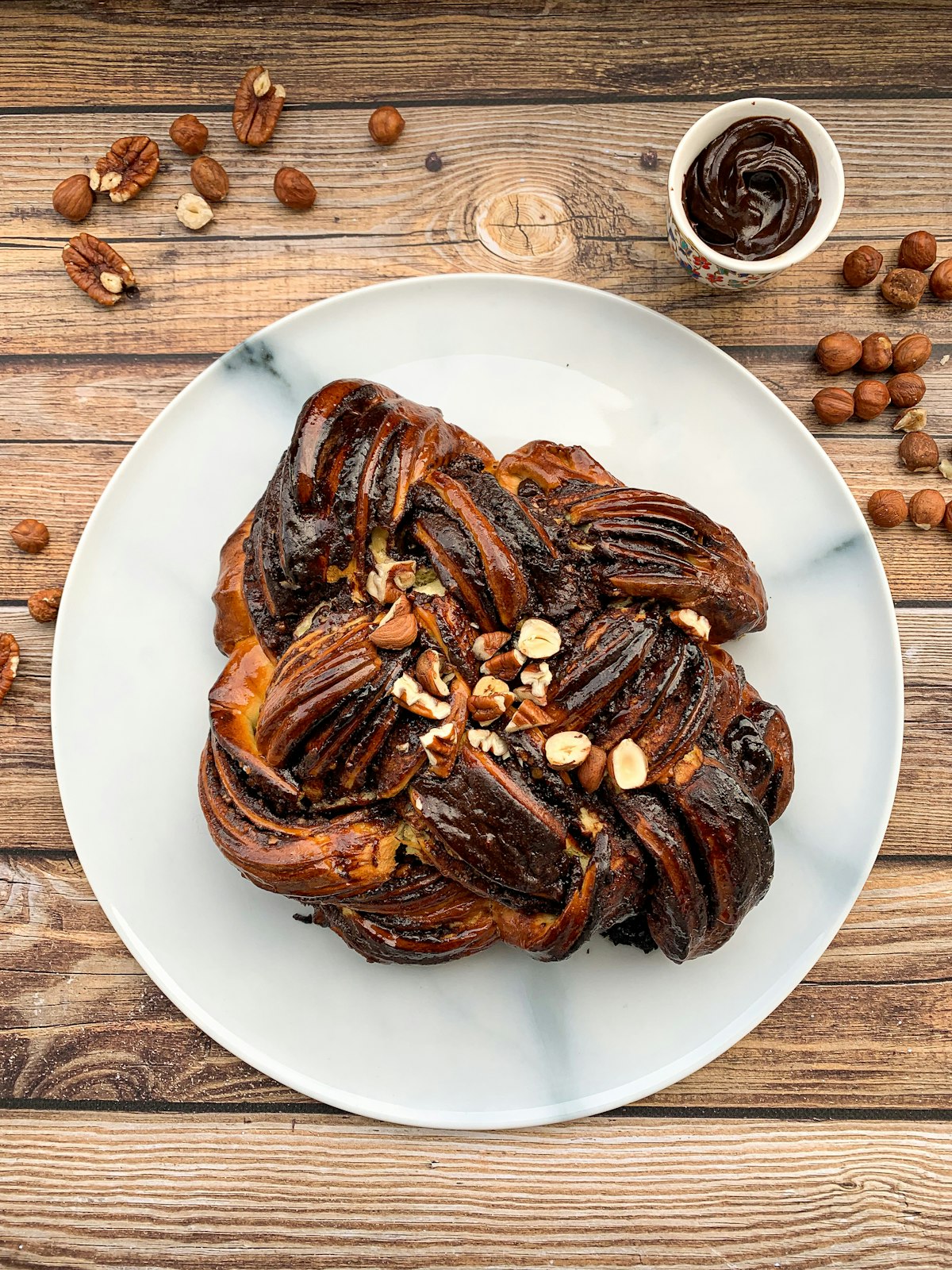
Categories
Uncategorized

slurpy surprise

Ingredients:

  • 1/2 cup sesame seeds
  • 8 ounces soba noodles
  • 2 tablespoons vinegar (rice wine is probably best, I used red wine)
  • 2 tablespoons vinegar (rice wine is probably best, I used red wine)
  • 2 tablespoons vinegar (rice wine is probably best, I used red wine)
  • 5 tablespoons soy sauce
  • 2 tablespoons honey
  • 2 tablespoons hoisin sauce
  • 1 carrot, shaved
  • 1 cup sugar snap peas
  • 1/2 cup edamame
  • 2 chicken breasts, poached and shredded
  • Salt and pepper, to taste

Read More


Categories
Recipes

Blueberry and Goat Cheese Salad with Mushrooms

Ingredients:

  • 2 1/2 tablespoons balsamic vinegar
  • 1 cup fresh blueberries
  • 1 tablespoon champagne vinegar (optional)
  • 4 oz (115 g) soft goat cheese, cut into rounds or crumbled
  • 4 cups mixed salad greens
  • 6 to 8 large white mushrooms, sliced
  • 6 to 8 large white mushrooms, sliced
  • 1/3 cup olive oil
  • 1 teaspoon olive oil
  • sea salt to taste
  • 1/2 cup walnut pieces

Course: side dish

Read More


Categories
Recipes

Black Forest Cake For Blogger Friends

Ingredients:

  • 1 teaspoon Use a hand whisk to stir chocolate cream till smooth or you can put the bowl of
  • 40 grams In a large bowl, chop semi sweet chocolate to small pieces. Boil whipping cream
  • 48 grams Melted Butter
  • 1/2 tablespoon Chocolate paste
  • 1/2 tablespoon Chocolate emulco
  • 3 Eggs
  • Add eggs, water and optima flour and whisk at high speed
  • 165 grams Optima flour
  • 100 grams Whisk fresh topping cream together with 85 whipping cream till peak form (not to
  • 300 grams Fresh Topping cream- whip to peak form- for adding dark sweet cherries and cover
  • 1 tablespoon * Kirsch syrup- measure 150 ml hot w
  • Lastly add in melted butter and mix well again
  • 60 grams Semi sweet chocolate- chop to small pieces
  • 3 slices Remove sponge cake immediately from cake tin after baked and leave cake to cool
  • 1 small Canned Dark sweet cherries- drained
  • 1 teaspoon Vanilla extract
  • 20 grams Water
  • 40 grams Whipping cream
  • 100 grams Fresh topping cream and 85 g Whipping cream
  • 8 cups Pour batter into a” round cake tin (lined) and bake in prehe

Course: dessert

Cuisine: German,European

Read More